European International Schools March Madness

March MadnessAs a basketball aficionado, I miss being in America during the frenzy of the NCAA tournament, but we also have  March Madness during basketball season in European international schools. Every time we hit the road, we enjoy our own form of madness.

Traveling with teens between countries by bus, train, plane and even gondolas in Venice gets crazy. Inevitably someone will forget a passport, misplace a plane ticket, lose a piece of luggage, arrive late for departure or forget a uniform.

For coaches, the journey to and from venues becomes more stressful than coaching those nail-biting basketball games in the tournament itself.

During one trip years ago, my starting point guard left her passport in the pouch at the back of seat in front of her on the plane.March Madness

Another time, due to an electronic glitch, our bus door would not open or close completely. The athletic director in Zurich gave us jump ropes from their PE department and we tied the door closed, crawled over the seats from the driver’s side and rode home shivering as wind and snow blew in from the gap in the door.

Traveling with a group of kids anytime is challenging. They are like those Tamagotchi electronic pets that need to pee, eat and sleep at regular intervals. Wherever we go, someone needs to find a toilet, get a drink or buy a smoothie at the most inopportune moments.

March MadnessOn our trip last weekend, before landing, one middle school girl said, “Every time I land in the Brussels airport, I have to get a smoothie.”

When she asked for permission, Gerald, unaccustomed to travel with teens, said, “Okay.”

Anyone who has ever worked with kids knows that if one student gets a smoothie then everybody gets a smoothie. Sixteen smoothies later, we finally pulled our bags off the conveyor belt in baggage claims. We were ready to be picked up by buses from the host school when another girl cries out, “Oh no, I left my purse at the smoothie stand.”

Once you have exited the arrival terminal, you can’t go back, so she and Gerald ran to the front of the airport’s departure gate. There, security staff insisted you could not re-enter the terminal without a plane ticket. By the time they were finally allowed to access, the purse was long gone.

By far the worst incident happened years ago when I coached in Paris where we often traveled with 4 teams – JV and varsity girls and boys. One time on our return train trip from Vienna, an exhausted guard moved away from his noisy teammates to another car to sleep. However, at some stops on long haul trips, the trains may split off to different destinations. Only after we arrived home in Paris did the coach realize he was missing a player. That poor boy fell asleep in Austria and woke up in Italy.March Madness

Every time we arrived home safely with our teams, I breathe a sigh of relief. We never remember who blew a lay up, shot an air ball or missed a free throw, but we never forget the time we almost missed our flight, lost our passport, rode a broken bus, bought a smoothie in Brussels and all the other hilarious incidents –though not funny at the time – in retrospect made our international travels during European March Madness so memorable.

Sterling Memories – Hometown Imprinted in Heart

Sterling Memories - Hometown Imprinted in HeartNo matter how far we have moved away, those stellar Sterling memories of our hometown remain imprinted in our hearts forever.

We grew up in a blue collar town founded on the Rock River and fueled by the steel industry. From Hezekiah Brink’s simple log cabin built in 1834 in one of the most fertile areas on earth, the small farm community grew to a bustling metropolis, a bedrock of manufacturing and steel once nicknamed the Hardware Capital of the World. During the late 19th and early 20th century, Sterling expanded quickly with the founding of Northwestern Steel & Wire, Lawrence Brothers Hardware, and the Wahl Clipper Corporation.

Most of us kids raised in the 60s and 70s came from modest families. We grew strong raised on powdered milk, baked potatoes, string beans, tomatoes, and whatever else we could grow in our garden. Everybody’s mama knew how to make hamburger a hundred different ways. Baloney on day old Wonder Bread became a lunch staple.

We obeyed rules. We never skipped school. We rarely swore. The only thing we ever stole was third base in sandlot baseball. We attended church on Sunday, said please and thank you for every little thing, and politely requested to be excused from the table. We were never dismissed from dinner without finishing our milk and clearing our plates.

Newly invented black and white TVs became popular during that era, but the picture was so poor and choice of channels so limited that no one became a couch potato. Too many more interesting adventures awaited outside our windows. Back yards were for ball games; neighborhoods became parks where we explored. The only bullets we dodged were imaginary ones from our cowboy rifles. Playing outside was safe even after the street lights came on.

Like food and clothes, toys were limited too, so from an early age we learned to take turns and share. Riding a bicycle was a rite of passage. A driver’s permit a sacred privilege. As soon as we were old enough to push a lawnmower or babysit a toddler, we were earning our own money and learning to save our pennies.

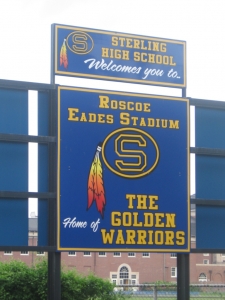
Sterling Memories - Hometown Imprinted in HeartThe highlight of our childhood was entering the halls of the Sterling High School, a red brick building that looks every bit as stately as an Ivy League School. The SHS sports facilities put small colleges to shame.

We were proud to fill our trophy cases with championships and cover our fieldhouse walls with conference banners. Although half of us were forbidden to play competitive sports pre Title IX, once that law passed in 1972 our school became one of the first to provide equal opportunities regardless of gender and race.

Between Westwood, Duis Center, the YMCA, Sinnissippi and a dozen other Sterling Memories - Hometown Imprinted in Heartparks we learned to play early on. We never realized how spoiled we were in terms of public recreational centers. Today our high school sports facilities are so outstanding opponents kiddingly call us Sterling U. The recently renovated stadium looks stunning.

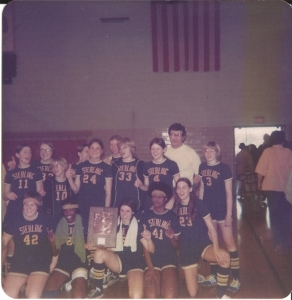
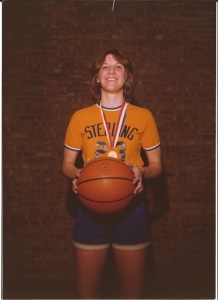
Traditionally we catered to our strong football teams of boys who now have the luxury of playing under the lights on astroturf. Back in my day we ran on a cinder track but today, local kids continue to break records on DuWayne Dietz all weather, royal blue running track. But no thrill was greater than watching those Golden Girls basketball players making history as Illinois 1st ever State Champions back in 1977. With the steel industry dying, the economy failing, the town struggling, that team united the community and inspired hope.

Sterling Memories - Hometown Imprinted in HeartNow half a century later walking down the streets of my childhood, the single story ranch homes with one car garages look like match box houses.The soil has settled and the foundations appear to be sinking, the sidewalks shrinking. Trees, mere saplings during our youth, now form a canopy over the street.

After living abroad for nearly half a century, it is hard to imagine going back home. So many of us moved away for education, employment, love, and family, but we all look back fondly and agree Sterling was a good place to grow up. Our heartstrings remain strongly attached to our old hometown and a way of life where solid values were instilled and we knew right from wrong. Mainstreet remains the heart of America, and the memory of Sterling still beats strong in ours.

Sterling Salutes Illinois’ First Girls’ State Basketball Champs

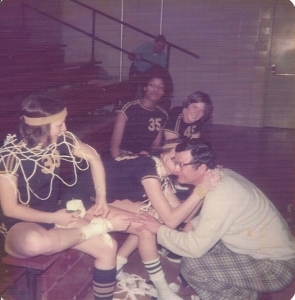
Forty years ago, my little sisters made history and on April 4, 1977 newspaper headlines read “Sterling High Girls win first ever-state title over 7,000 greet Illinois number one basketball team.” Five years after Title IX passed into legislation mandating equal opportunities for girls in all publicly funded schools, a new generation was born. While our country was struggling with civil rights and gender equity issues a small town team united blacks, whites and Hispanics in one dream – a state championship.

If I close my eyes, I can still see Marche Harris pumping her fist in air after a break away lay up, Fran Smith with her wicked ‘fro soaring at the jump circle, Dawn Smith grabbing weak side boards, Jojo Leseman, running the court like a platoon captain in fast forward, freshman, Amy Eshelman gliding the baseline. And my sister, Karen McKinzie, standing at the line swishing another free throw. Harris, Smith, Leseman, Eshelman and McKinzie names that have marked SHS record books for years.

YouTube player

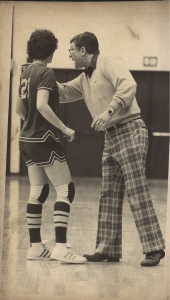
An odd trio of coaches, Jim McKinzie a retired boys coach, Sue Strong a GAA coordinator and Phil Smith the first African American teacher in the conference fought behind the front line to make sure female athletes were granted equal rights at SHS in those crucial years after Title IX. Before anyone dared to utter words like racism or sexism in public, they shaped a team far ahead of its time indifferent to gender or race. That group of unassuming girls enchanted an entire community. Part of the magic was their cohesiveness. No divas, no superstars, no drama queens, just selfless teammates who knew that they were stronger together than they could ever be alone.

It was too late for me. A 1975 SHS graduate, I became a Redbird and moved to Illinois State University where the first girls state tournament was held on my new home court. I watched with pride from the bleachers of Horton Field house as my little sisters made history under my father’s tutelage.

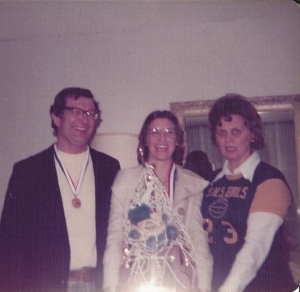
“What stands out most was how this team brought the community together,” he said reminiscing, “Nothing like it before or since. The Golden Girls were goodwill ambassadors for Sterling, a place no one heard of before was thrown in the limelight. When we returned as state champions, we were wined and dined like celebrities.”

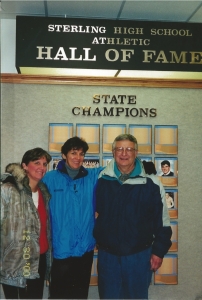
Forty years ago, we had no clue that the old Golden “Girls” would bear daughters who would one day be recognized as Golden Warriors. All we cared about was finally being allowed to play the game we loved. Do the girls that play today know how lucky they are to compete on center court wearing fashion’s latest apparel? To prepare before games in weight rooms and repair afterwards in training rooms? To be immortalized in a state of the art Hall of Fame room?

Stop by the open house at Woodlawn Arts Academy on Friday April 7 from 4:00-7:00 to salute that first state championship team and their coaches. Tip your hat to those pioneers who grew up in flimsy, canvas shoes and one piece gym suits, who played ball when no one was looking or worse yet when people looked and laughed. Pay tribute to those women who gave their heart and soul to dreams that no one understood, dreams that became our daughters’ reality.

When you sink a jumper and drive the baseline young blood, hear our stories whispered from the rafters. Walk tall, be strong, be brave. Be proud of your past, Golden “Girl”. After years of battle, it’s an honor and a privilege to be called a Warrior.

A chapter of my memoir is about the 1977 state championship team.

March Madness My Way

Though I miss the basketball frenzy in America especially at this time of year, I learned to celebrate March Madness my way. As an expat in Europe for the past 35 years, the only March Madness I experienced was in 2014 when I traveled to the University of Wisconsin, Stevens Point to be the keynote speaker at the DIII Final Four banquet in commemoration of the 40th anniversary of Title IX.

Fortunately after my international playing career ended, I joined a collect of coaches – many former players – who brought a taste of March Madness to the international schools in international and national competitions.

I have had my fair share of championship teams and though I am every bit as competitive as my cohorts across the Atlantic, over here the stakes are not as high. My players don’t perform in front of sell out crowds and my job is not dependent on the number of wins.

So though I retired from teaching in June, no one who knows me will be surprised that after medical treatments in the States, I came back to coaching in Switzerland to finish the season with my high school team.

At our international tournament in Basel, my team felt like they let me down when they lost their defending title to Zurich in the SCIS.

“I didn’t come back to watch you play basketball,” I said in the locker-room after the game. “I came to be with you. To help you get your international baccalaureate degree and to remind you that I believe in you. Always. Even in defeat. Especially in defeat.”

No one goes through life beating every opponent. It is what you do when the chips are down that builds character. Second effort is the difference between, well, going on and giving up. So after that disappointing defeat, we went back to gym and practiced. A month later we beat that same Zurich team to win the Swiss championship SGIS.

We can beat ourselves up reliving our errors. Forget the mistakes. The game goes so fast no one else will remember that you dribbled off your toe, threw the ball out of bounds or shot an air ball, what they will remember is that you hustled back down court on defense and played tough until the final buzzer.

The emphasis in international schools is less about winning and more about learning, so academics always play the biggest role.

No doubt I have book smart players. But playing basketball teaches self-discipline and perseverance and other valuable lessons that can’t be learned in a classroom.

This year one of my star basketball players is heading to Stanford and another one is off to Oxford; they won’t be going on athletic scholarships. They play hard, but study harder. And maybe that is how it should be.

Basketball basics 101 – a valuable part of any curriculum. It’s a throw back to the good old days in the early infancy of Title IX when we played for love of the game and to get a good education.

March Madness my way.


Why Me Syndrome

dsc01302Ever suffer from the why me syndrome? Those times you are immobilized by anger, frustration, and fatigue and wondering why you have to go through whatever it is you are enduring. Anyone who knows me knows that I have coped with an abundant amount of physical pain. Some of it was self-inflicted during my career as a pro athlete, but most of it accidental, random sh**.

I don’t have to look far for inspiration to find someone who is fighting an even greater challenge. Compared to others, my life is not so bad. I have lost friends to cancer, suicide, and bad, bad bugs like MSRA. I have friends who are coping with MS, diabetes, and depression.

I have friends enduring the crippling loss of a parent, child, sibling, spouse or friend. I know people facing surgery, dealing with dialysis, and going through chemo. I have friends who encounter each day without complaint, staring down each personal setback with dignity.

Early on, we must learn life is not fair. We don’t get to pick our opponents. Some obstacles are insurmountable. Some rivals are bigger, stronger, better. Some battles cannot be won, no matter how hard we fight.

I have cried a million tears, pounded my bed in despair and prayed to the heavens. Why am I here if only to suffer?

Because suffering is universal.

It is what makes us human.

img_0006Life is not fair. It is not fair that I was born into a stable, loving family. That as a child, I grew up with 3 of my 4 grandparents still living to help shape me. That my community was so safe I could play outside until the street lights came on. That doors opened for women in sports that had been forever closed offering me opportunities to travel and compete. That my father was a coach and I, an athlete, so I had a head start. That I met my soul mate half way across the globe. His family adopted me just as mine cherished him helping us to create a new cross cultural, bilingual family. That I had not only one, but two children that enrich my life. That I have loyal, steadfast friends and former students and athletes scattered around the globe cheering me on in my darkest moments.

img_1963Thanks to all of you who reached out to support me with calls, comments, text messages, FB shout outs and emails.

I have been blessed beyond measure. As I roll out of bed onto the floor and into the downward dog to stretch my limbs that lock up overnight, I toss-up a prayer.

To all of you grappling with the loss of loved ones, job insecurity, crazy bosses, growing older and the gamut of emotions ranging from rage to fear to anxiety that are an inherent part of the human condition, I hope you have the resiliency to weather the next storm.

As you face a new day, I wish you Bon Courage.

Be bold, be brave, believe.

Embrace life…a gift at any age.

Happy Father’s Day Coach – Thanks for the Legacy

Coach "Mac" - Ralph McKinzie

Coach “Mac” – Ralph McKinzie

On June 5, 1983, mere months after a car accident in France ended my career as professional athlete, I wrote this letter to my grandpa Coach ‘Mac’ Ralph McKinzie. a beloved college coach.

Today, I can address this same letter to my dad, who influenced just as many high school athletes as my grandpa did at the university level.


Dear Coach Mac,

I want to wish you a Happy Father’s Day, not as your granddaughter but as an athlete. Though I never had the opportunity to play football on your team (football is forbidden for girls, even tomboy girls) I still look to you as an example. As an athlete I know the impact you had as a coach, but as a woman I can express emotions more openly than a man. Today I am writing on behalf of all the boys you fathered on the football field who would wish you a Happy Dad’s Day if they could find the words.Jim & Grandpa

In our society men are not allowed to show feelings; it is uncharacteristic of the American male, especially husky football players, to write thank you letters, so you’ll never realize the number of lives you touched. Your influence on one boy, Ronald Reagan, who became President of the United States, is probably the most outstanding example of the far-reaching effects of your coaching. Many men, less acclaimed perhaps, but equally important, are fathering children and becoming productive citizens because of the impact you had as a coach, developing character. Many continue to hurdle life’s hardships because of the never-give-up attitude you instilled on McKinzie Field.

Coach Jim

Jim McKinzie – Eureka College

I am one of those former athletes. I never endured the duck walk, but I know enough of your coaching philosophies to have that iron will ingrained, a will that kept me alive this year. After the accident I thought I would never get out of bed, days passed from minute to minute enduring pain. When walking from one room to another seemed insurmountable, you were my inspiration. I thought of you pacing the football field. Not all your former athletes will have suffered the same trials as I, but each will have endured hard times, drawing on the strength you helped them develop off the field.

Since I can no longer compete, I feel useless. Again I look to you and see how you are still coaching, influencing lives even at the age of 89. So I think I will try to follow your example as a coach. Unfortunately, in organized sports today, coaches often must focus more on winning championships than on shaping individuals. However I intend to follow your philosophy and be a coach of life.

Perhaps you too are weary from life’s aches and pains. Many mornings you, a man that once kicked 50-yard field goals, has trouble pulling on his socks. Like me you wonder what your purpose is here now. But your very existence continues to be an inspiration to us all. Thanks Coach from all your athletes.

P & Nic-2My grandpa officially retired from coaching in 1962, and then was called back to the game a year later. My father retired from coaching boy’s football and basketball only to return to coaching girl’s basketball in the infancy of Title IX.

Looking back my letter reads like a prophecy; I went on to coach and teach internationally for 33 years. Together grandfather, father, and daughter have dedicated nearly a century and half to helping shape kids on the playing fields. Only days after my grandfather died in 1990, our son was born. Today that young man, Coach Mac’s great grandson, has become the fourth generation to go into teaching and coaching.

I think that is what you call a legacy.