 Though Gérald and I will dine tête a tête this Sunday, our hearts are filled with memories of holidays past when our children were younger and we were surrounded by family. As with every celebration in France, Easter begins and ends à table.
Normandy is appreciated the most at mealtime when land and sea are perfectly marinated. Mamie cooks the traditional Easter favorite, leg of lamb. At the head of the table, Papie carves the tender meat fresh from a newborn romping on the rolling green hillside only days before. But back up, each course is an event worth savoring.
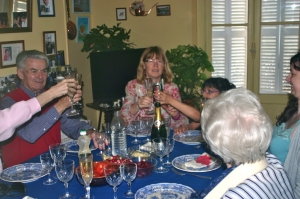
toasting champagne
First a toast of champagne and a light aperitif. Next is naturally an egg based, a soufflé as light as cotton candy, followed by a platter of seafood: shrimp, crab legs, clams, oysters, something for everyone’s palate.
The main lamb course is always served with flageolet, a mini lima bean, that reminds me of the word flatulence and of course, bean jokes inevitably enter the conversation, sending the children into gales of laughter. Mamie always has a special dish for every family member, so a garden of vegetables -beans, broccoli, potatoes, spinach, tomatoes - also grows out of the linen tablecloth.
The children eat with the adults where they risk being reprimanded to sit up straight. However, I never notice table manners; my fork and knife are usually in the wrong hands. Softhearted Mamie excuses the grandkids early and they scamper upstairs to read Lucky Luke or Astérix comic books until called for dessert.
Each course is accompanied by wine, a light white Burgundy for the seafood starters and then a heavier Bordeaux for the meat and cheese. Every big meal is followed by a green salad and cheese platter with triangles of creamy local cheeses like Camembert and Pont L’Evêque.
family feast
Dessert always includes seasonal fruits, which in the spring means luscious strawberries. Like little elves, the children reappear to gobble up berries dipped in fresh cream. The kids magically disappear again when they smell the coffee brewing. Papie ceremoniously opens the antique Normand hutch and pulls out his bottle of Calvados offering, “a little taste.” True Normands swear that the fiery apple brandy aids the digestion. During weddings and christenings, the “trou Normand,” a shot served on sorbet in the middle of the feast, is customary.
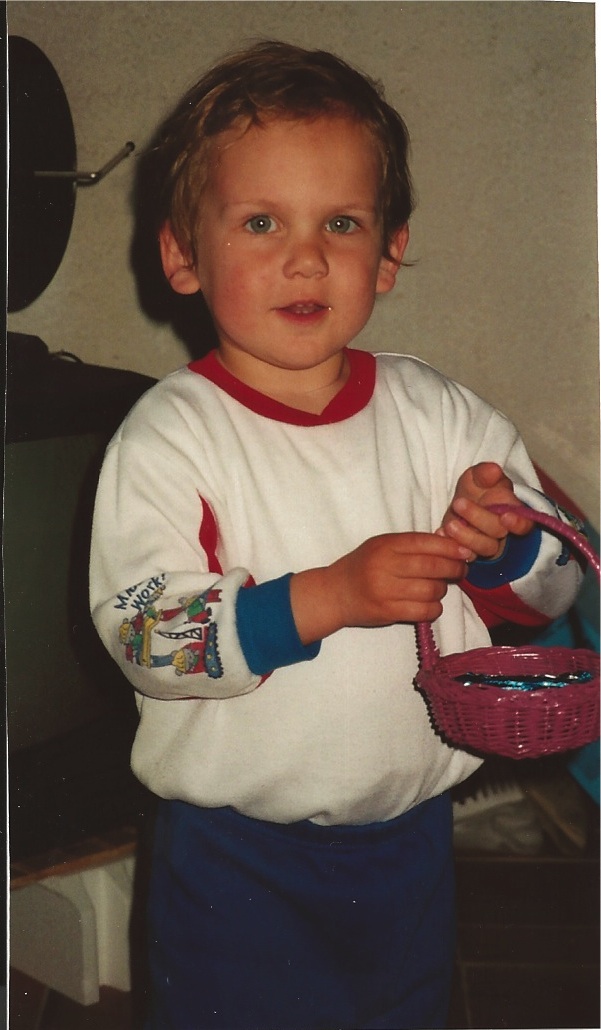
boy with easter basket
Throughout each course a lively repartee of sarcasm, word play and arguments ensue that to a soft-spoken Norwegian American sounds like verbal abuse, but is only part of the French art de vivre and their love of language and debate.
Just when you think your belly will burst, Mamie rings a bell and the children race downstairs, for in France, bells, not bunnies, deliver eggs. As a token of mourning for crucified Christ, church bells remain silent from Good Friday until Easter Sunday. On Easter, when the chimes ring again, children rush outside to see the bells fly home to Rome, after dropping chocolate Easter eggs from the sky.
The children crowd onto the wrought iron balcony to find eggs tucked behind the potted geraniums and tulips. While they devour the chocolate figurines, the adults, too, savor a delicacy from the local chocolate shop . Everyone moans of stomachaches and swears they will never eat again, but a few hours later after a stroll by the sea, we are à table again discussing the favorite French topic, food.



 On a recent trip to England, our son took us to visit historic Warwick, an enclosed city. The highlight of the afternoon for me was going for a proper English cream tea at the
  looking like they stepped out of the back kitchen where they baked homemade cakes and scones. Patrons spilled out of the ground floor tea rooms, so our waitress led us up a rickety, winding, ancient staircase that made me feel like I stepped into the old nursery rhyme.
 We squeezed around a low table designed for short-statured folks of earlier times. We folded our long legs; our knees knocked into the furniture.

 From the window of our son and daughter-in-law’s home in Warwickshire, England, I was admiring the red, brick barns and lush, green fields when suddenly a head floated past, just above their back hedge.
 century. In the past, a boy riding a bicycle prepared or set locks ahead of a boat's arrival. Nowadays, the woman aboard, carrying the lock key, hopped off onto shore to open the gate letting the water rise or fall, while the mister stood at the stern manning the rudder bar.
 Revolution, the canals system provided a commercial transport network until the the railways prevailed.
 Only a sunny day, a carnival atmosphere prevails. I felt wistful watching the colorful boats parade past on the lazy canal. Whimsically, I imagined ditching real life and drifting down the canal without a care in the world.
 I was excited as a two-year-old to take my first walk in wellies across the beautiful British countryside (I am easily amused.) Wellies, the symbol of British culture, reflect the lasting legacy of the Duke of Wellington and the term carries a sense of tradition, practicality, and British identity.
 The British waterproof gumboots are usually made from rubber or PVC. Traditionally Wellies come in black, olive green, tan color or print and hit just below knee level.
 Today's wellies, with varied color options and patterns, permit people to add personal style to functional footwear. They can be paired to match every outfit and occasion.
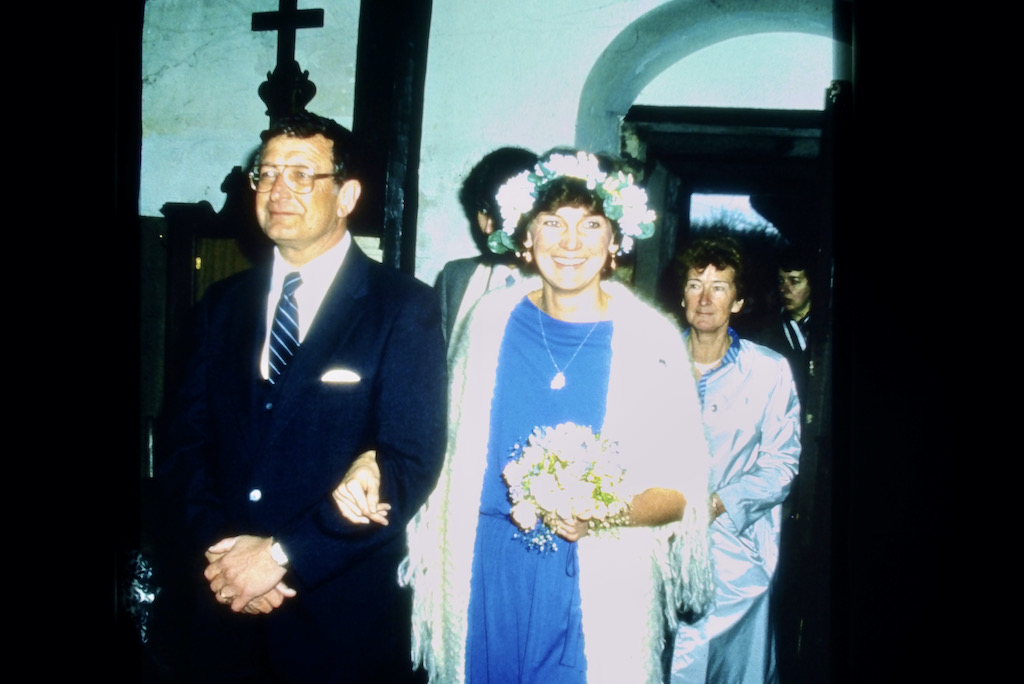
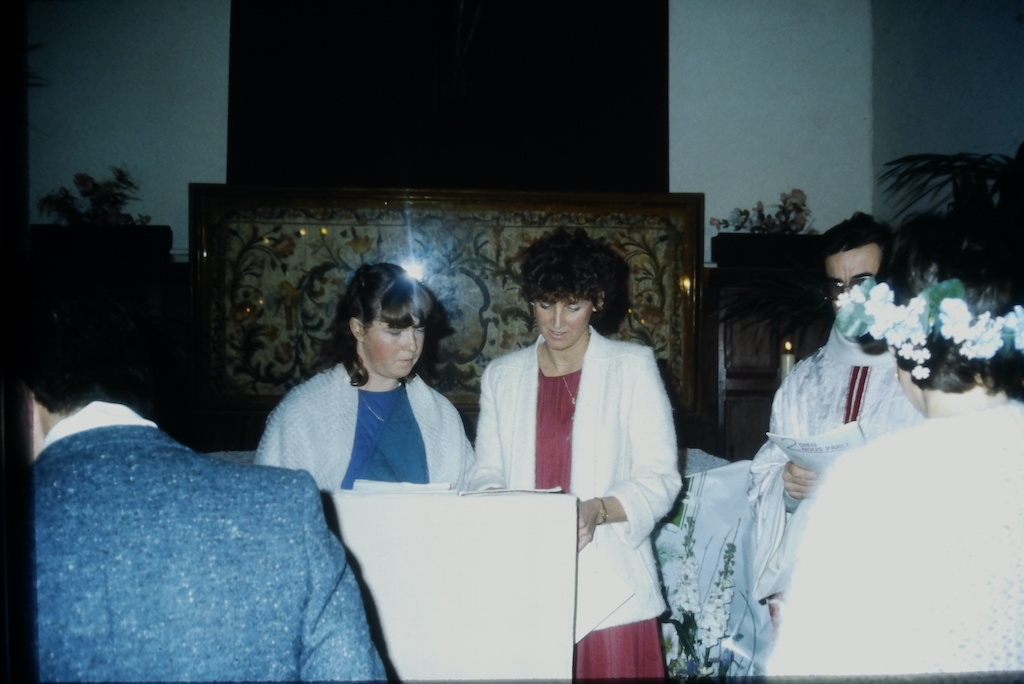
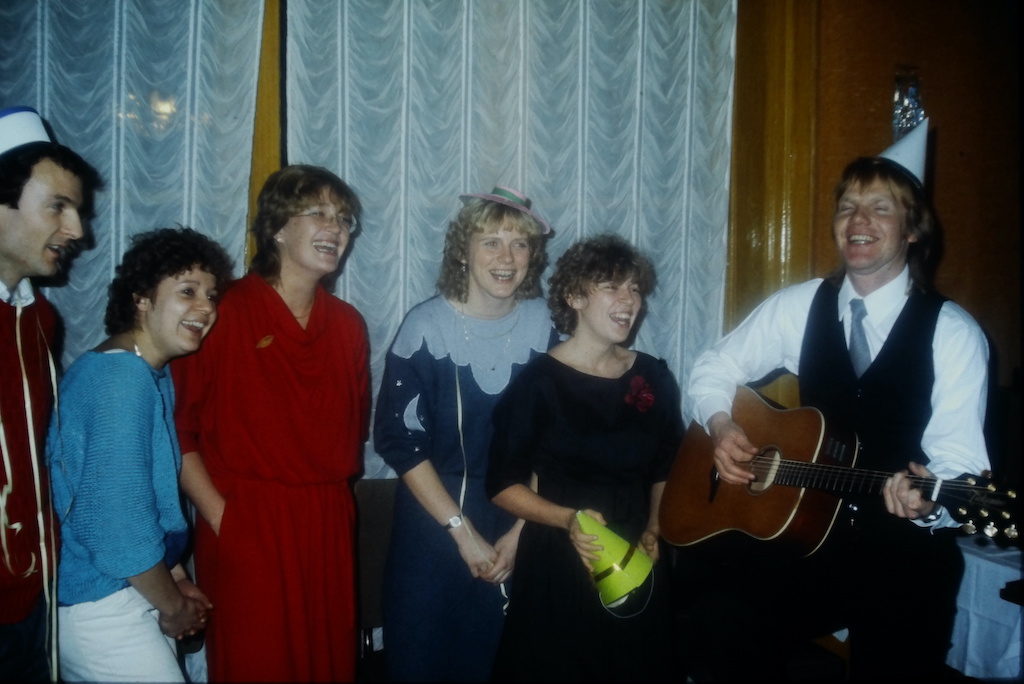
 Forty years ago on New Year’s Eve 1983, I said, “I do,” in a seventeenth century chapel in France, not far from the famous WWII Landing beaches. What are the odds of a small town girl from the cornfields of Illinois meeting a French boy raised by the sea in Normandy?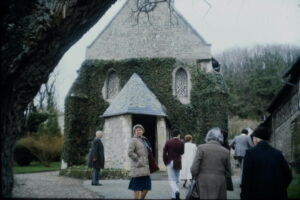
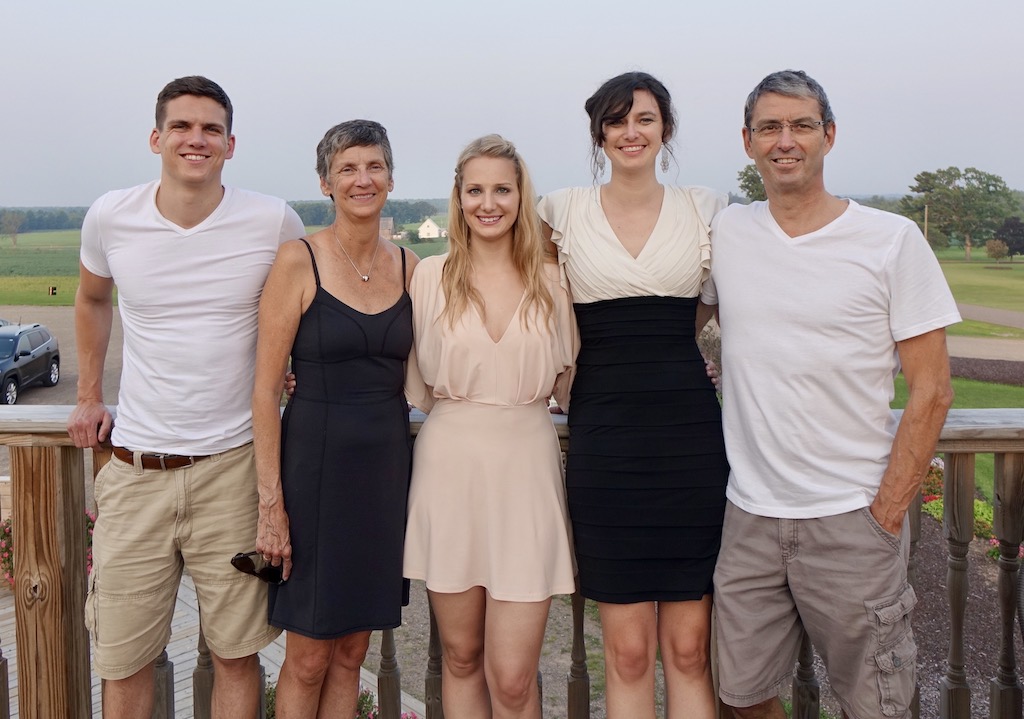
 But our rewards were great; none greater than watching a bright, adventuresome daughter and a clever, witty son grow strong on basketball courts across Switzerland and go onto become doctors.