Endless Challenge Flying Internationally

For me, a seasoned traveler having lived abroad nearly half a century, air travel has never been more challenging. Especially internationally. Especially for mixed nationals.
I have lived in Europe so long, I may becoming one of those historic icons tourists love to visit!


With my savvy, I should be cool as a cucumber. Instead, I hyperventilate weeks before flying, knowing “what can go wrong will go wrong.” And more!

I have experienced every disruption possible except, thankfully, a plane crash.

Our latest travel saga started at the Delta counter at Minneapolis-St. Paul Airport where we waited to check baggage for our return flight to Switzerland via Amsterdam. Due to a technological glitch between code sharing companies Delta (MSP hub), Air France (Paris hub) and KLM (Amsterdam hub), my husband’s luggage could not be registered even though we mastered check-in online 24 hours before without a hiccup.

“Sorry Mr. Lechault, our computer flagged your name in red with DO NOT ALLOW TO TRAVEL status”

The desk agent's colleague saw our distress and offered his assistance by staring at the screen another ten minutes.

“Call the manager,” he insisted.

The manager arrived repeated the identical process and demanded, “Call the supervisor.”

An hour later, a starting line up of aviation personnel glared at the computer in front of us, while behind us the line grew down the terminal and out the door.

I searched for more documentation to permit our authorization to board the plane. International travelers never go to a airport anywhere on the planet without the mandatory paperwork. (ie.birth certificate, marriage license,US tax payment proof, children’s birth records, COVID vaccination card)
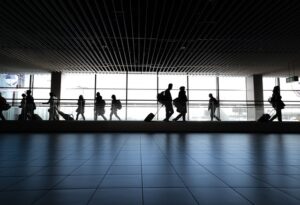
Uh oh. Dual citizenship?

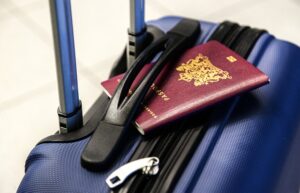
Bring French and American passport. Swiss residency card.

Do multi-nationals qualify for an extra carry-on bag to haul aboard aforementioned official documentation?

Whaaat? You want to see a valid driver’s permit?

In the event of unforeseeable, adverse circumstances, you want me to pilot this plane with a Minnesota vehicle license?

Finally we board. Seven hours later, our flight touches down on Schiphol tarmac “on schedule.”

“It took so long to reach the gate,” Gerald said. “It’s like we landed in Belgium and taxied across the border to the Netherlands.”

With only an hour to catch our KLM flight to Geneva, we anxiously fidgeted in line at the customs gate. At the booth, I presented my US passport.

“M’am how long will you be staying in Switzerland?”

“I live there,” I said.

“Then I must see a Swiss residency permit,” she said. I dug out the darn document, issued under my French citizenship, which aroused suspicion. “Where is your other passport?”

“Madame, enter only the US with American passport,” the Dutch border official stipulated,“When arriving in the Netherlands or any other European country (except the UK) you must present your European passport.”

Aiihh the last time, I was reprimanded for switching passports during transit. However, never argue with the official in front of you, even if you cannot understand rules that change overnight.

Starting in the near future (supposedly May 2025), American passport holders traveling to 30 European countries will need an authorization via the European Travel Information and Authorization System (ETIAS).

This is similar to the ESTA requirement that the US has always demanded of European visitors. Tit for tat or part of the legitimate security regulations in ever increasing unsafe world.

We hurried to the boarding gate just before it closed. I flashed my ticket and French passport and slipped through the turnstile. As I headed down the tunnel, I heard,

“Pat, wait. I can’t fly!” my husband hollered on the other side of the gate. “My passport’s gone! I’m going back to see if I dropped it where we last stopped.”

Naturally traveling with me, our last stop was the ladies room.

As he sprinted back through the terminal, I searched the pouch of my old fashioned bum bag. (I know. Does anyone wear those anymore?)

Voila!

From my magic money belt, I retrieve not one, not two, but three passports.

How did Gerald’s passport jump in my fanny pack? I never carry his passport, credit cards, cell phone, wallet or keys. Never.

I dashed back through the terminal and smashed into my husband racing toward me.
“My passport is lost!”

“I found it!” I screamed, waving the priceless booklet like a billion dollar lottery ticket.


At last, we boarded the Geneva flight. Still, I wondered, what happens to the poor beleaguered passengers that lose passports in transit?

Could we apply for asylum in Amsterdam?

How long does it take to build a house in Holland?

International Family Reunion on the French Riviera

Family reunions across state lines may seem difficult, but imagine the complications trying to unite international ones like mine, living in 3 different countries. It is never easy for a French-Normand father and Norwegian-American mother sans home, in a mountain hut in Switzerland to meet up their Franco-American kids.
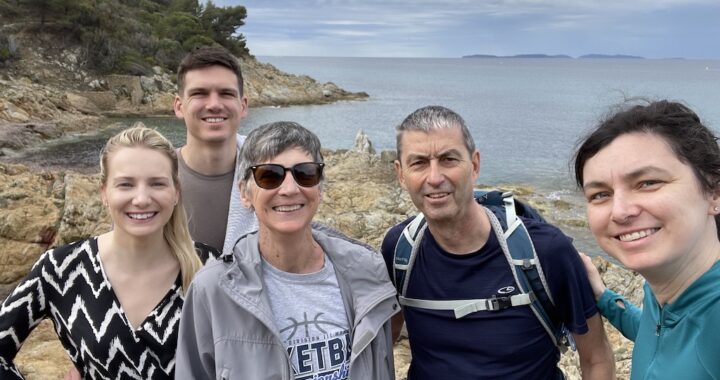
Our daughter settled in the land of 10,000 lakes. Our son married a pretty British-Irish-Ukrainian woman and moved to the countryside near Warwick, England. Recently, we united on the glamorous French Rivera. Whenever we gather, it is magical!

Our daughter flew to Europe for her spring vacation. We picked her up at the Geneva airport and drove south through France to La Croix-Valmer halfway between Le Lavandou and St. Tropez on the Cote D’Azur. Meanwhile, our son, Nic, and daughter-in-law, Larissa, flew to Nice from England to be with us.
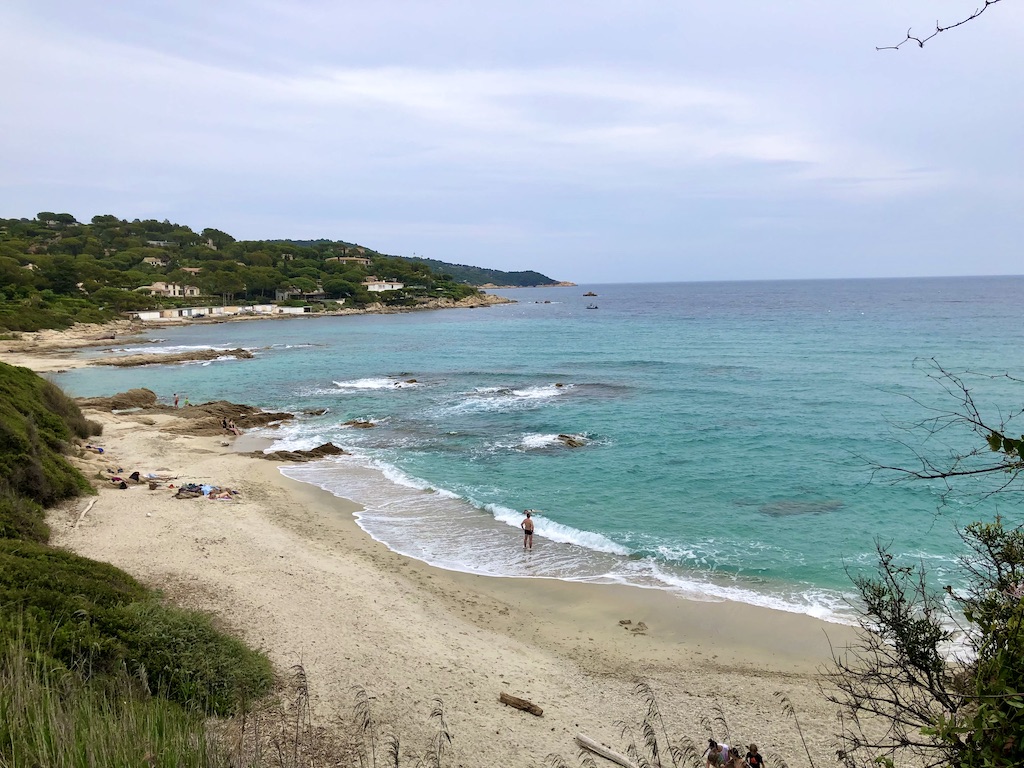
Our Airbnb was perched on the cliffs above the Mediterranean Sea on the Blue Coast, one of the world’s most famous coastlines offering sunshine, blue skies and the sparkling sea.

We woke up in the morning to birds singing from flowering bushes and the famous umbrella trees so prolific in southern France and to a spectacular view of the Bay of Cavalaire and the islands.

Every day was a feast for the senses

Each meal was a party for the palate.

Every moment was a priceless celebration.

For breakfast, over coffee, we enjoyed pain au chocolat, pain au raisin and patisseries from the bakery down the hill. At lunch, we savored salads, while Nic scarfed down giant Dagwood sized sandwiches on fresh baguettes.

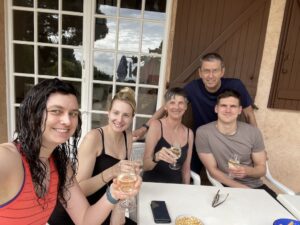
Every evening, Gerald, our favorite French chef, offered the region’s finest fare. One night, we savored succulent lamb with risotto, the next night we enjoyed a rib of beef with green beans and Lari’s rosemary baked potatoes. The last evening, we dined on a giant sea bass in white wine and lemon butter.
We started each dinner toasting one another with an aperitif of chilled Prosecco. We finished each meal with fresh fruits dipped in cream — currents, cherries, strawberries, blueberries, raspberries, a go-go. One night we splurged and enjoy a rich chocolate lava cake. We are all confessed chocoholics.

How Nat endured sticking to gluten free diet everyday amazed me. Although, I am also gluten intolerant, I cheated every meal.

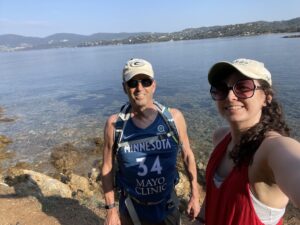
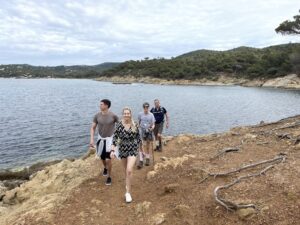
On sunny days, we hiked the rugged coastline, swam in the icy sea, read our Kindles and dozed on the beach.
On our last day, Nic hugged his big sister goodbye .

“See you soon,” he said. “Maybe this summer, maybe at Christmas, or maybe next year at this time?”

For us, family reunions can never be taken for granted. Surely, we must somehow make this first family trip a new tradition.

Who knows where or when we will meet up again? A Frenchman, Gerald, is only allowed to stay in the USA for 90 days, as a British citizen Lari, due to a quirk in rules had her ESTA revoked, will not be allowed to enter the states for a couple years.

I regret that we live so far apart in separate countries each with its’ own red tape. Yet, we are lucky to be open-minded enough to embrace one another cultures, to have the wherewithal to afford travel and the knowledge to navigate crazy rules limiting border crossing.

Even now with the conveniences of modern travel and connections of technology, many immigrants, like my Norwegian grandparents, never had the chance to return to their homelands, due to immigration status, political asylum rules, and economic constraints.

On the way to the airport, before flying back to England, our daughter-in-law, Larissa, bless her little cotton socks, insisted Gerald stop off to check out the local real estate, and begged him to buy a place in southern France for us to meet up regularly.

One way or another, in spite of the challenges, obstacles and inconveniences, we will gather together again, somewhere, some way, somehow.

I will move mountains to make it happen!

Because that’s what mom’s do.

Biarritz Coastal Resort Haven for Surfers


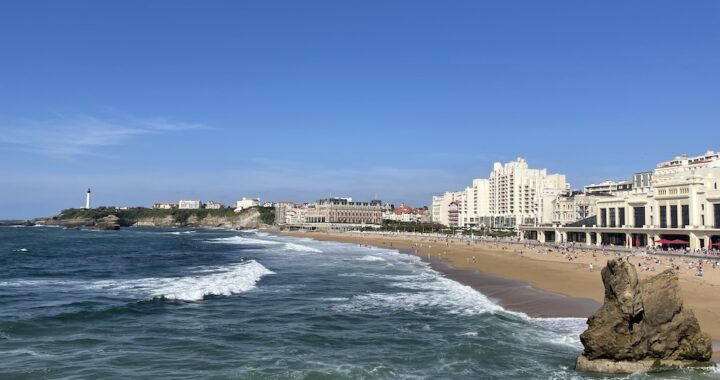
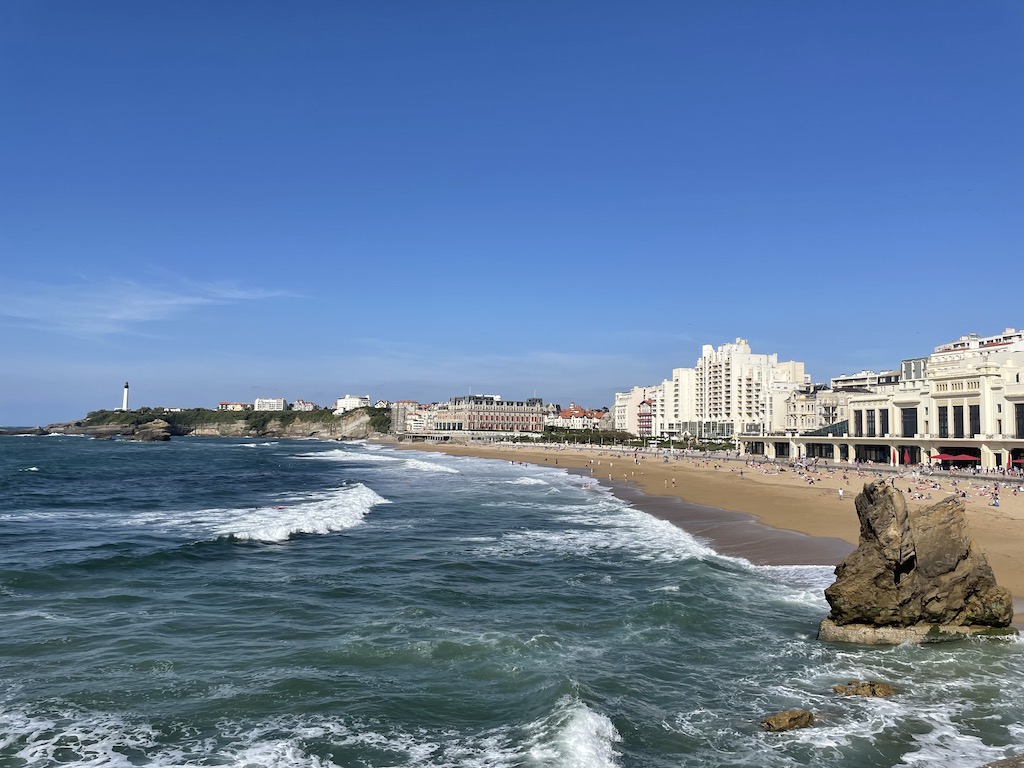
Biarritz Grande Plage

After living in Paris for years, I was well traveled to most parts of France, but I’d never set foot in her southwest, Biarritz topped my bucket list. Perched on the Atlantic cliff side near the Spanish border in the Basque Region, settlements around the city date back to prehistoric times. The Vikings invaded Gascony in 840 and created the first real village.

Economically dependent on the fishing trade, Biarritz was known for whaling from the 12th century. Napoleon III and his Spanish born wife, Eugenie, turned Biarritz into a popular seaside spot when they came for holidays starting in the mid 19th century.

Today, the ritzy coastal resort, with its elegant villas and epic Grand Palace glitter in Belle Epoque style, juxtaposes with the summer surfers crowd in their beach bum attire.

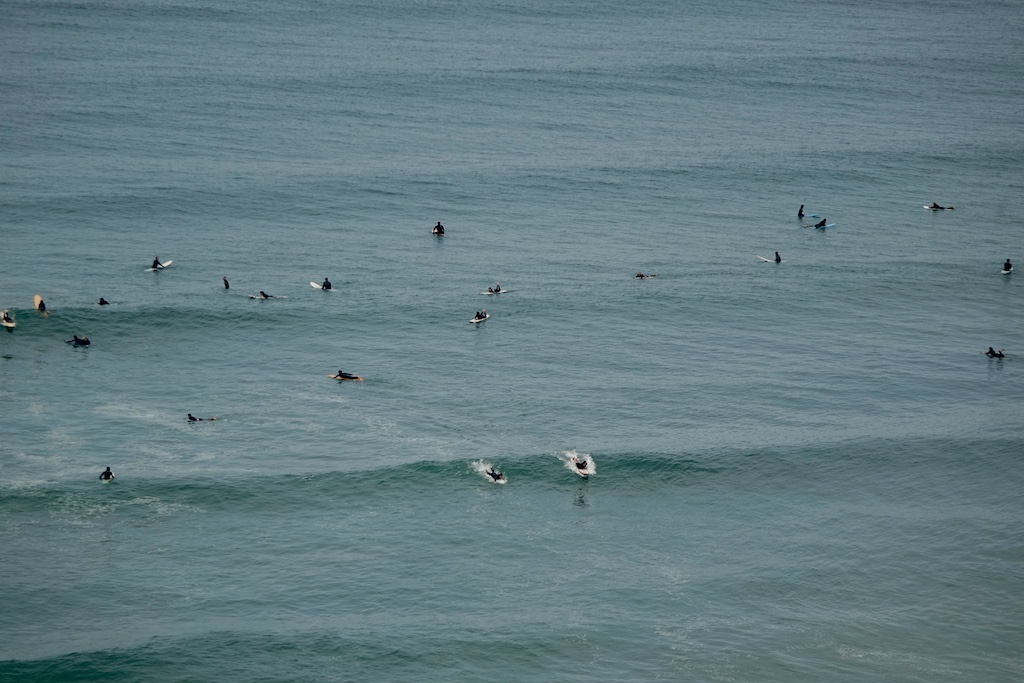
In the 1950’s, Biarritz became known as Europe’s surf capitol. Since then the city thrives on high tide when surfers from across the continent flock to the sea to ride the waves.

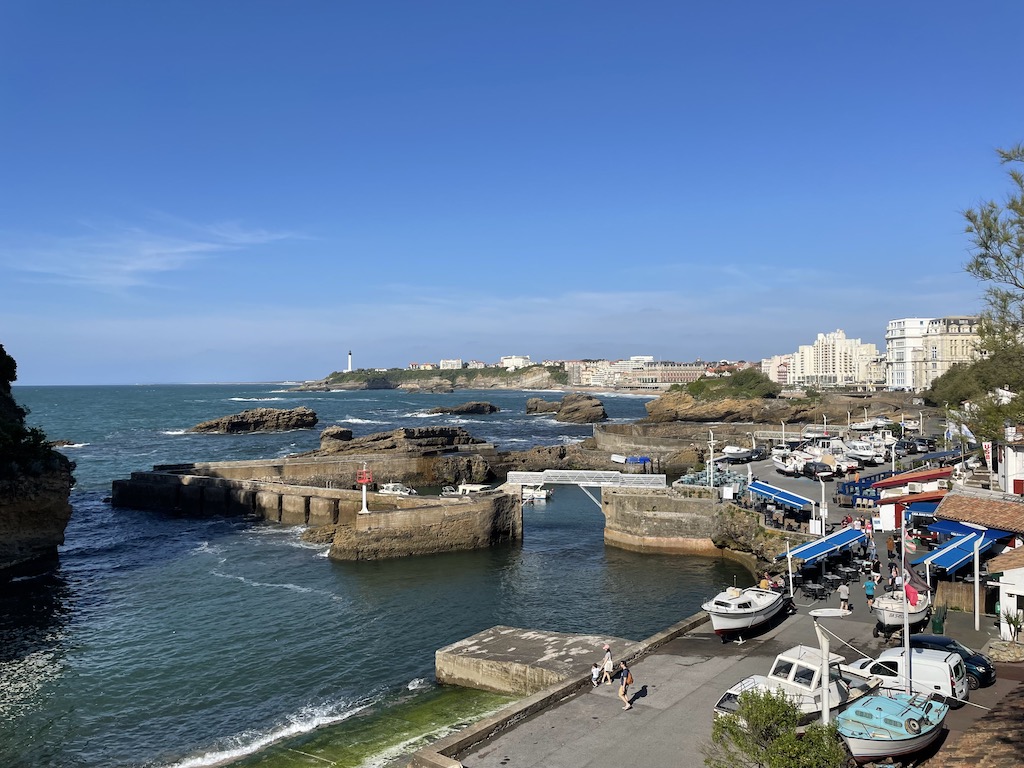
Fishing port

In the past, popular for its casinos, boutiques, bars, restaurants and golf courses, which catered to the rich, the surf community has now also invaded the coastline of Biarritz. Tucked along streets of early 1900s mansions, surfers live out of 60s style vans, cooking meals on electric coals set on the stone seawall, waiting for the water to rise and race to the sea.

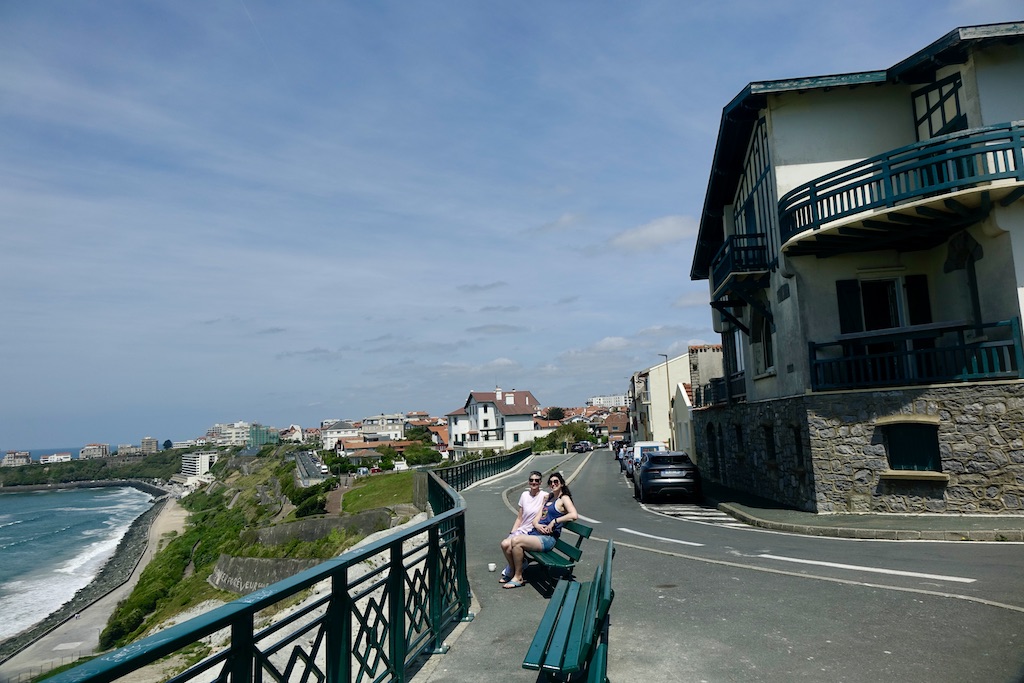
overlooking La Côte des Basques

We rented an Airbnb apartment on the cliff-side above the Bay of Biscay and savored the panoramic view of the beach, the bay and the surfers that looked like shark fins from a distance.

As we meandered down narrow, winding streets that opened to La Cote Des Basques’ stunning overlook, we passed lithe surfers with boards slung under their arms or attached to their bikes. With their stereotypical trim builds and dreadlocks, wearing a dress-like coverups over their swim trunks, they were always ready to peel into wet-suits and hustle to the beach in time to hit high tide.

How they managed to ride the waves in winds so ferocious amazed me. I was knocked off my feet just wading along the beach.

All the outdoor exercise whet our appetites, and there was no end to eateries along the coast and in the village.
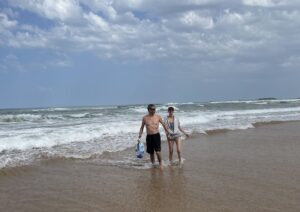
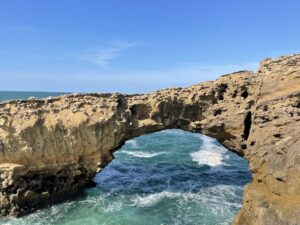
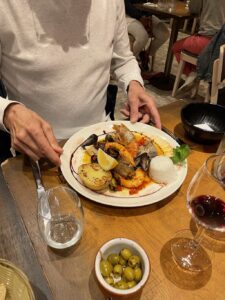
My husband, born on the coast of Normandy, adored the seafood platter including 5 different fish and prawns, mussels and clams in a saffron sauce served with a tasty, fruity local red wine. Food in the Basque Country is an explosion of flavors filled with spices from the inland.

Most eateries are a lively, colorful, warm reflection of the Basque people.

Biarritz's spectacular sea scenes combined with her succulent cuisine and welcoming ambiance will entice visitors to return.

Happy 90th Birthday to my Pioneer Dad

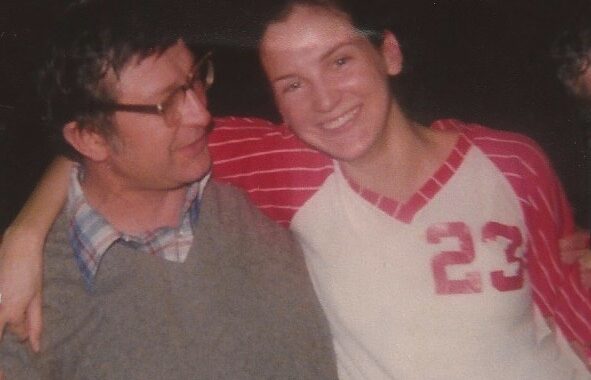
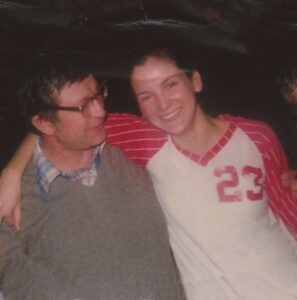
If I pursued a career unheard of for women, moved abroad and rewrote my script after my dream collapsed in an accident, it is because of you, my pioneer dad, who believed in me every step of the way.
I inherited the McKinzie iron will, a drive to pursue lofty ideals in spite of obstacles.

In the controversial years of Title IX’s infancy, when girls and ball games were non compatible entities, your adamant belief in women’s right to participate in sports would empower all your daughters. Especially me.

Fifty years ago, dads teaching daughters jump shots were anomalies. Fathers discouraged daughters from playing ball games society deemed unladylike.

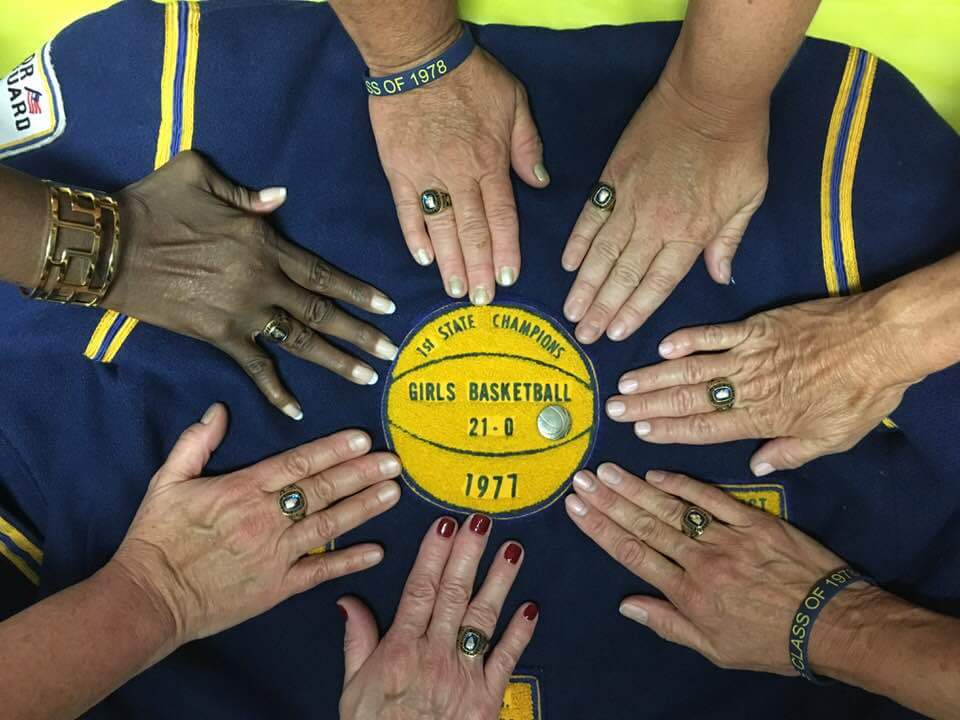
Yet, you fought for equal rights and shaped values in the athletes you mentored during your 33-year career at Sterling High School where you earned the affectionate title of Papa Mac while racking up Illinois’ 1st ever girls state basketball championship title, a 3rd place finish and an Elite Eight appearance. But what made you proudest was seeing how your athletic “daughters” grew up to contribute to society as principals, teachers and leading members of their communities.

No one felt your influence more greatly than me. When my slender frame took a beating on basketball courts at ever elite levels, you never said, “You’re too small to go pro.” Instead you helped develop my potential. When my American pro team folded, I stated, “I’m going to France to play.”

“What if you get hurt?” You tried your darnest to dissuade me. Then after the shock subsided, you offered your support and returned to the gym to rebound.

When I announced, “I’m engaged to a Frenchman,” you were the first to accept a foreigner into the family and remained my most faithful correspondent, sending manila envelopes to Europe. Rather than disowning me, you sacrificed time and money to make 18 trips across the Atlantic to be part of your gandchildren’s lives.

Though you never visited Scotland, the home of your fore-bearers, it is as if clan bloodlines transcended generations. Like your father and forefathers, you became a leader of men and women. You taught us a code of honor, respect for our fellowman, and fierce loyalty toward family.

Our resilient constitution, strength of character, love of nature, and reverence for honest work may have been virtues passed on from our ancestry, but we developed them by modeling your behavior in a life where you treated everyone equal.

As the head of our McKinzie clan, you set the finest example of what it means to be an honorable leader, a strong chief, and a benevolent father.
I grew up during an era when athletic girls felt shunned without role models. You encouraged me to be myself even when it meant being different and pursuing a career usually sought by men.

It was not easy being a modern day daughter, marrying a Frenchman and raising children abroad. Nor was it easy to be an up-to-date dad, whose dedicated coaching developed the talent that took his daughter away.

I was a selfish, smart-aleck kid; you were too overprotective. You grew up under the “work ethic” when it was a man’s world, only, yet you learned to accept a modern, do-it-herself daughter who lived by the “experience ethic.”

You leaned right; I left. Too much alike in temperament and too different in ideologies to always get along, yet our differences, spurred growth. I loved you enough to let you be a blundering father. You let me be a belligerent daughter. Through headstrong outbursts, we learned to compromise, to live modern dreams without losing old-fashioned values.

You were not a perfect dad, nor I, a perfect daughter. But our love was.

You taught me to shoot a jump shot, swim a lake, drive a car, balance a checkbook, but the greatest lesson I learned from you was “never give up!”

Thirty-five years ago, that fighting spirit helped me recover from a career ending, near fatal car accident 4,000 miles away from home. More recently that same resiliency helped me survive a life altering fall that resulted in a broken cheek bone, eye socket, jaw, nose and skull that led to a 5 hour brain surgery and over a year of rehabilitation. With no end in sight.

I may never play my guitar, type a blog post or swim again pain free.

Everyday as I struggled in physical therapy to squeeze my hand, raise my left arm, and walk without stumbling I think of you and repeat the mantra you ingrained through hours of practice spent correcting my jump shot, “Keep fighting!”

Every night when I called you reminded me,“I am proud of you sweetie.”

And you ended every conversation with these words,

“I think of you everyday and love you more each minute.”

Me too, dad, me too.

Happy Birthday to my 90 year old hero!

"Dump" in Switzerland

Can Tidiness Be Part of National Heritage

You would think after living in the world’s Most Tidy Country I would have adopted some of their clutter free lifestyle. Alas after residing in the same house in Switzerland for over 2 decades I have amassed a truck load of artifacts, books, T-shirts, photographs, medals, basketballs and other memorabilia.
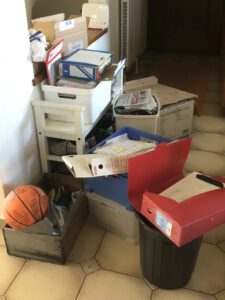
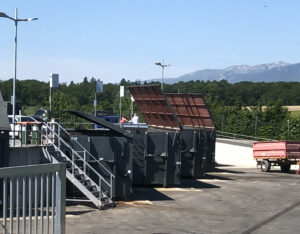
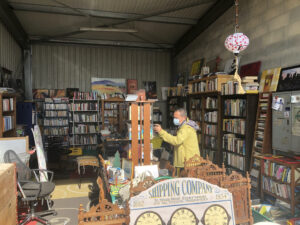
As a history collector, a memory keeper, how do I part with boxes of stuff.

Am I missing the clean gene?

Or can tidiness be part of a national identity inherent in small countries where space is at a premium?

I do not have any messy Swiss friends, nor has a “native” ever entered my home without automatically taking off his/her footwear. Even the children are trained to park their shoes at the door.

Marie Kondo, a Japanese woman, created a global movement of mindfulness to organize space and eliminate the vicious cycle of clutter. She would love Switzerland.

The Swiss must instinctively adhere to her number selection criteria – “does it spark joy?”

She insists: keep only those things that speak to your heart. Do Beanie Babies, books and bags count?

Am I the only one who finds joy in preserving plastic bags triggering memories of special people, places and events? Yes, I have bags labeled NBA store in NYC, Nathalie’s Boutique in southern France and Nicolas Wine Shop in Paris.

According to Kondo when we really delve into the reasons for why we can’t let something go, there are only two: an attachment to the past or a fear for the future.

I suffer from both making it doubly hard.

Another tip she stresses, don’t let your family see what you are doing. They will inevitably want to keep everything you want to pitch.

“People have trouble discarding things that they could still use (functional value), that contain helpful information (informational value), and that have sentimental ties (emotional value). When these things are hard to obtain or replace (rarity), they become even harder to part with.”

When you were raised in the American midwest where garages are bigger than European homes and filled with more junk than a Dollar Store, downsizing stuff does not come naturally. It so much easier to just chuck it in the garage.

After living in a country so clean you could eat off the street, where wood piles are stacked as neatly as Jenga blocks and spotless garages contain nothing more than shiny new cars, I still wonder where the Swiss store junk?
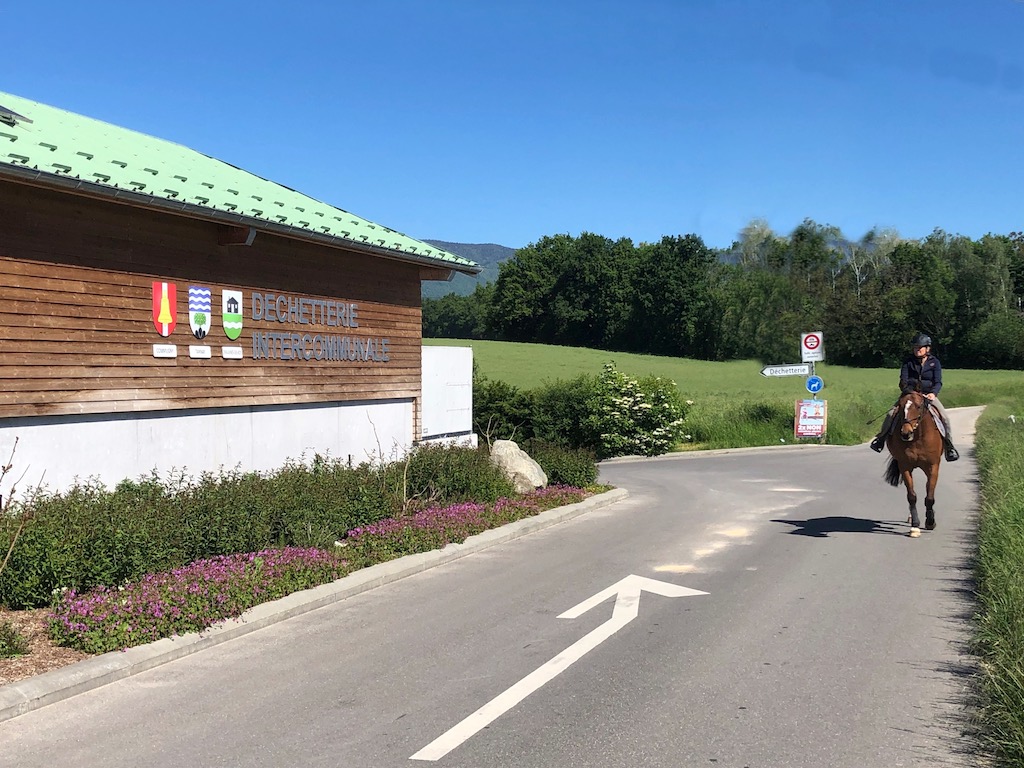
Chalet like style outbuildings are surrounded by gardens of flowers and shubbery.

At some, like ours, secondhand wares are tidily diplayed as gift shops. Since garage sales do not exist here, people can browse the local recycle centers that look more like lending libraries.

In a country as wealthy as Switzerland even junk is topnotch quality. Unfortunately I am no longer allowed to go to the dump here. I always bring back home more stuff than I threw away.


Europe Under Siege Our New Normal?

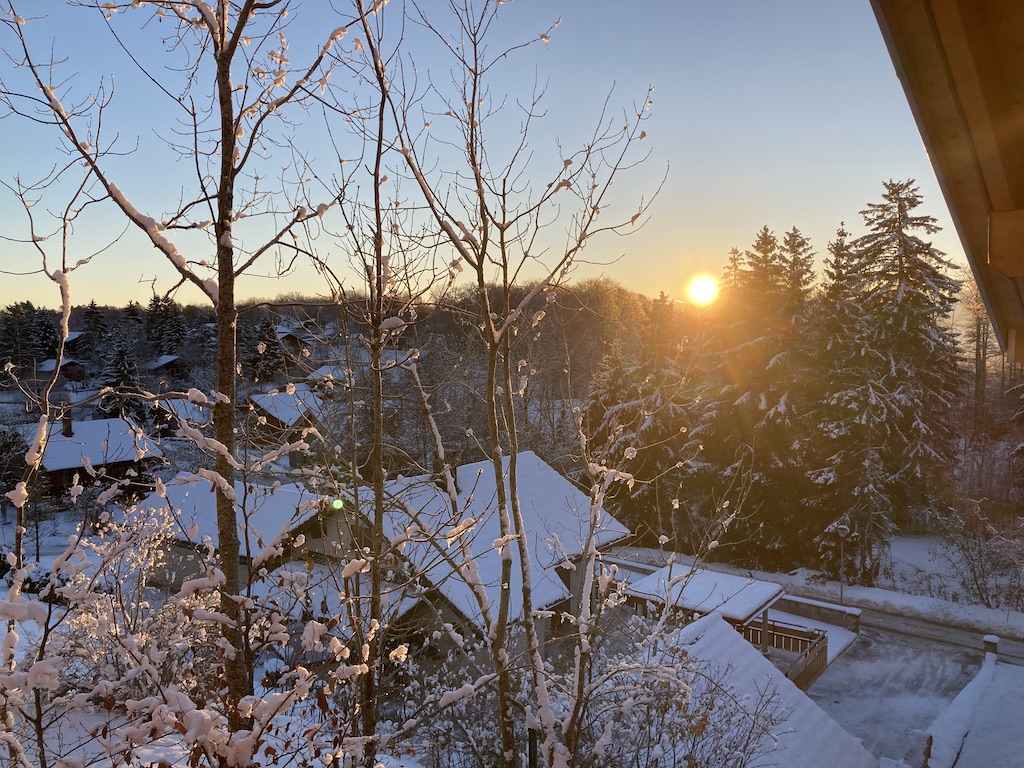
After enduring winter’s fog obscuring our mountains, I rejoiced to see the sun rise over the Alps and Lake Geneva. Though daffodils dance with the promise of spring, people remain oppressed.

Our resplendent view clashes with the darkness in our hearts, as we face a relentless enemy. As if it blew in overnight, coronavirus swept across the land leaving silence in its wake. No birds chirp in the gardens, no planes fly overhead, no cars rumble in the distance.

We live in a bucolic village outside Geneva Switzerland at the crossroads of the globe only 2 minutes from France, an hours drive from Germany, 3 to Italy. But right now no one travels beyond the block.

How could we not see what was happening?

When the coronavirus invaded our neighbor Italy, we continued daily routines. We didn’t know anyone who was sick. Weren’t symptoms mild? Weren’t only the elderly and infirm at risk? We lied to ourselves “I am healthy, I am robust, I am not that old.”

Meanwhile coronavirus crept into our communities.

Ten days ago, President Macron rang alarm bells urging French people to stay home to protect our most vulnerable.

Champs-Elysées, Paris, March 20th 2020

The following day, Swiss authorities enforced the same protocol. One by one European countries followed suite closing borders, shutting schools, and urging employees to work from home.

Like vultures swooping down on prey, people ravaged grocery shelves stocking up for the siege and stormed pharmacy stock for hand sanitizers, gloves, masks, pain killers. Worse yet, medical staff faced shortages.

Even so, many others still ignored warnings and continued to party in crowds at parks, cafes, night clubs spreading disease with every encounter.

So governments mandated more restrictions. Overnight, France turned into police state. Officers fined citizens 135 euros ($150) for leaving their homes without a warrant.

For first time since WWII, Switzerland deployed troops to help transport supplies and patients from overflowing hospitals. In Ticino, the Italian speaking part of Switzerland, no beds remained. ICU patients in Alsace region had to be airlifted to other parts of France.

Europe Under Siege Our New Normal

Warning signs in Swiss train station

Infections doubled daily, death rates climbed.

Did we do too little too late?

Citizens learned a new vocabulary – Covid-19, containment, mitigation, social distancing, flatten the curve.

And changed cultural customs. No hand shaking, cheek kissing, bear hugging. No funerals, no weddings, no family gatherings. Grandparents can no longer babysit children. Family members not living in the same house can’t meet up. With no entertainment, no social gatherings, no sporting events, we grumbled about the very restrictions that may safe keep our lives.

As free floating anxiety reigned across the land, our lives are stripped to bare necessities — food, water, air.

Tick tock. Tick tock. Italians cried, “Heed our warnings!”

Are we listening?

Who will be next?

Is this the new normal?

Instead of turning inward in self-pity, we need to look outward.

How can we support the overworked medical personnel?

What can we do to help the poor and homeless survive?

How can we reach out to struggling neighbors?

Who can we do to lift someone up today?