Natives living in the French Savoie region or in the Swiss Alps will argue ’til the cows come home over who first invented raclette, but everyone who tries this traditional cheese/potato dish agrees it’s great. Raclette is thought to be at least 400 years old and remains popular today.
For centuries, herders in Europe’s mountainous regions have survived on this simple dish of boiled potatoes covered in melted cheese.
During its production, the raclette cheese is washed with salted water and bacteria smears. It must rest in a cave (real or man-made) with 100% humidity and a temperatures of about 60 degrees F,° which accelerates the breakdown of the protein and fat, creating different flavors, nutty, creamy and a bit buttery and aromatic when heated.
 On every visit home to Switzerland, my adult kids request raclette. Instead of the traditional equipment meant for the half cheese, we use an electric grill with individual serving trays and raclette cut into portions. Since moving to the mountains, we decided to try the authentic dish.
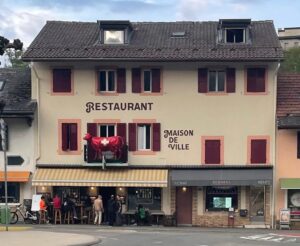
As you enter our village of St. Cergue, the Beef’n Cheese Restaurant is easy to locate off the round-about. A giant, red ceramic cow with a white cross symbolizing the Swiss flag, stands on the balcony. Locals stop for a beer at the cafe table out front.
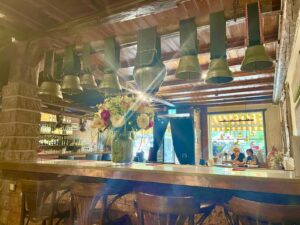 The interior of the restaurant is a bit kitsch, but charming with its spotted cow upholstered chairs, long wooden tables, a wall-sized hearth and local decor. Cow bells hang from wooden beams, antique skis stick out of giant milk jugs and ski posters from the 40’s decorate the walls.
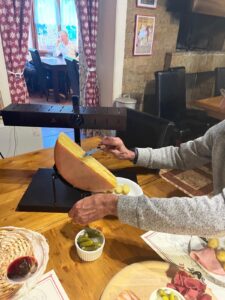 Our waitress brought us a half a wheel of cheese melting on the authentic raclette machine. Gerald tilted the wheel and scraped the top layer of cheese onto our plate of unpeeled potatoes. Raclette comes from the French word "racler," which means to scrape.
A basket filled with giant, marble-sized spuds are served with finger-sized vinegary cornichons and white cocktail onions. We ordered a side of charcuterie, a wooden cutting board laden with ham off the bone, jambon cru (dried beef) and dried saucisson à l’ail (garlic).
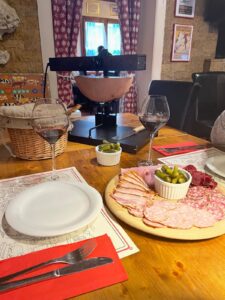 The “all you can eat” meal costs 31CH ($35) per person, which for a Swiss tourist town, is not unreasonably expensive. Traditionally, raclette is served with white wine, but our Frenchman ordered a Scramble Noir, a sublime red blend of five different grape varieties. Red or white wine, whatever, the French and Swiss agree never drink water with raclette. It will make your stomach bloat in indigestion!
Raclette was added to the 2024 World Championship Cheese Contest in Madison, Wisconsin.
”I personally love it," John Jaeggi, a contestant, said. "When it's cold, it's OK. But melted, oh my gosh, it's really good."
Though less well known in the US, I’ve yet to meet an American that didn’t enjoy raclette.
“Trader Joe’s stocks this cheese around the holidays,” my best friend, who moved back to the States, says, “I call and order ahead before it even hits the shelves, so I can throw raclette parties all winter.”
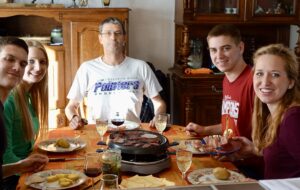 Whenever anyone visits us in Switzerland, we share this convivial meal and create memories for guests to take home.
No matter how many visitors we’ve served, we will never beat the new record!
In Martigny, Switzerland on April 5th, organizers of 'The Biggest Raclette Party in the World` brought together 4,893 people, including 361 raclette- scrapers, to claim the title.
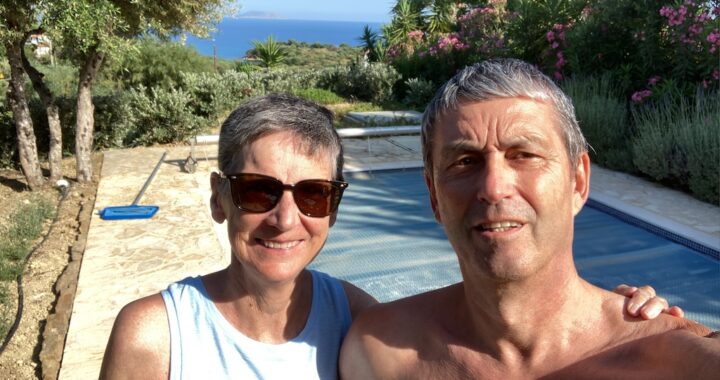
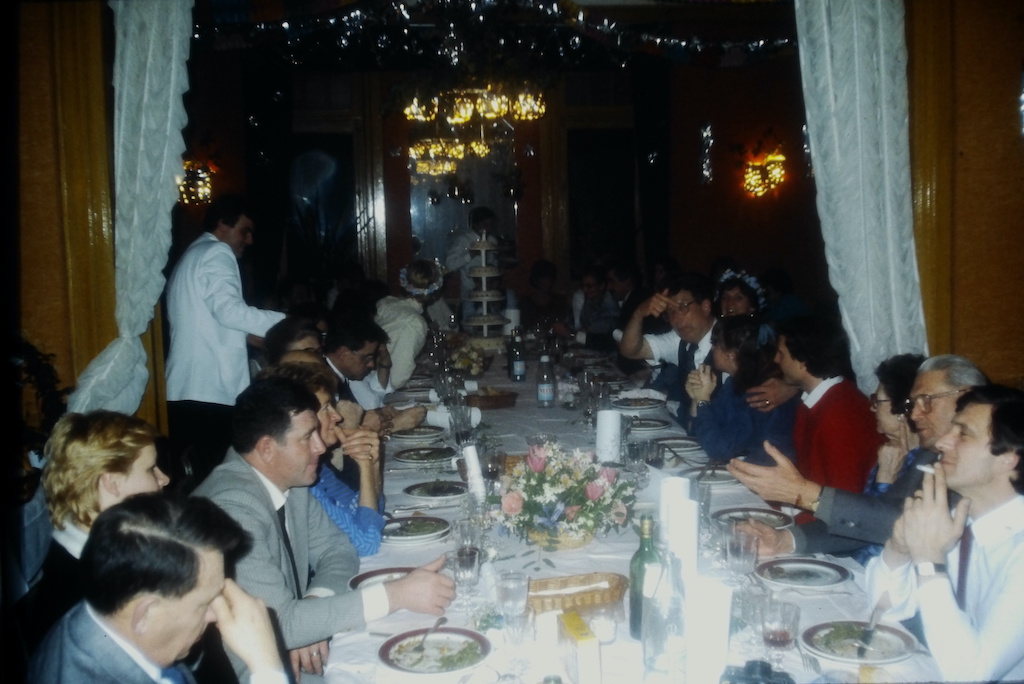
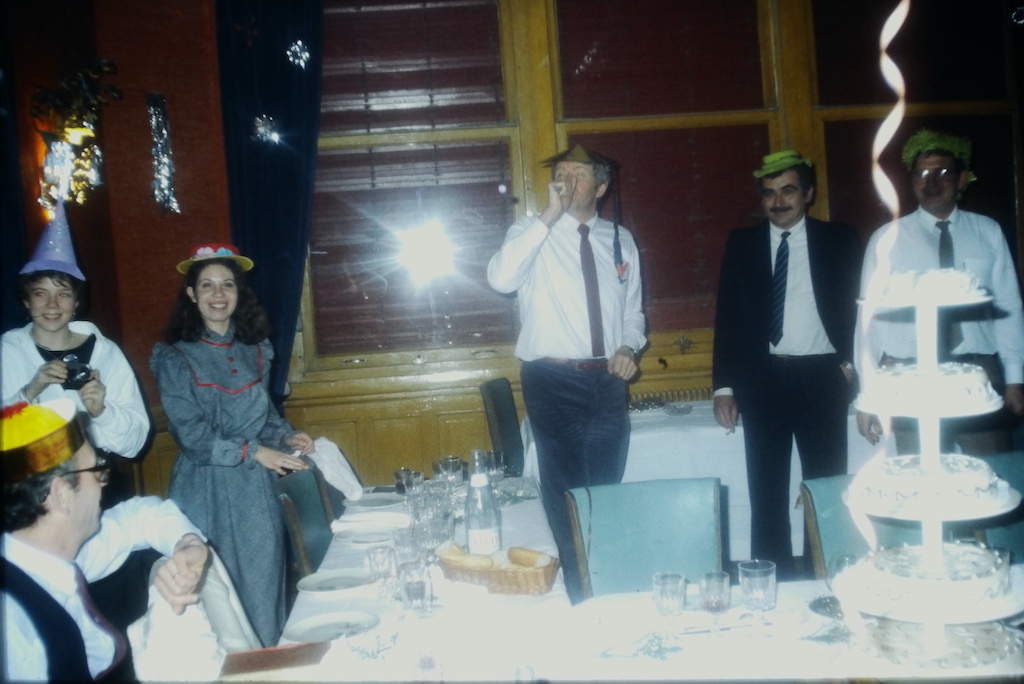
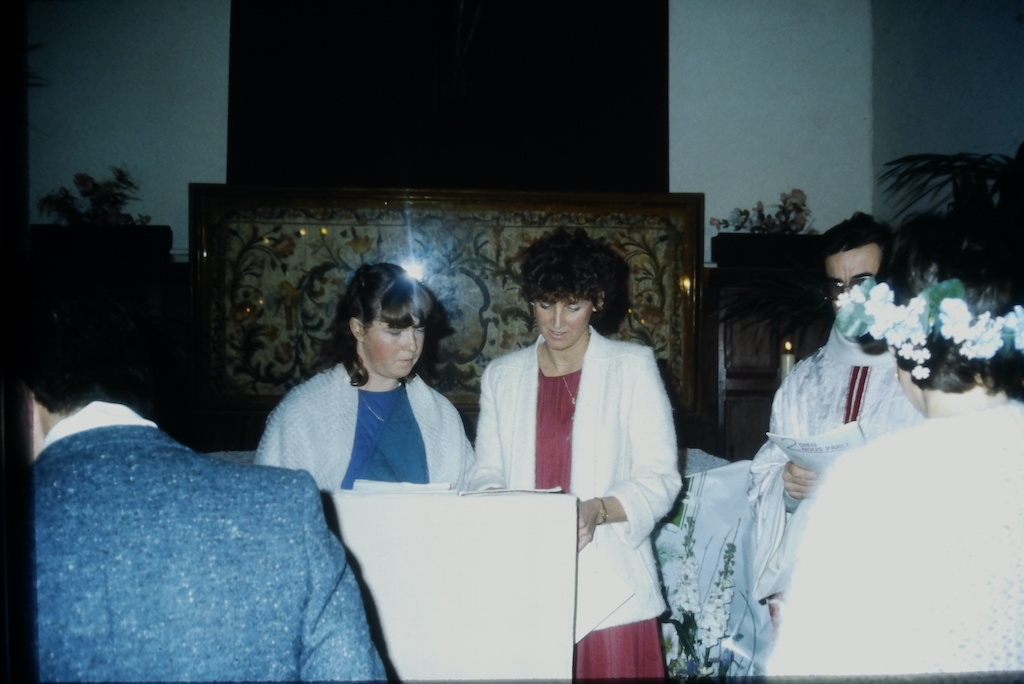
 Forty years ago on New Year’s Eve 1983, I said, “I do,” in a seventeenth century chapel in France, not far from the famous WWII Landing beaches. What are the odds of a small town girl from the cornfields of Illinois meeting a French boy raised by the sea in Normandy?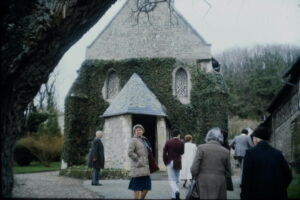
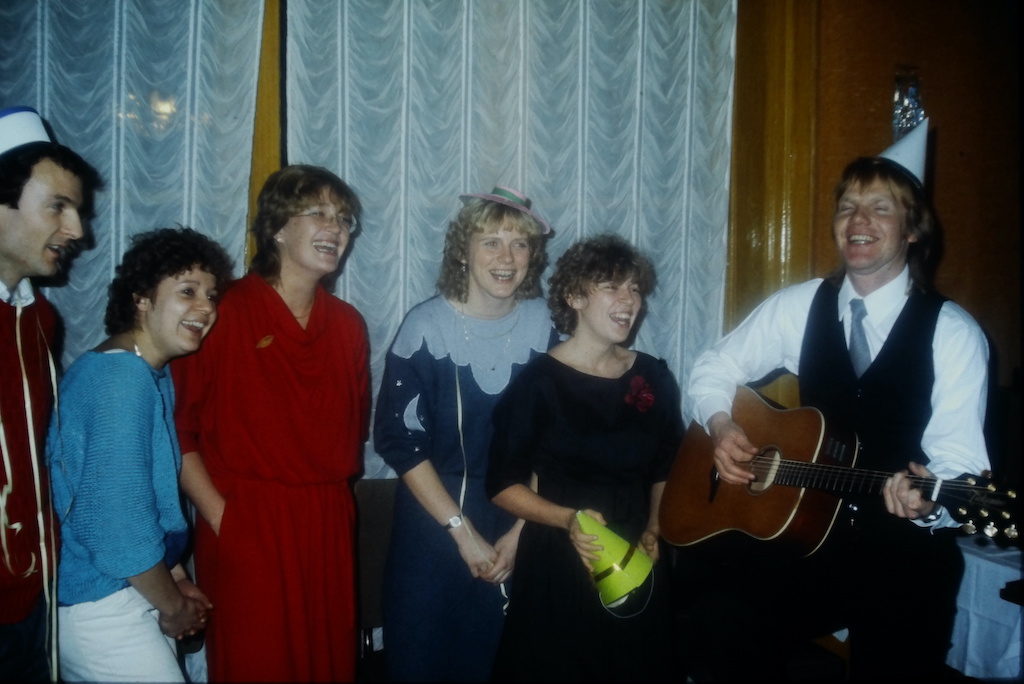
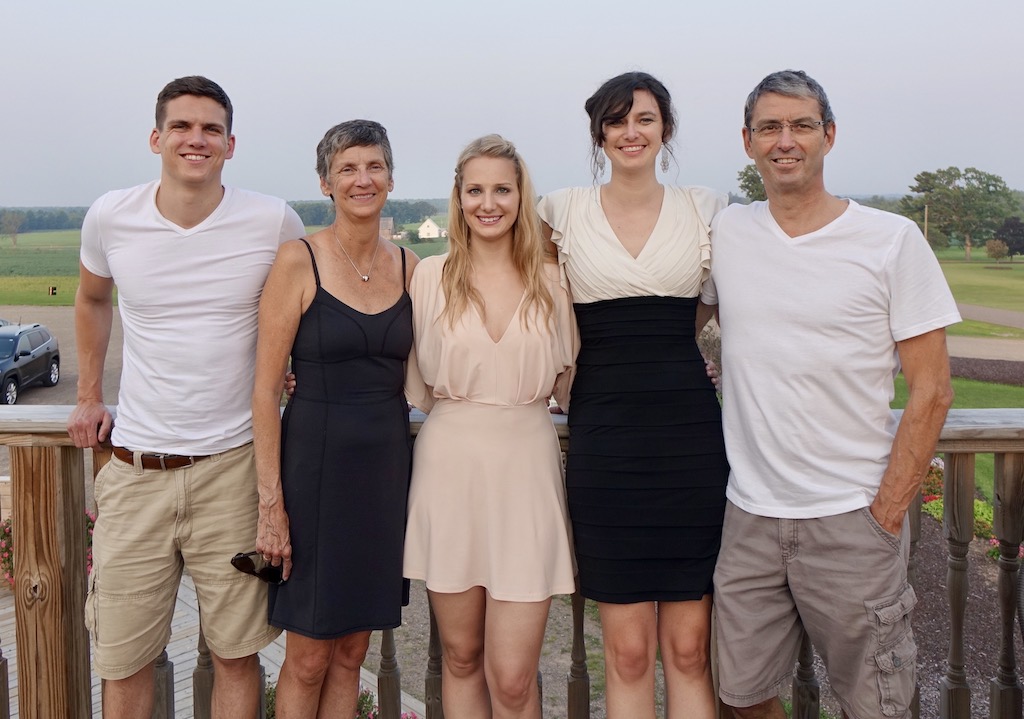
 But our rewards were great; none greater than watching a bright, adventuresome daughter and a clever, witty son grow strong on basketball courts across Switzerland and go onto become doctors.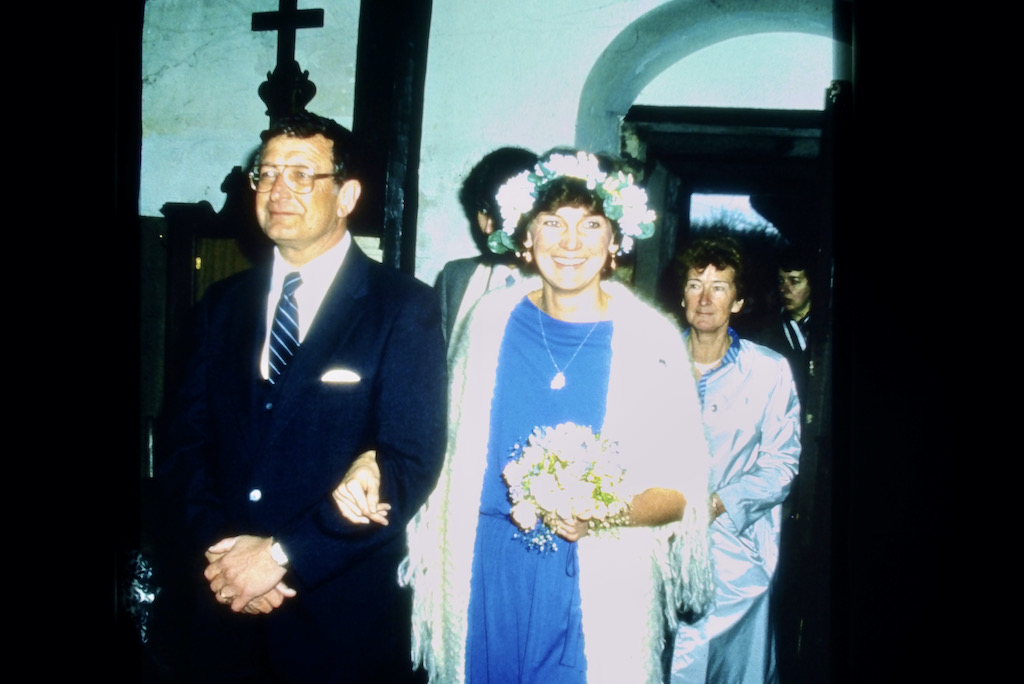

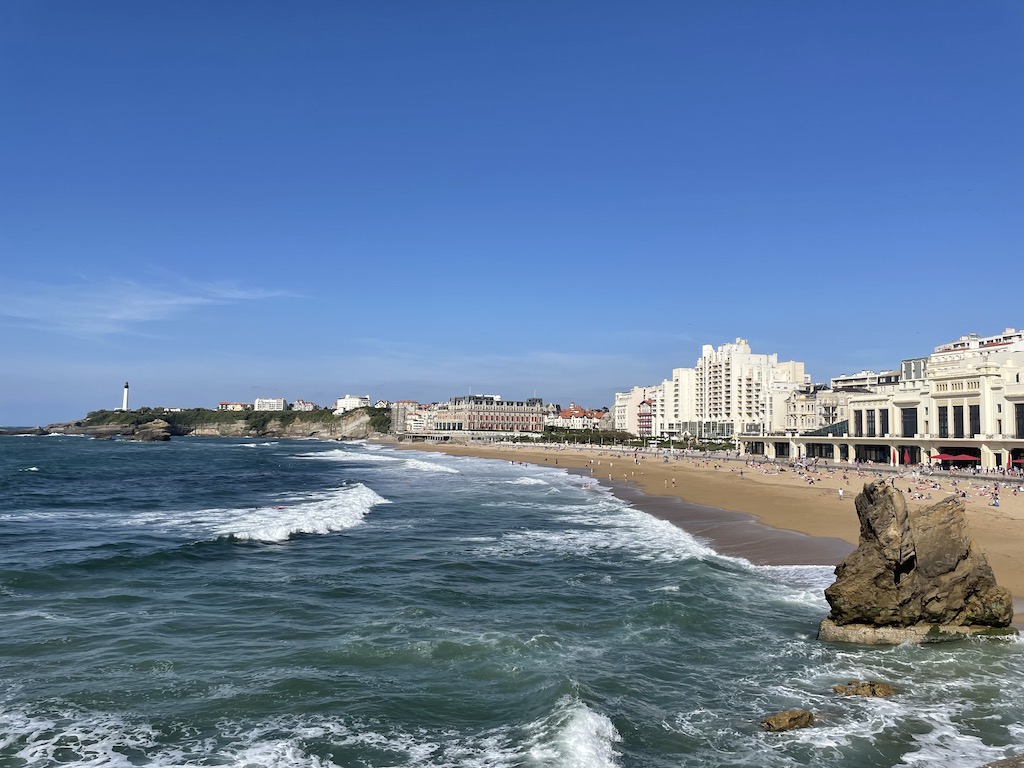
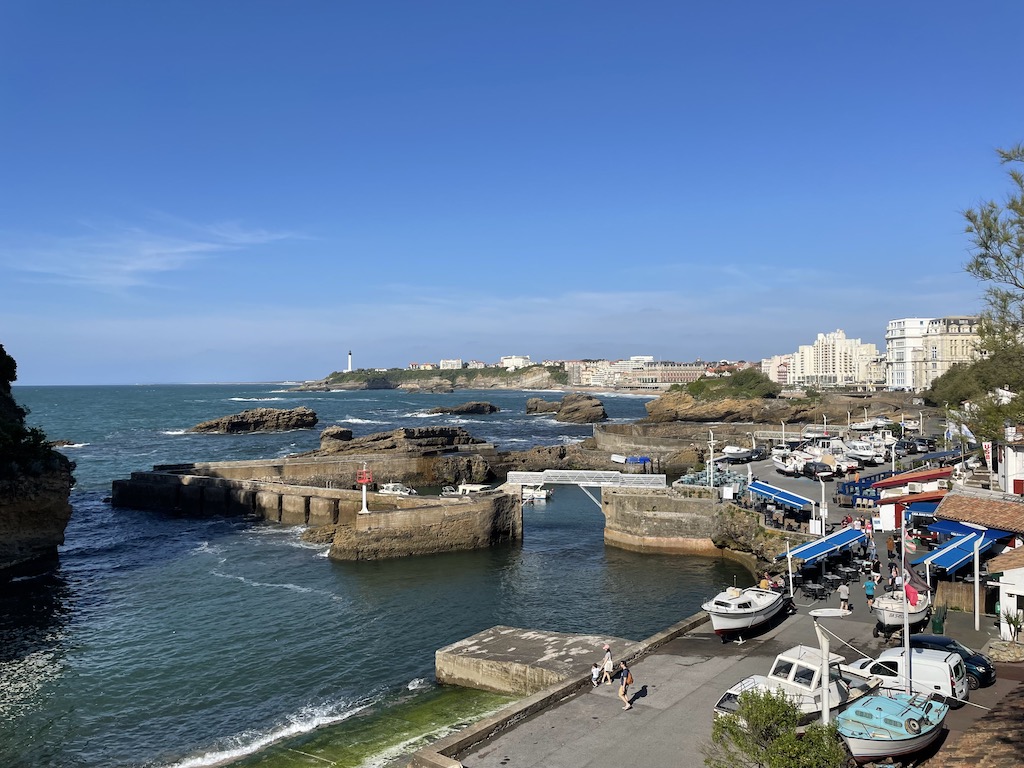
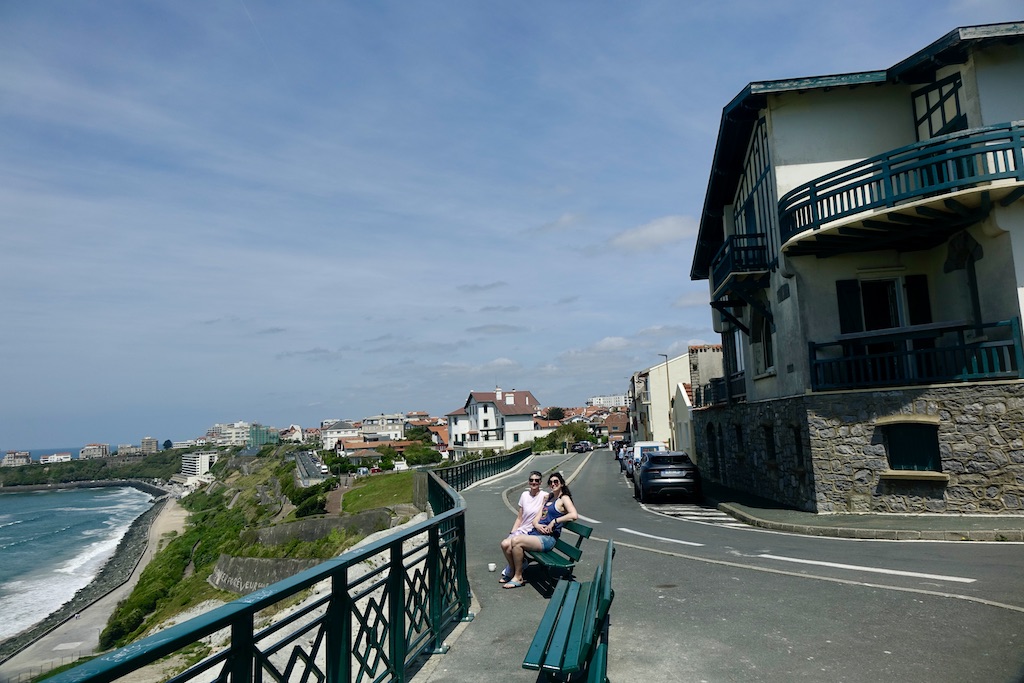
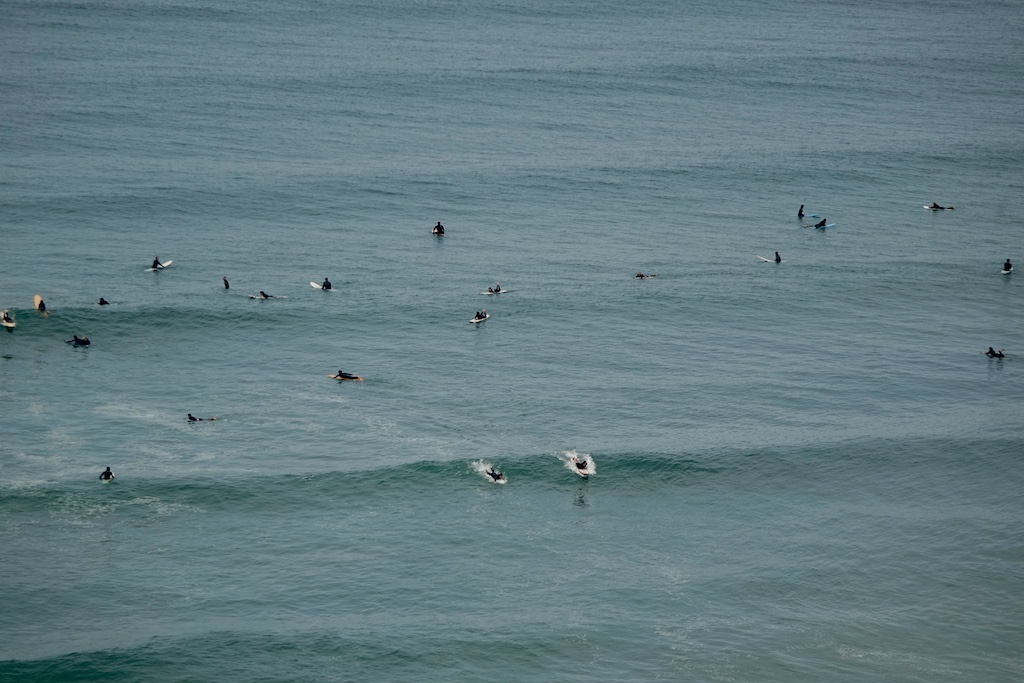
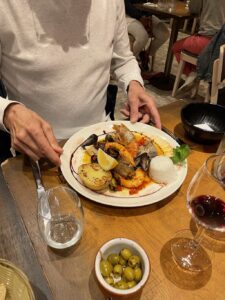 All the outdoor exercise whet our appetites, and there was no end to eateries along the coast and in the village.
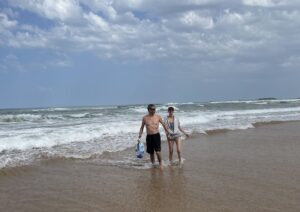

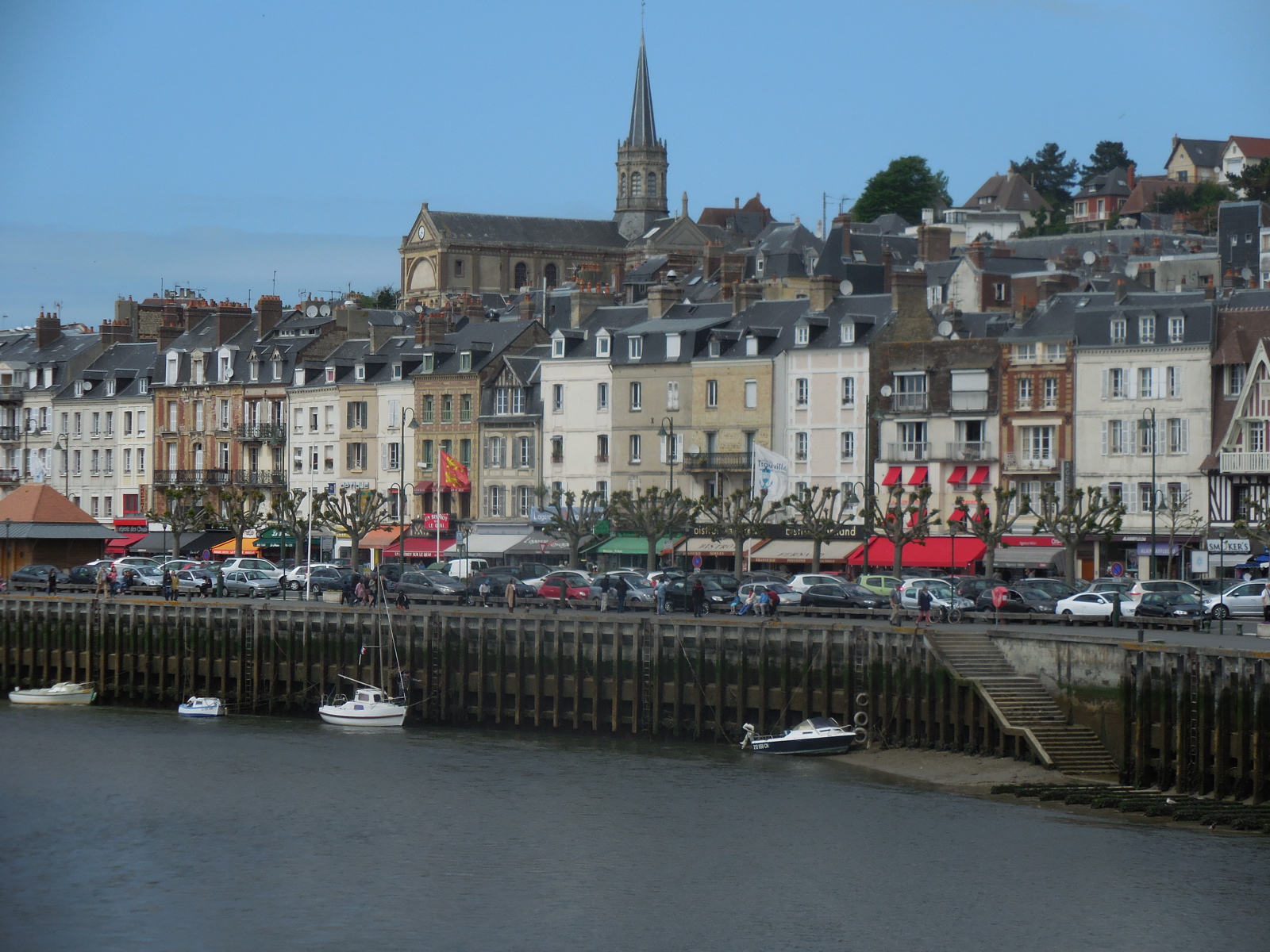
 Mamie’s house overlooks the quay of Trouville, France, a fishing village where inhabitants exist in rhythm with the tides and the ebb and flow of tourists flooding her Normandy beach.
 The windows on one side of the apartment face the colorful, lively, bright main street alongside the Touques River; the other side’s windows look onto the darker Rue des Ecores.
 Every nook and cranny remained filled with mementos triggering happy memories from Mamie’s giant dinner bell, to her French cartoon collection, to her lumpy, duvet covered beds. Artwork and photographs, showing the chronology of marriages, birthdays, baptisms, and graduations, covers every inch of wall space.