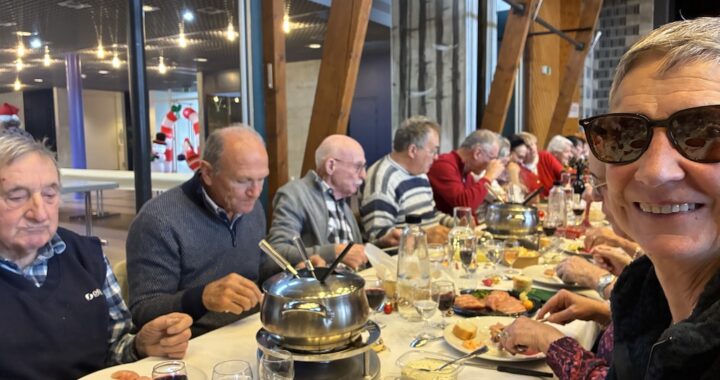
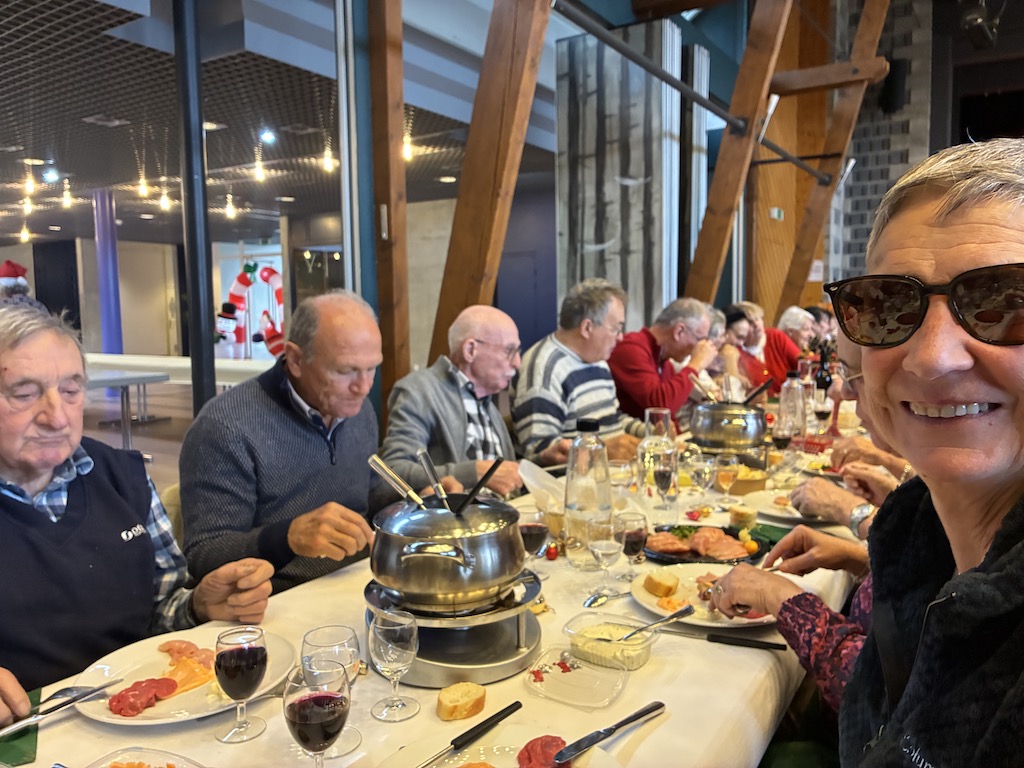
 In one of its most endearing traditions, Swiss villages celebrate their seniors by hosting the annual Christmas dinner for retirees. The “Repas de Noël” has become a beloved part of the holiday festivities.
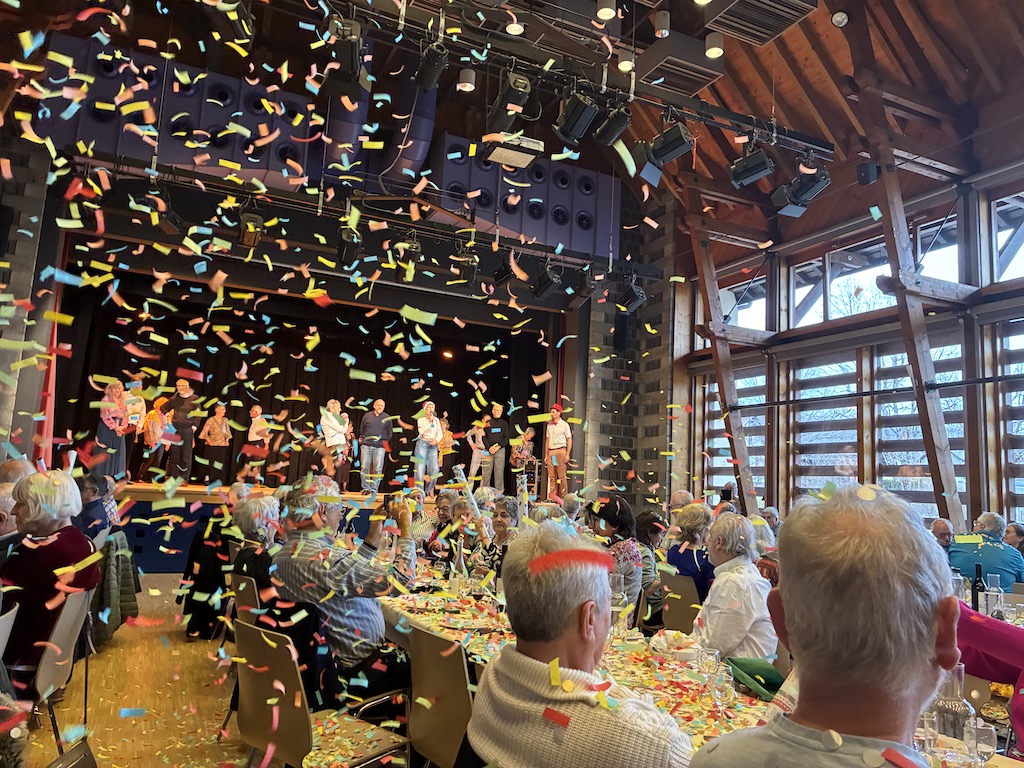
In St-Cergue, at the community center next to the grade school, a few hundred retirees gathered around long tables to share fondue. Not the classic cheese fondue one associates with Switzerland, instead Vaud, like all 26 Swiss cantons, has adopted a variation of the Chinese fondue to celebrate Christmas Eve.
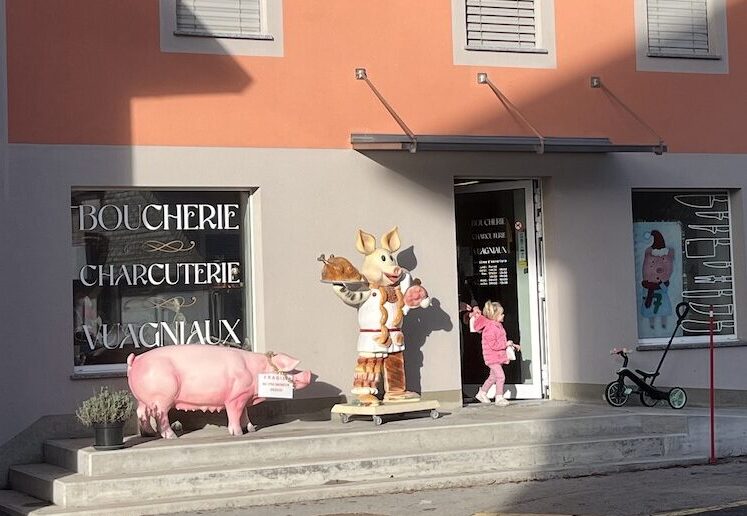 After individual starters of grated carrots and paté, we passed plates of veal, pork, chicken and beef provided by our local butcher. We skewered the thinly sliced meat on long forks and dipped them in slow-simmering broth in Chinese fondue pots. The meat was accompanied with rice and different sauces, ranging from curry-flavoured mayonnaise to zingy relishes.
For dessert, we savored the traditional Buche de Noel or yule log, a rolled sponge cake, with layers of buttercream. This extraordinary favorite had a local twist. It was crafted by a former pastry chef who perfected his art in prestigious French restaurants. To our great fortune Julien Maslanka relocated to Switzerland where he opened four different patisseries including Le Comptoir du Vieux Chateau à St-Cergue on our main street.
 In a serendipitous stroke of luck, I sat next to an interesting jazz musician and a friendly, outgoing woman, who gave me all the contacts and links to activities for citizens in the community. When she saw me scribbling in my pocket notebook, I explained that I wrote a blog sharing European experiences.
“Oh, I have to introduce you to our American writer!” she said clapping her hands. Then she led me to a table to introduce me to a short, white-haired fellow with twinkly blue eyes who had lived in Switzerland for fifty-five years.
Then after the municipal employees took a bow on stage, the seniors gave a hearty applause in appreciation for their public services, especially for their swift snow plowing of our streets.
A senior dance group performed a polka, school children sang holiday songs, and then we joined in singing along to a French translation of Gloria in Excelsis Deo.
 The only shadow on the festivities, was finding out that we lost our petition to save our local post office, which closes in 2026.
The convivial atmosphere resumed, when the master of ceremony invited us to pop open the tubes of confetti in a jovial grand finale.
Wherever you live dear friends and readers, however you celebrate the season, I wish you peace, health and hope for 2026.
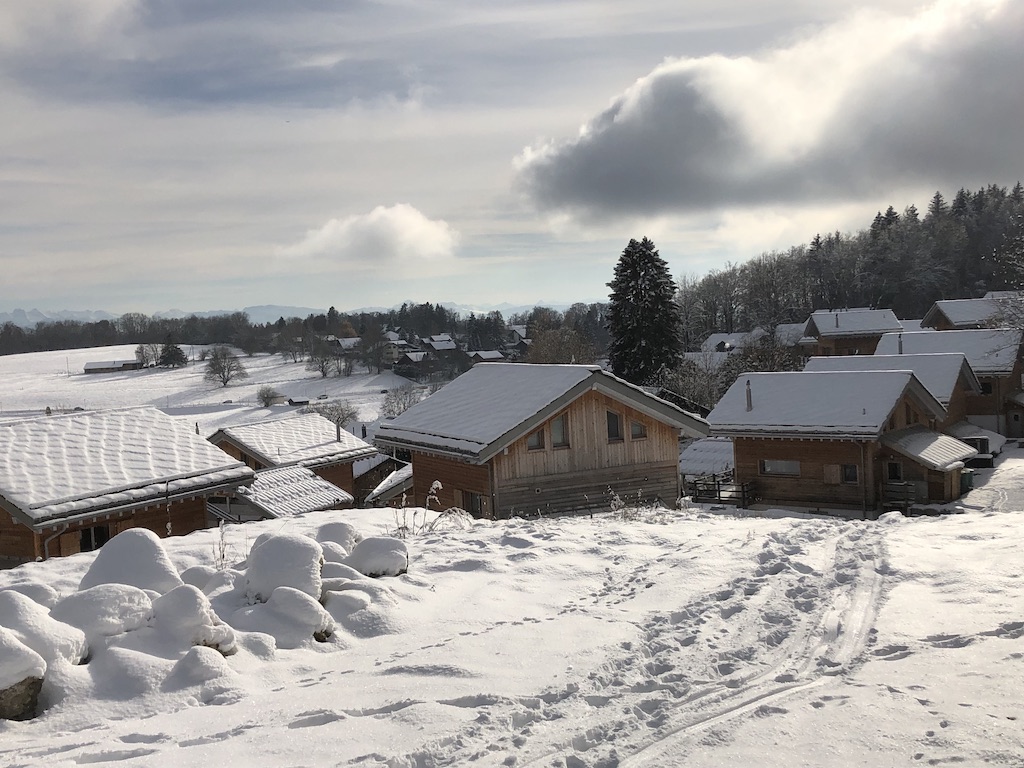



 Natives living in the French Savoie region or in the Swiss Alps will argue ’til the cows come home over who first invented raclette, but everyone who tries this traditional cheese/potato dish agrees it’s great. Raclette is thought to be at least 400 years old and remains popular today.
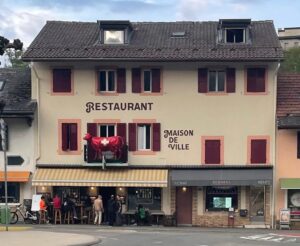 On every visit home to Switzerland, my adult kids request raclette. Instead of the traditional equipment meant for the half cheese, we use an electric grill with individual serving trays and raclette cut into portions. Since moving to the mountains, we decided to try the authentic dish.
 The interior of the restaurant is a bit kitsch, but charming with its spotted cow upholstered chairs, long wooden tables, a wall-sized hearth and local decor. Cow bells hang from wooden beams, antique skis stick out of giant milk jugs and ski posters from the 40’s decorate the walls.
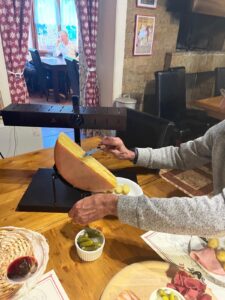 Our waitress brought us a half a wheel of cheese melting on the authentic raclette machine. Gerald tilted the wheel and scraped the top layer of cheese onto our plate of unpeeled potatoes. Raclette comes from the French word "racler," which means to scrape.
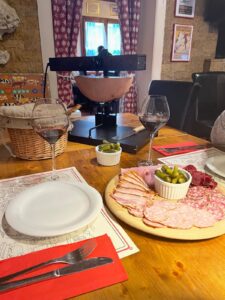 The “all you can eat” meal costs 31CH ($35) per person, which for a Swiss tourist town, is not unreasonably expensive. Traditionally, raclette is served with white wine, but our Frenchman ordered a Scramble Noir, a sublime red blend of five different grape varieties. Red or white wine, whatever, the French and Swiss agree never drink water with raclette. It will make your stomach bloat in indigestion!
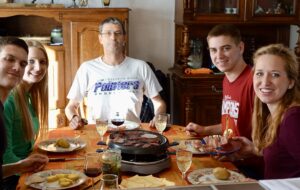 Whenever anyone visits us in Switzerland, we share this convivial meal and create memories for guests to take home.
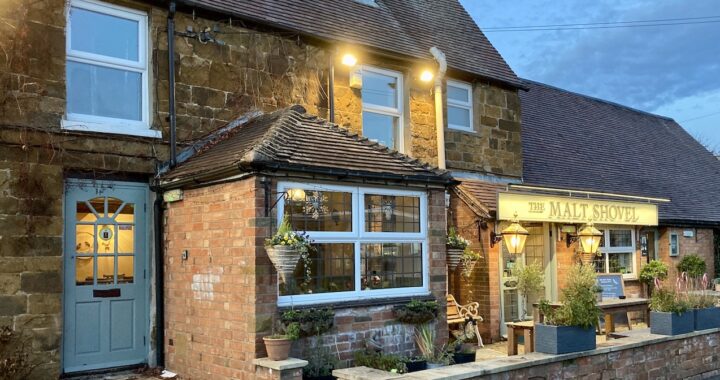
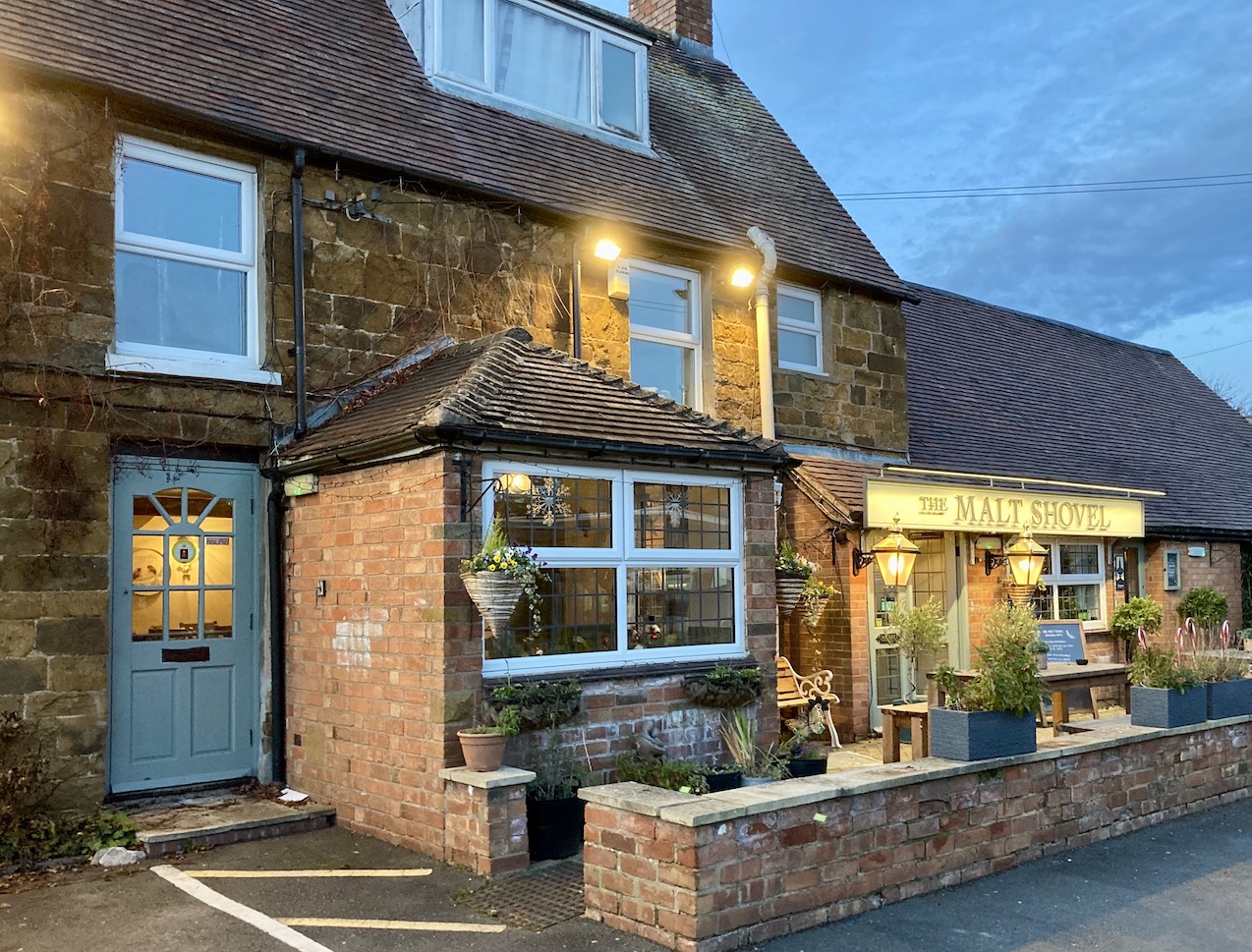
 On a recent trip to England, our son took us to visit historic Warwick, an enclosed city. The highlight of the afternoon for me was going for a proper English cream tea at the
  looking like they stepped out of the back kitchen where they baked homemade cakes and scones. Patrons spilled out of the ground floor tea rooms, so our waitress led us up a rickety, winding, ancient staircase that made me feel like I stepped into the old nursery rhyme.
 We squeezed around a low table designed for short-statured folks of earlier times. We folded our long legs; our knees knocked into the furniture.

 Awe-struck by the sight of the colorful, long house boats, I peppered the people floating past with questions. Friendly folks answered all of my silly inquiries.
 The average 7 foot by 50 foot narrow boat has about 350 square feet of space for a bedroom, kitchen, living area, toilet, and cockpit. A small refrigerator, stove, cupboards and a narrow table squeezed on one side of the boat. Most have electric heat or a wood burning stove.
 “Me ’n dad sleep on the couch that folds out into a bed right in front the telly,” he added. “Granddad sleeps in the bow and this here is the toilet and shower.”
 Much like the English cottages in the village, each boat on the canal has its own name and unique identity with eclectic collections of artifacts, various potted plants and flower boxes decorating their colorful painted exteriors with names like Athena, Beulah Mae, Lady Anne, Jemima, Tubby Bunny, Rollin Along, Bubbling Billy, End and Beginning
 collision. Bow, or fore end. Deck. Fore and aft.