 Feeling old, achy and foggy brained? Experts say learning a new skill is recommended for our rusty bodies and aging brains. For me, relearning old skills is equally valuable. It is never more important than after suffering a traumatic brain injury (TBI) which can effect spatial awareness, balance, proprioception, executive function, listening, speaking and emotional stability.
Like so many people after injury, illness and accidents, I was forced to reframe my life. Once I retired from playing pro ball, I dreamed would learn to scuba dive, alpine ski and surf. I’d run marathons and bike mountains.
Well, that hasn’t been an option for decades.
So when my chiropractor in Geneva (Switzerland) suggested that I try “rope flow” to help strengthen my core, align my back, retrain my brain to better coordinate both hemispheres and work my lazy left side, I was all ears.
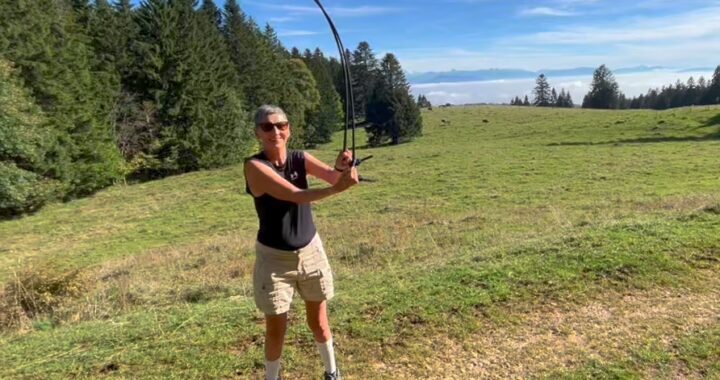
In Dr. G’s office, I watched in awe as he demonstrated swinging a heavy rope around his body.
“Jump rope sans the jump for injured adults!” I said.
“Actually, a heavier marine rope like sailors use works better,” Dr. G explained. “The sailboat boutique across Lake Geneva in Nyon carries all different sizes.”
Then he went onto explain the history.
“David Weck, an American, created rope flow to help people recover rotational movement and to reinforce how we walk, run and move. Rope wave, quickly adopted by elite athletes and movement coaches, has become a valuable training tool for improving mobility symmetry, coordination and striking power.”
At first glance, rope wave looks easy. It’s not. It involves swinging a rope around your body in coordinated patterns like figure-eights, while shifting your weight and rotating your spine, shoulders, and hips with rhythm and control.
I was delighted to discover a game that I can play without getting hurt as long as I don’t whip myself on the back of my legs or lips.
If you perform rope flow properly, the rapid rhythm builds a smooth, effortless coordination across both sides of the body. Rope flow is symmetrical. You rotate both left and right, retraining your non-dominant side and this helps smooth out imbalances.

Rope flow is ingenious for its affordability, convenience, practicality and simplicity. This portable habit helps rewire the way I relate to my body. It is probably even more valuable for people like me who suffer from the effects of a stroke or TBI where message systems in the brain are damaged and to weakness on one side of the body.
After my time at the Functional Neurology Clinic in Minnesota, I learned how neuroplasticity allows the brain repair itself. After my brain surgery, messages did not get to my left side. Rope flow trains the brain and the body simultaneously and I would recommend it for anyone recovering from a TBI.
I am learning to accept my limitations, no more hooping, running, jumping. No kayaking, canoeing, golf, tennis, pickle ball or any asymmetric sport requiring lateral movement. For me, traveling in cars and planes or even sitting must be minimized.
So I was encouraged to finally find a sport I can perform with my broken body; it’s even good for me.
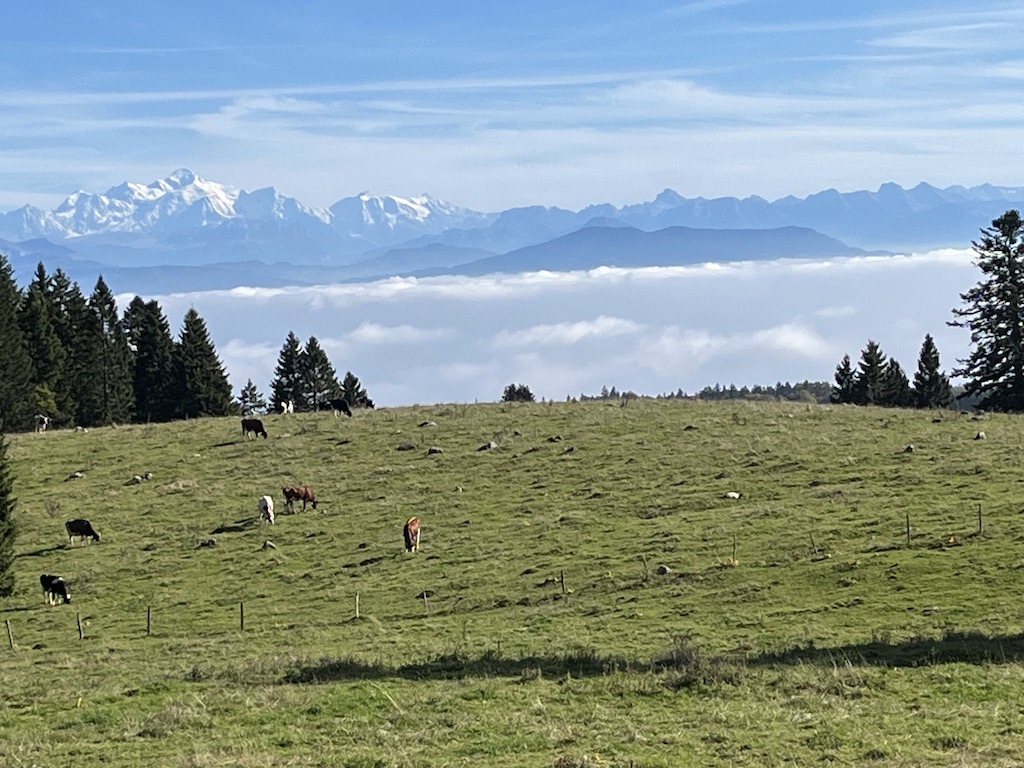
Granted I look a bit crazy, but who cares? I swing my rope, whistle like my dad used to, hang out with cows up in mountain meadows and admire the panoramic Alps.
It is highly unlikely that you can find an instructor in your area, but David Weck, Tim Shieff and other experts offer detailed videos breaking down movement into steps.
So pick up a rope, put on your favorite song and swivel those hips.
Yahoo! Clear the way! Look out! I’ll lasso you…my first dream was to be a cowgirl!

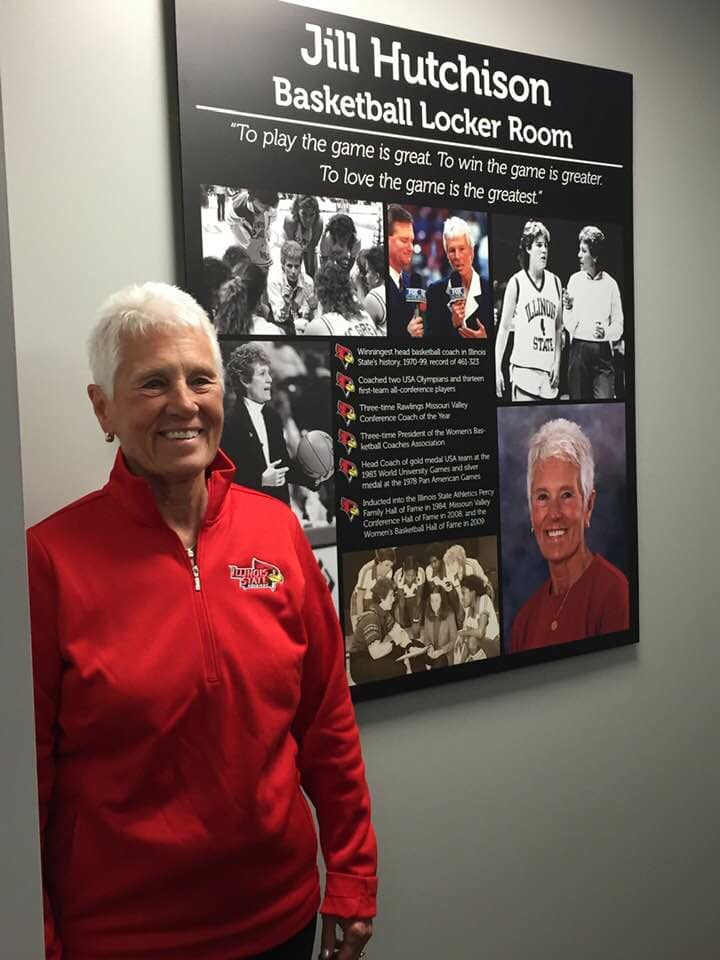
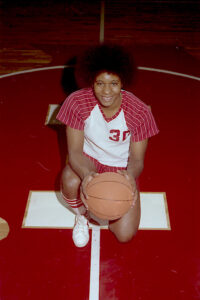
 Half a century ago, no one paid any attention when my friends and I played basketball. We got kicked off the court, but shoved our way back in the game, clearing the lane for Caitlin Clark, Angel Reese, Paige Bueckers, Juju Watkins and the contemporary stars of today.
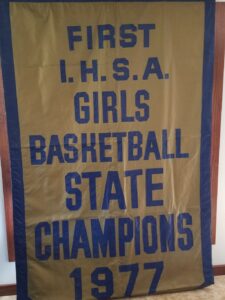 In the sixties, in my own second grade story I wrote about the lockers playing a basketball game against the waste baskets during recess. Back then, I imagined inanimate objects in school had a greater chance of competing in the game than girls. Yet, like my sports loving peers, we shot hoops anyway creating a path so new that no one envisioned its existence.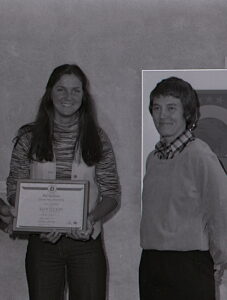
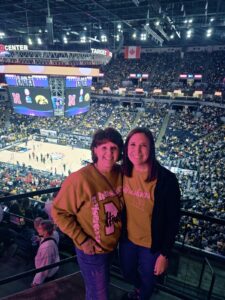
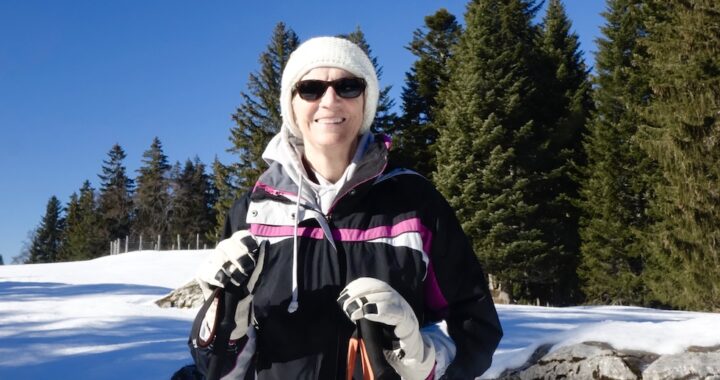
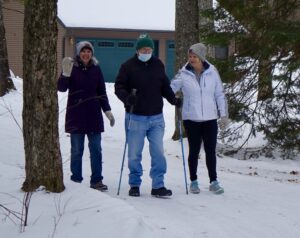
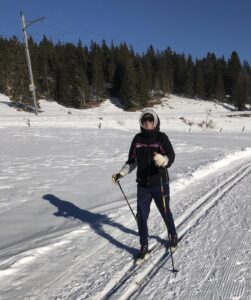 After countless hours of medical treatments, therapy and hard work, I cross-country skied again. I fell in love with the sport, inspired by my Scandinavians ancestors, who invented cross-country skiing centuries ago to circulate across mountains in winter. It reminds me of my forefathers born on the fjords in Northern Norway where reindeer run wild and Laplanders reign, where nature and its preservation is a God given right and obligation.
 puff around each bend. I remove my skis when I can non longer duck waddle up the steep incline. My fear of falling defeats the fun of gliding downhill. I also take my skiis off to walk down any incline. At sharp bends at the end of slopes, I collapse sideways halfway down the slope. Better to fall gently, but awkwardly on my own terms, then crashing out of control.
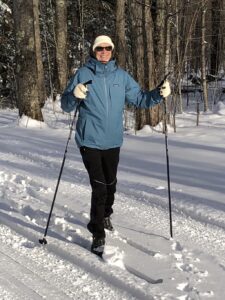 I can still remember the first time I went skiing with a teammate on the golf course of Illinois State University. I’ll never forget the wrath of my coach when I came to practice with a twisted knee after tumbling down the slope on the 9th hole.
 And I feel lucky to be alive.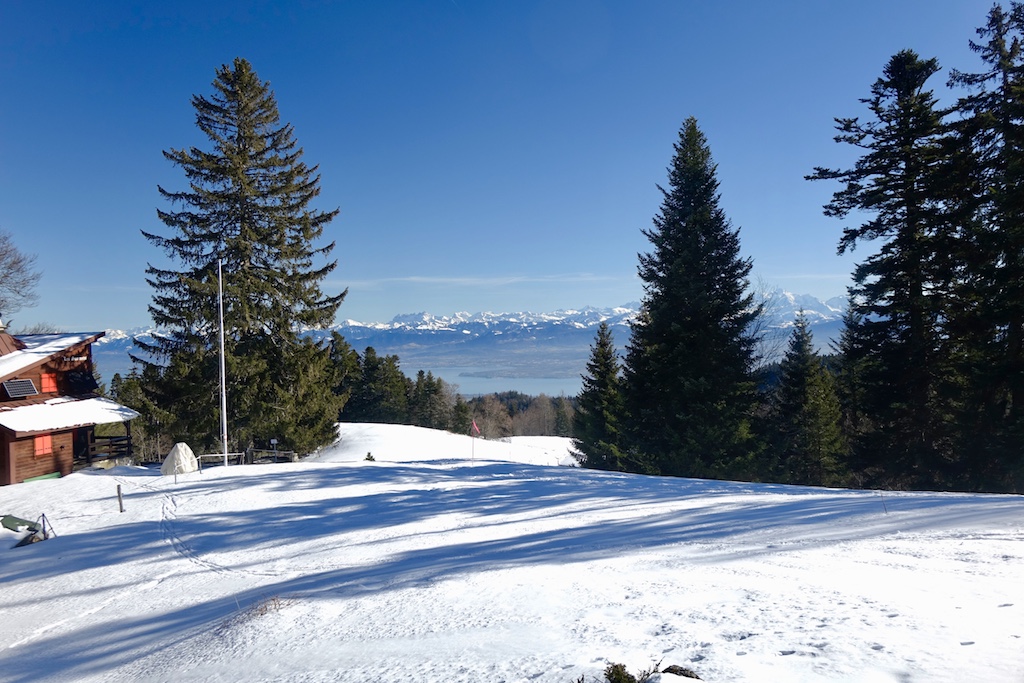
 Remember when our mothers used to throw us out of the house commanding, “Go out and play!”: we spent the day climbing trees, making mud pies and inventing games.” Well, they were right all along. We grew strong, healthy and resilient.
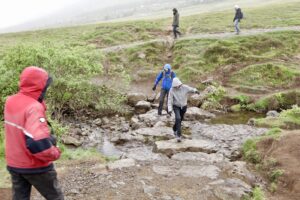 Not only does physical activity create new neurons, but exercise also strengthens the heart and blood vessels that supply oxygen to the brain helping you feel mentally alert.
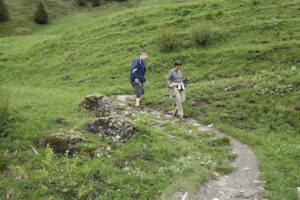 Not everyone, like the Swiss, enjoy the privilege of living in a mountainous and lake regions. Nor can everyone be located on coastal sea areas.
 National and state parks and nature reserves abound across America. Even smaller communities boast of green space, like Sterling, Illinois where I grew up, which has 20 different parks, including a favorite Sinnissippi.
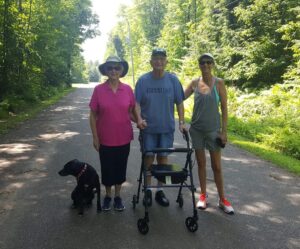
 Those of us who can - must keep moving. My mom maintains her routine by taking steps for friends who no longer can. My dad keeps trudging along with his walker by setting daily goals to walk to the corner. And through diligent practice, I learned to regain balance, step forward without stumbling and swing my immobile left arm again after brain injury.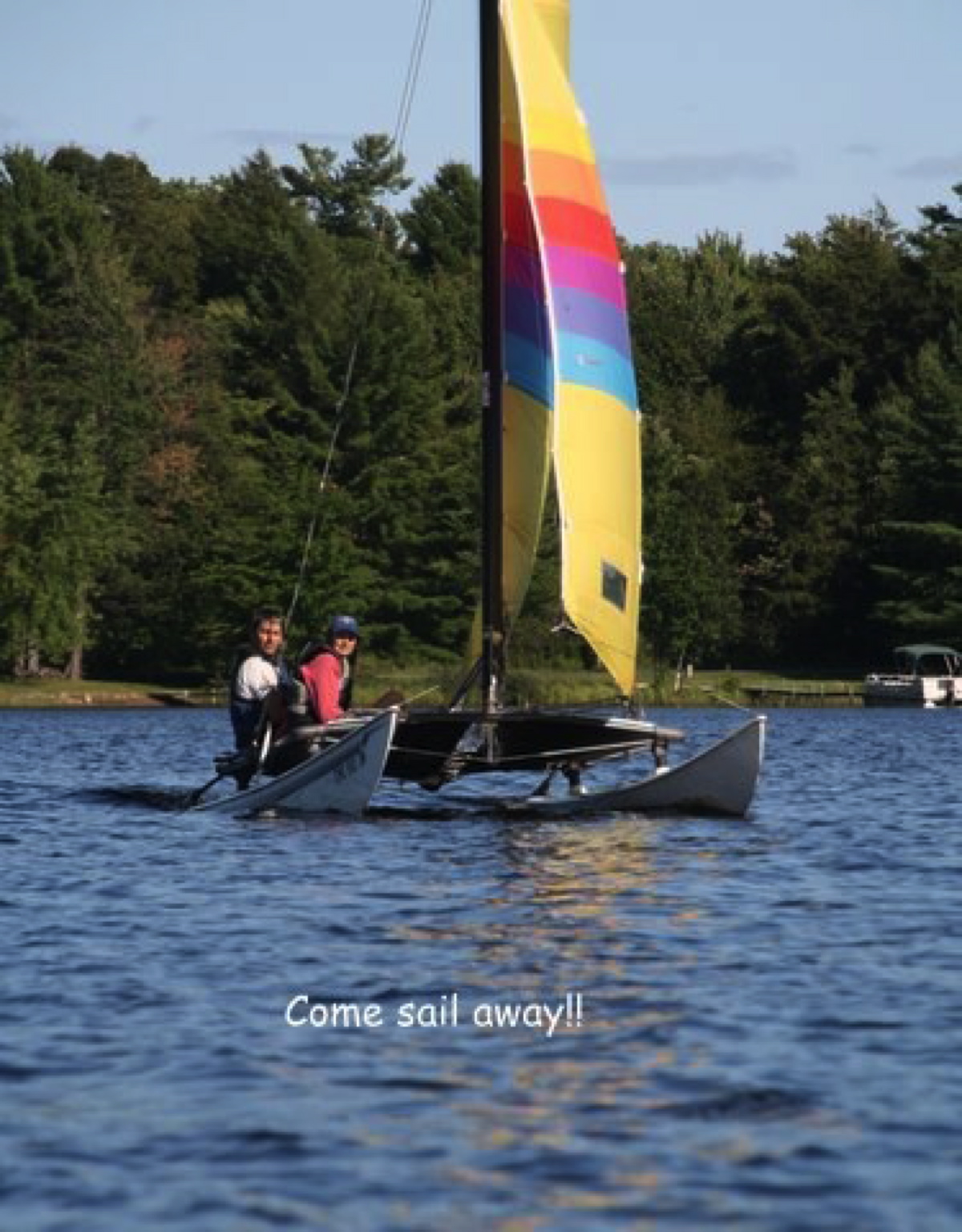
 As a Pisces, I have always been drawn to water for solace and inspiration, but it wasn’t until I read Blue Minds, Wallace J. Nichols’ bestseller that I realized research proves water contains therapeutic powers. I joke that in my next life I will return as a fish, so I could swim pain free no longer confined in an upright human body with an injured spine.