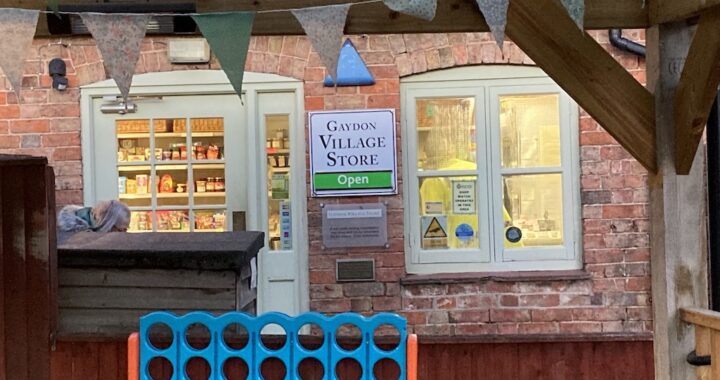
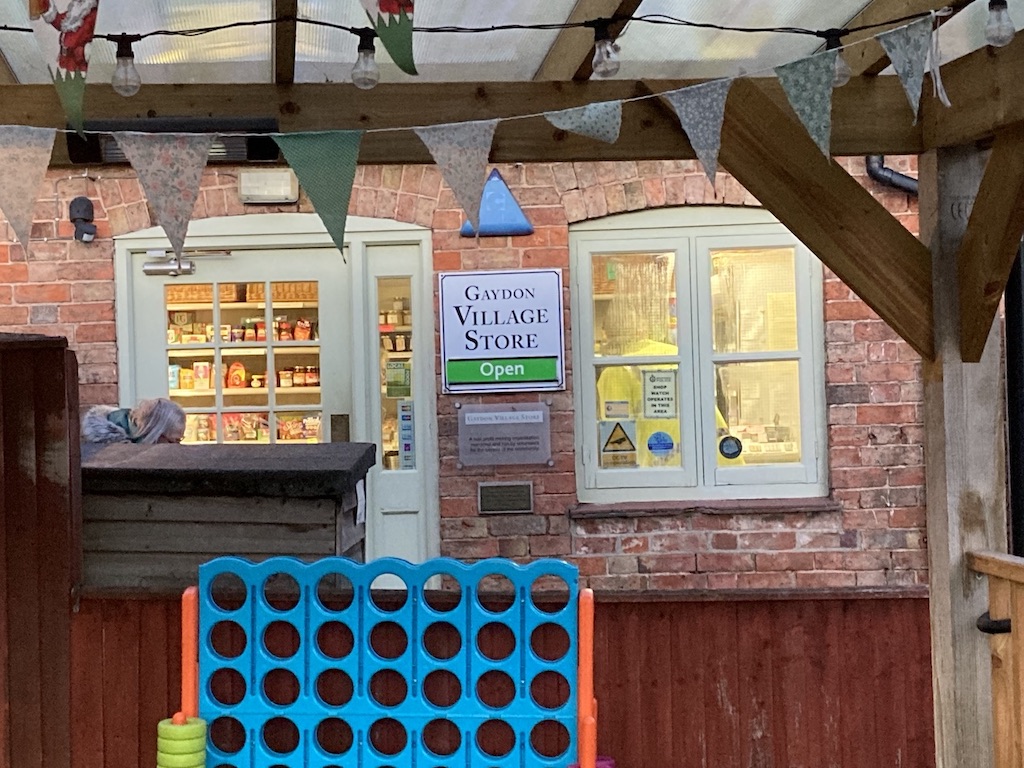
 In a nondescript, brick building across from the Malt Shovel Pub, Gaydon’s Village Shop opened in May 2010 as a non-profit co-op where volunteers provide locals with staples and simple necessities that households might run out of on a weekend.
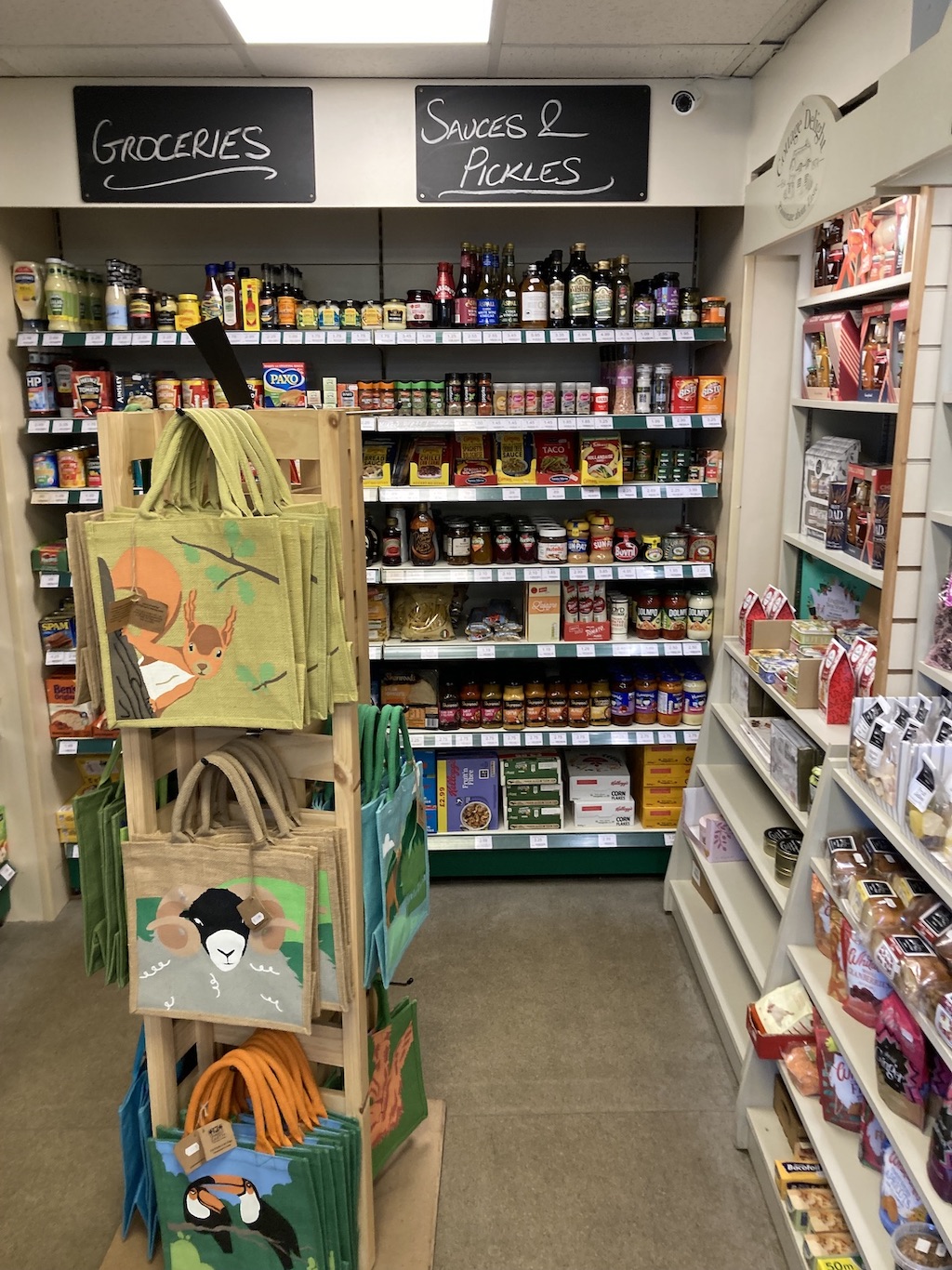
The shop’s shelves were stacked with a hodgepodge of essential toiletries like shampoo, soap, deodorant, toilet paper and toothpaste, as well as milk, eggs, butter and cheese and a limited selection of fruits and vegetables, canned goods, pasta and cereals.
Surprisingly, the Village Shop also sold fresh pastries and bread delivered daily from a bakery in the hamlet just down the road.
Beverages, such as bottled water, alcohol, beer, wine, cider, juice and sodas are also available for purchase.
 I perused the shelves with childlike wonder. I picked up a chunk of cheddar, waved it at the woman behind the counter and asked, “Do you have grated cheese?”
“No” the lady at the till told me, “but I have grater at home that you can borrow.” Then, she picked up the phone and called her daughter and asked her bring it over.
Minutes later, the shop doorbell jingled and her daughter dashed in and handed me the family’s cheese grater.
Meanwhile, as we were talking, a middle aged man walked in with his father, who hobbled on an artificial leg from the knee down.
“Oh dear, what happened?”
“Felt my knee cap slip up me thigh when I fell,” the elder man told the woman at the cash register. “And that was my good leg!”
A spontaneous discussion between strangers unfolded as can only happen in these quaint, little communities where the time seemed to standstill.
Another shopper asked me, “Where you from?”
“Illinois,” I answered in my midwestern nasal twang. My very unBritish inflection was a dead giveaway.
“I’m from Normandy,” Gerald added in English with a heavy French accent.
 “Normandy!” the elder gentleman exclaimed. “Lost my great uncle over there during The Landing. He was shot down parachuting over Ranville (towards Caen).”
“Me and dad were paratroopers,” the man’s son explained. “I parachuted in the WWII reenactment in Arnhem, Holland.”
Then the friendly fellow went on to recount his tales traveling to US and being in whiskey bar in Florida.
“We’ve just been to the pub,” the jovial, older man said, “Had a wee pint or two or three!”
Another young lady in the shop overheard us talking. She peeked into our baby buggy and asked, “Oooh, is that Nic and Larissa’s baby?”
“Yes,” I said beaming, “we are the proud grandparents.”
“I’m their neighbor,” she said.
“Glad to meet you!” I said. “I’ve heard so many nice things about you from our son and daughter-in-law; I feel like I know you already.”
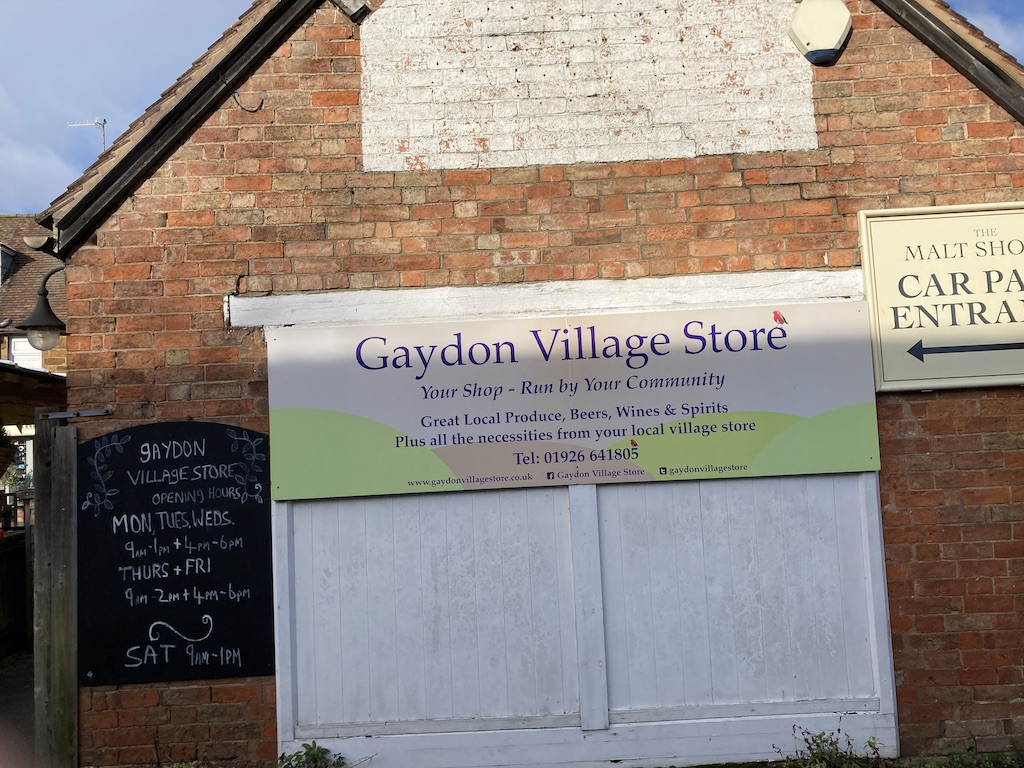 If the Malt Shovel Pub is the heart of Gaydon, the Village Shop is its’ soul. Where else in the world does the pace slow enough to chat with locals, so trusting, that they’ll lend their own kitchen appliances to complete strangers?
Everyone feels at home at the Village Shop.
Even the “foreigners.”

