 Though I lived in a gym, not a barn, I grew up in a farm community and have always shared a country kid’s appreciation for the livestock and land. I was raised in Sterling, Illinois, a farm and mill town, nestled in fertile soil on the banks of the Rock River. Today, I live in the mountains of my adopted country, Switzerland. I feel a connection to home by living close to cows in the summer months.
Livestock come up to graze in our rich, green alpine pastures in what I dubbed as cow’s “summer camp.” The locals welcome the cows, sheep, herders and cheese makers who reside here between La Cure and St Cergue from May through September.
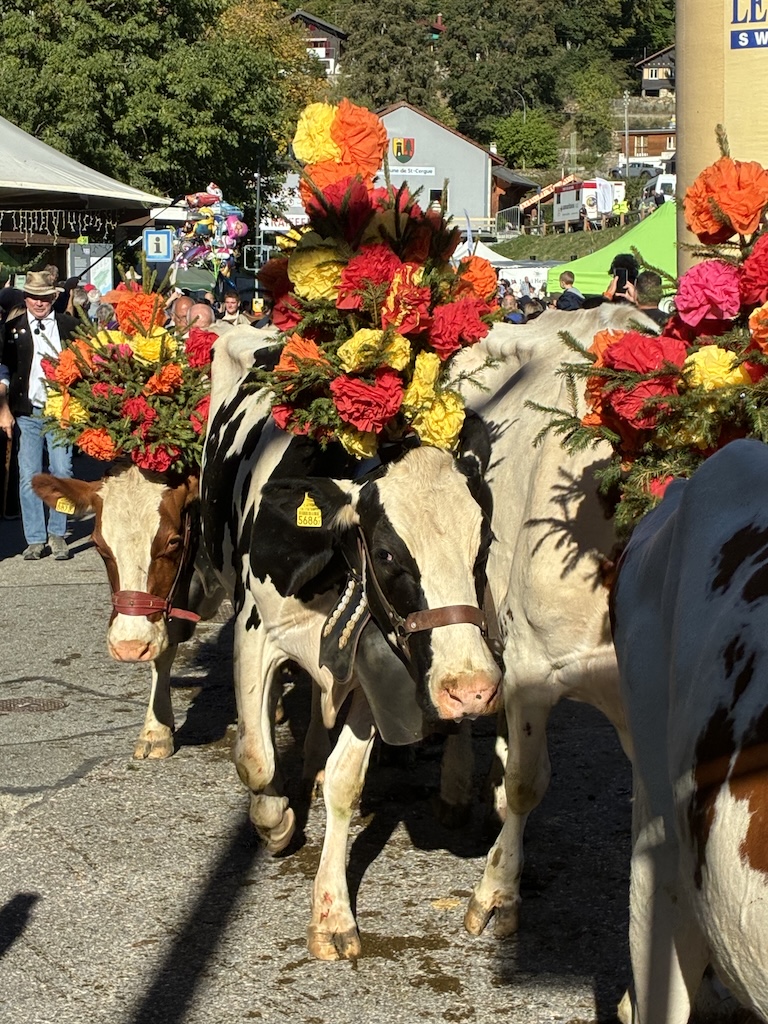 In our area, the pageantry of cows with flowered head dress began in 1988 when Jean Ravel inaugurated the 20th anniversary of his first alpage season by decorating his herd with beautiful bouquets for their hike up the mountains from Trelex up to Borsattaz.
Some alpine villages celebrate the inalp when the cows hike up, but my village, St. Cergue, is known for the désalpe when the cows parade back down. Our désalpe, the largest in Switzerland, draws spectators from across France, Switzerland and other parts of the world.
The last Saturday of September, tourist buses arrive from all over. Our little two-car, red train, transporting people up and down the mountain to and from Nyon on Lake Geneva, swells with day trippers.
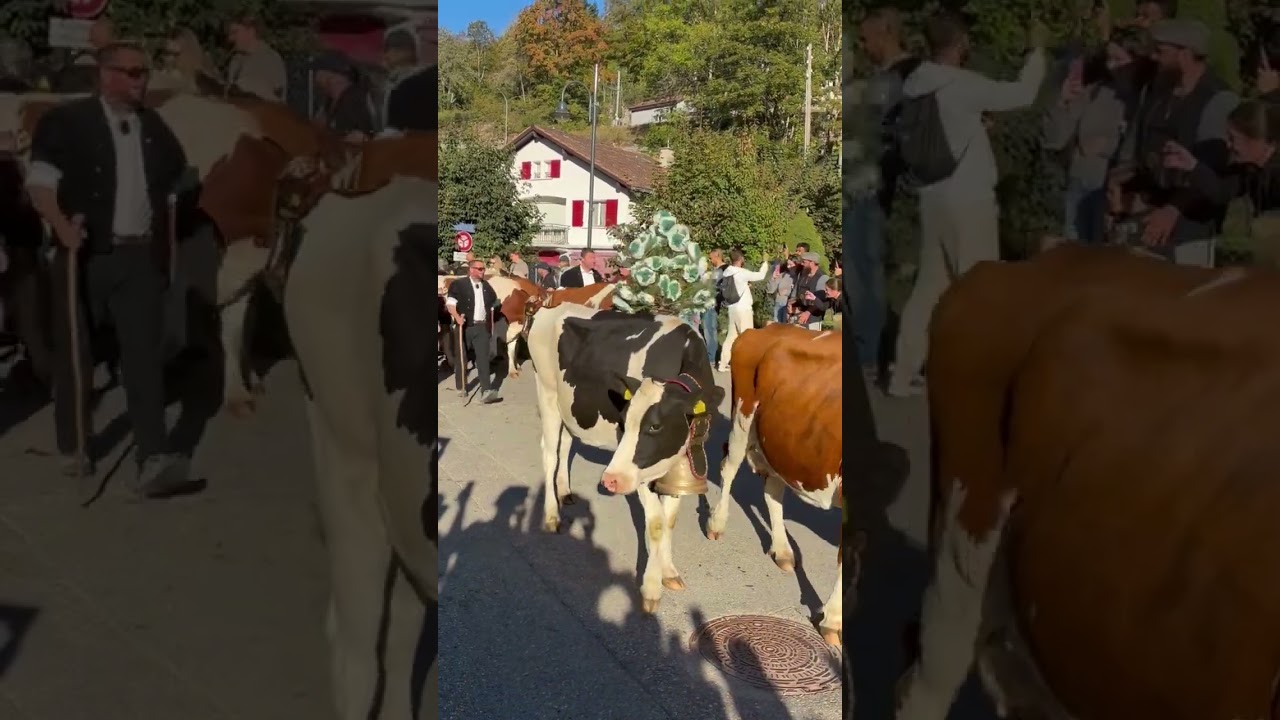
Every autumn 8 or 9 herds, over 400 cows, march through our village in a cacophony of cowbells. The herders dressed in traditional costume lead the cows bedecked with bells and bouquets from our mountain pastures to return home to the plains by Lake Geneva.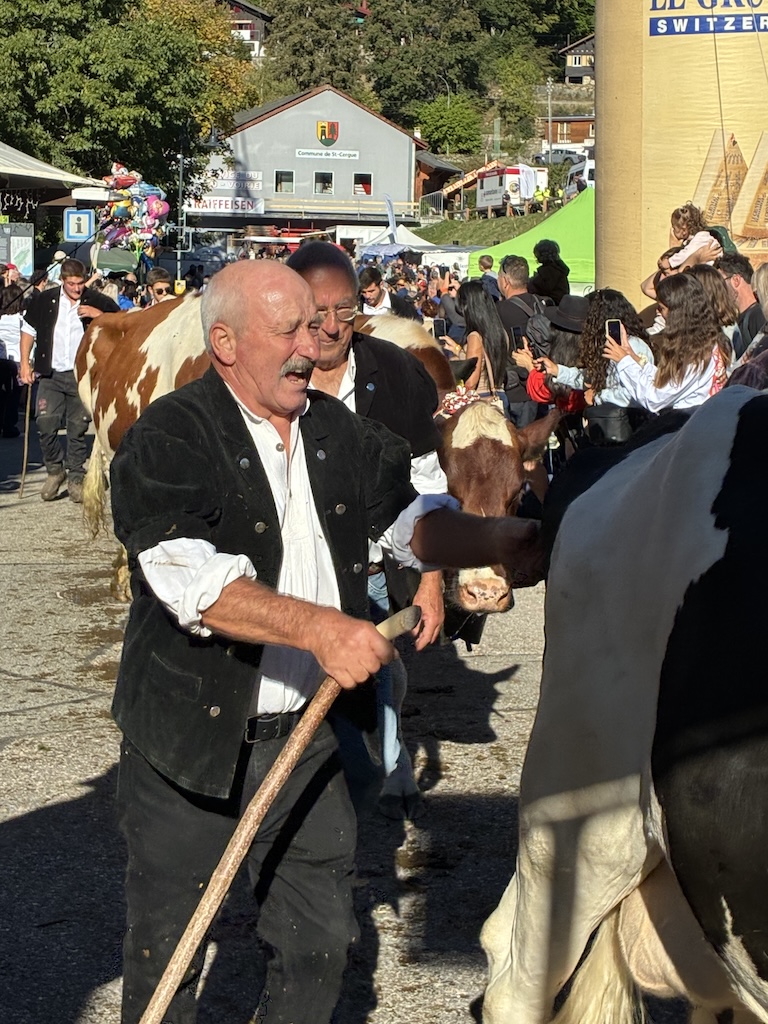
 The festival with music, dance, arts and activities unites the community to celebrate the return of the cows and change of seasons from summer to autumn.
This cultural event is passed down through generations - grandparents, parents and children. Entire families lead the cows down the mountain showcasing the deep connection between mountain communities and their livestock.
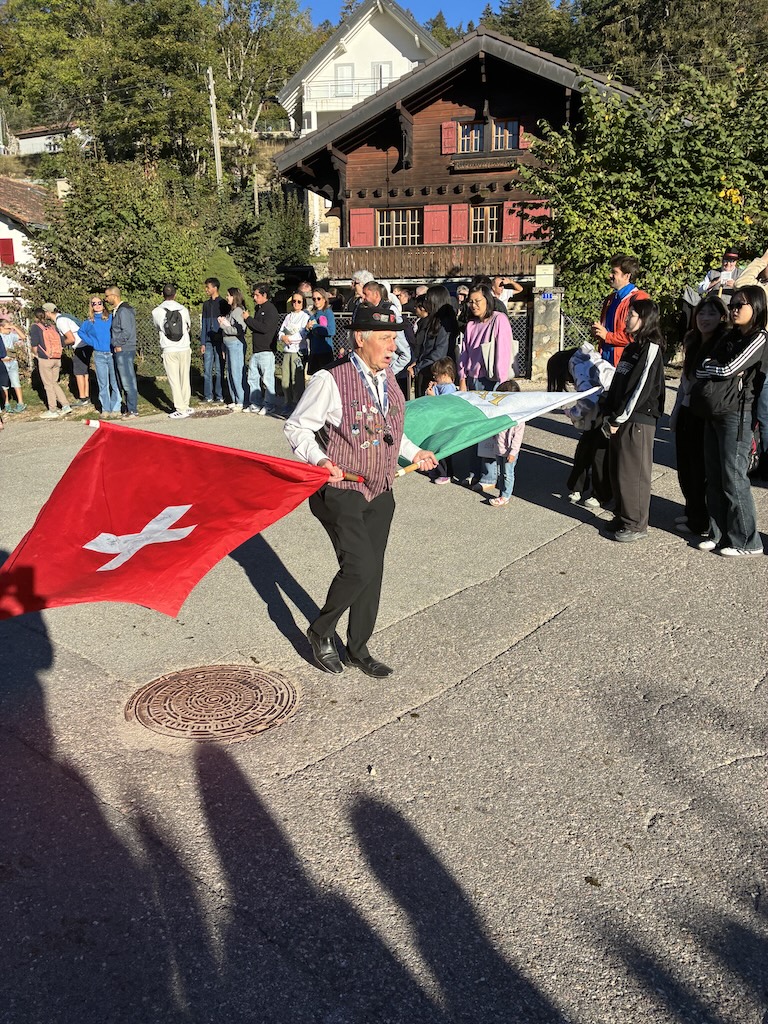
Spectators crowd our village to discover this ancestral ceremony with its unique ambiance. Locals, donning traditional costumes, gather to witness the cows’ return. Groups of folk singers, dancers and yodelers perform. In addition, special events like the Swiss wrestling (lutte à la culotte) and locally trained Bernese mountain dogs add to the lively scene of cows procession down main street.
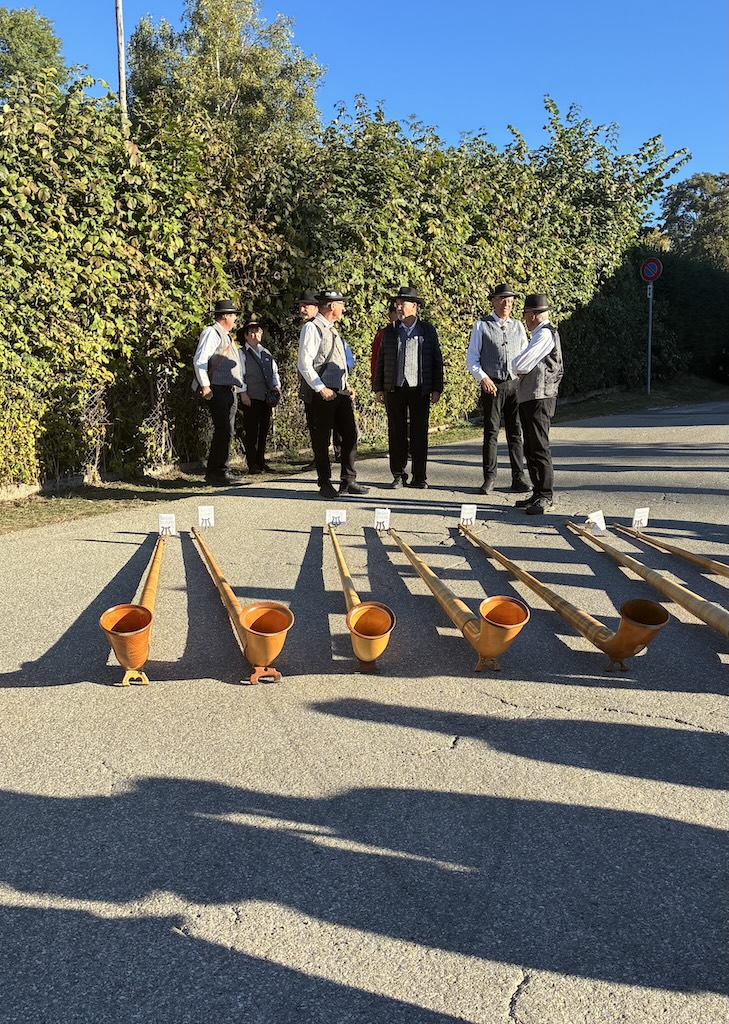
Hearing the alp horns has become one of the biggest attractions for visitors.These eight foot long, wooden horns used in rural areas in17th to19th century to signal between high pastures, across valleys and to communities on the valley floor, are no longer needed by herdsmen, but with the revival of interest in musical in late 1800s they have became important to tourism.
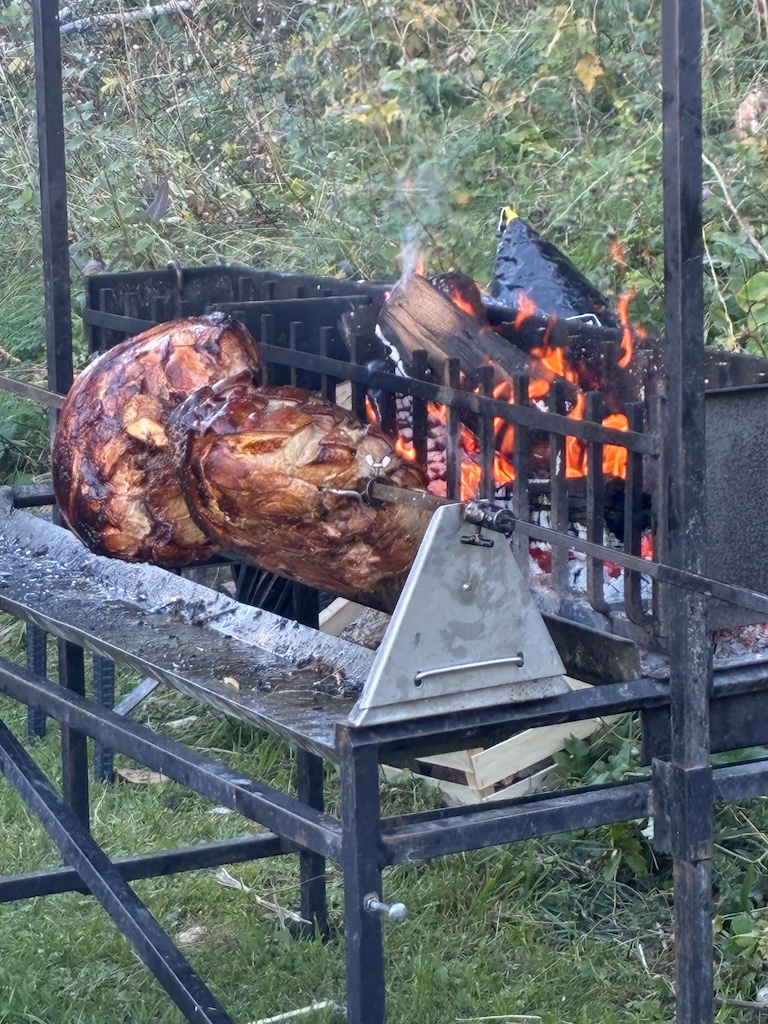
Eight different food booths and six bars offer regional wines and specialties of beef, cheese, sausages, ham and other favorites from our canton Vaud. A variety of beverages can be purchased, but the local white wine served in miniature glasses, is traditional. To produce a festival as ecologically friendly as possible, with the least amount of waste, the town provided real plates and glasses to be recollected after use at various stations.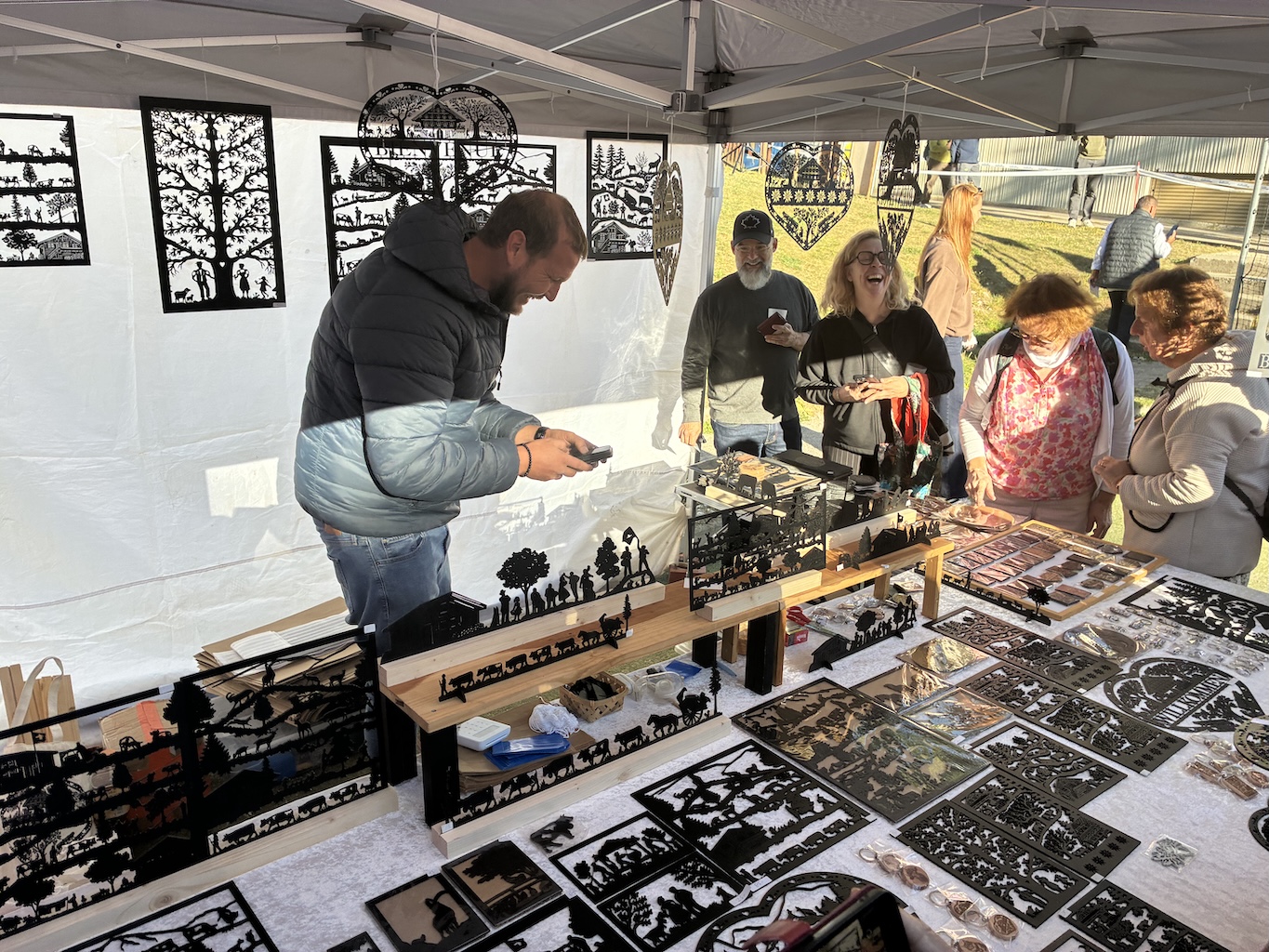
Over 50 tents set out near the school grounds at the base of the ski slope, display Swiss arts and crafts and local products. Artists sell traditional wooden hand carvings, chinaware, black metal works and cloth goods.
Fortunately, this year people welcomed a day of play in sunshine in the spirit of bon enfant as a reprieve from anxieties about climbing gas prices, climate warming, political discourse. In a celebration of family, community and nature, we shared a day honoring those sacred cows that provide milk, beef and cheese.
The désalpe, a giant street party, also pays tribute to the herders, who are finishing their season in the mountains and sharing their passion for the land. It helps them forget the harshness; last year’s cows were quarantined due to a highly contagious virus that spread so rapidly entire herds had to be put down. The désalpe had to be cancelled. This summer hay had to be imported, when drought led to shortages of grassland.
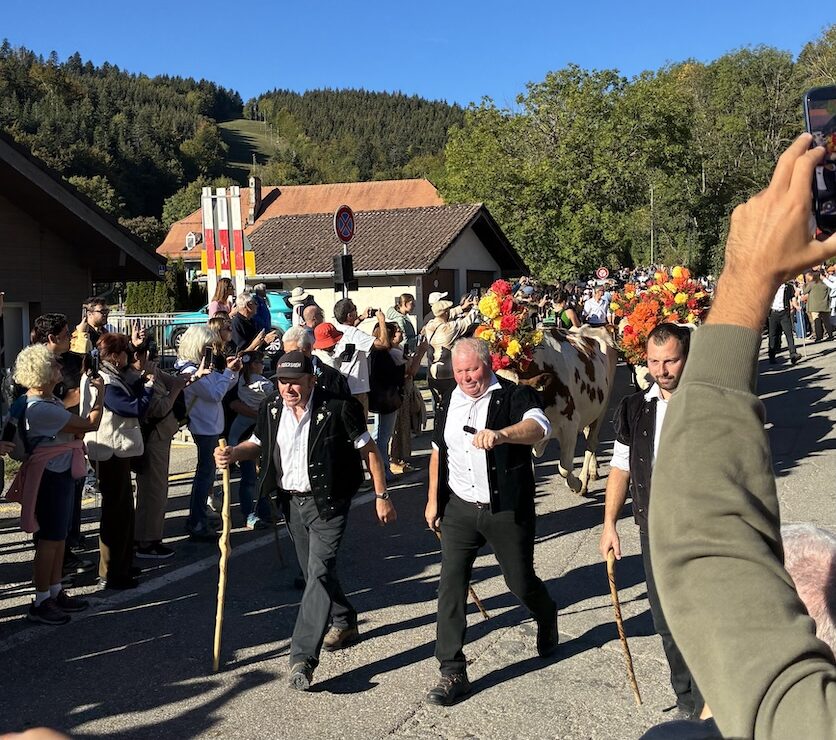
As I admired the lively show, the day the cows come to town, I gazed up at our awe-inspiring mountains in gratitude. I gave a silent nod to the flat landers back home and to other folks who toil to grow and harvest food for our tables even in the toughest of times.
Thank you for your post about this tradition and your thoughts, Pat!