 My best friend Skippy died the year I moved to Europe. Ever since I lost my childhood sidekick decades ago, I have longed to own a dog!
But ze Frenchman was adamant, “Dog or me!”
Well, that’s a no-brainer!
I’ll never forfeit my number one chef, chauffeur, work-out partner, hiking buddy, electro-technician and soulmate for a four-legged friend.
My pleas for a dog fell on deaf ears!
I got a pet chammy instead.
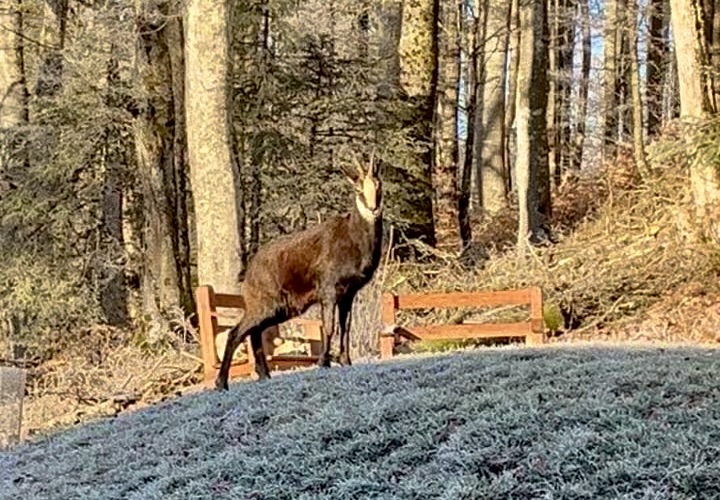
One day I looked out my window; there he was in all his majesty.
He hangs out in my backyard, which is actually the side of a mountain.
What’s a chamois?
Chamois are medium-sized, goat antelope, a bit larger than deer. Native to the mountains of central and southeastern Europe, they stand up to 31 inches tall at the shoulder and weighs 25–50 kg (55–110 pounds)
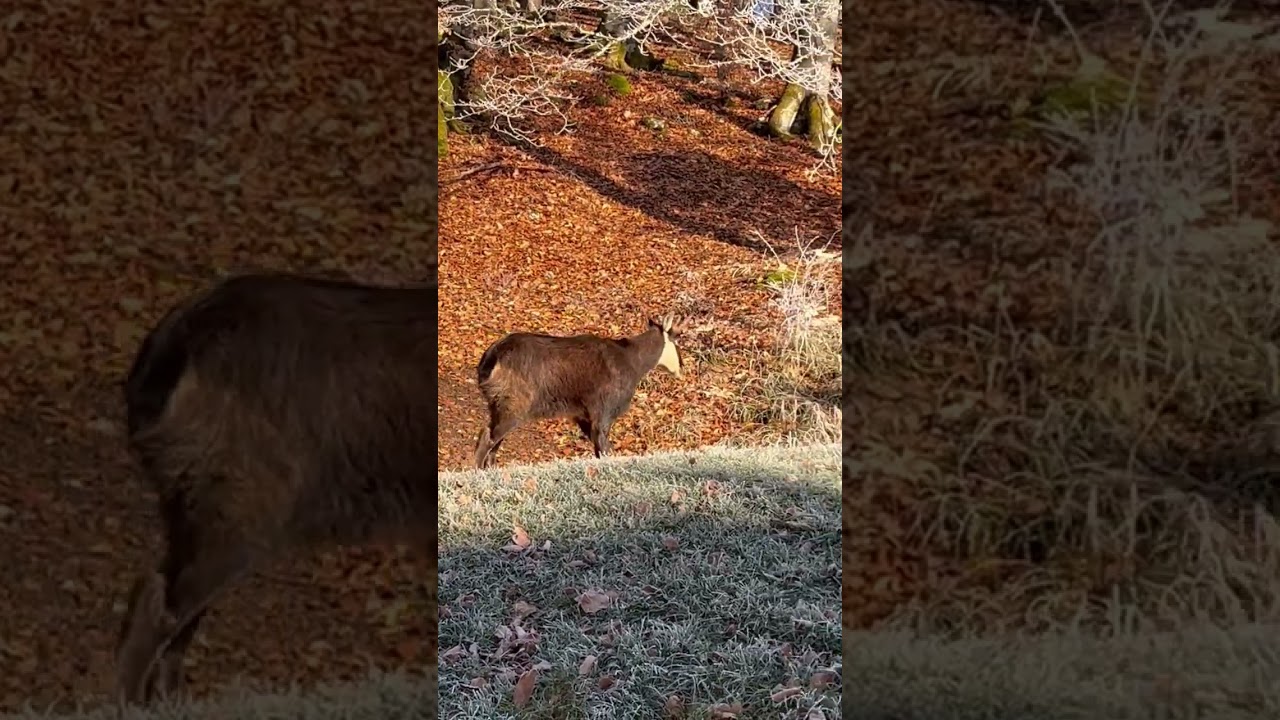
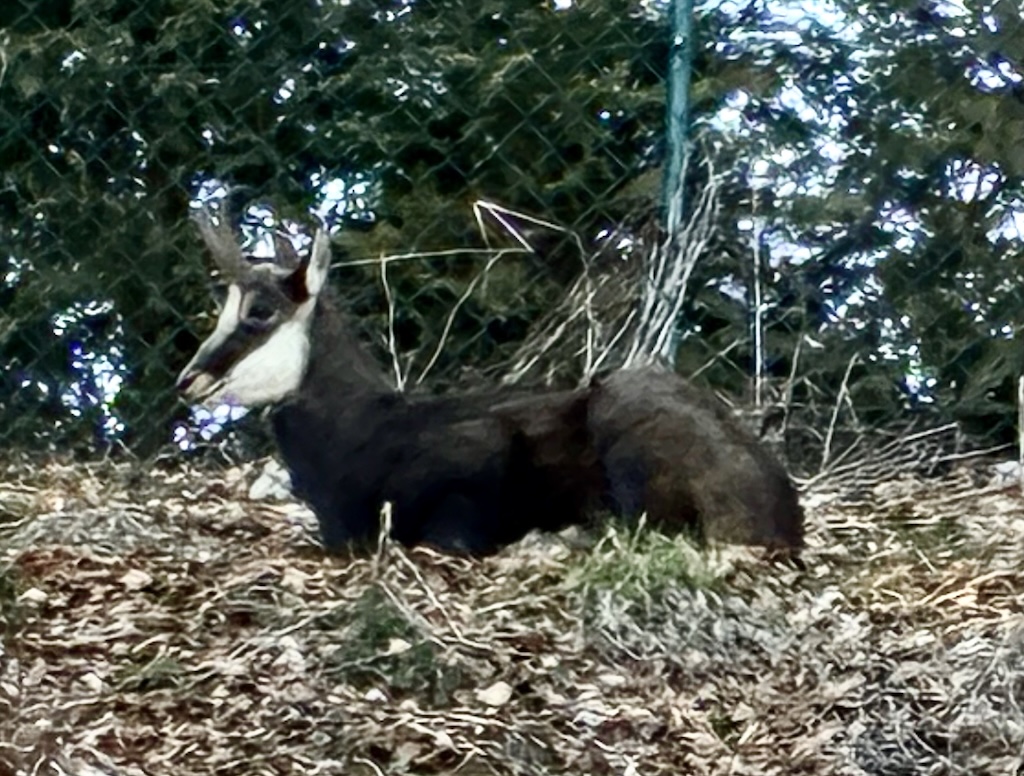
White contrasting marks on the sides of the head with pronounced black stripes below the eyes, a white rump, and a black stripe along the back are distinct, identifying characteristics. Even more telling both sexes possess vertical horns that hook sharply backward at the ends.
 These quintessential mountain dwellers can jump 2 m (6.6 ft) vertically into the air or over a distance of 6 m (20 ft). Chamois, perfectly adapted for their challenging alpine home, can scale the near-vertical rock face. Exceptional climbers, their strong fore and hind legs give them great jumping power. Their split hooves, with sharp outer edges and a soft inner section, provide perfect grip on wet rocks and ice.
Like deer, chamois change colors to blend into their habitat. Their rich brown-colored coat of fur turns light grey in winter. As members of the Bovidae family, their lineage traces back millions of years to common ancestors of cattle, goats, and sheep. Their distribution spans several major European mountain ranges and extends into parts of Asia.
The agile acrobats of the Alps hold a special place in the folklore and traditions of mountain communities. Seen as symbols of agility, freedom, and the untamed spirit of the mountains, chamois have a tuft of hair from the back of their neck, called the gamsbart (chamois “beard”). It is traditionally worn as a decoration on hats throughout the alpine countries.
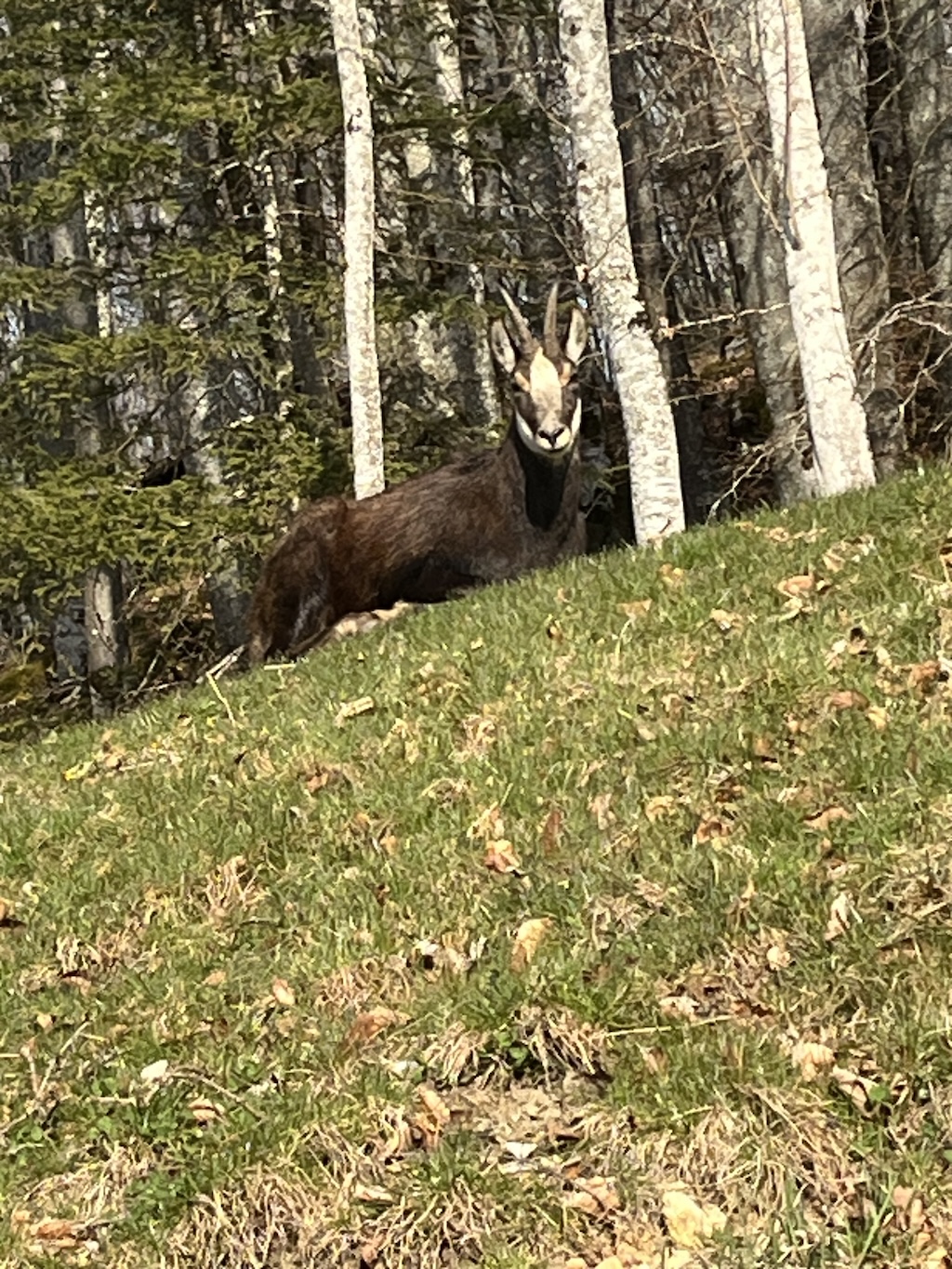 Chamois are social animals. Females and their young live in herds of up to 15 to 30 individuals; however, adult males tend to live solitarily for most of the year. They can run at 50 kilometers per hour (31 mph).
Their milk and meat are good, but they are best known for their hides. The soft, pliant skin of the chamois is made into the original “chammy,” or “shammy,” leather. It is used for cleaning, buffing, and polishing because it is smooth, absorbent and won’t scratch,
On a cold day in April, when the last snow melted and the sun slinked behind the mountainside, I bid farewell to my favorite four-legged friend.
In Europe, chamois disappear into higher levels to spend their summers above the tree line. They prefer high-altitude environments between 800 and 2,500 meters. But when winter rolls around, they’ll come back down to lower elevations to live in forests areas dominated by pines.
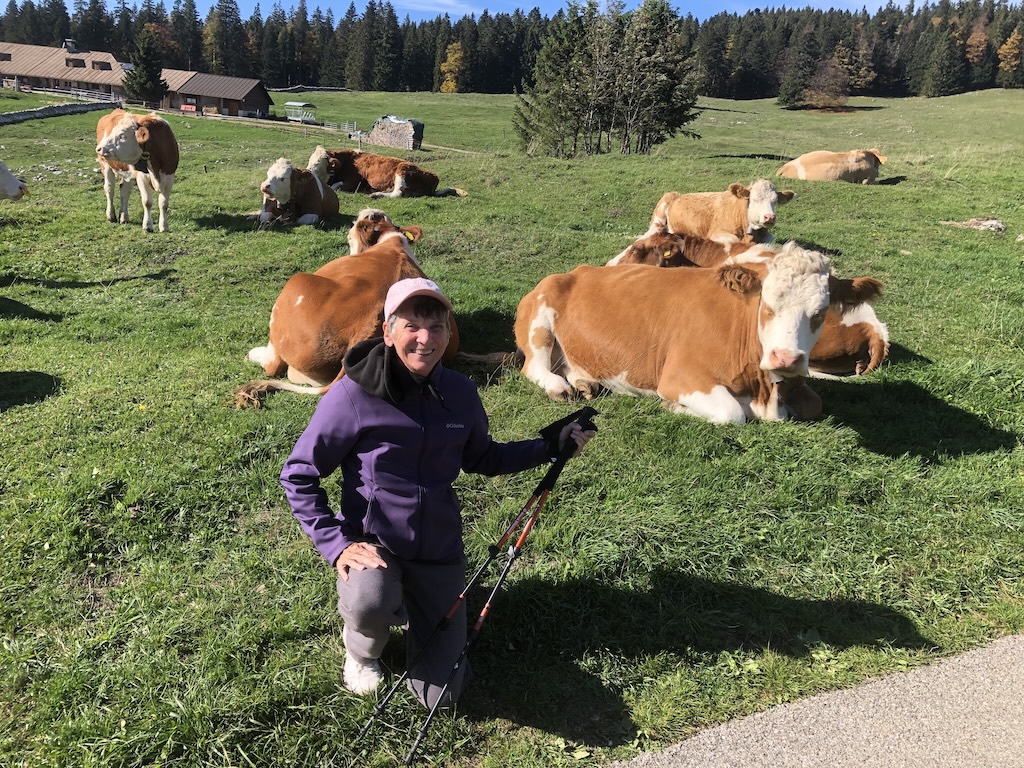
Fortunately at about the same time the chamois fade into the clouds, farmers here haul truckloads of cows up to graze in lush green mountain meadows for the summer season. I will miss seeing my favorite chammy, so now I’m adopting a cow! Ssshhh Don’t tell ze Frenchman.