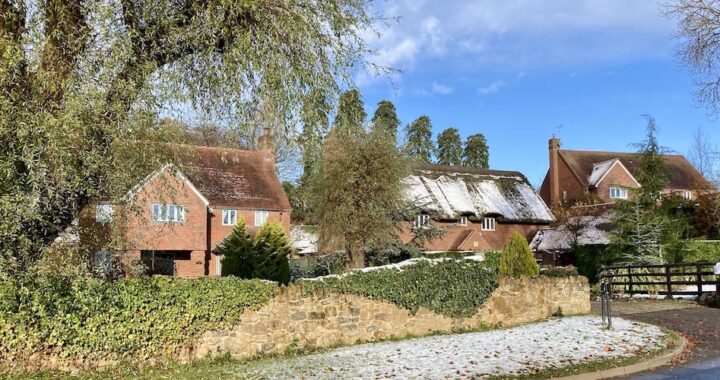
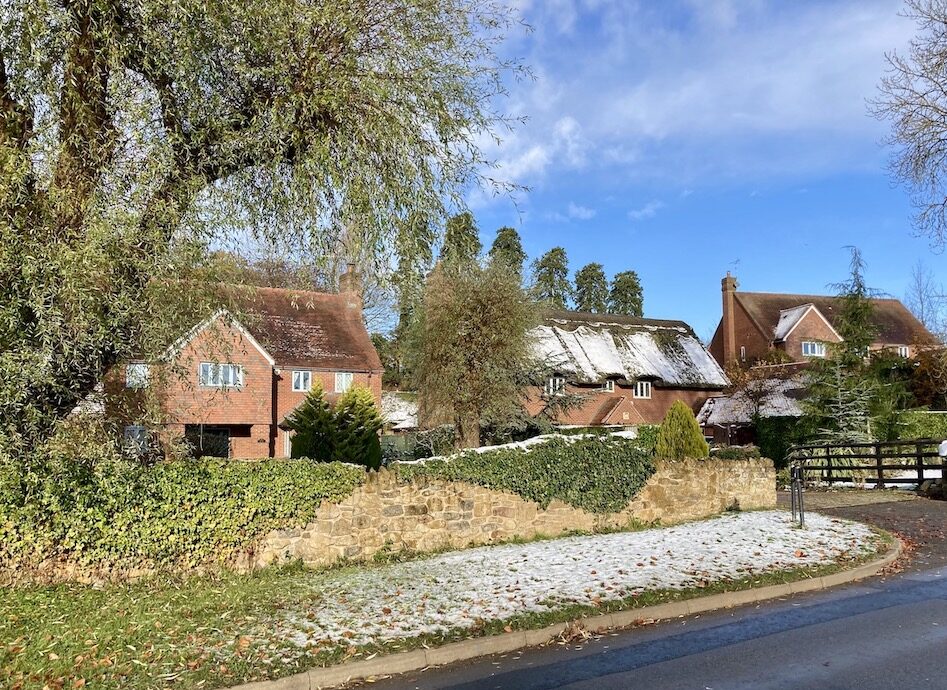
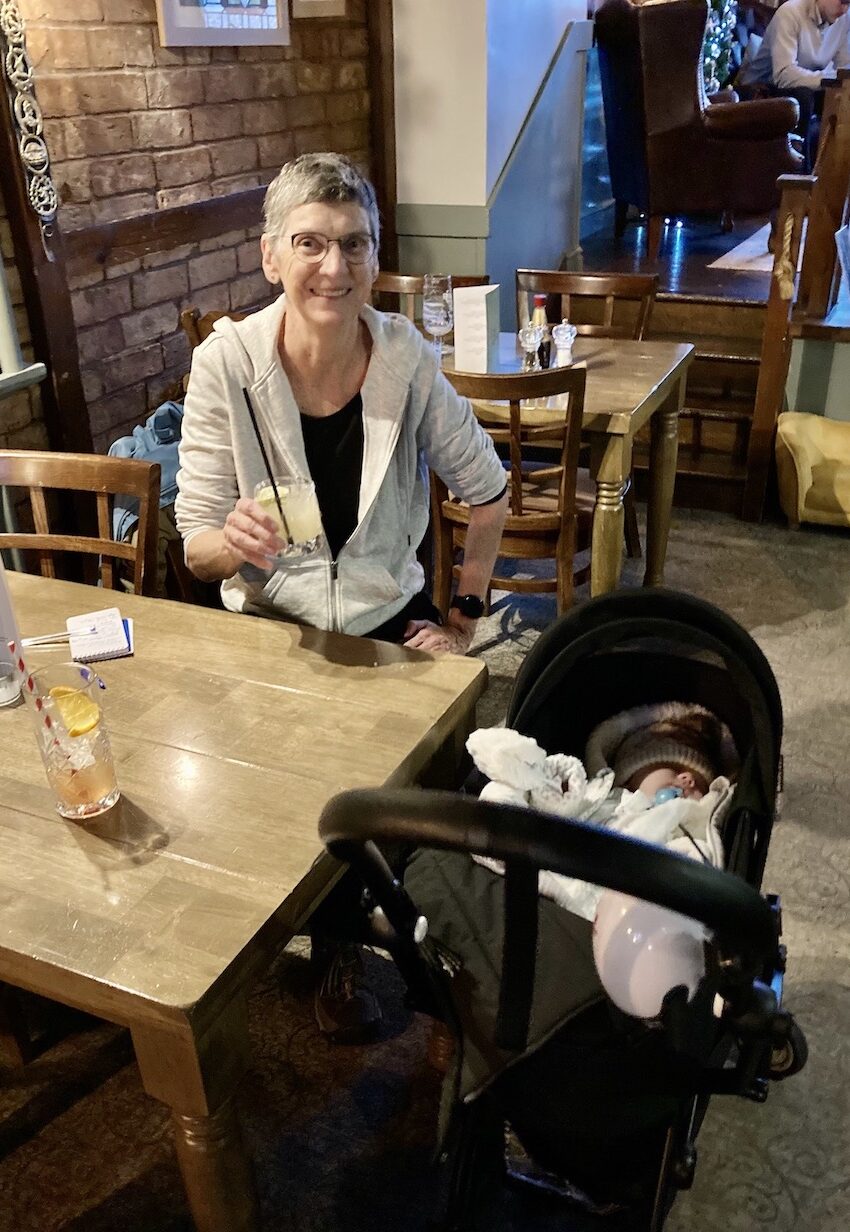
 How about a buggy ride back in time through an enchanting village in England’s heartland? Mormor, (that’s me) is driving! Mormor is grandmother in Norwegian, giving a nod to my Norwegian mom and our family in Norway. Lil’ Prince of Gaydon (nickname I gave my grandson) and I are taking a wild ride through town!
Gaydon, though not mentioned distinctly from Chadshunt in the Domesday Book of 1086, was a separate settlement. It became known as Gaidon by the late twelfth century, taking its name from the proper name “Gaega” and the Old English word for hill “dun”.

Homeward Bound
Gaydon is at the gateway to the Cotswolds in the Stratford-on-Avon District of Warwickshire. Surrounded by rolling hills and rich farmland, Gaydon is known for its picturesque countryside and meandering walking trails. While the rest of the England races by with its twenty-first century angst, the 500 or so residents of Gaydon can chill away from the big city hustle in a community where time stood still.
I bundle Lil’ Prince into his buggy and wheel down his street lined by stately, red brick homes with colonial windows. As we pass by, I wave to the young couple next door and hope for a sneak of their new baby.
It’s a boy!
Lil’ Prince will have a new playmate soon.
Allez op, off we go ‘round the cul-de-sac and down the other side of the street past the home of the proprietors of the local pub, The Malt Shovel.
On the corner, the decrepit Gaydon Inn, notorious in the eighteenth century for violent highwaymen, still stands, barely. In 1725, a Parliamentary Act brought the stagecoach trade to the village, increasing Gaydon Inn’s importance. It has since has fallen into disrepair due to zoning laws.
Across the street on Banbury Road, a busy highway for commuter rushing to the cities, the Esso station and a quick stop shop, reminds me modern civilization is never far away.
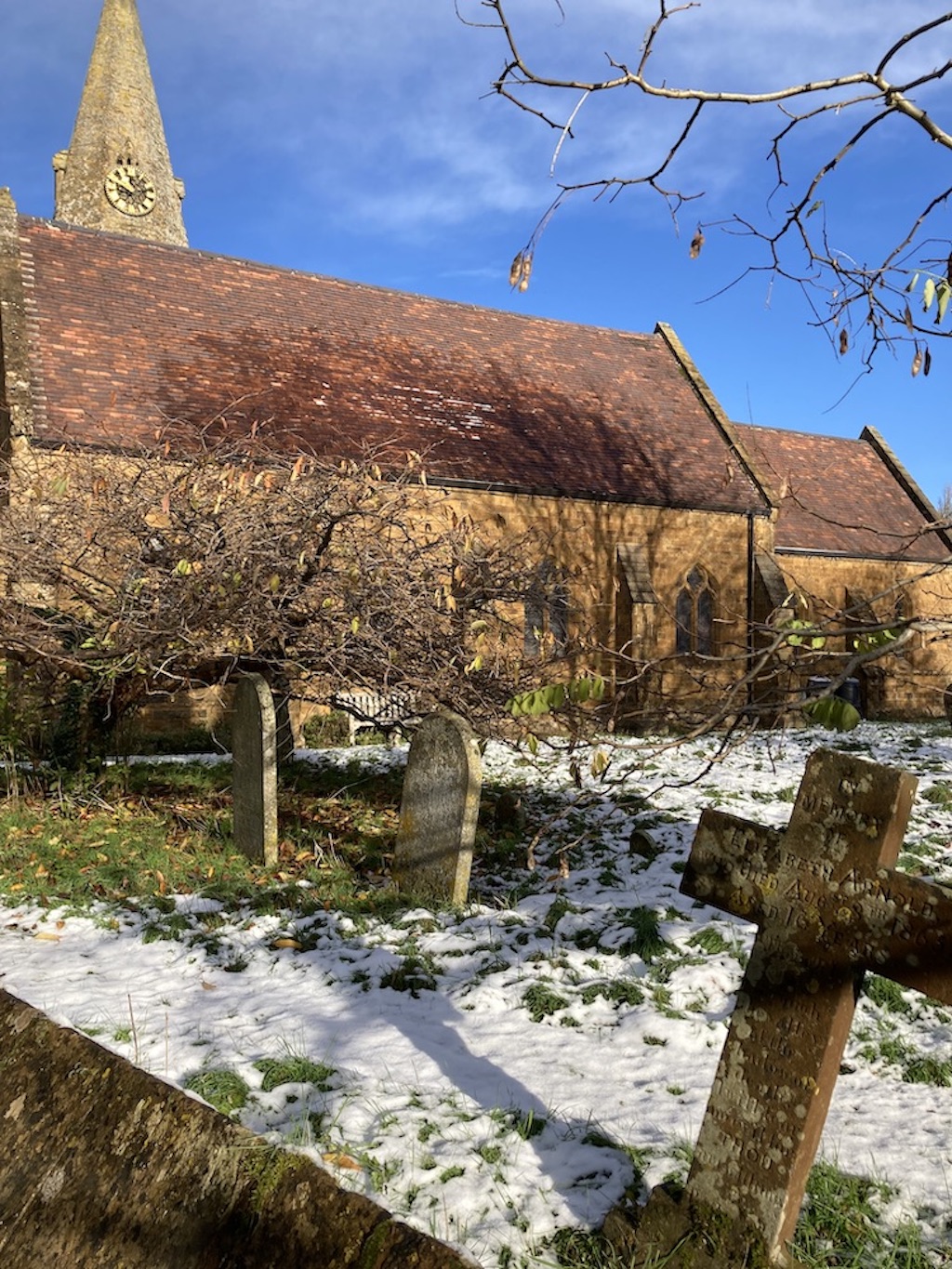 We turn and wind along Church Street, which leads us to the St. Giles Church, as does Church Lane. Like in yesteryear, all roads lead to the church.
Now at the site of original thirteenth century medieval chapel, the current one was rebuilt in the gothic revival style of the mid 1800s. Only the bell survived from the original church, but worn gravestones from past centuries remain in the churchyard.
Lil’ Prince appears to be enthralled by the bewitching stories I spin of ghosts lurking among the ancient tombstones tilting in the heavy Warwickshire fog.
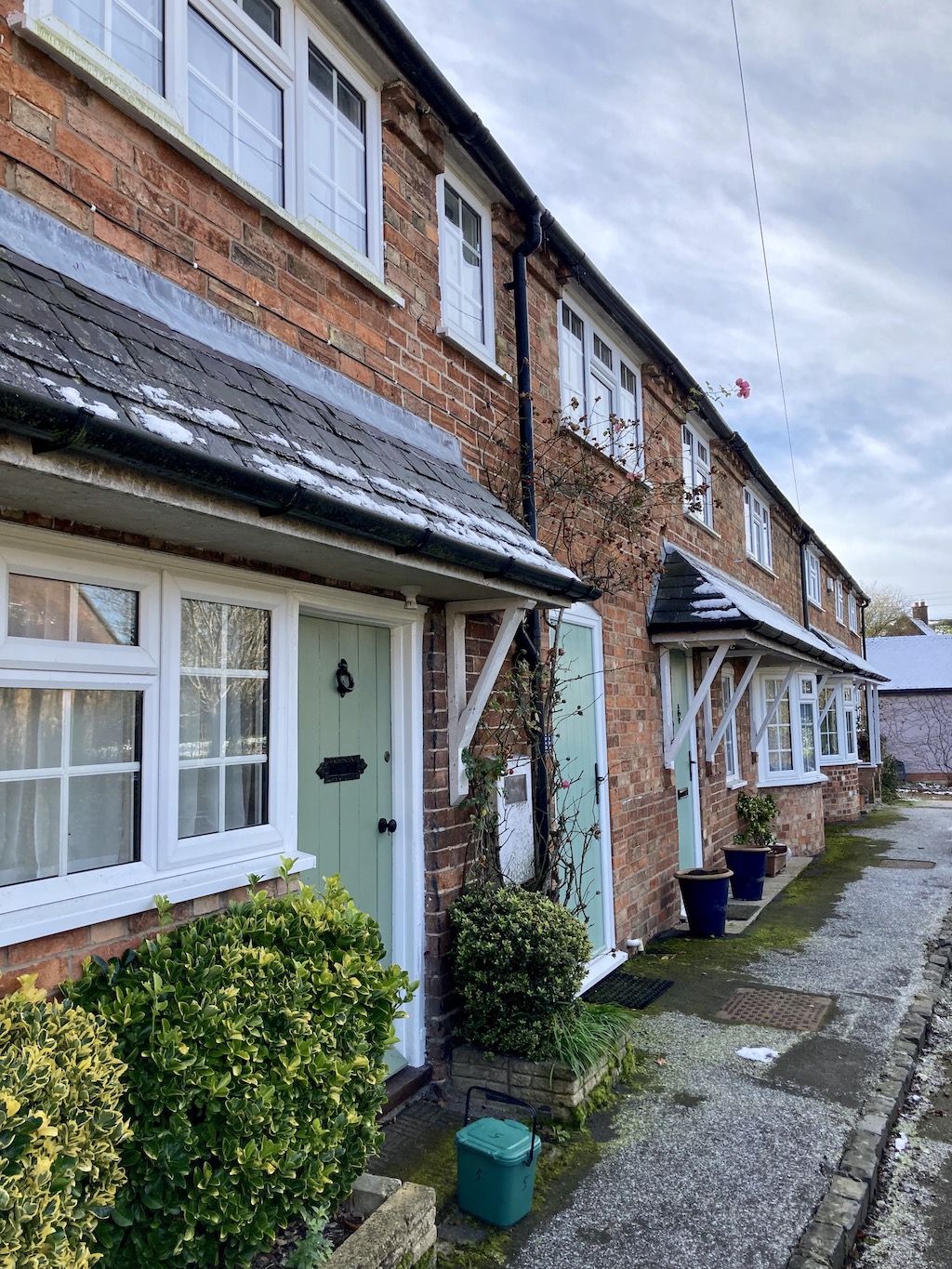 “They look like Hobbit Houses!” I exclaim pointing out low stone dwellings across the lane from the churchyard. Anyone in my family would have to duck to enter the doorway, but I would love to see inside even if had to crawl through the visit.
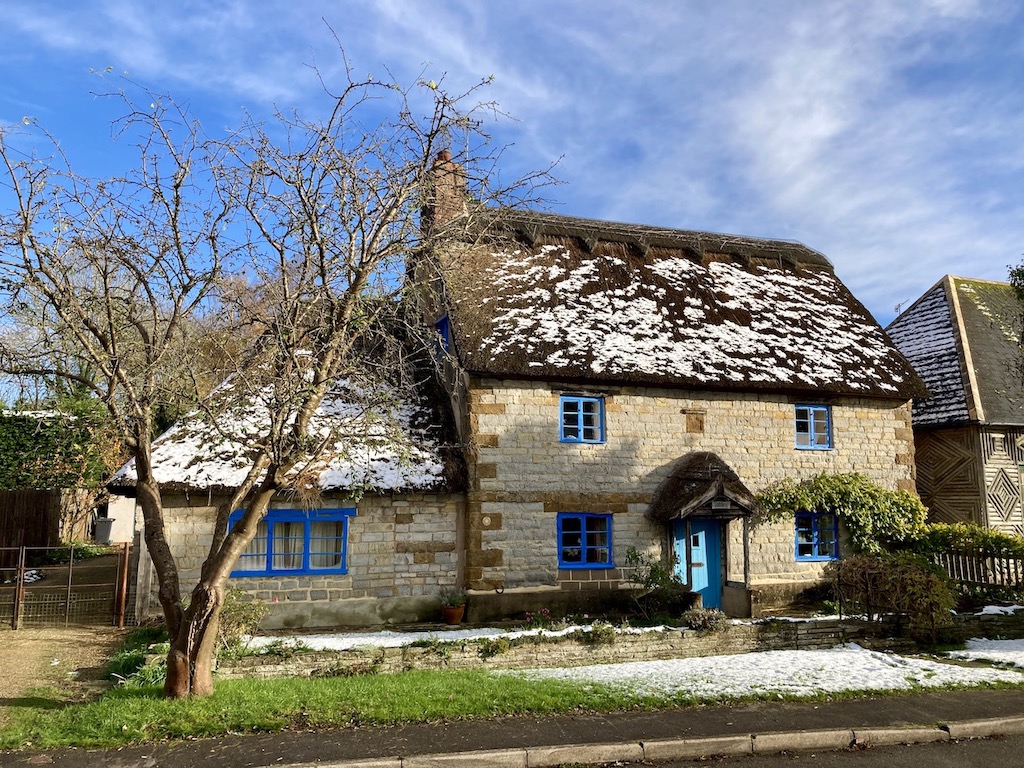
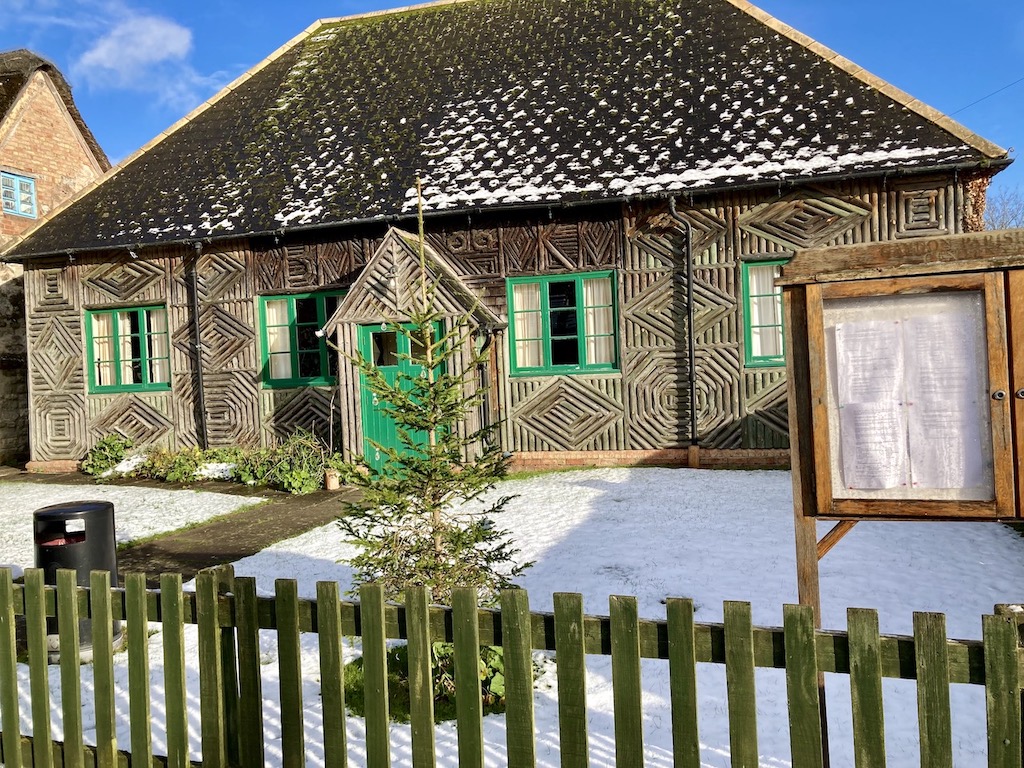
Just past the church, in front of the town parish, I read aloud the Parish Council News and update Lil’Prince on village events. Next to town hall, a white stone, blue-shuttered thatched-roof house stands magnanimously.
Next we stop to admire the Manor House on Kineton Road, which dates back to the seventeenth century. Surrounding the village, open fields, farms and estates, date back to the nineteenth century and bear the titles Manor Farm, Gaydon Farm, Gaydon Hill Farm, Gaydon Field Farms and Poplars Farm.
-

- Thatched Roofed Stone House
-
- Eclectic Town Hall
-
- Poplars Farm
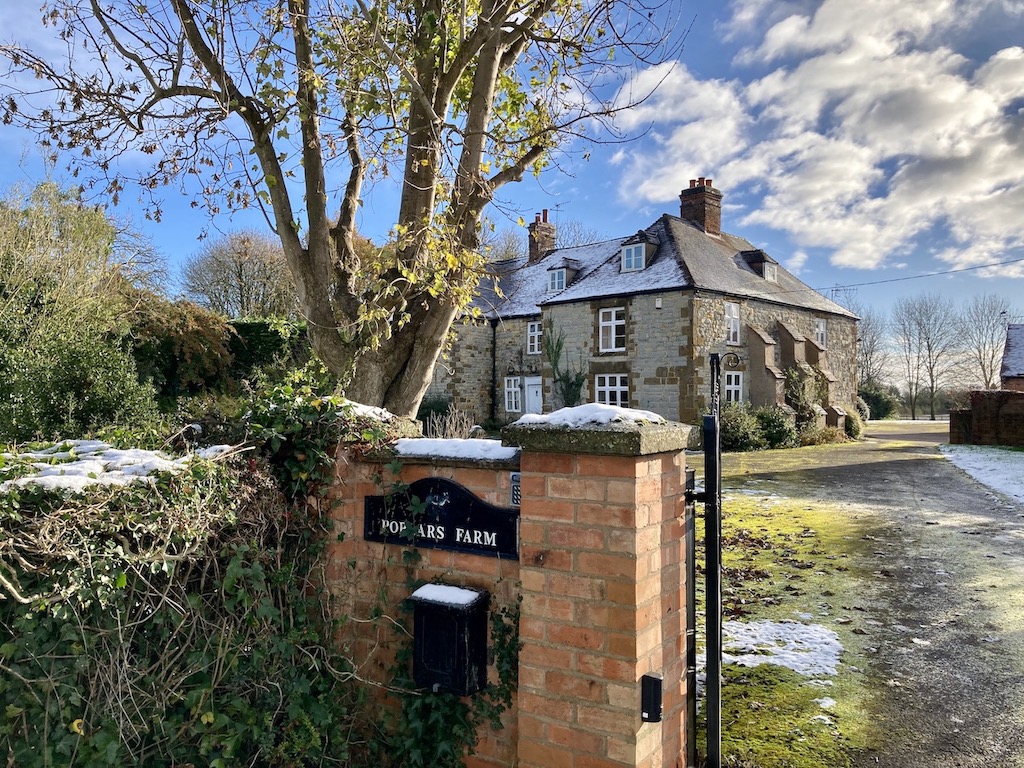
“How about that?” I laugh as I tell the Prince, “Now we are on Pimple Lane.”
 Then, we stroll past the local village shop that opened May 2010. Volunteers run, the non-profit coop providing local produce, homemade gifts and daily essentials.
Last stop, The Malt Shovel, the local pub, which offers a cozy welcome to village life. With baby in tow, we pop in for a quick pint of apple cider, popular in the region.
This village is definitely worth a look see, but,”shh don’t tell anyone.”
If I advertised this gem, villagers would be dismayed. Gaydon’s natural beauty, unaltered by tourist buses, gift shops and fast food joints, is part of its charm.
Like the British would say, “Gaydon is a great place to stop and ‘ave a nosy.’”

 On a recent trip to England, our son took us to visit historic Warwick, an enclosed city. The highlight of the afternoon for me was going for a proper English cream tea at the
  looking like they stepped out of the back kitchen where they baked homemade cakes and scones. Patrons spilled out of the ground floor tea rooms, so our waitress led us up a rickety, winding, ancient staircase that made me feel like I stepped into the old nursery rhyme.
 We squeezed around a low table designed for short-statured folks of earlier times. We folded our long legs; our knees knocked into the furniture.
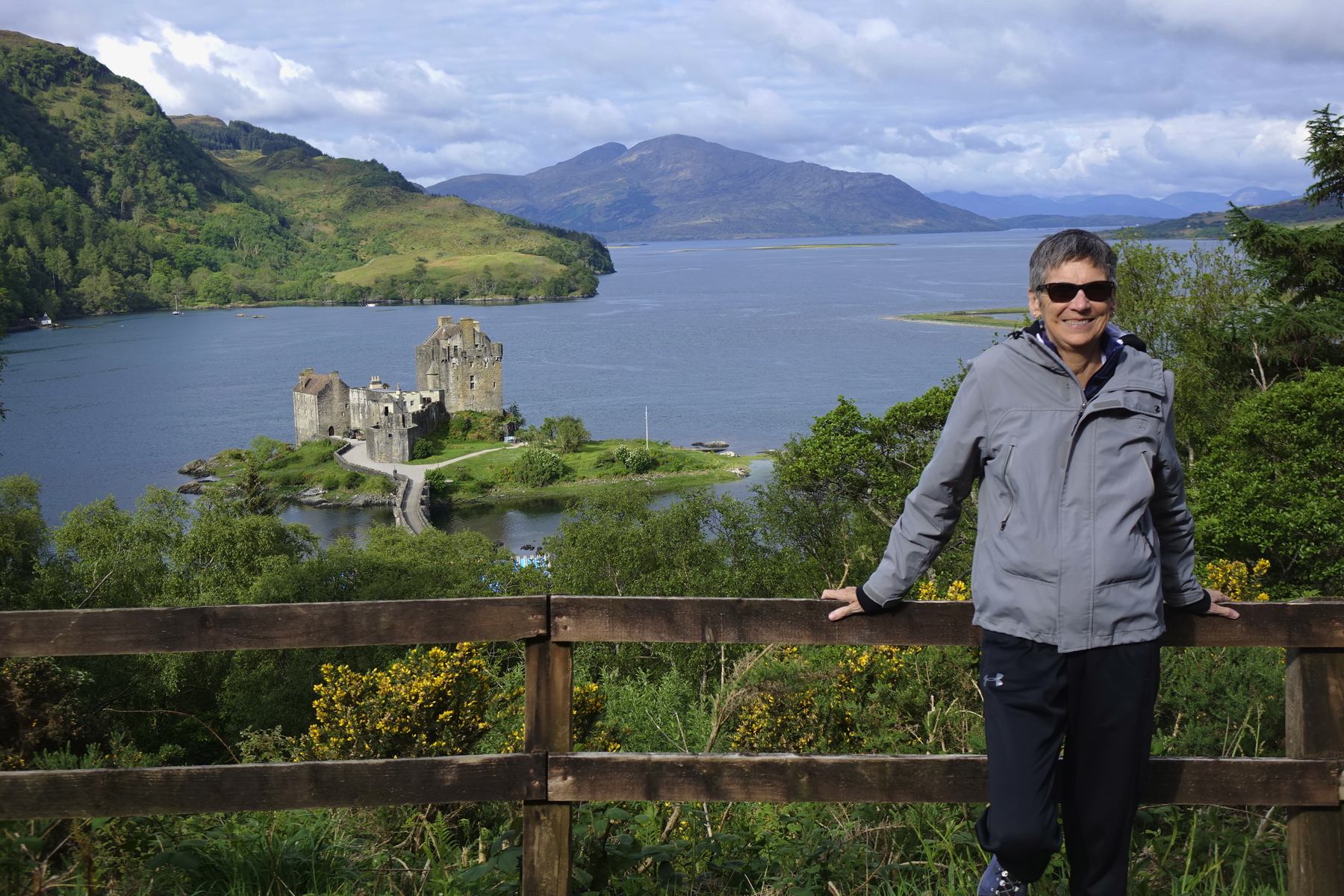


 Though unlike our ancient clan chiefs, you never led your tribe in battle against the Munros, MacLeods, or MacDonalds, you inspired countless warriors on the playing fields of Sterling to conquer “enemies” in Dixon, Rock Falls and Rochelle.

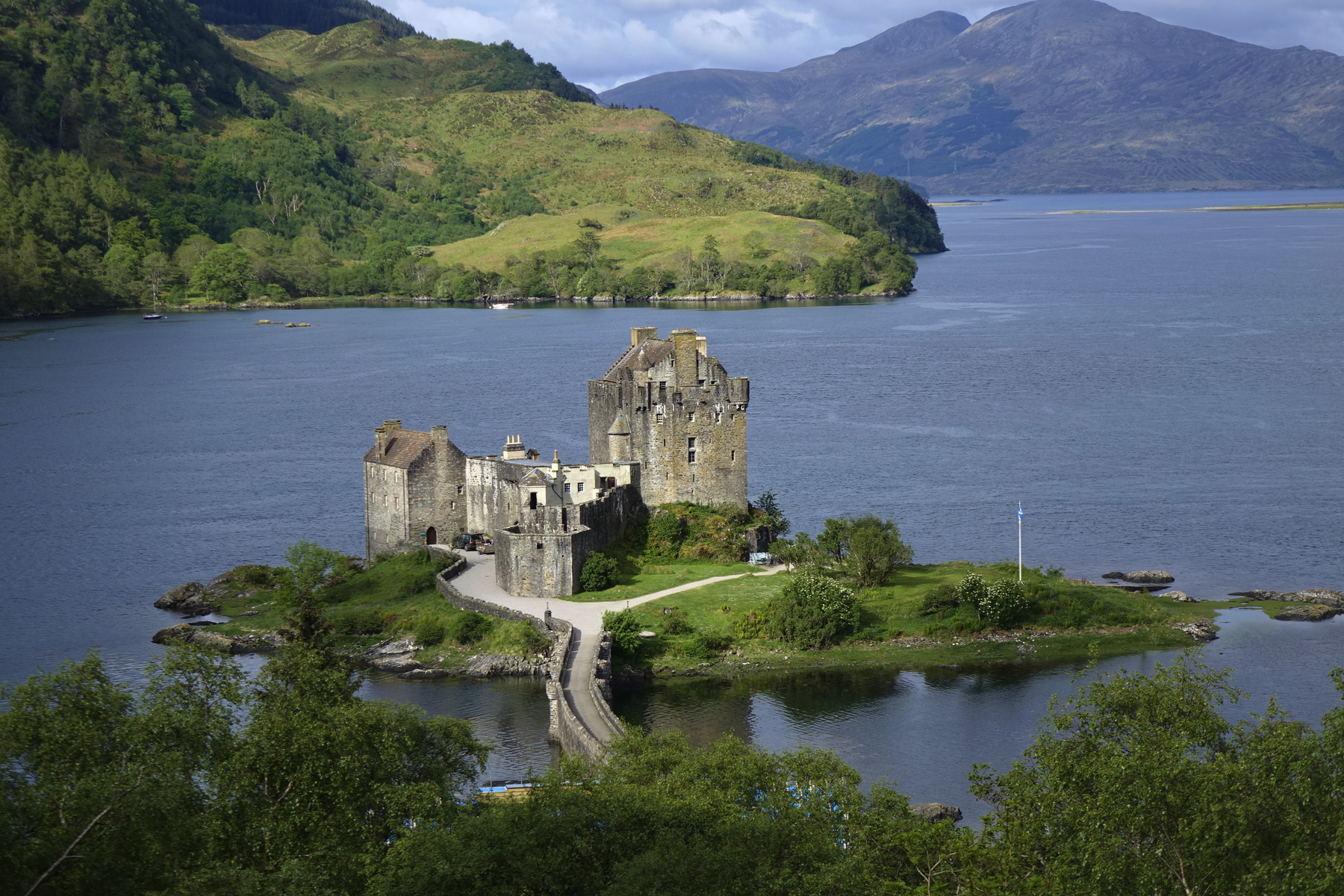
 Ever since I found out that my paternal lineage goes back to the 12th century Clan Mackenzie, I dreamed of following their trail from Eilean Donan Castle on the west coast across the Scottish Highlands and the Kintail mountains to Castle Leod on the eastern shores.
 Mackenzie’s, once the strongest clan in the north of Scotland, reigned for centuries. From rich, warlords to cash strapped landlords, their story portrays the end of the clan system as fortunes changed hands after the Highland Clearances. Their lives were as rugged as the lands they ruled. Filled with craggy inlets, mist-covered mountains, and broody glens, their land lends way to legends.

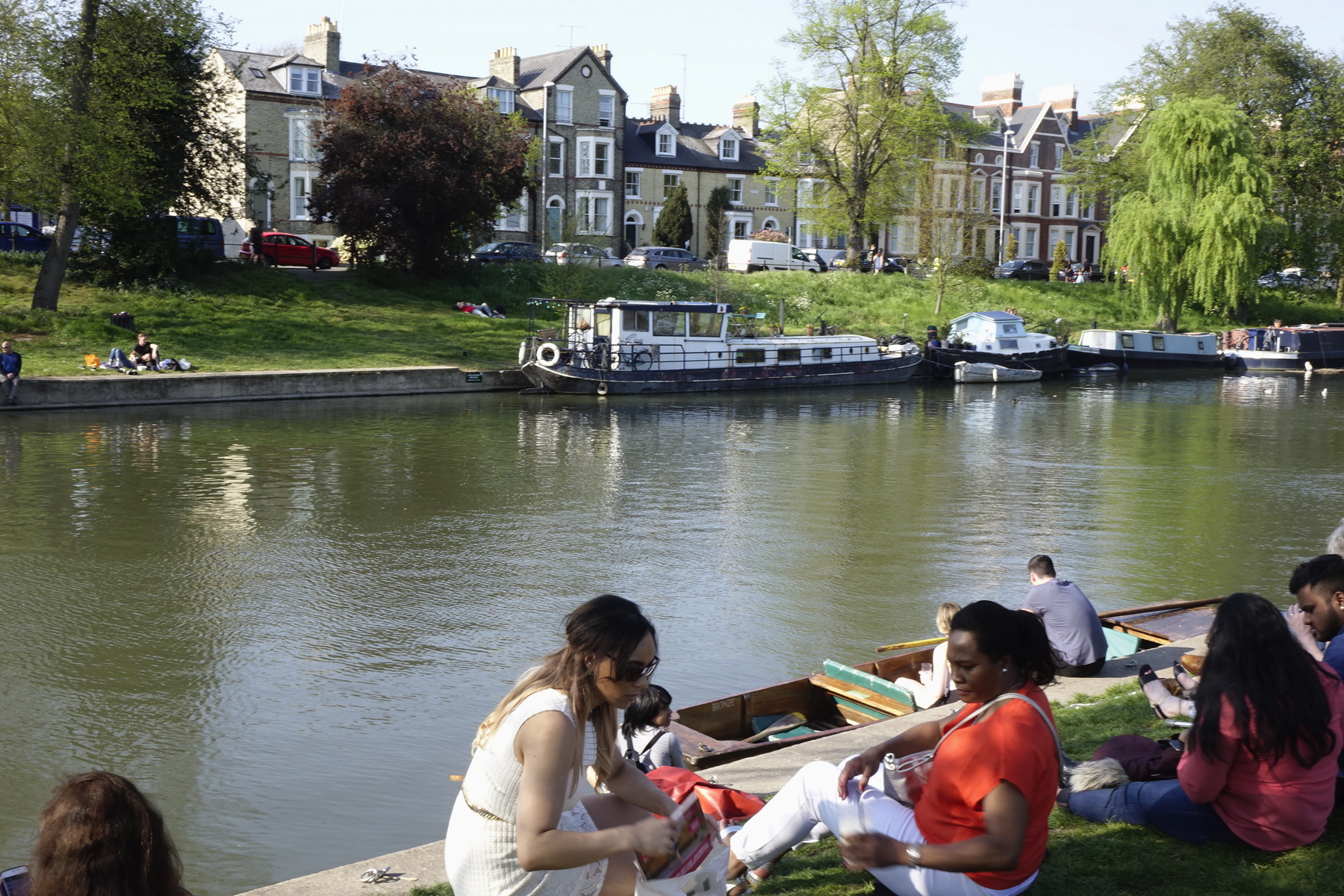
 I went to Cambridge, the prestigious medieval university, only as a tourist, but boy did I get educated. Though my former students have attended these hallowed grounds, I felt like a dunce when I realized Cambridge was not one central institution, but actually 31 different colleges under the administrative umbrella of the University. The colleges, established between the 11th and 15th centuries, have unique, individual histories.
 cheese rolls, salt & vinegar crisps (chips) were followed by sweets – brownies, French cakes – pink, chocolate and yellow frosted squares and strawberries.
 rchitecture, and known for it stained glass windows whose refracted light creates incredible beauty under the vaulted ceiling. The chapel, a Tudor masterpiece, commissioned by Henry VII, was completed under Henry VIII reign.


