The Village Shop, Soul of the Town

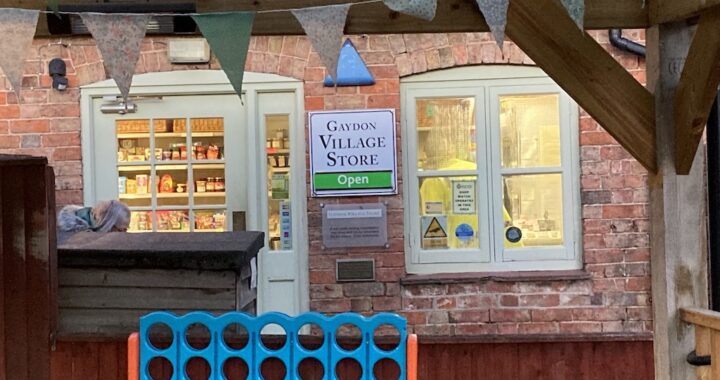
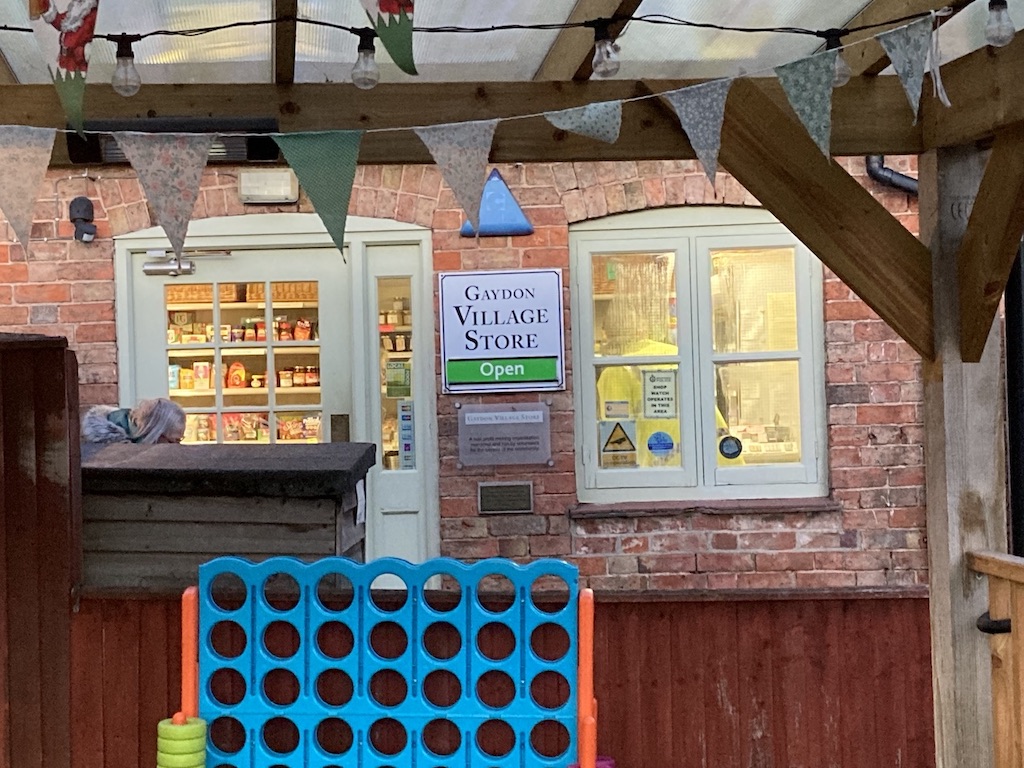
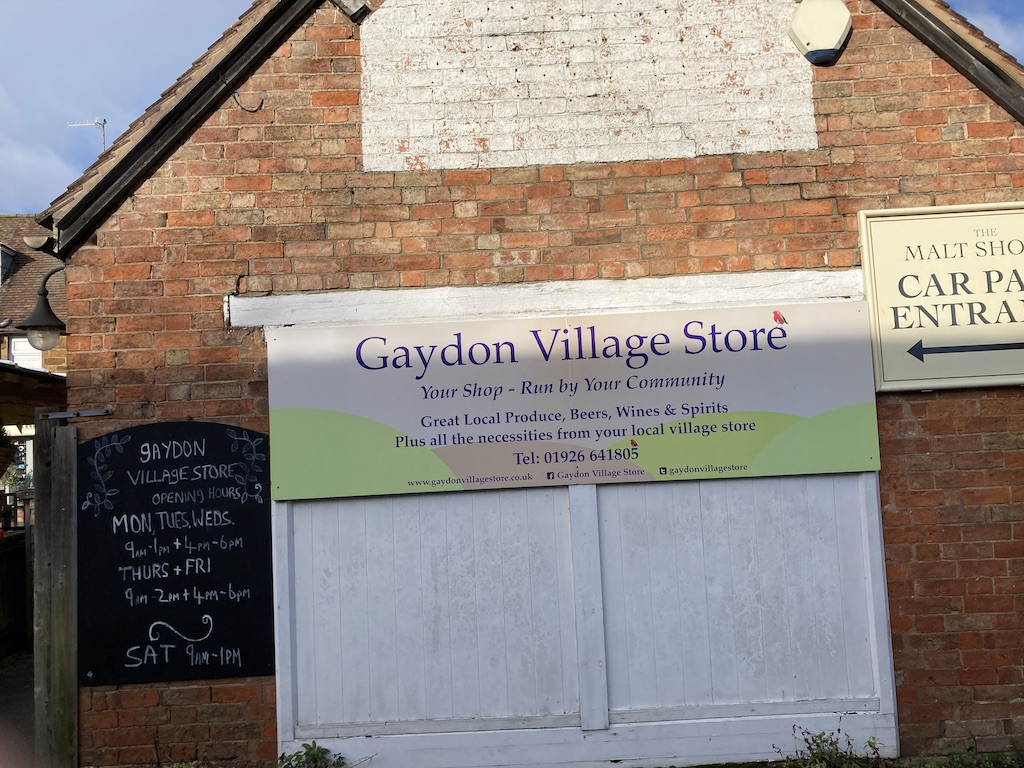
In a nondescript, brick building across from the Malt Shovel Pub, Gaydon’s Village Shop opened in May 2010 as a non-profit co-op where volunteers provide locals with staples and simple necessities that households might run out of on a weekend.

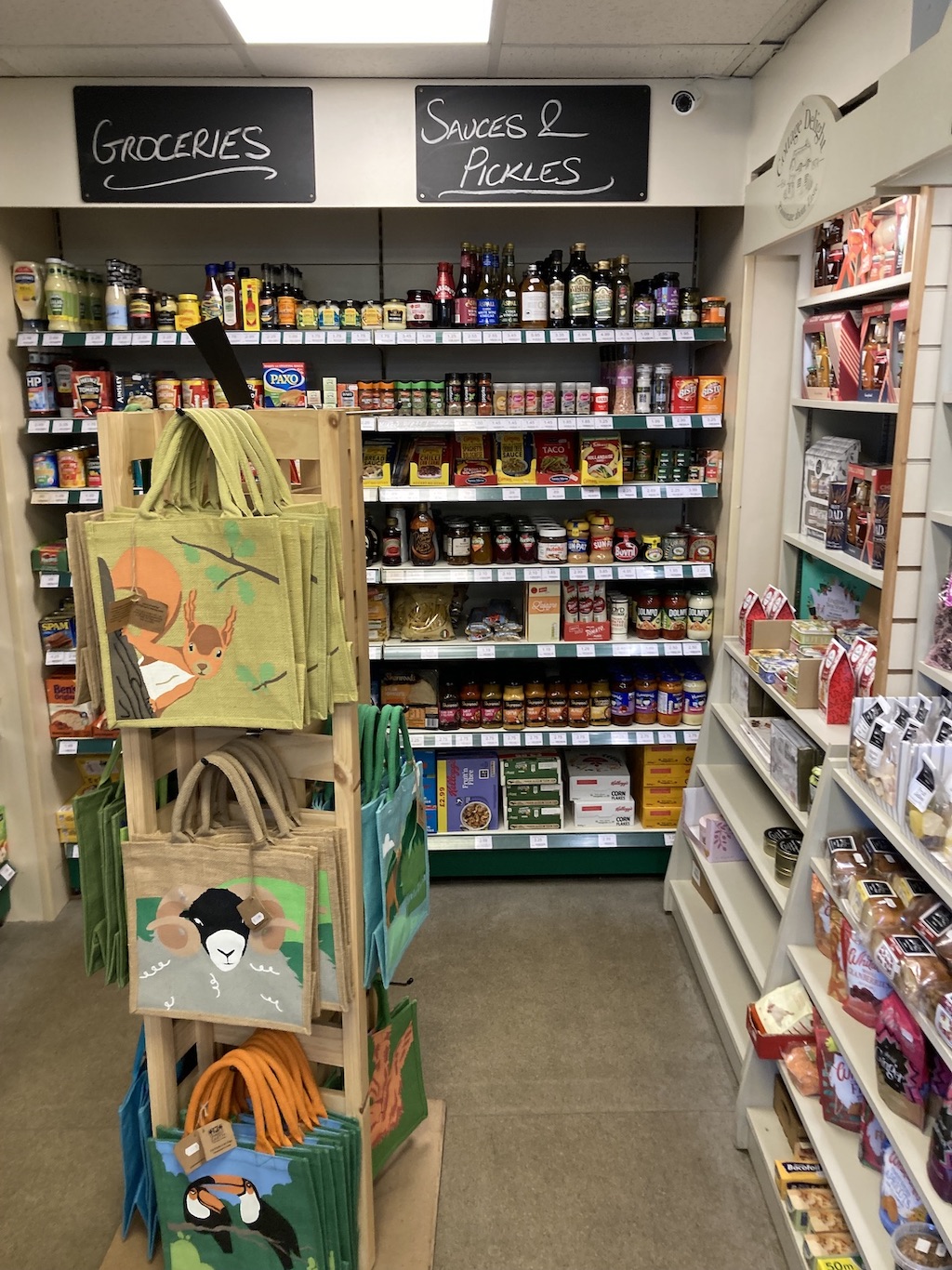
The shop’s shelves were stacked with a hodgepodge of essential toiletries like shampoo, soap, deodorant, toilet paper and toothpaste, as well as milk, eggs, butter and cheese and a limited selection of fruits and vegetables, canned goods, pasta and cereals.

Surprisingly, the Village Shop also sold fresh pastries and bread delivered daily from a bakery in the hamlet just down the road.

Beverages, such as bottled water, alcohol, beer, wine, cider, juice and sodas are also available for purchase.

I perused the shelves with childlike wonder. I picked up a chunk of cheddar, waved it at the woman behind the counter and asked, “Do you have grated cheese?”

“No” the lady at the till told me, “but I have grater at home that you can borrow.” Then, she picked up the phone and called her daughter and asked her bring it over.

Minutes later, the shop doorbell jingled and her daughter dashed in and handed me the family’s cheese grater.

Meanwhile, as we were talking, a middle aged man walked in with his father, who hobbled on an artificial leg from the knee down.

“Oh dear, what happened?”

“Felt my knee cap slip up me thigh when I fell,” the elder man told the woman at the cash register. “And that was my good leg!”

A spontaneous discussion between strangers unfolded as can only happen in these quaint, little communities where the time seemed to standstill.

Another shopper asked me, “Where you from?”

“Illinois,” I answered in my midwestern nasal twang. My very unBritish inflection was a dead giveaway.

“I’m from Normandy,” Gerald added in English with a heavy French accent.

“Normandy!” the elder gentleman exclaimed. “Lost my great uncle over there during The Landing. He was shot down parachuting over Ranville (towards Caen).”

“Me and dad were paratroopers,” the man’s son explained. “I parachuted in the WWII reenactment in Arnhem, Holland.”

Then the friendly fellow went on to recount his tales traveling to US and being in whiskey bar in Florida.

“We’ve just been to the pub,” the jovial, older man said, “Had a wee pint or two or three!”

Another young lady in the shop overheard us talking. She peeked into our baby buggy and asked, “Oooh, is that Nic and Larissa’s baby?”

“Yes,” I said beaming, “we are the proud grandparents.”

“I’m their neighbor,” she said.

“Glad to meet you!” I said. “I’ve heard so many nice things about you from our son and daughter-in-law; I feel like I know you already.”

If the Malt Shovel Pub is the heart of Gaydon, the Village Shop is its’ soul. Where else in the world does the pace slow enough to chat with locals, so trusting, that they’ll lend their own kitchen appliances to complete strangers?

Everyone feels at home at the Village Shop.

Even the “foreigners.”

Jump Start Brain and Body – Learn a New Sport

Feeling old, achy and foggy brained? Experts say learning a new skill is recommended for our rusty bodies and aging brains. For me, relearning old skills is equally valuable. It is never more important than after suffering a traumatic brain injury (TBI) which can effect spatial awareness, balance, proprioception, executive function, listening, speaking and emotional stability.


Like so many people after injury, illness and accidents, I was forced to reframe my life. Once I retired from playing pro ball, I dreamed would learn to scuba dive, alpine ski and surf. I’d run marathons and bike mountains.

Well, that hasn’t been an option for decades.

So when my chiropractor in Geneva (Switzerland) suggested that I try “rope flow” to help strengthen my core, align my back, retrain my brain to better coordinate both hemispheres and work my lazy left side, I was all ears.

In Dr. G’s office, I watched in awe as he demonstrated swinging a heavy rope around his body.

“Jump rope sans the jump for injured adults!” I said.

“Actually, a heavier marine rope like sailors use works better,” Dr. G explained. “The sailboat boutique across Lake Geneva in Nyon carries all different sizes.”

Then he went onto explain the history.

“David Weck, an American, created rope flow to help people recover rotational movement and to reinforce how we walk, run and move. Rope wave, quickly adopted by elite athletes and movement coaches, has become a valuable training tool for improving mobility symmetry, coordination and striking power.”

At first glance, rope wave looks easy. It’s not. It involves swinging a rope around your body in coordinated patterns like figure-eights, while shifting your weight and rotating your spine, shoulders, and hips with rhythm and control.

I was delighted to discover a game that I can play without getting hurt as long as I don’t whip myself on the back of my legs or lips.

If you perform rope flow properly, the rapid rhythm builds a smooth, effortless coordination across both sides of the body. Rope flow is symmetrical. You rotate both left and right, retraining your non-dominant side and this helps smooth out imbalances.

YouTube player

Rope flow is ingenious for its affordability, convenience, practicality and simplicity. This portable habit helps rewire the way I relate to my body. It is probably even more valuable for people like me who suffer from the effects of a stroke or TBI where message systems in the brain are damaged and to weakness on one side of the body.

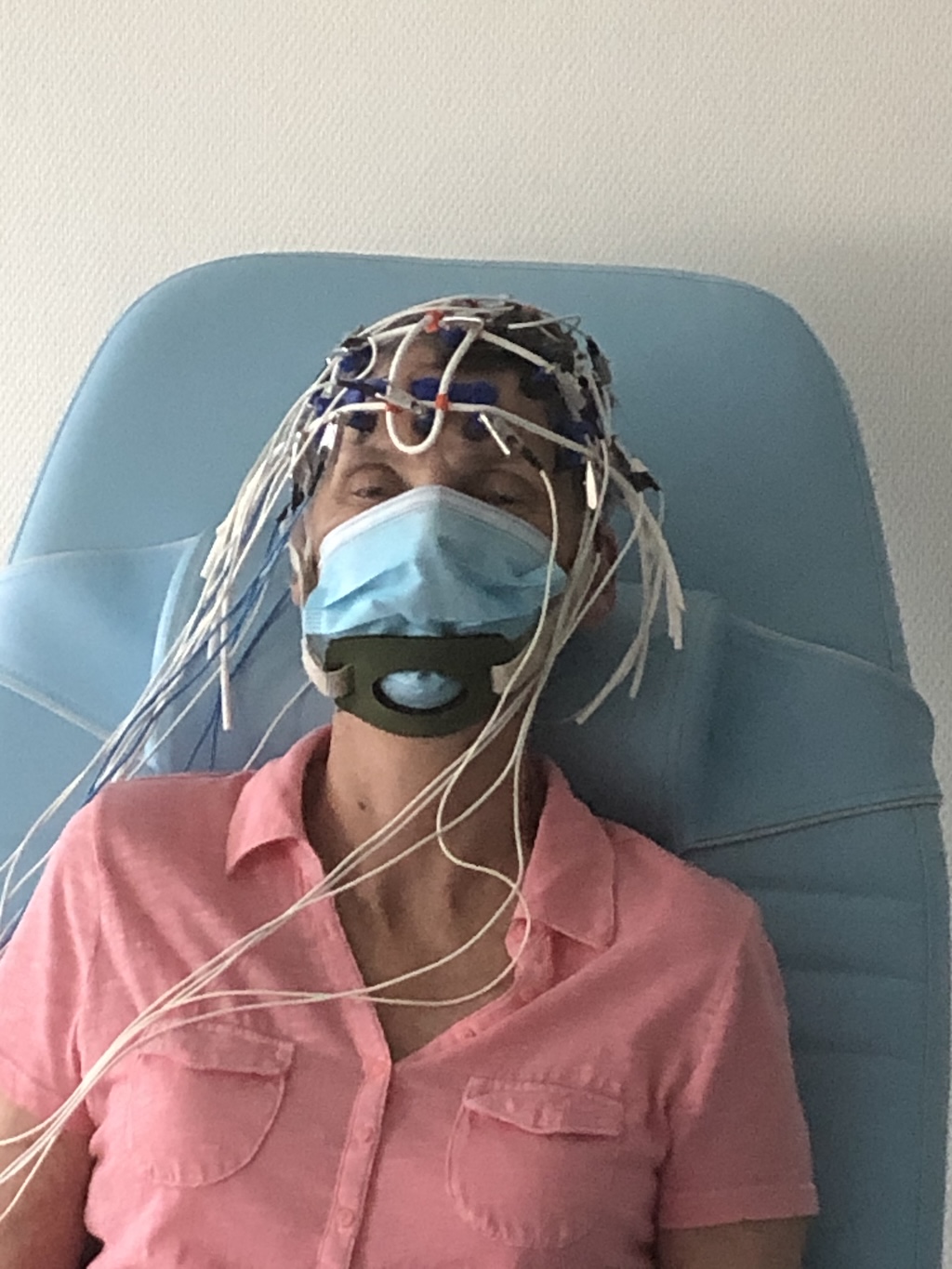
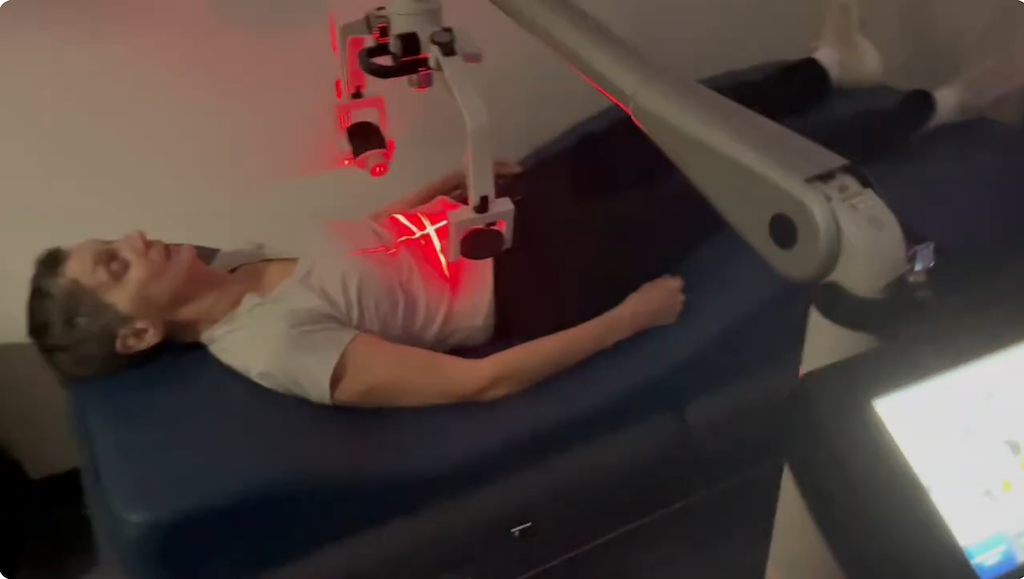
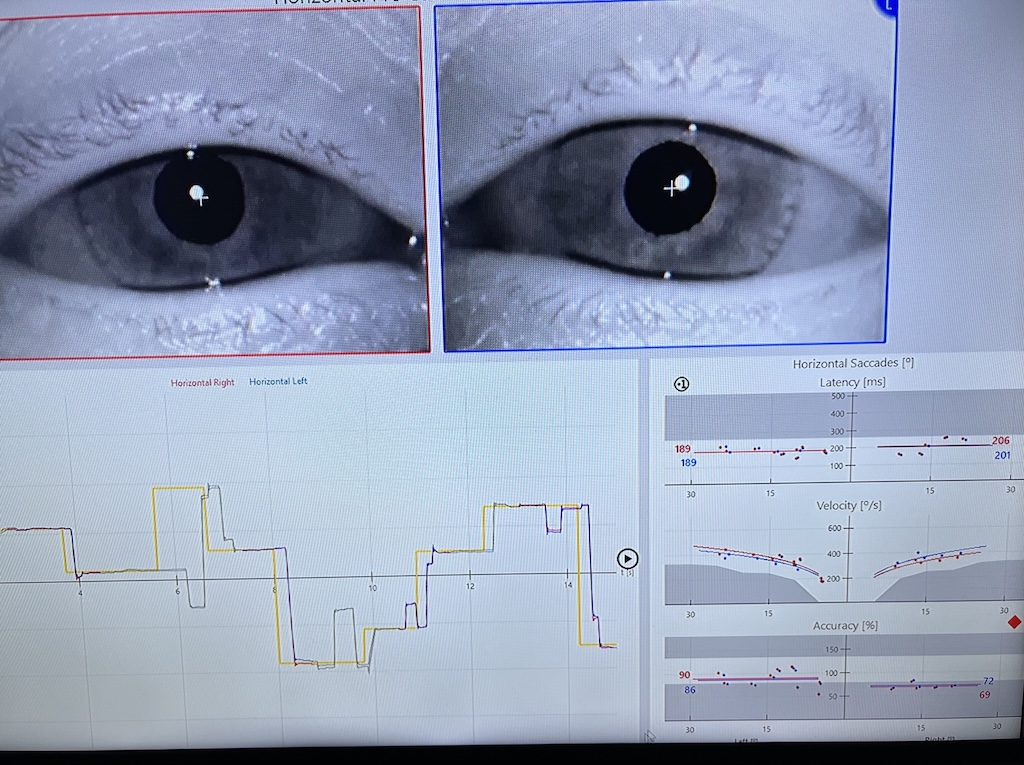
After my time at the Functional Neurology Clinic in Minnesota, I learned how neuroplasticity allows the brain repair itself. After my brain surgery, messages did not get to my left side. Rope flow trains the brain and the body simultaneously and I would recommend it for anyone recovering from a TBI.

I am learning to accept my limitations, no more hooping, running, jumping. No kayaking, canoeing, golf, tennis, pickle ball or any asymmetric sport requiring lateral movement. For me, traveling in cars and planes or even sitting must be minimized.

So I was encouraged to finally find a sport I can perform with my broken body; it’s even good for me.

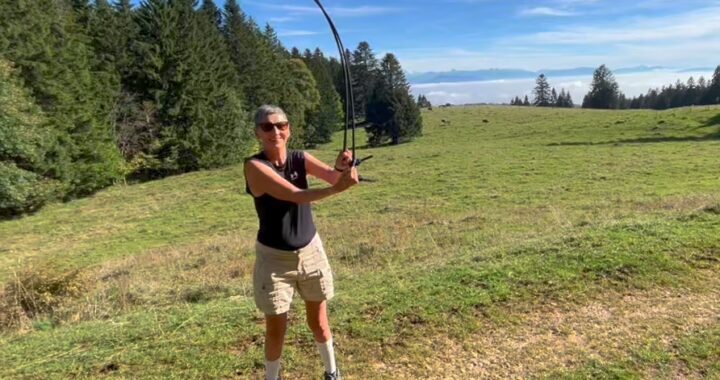
Granted I look a bit crazy, but who cares? I swing my rope, whistle like my dad used to, hang out with cows up in mountain meadows and admire the panoramic Alps.

It is highly unlikely that you can find an instructor in your area, but David Weck, Tim Shieff and other experts offer detailed videos breaking down movement into steps.

So pick up a rope, put on your favorite song and swivel those hips.

Yahoo! Clear the way! Look out! I’ll lasso you…my first dream was to be a cowgirl!

Hope in Hopeless Times

God grant me the serenity
to accept the things I cannot change;
courage to change the things I can;
And the wisdom to know the difference.

My paternal grandmother taught me The Serenity Prayer when I was a child. I turn to this verse in the troubled times of today. Replace the word God with the name of whatever deity you worship or ideology you believe in. An estimated 4,200 religions exist in the world and most adhere to the same tenets.

Each culture is rich in its own way, with its own language, religion, literature, art, music, poetry, traditions and philosophy.

My heart breaks a little more each day knowing that my birth land, a country built on the backbone of indigenous tribes, immigrants and African slaves is now being split apart by violent rhetoric, divisive ideology, religion intolerance, systemic racism, sexism, classism and ethnocentrism.

In the USA, civil rights are being threatened daily by policies eliminating immigration and human rights. Nationalism is sweeping across borders with extreme right wing leaders rising to power in Austria and Italy and threatening to succeed in Germany and France.

Have we forgotten our past?

I never thought I would witness war on European soil during my lifetime. Yet three years after Russia invaded Ukraine, Ukrainian’s battle for freedom and defense of democratic principles rages on. A potential US-Russian peace agreement for Ukraine, without including Ukraine in the discussion, echoes of the disastrous appeasement plan of the Nazi Era that led to WWII.

Europe is not a far away place somewhere. Europe is your neighbor. Europe is my home. In the past, my grandfather fought in WWI; my French in-laws and Norwegian relatives survived the Nazi Occupation. My American peers and I grew up fighting against discrimination and inequality.

My family, through birth and marriage, is American, British, Chinese, French, Irish, Norwegian, Scottish, Swedish, and Ukrainian.

My people are all people.

Set our differences aside. Take off our rose-colored glasses and pie-in-the-sky illusion that conditions are improving. We must face the stark reality of what is happening, not only in the USA, but around the globe. Natural disaster, civil unrest, a wave of extreme right wing ideology and nationalism is spreading.

A half century ago, as an idealistic university student, I started studying social work. When I realized that I could not save the world, I trained as an educator. Serendipitously, while teaching at an International School in Switzerland, I had the privilege to work with students and families from around the globe.

From my experience, I learned that we are more alike than different.

We all want the same things for those we love — a roof overhead, food on the table, a right to a good education and an equal chance to work and prosper.

Yet as individuals, we remain impotent, helpless and hopeless. How can one human being, especially one with a broken body, ever change the world?

I can’t. But I can reach out to those in my entourage.

We must begin within our immediate circles — families and friendship groups, neighborhoods and schools, churches and communities.


As my former coach said, “We have to continue to do the right things, for the right reasons, for all of us.”

It’s so hard to believe integrity matters when countries’ leaders seem to be so hell bent on spinning lies, disbanding public education, health care, social services, and the human rights we fought so long to assure.

How can my country go from being the world’s leading democracy to one of the planet’s biggest bullies?

Political ideologies aside, if any civilization anywhere on earth is to survive, we must find ways to work together on global issues. Poverty, climate change, cyber security, natural resources, future pandemics, nuclear threats and pollution affect all mankind.

An estimated 8.2 billion people representing 4,000 different cultures, speaking 7,000 languages share this planet. We all have to do more at every level in each country to communicate in a common language — the language of humanity.


How International Women’s Day, Title IX and Sterling Basketball Tie Together

Today, March 8, 2025, is International Women’s Day! Coincidentally, the United Nations began celebrating International Women’s Day as part of the International Women’s Year in 1975. That same year the Title IX (June 23,1972) Amendment stipulated full compliance with the law.
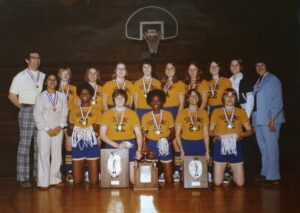
Title IX transformed education for women. After centuries of discrimination, the landmark civil rights law leveled the playing field in sports and allowed millions of women to earn degrees.

Speaking at Illinois State's 50th Title IX Celebration with legendary basketball coach Jill Hutchison, Olympian Cathy Boswell and other superstar alumni.

Gradually, Title IX revolutionized women’s lives in the US by opening doors to education and athletics.

Unfortunately here and globally, women are still subject to sex abuse and domestic violence and denied access to health care, education and equal opportunity in the work place.

In our hometowns, we see firsthand Title IX’s impact, as our daughters, granddaughters and great granddaughters enjoy the opportunities that my generation, and women prior to my time, fought so hard to ensure.

The 2025 Sterling High School Golden Warriors basketball team fell a game short a trip down state to Redbird Arena, my alma mater, in their run to repeat the 1977 first Illinois state championship. Their rise to glory was no less phenomenal. In four years they turned a 3-26 losing team into a championship contender.

This year's team with their tough defense and fighting spirit were reminiscent of SHS’s 70s and 80s teams like that 1977 state championship team, which included Coach McKinzie and Coach Smith, a dad/daughter, brother/sister combo, the 2025 team was also a family affair uniting sisters, coaches, dads, daughters and their families.

With perfect timing, Coach Jackson’s team gave the community a reason to cheer at a scary time when many civil rights and federal departments protecting health and education threaten to collapse at an alarming rate.

I am proud of Sterling’s stellar basketball season. Like many Sterlingites who may have moved away, I still bleed blue and gold. Our Sterling High School days remain tattooed in our hearts.

As a pioneer, I lived daily the battle for equality and I have had the privilege of seeing opportunities for women explode. I am also old enough and wise enough to know our rights could disappear.

Today, in the Caitlin Clark and Paige Bueckers era, we celebrate the popularity and media exposure of women’s basketball. We love watching the NCAA’s March Madness, the Unrivaled 3-on-3 inaugural season and the W. We appreciate the opportunities awaiting our daughters, not only in basketball, but in so many other arenas.
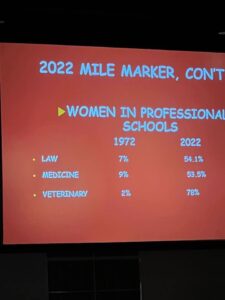
But work must continue in the US and around the globe to improve women’s health care, to protect reproductive rights, to guarantee equal pay, to curb the epidemic of violence against females, and to allow the voices of other women to be heard worldwide.
Today women succeed, not only on the playing fields, but in education, business, medicine and other professions where we were never allowed before.

Today we are winning, but the risk of losing all has never been so great.

Today, we must fight to guarantee these rights will remain for future generations.
.
Five decades ago, the UN started the First National Women’s Day. Fifty years ago Title IX was fully enacted.

What can we do today to assure women’s opportunities and their contributions will stand in the next century?

Raising the Roof, Retiring Maya Moore’s Jersey, Reveling in Women’s Basketball

As an athlete, coming of age in the 70s during Title IX’s infancy, the explosion of women’s basketball today blows my mind.

This summer, I blended into the 19,023 record-breaking crowd at Target Center in Minneapolis to honor the Minnesota Lynx legend Maya Moore.

Before tip off, I trembled. Awed, I watched as people of all ages, races and backgrounds cheered, wearing shirts engraved with the names and numbers of their favorite FEMALE players.

How fitting that Iowa’s Caitlyn Clark’s Indiana Fever team faced off with the Lynx on the night they retired her idol’s number 23 jersey?

Caitlyn grew up dreaming of playing basketball like Maya one day.

Decades ago, girls like me and my sisters, grew up dreaming of playing at all. Of just being allowed on the court.

This profound moment in time was magic. Especially for my family.

Like Maya, I once wore the number 23.

So did my little sister.

Maya was a star at every level, on her high school team, at the storied women’s basketball program at UCONN, and in the WNBA leading the Lynx to 4 national championships.

By comparison, I couldn’t even play on a team until my senior year of high school. When I played college ball in the 70’s, we were ridiculed by peers, scorned by the NCAA. After college, I signed a contract with hard times to compete in a fledgling Women’s Professional Basketball League (WBL). We played in empty arenas, hitched rides to practice, survived on crackers and never got paid. In the late 70s female ball players were oddities, a pro league of our own insane, but our crazy collective dream gave birth to the 1996 WNBA.

Along with hundreds of courageous pioneers, our sacrifices helped thread together the stunning tapestry of women’s basketball that led to this day, this time, this moment.

In the summer 1999, my sister and I took our daughters to our first WNBA game in the Lynx inaugural season. There were fans, but also enough empty seats that we were able to move close enough to the court for my daughter to catch a free t-shirt.

On August 24, 2024, at Minnesota’s Target Center, as I sat on the upper level of the packed arena, pandemonium erupted as fans paid tribute to their past hero and applauded the exploits of their present star, both catalysts in revolutionizing the popularity of the women’s game.

It’s a far cry from my day, when I played at Madison Square Garden in an arena, so empty, the sound of the ball bouncing echoed through the rafters.

We cannot know who we are if we do not know where we came from.

Before the Lynx/Fever game, when I stood for our national anthem, I raised my hand to my heart and nodded to our past stars.

We stand on the shoulders of those who came before us.

Thanks to Title IX, a girl grows up never questioning her right to be all she can be.
That access to opportunity began in the heartland for me, Maya, and countless other little girls.

When we were kids, women were not only absent from the gym. We didn’t know any female doctors, lawyers or CEOs. We fought for the right to play ball and paved the way for our highflying daughters of today, including my own daughter who was a division III athlete on her way to becoming a doctor.

What made Maya Moore extraordinary, was not just her supreme athleticism, but her human spirit embracing equality and battling for social justice that led to the liberation of a man imprisoned for crime he never committed. Maya, the league’s best player, retired from the game at height of her success, to fight for the rights of others.

After the game, Maya Moore Irons addressed former teammates and fans as they raised her number 23 to the rafters. Known for her illustrious MVP career, Maya stands out most, not for her accolades on the court, but for the person she is off it.

“There’s no end to possibilities, when a group of women together bring it!” She said blinking back tears. “Let our unity go beyond Target Center. Show your love and appreciation for those around you!”

“My life,” she added“is an example of what happens when we love a little girl well.”

I, too, am an example of a little girl being loved well. I grew up first in my adoring McKinzie family, then my hometown, Sterling, my Illinois State University community, and my country, the USA. As an adult, I dedicated my life to helping teens reach their dreams on the hard courts and in the classroom across Europe. Never in my wildest fantasy could I imagine how far the game took me and how far we have come.

Basketball, like life, is about paying it forward. Passing it on.

The current Lynx icon, Napheesa Collier, grew up in Jefferson City, just like Maya. Somewhere out there is a little girl who looks at Phee and dreams of being a WNBA star. I look back at my younger self and think “you did good girl”.

We struggled too hard for too long.

We are NEVER going back.

Happy 90th Birthday to my Extraordinary Mom

From kindergarten teacher, to camp leader, to club member, to quilt-maker, to card sender, to grandma extraordinaire… everybody loves Lenore!

You, mom, who brought us into the world and then taught us to embrace each day as a gift, also showed us how to nurture, to console, to compromise, to accept, to fight, to forgive, to teach, to learn, to praise, to thank, to welcome, to love.

Unconditionally.

Thank you for the gift of life. Only in my later years, have I appreciated what a selfless act that truly is. When I was a young mother, you wisely told me: “From the moment your baby is born, you offer her as a gift to the world.”

I have been so blessed to have been born to you - a generous, intelligent, forward-thinking mom, who nurtured me through so many tough transitions with my identity intact during the tumultuous 60s and 70s. Because of you I became strong, courageous and resilient.

I could have never navigated my path as a trailblazer without you encouraging me to rise up after each setback, to persist through every trial, and fight back from injuries in my rough and tumble life as a female athlete.

Because you loved and accepted me, I learned accept myself, long before society did.

Had you been born in a different era, when women had equal educational and athletic opportunities, you would have been an athlete, a doctor, an engineer or a scientist, like your two brothers. Instead you broke glass ceiling in the 1950s earning a college degree, becoming a teacher and raising four children five years apart.

If I became a Title IX pioneer, it was because from day one, my strong, loving, selfless mom believed in me and led by example. You walked so I could run.

You taught me to live with gratitude and to “hang by my faith hook”. How much kinder and more hopeful am I because you taught me to believe in the goodness in mankind?

I feel grateful for every sunrise, every phone call, every Summit Lake summer, I can share with you.

You, my beautiful, blue-eyed Norwegian-American Mom, have only to look into your children’s, grandchildren’s and great grandchildren’s eyes to see the reflection of your love. A love that keeps on giving.

lenore 2-1
previous arrow
next arrow