First Step Fighting Depression and Anxiety Seek Mental Health Help

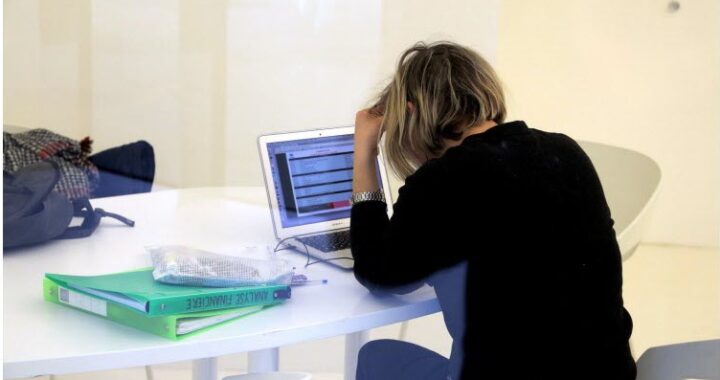
Most people may need counseling especially these days due to the Covid-19 outbreak. Including me. One-third of the people suffering from brain injuries, like mine, develop major depression. Depression may be precipitated by genetics, circumstances, illnesses or unforeseeable and uncontrollable events. For example, the current world pandemic affects our mental health in ways we could never have imagined.

Anxiety, too, is at an all time high worldwide. We are scared of going to school and work and contracting Covid-19, or staying home for safety and falling behind. We fear our ability to pay mortgages, medical bills, rents. We worry about losing our homes, our businesses, our loved ones, about finding jobs or keeping jobs.

We are cracking up.

US cases of depression tripled from 8.5% before Covid to 27.8% now.
One in three people in the States are anxious or depressed.

Statistics in Switzerland, rated the top place in world to live for the quality of life, are alarming. Adults suffering from mental health issues before Covid were 3% and that number climbed to 18% in November 2020. Today, one out three people under the age of 24 suffer from depression or anxiety.

“The person who needs help is often times the last to realize it,” says my husband who encouraged me to get professional help after my accident and brain surgery.

If you know someone who is struggling encourage them to seek help or even better help them find it.

A good therapist can’t give you the magic solution, but they can help you find coping strategies and the right tools to move forward. They can help YOU create an action plan and locate resources — the right medications, support groups, community services or books to read to help you. They can motivate, cheerlead, validate your feelings, listen without judging, and help restore hope.

But the first step is admitting you need assistance. We never waver when we need to seek medical health for broken bones, cancer, or illness, but we balk when it comes to caring for our mental health. There is a stigma to admitting your brain is suffering, but like any of the organ can go haywire.

Would it encourage you to take action if you knew that nine people in my hard-working, high-functioning, “normal” family have at one time or other sought professional mental health care in the form of a psychiatric, psychologist or counselor? None of us are crazy.

The cause of mental illnesses are varied as the kinds. They can be caused by brain disease, genetics, chemical imbalances, injuries, PTSD, CBT (i.e.getting one’s bells rung one too many times on the football fields, hockey rings, soccer pitches.)

But due to Covid-19, no time in modern history have the levels of depression and anxiety been greater.

“The distress in the pandemic probably stems from people’s limited social interactions, tensions among families in lockdown together and fear of illness,” says psychiatrist Marcella Rietschel at the Central Institute for Mental Health in Mannheim, Germany.

The finding that women are more likely to experience psychological distress than men is consistent with other global studies that have shown that anxiety and depression are more common in women.
“The lower social status of women and less preferential access to healthcare compared to men could potentially be responsible for the exaggerated adverse psycho-social impact on women,” the researchers suggest.
Mental health professionals can help, but the work must be done by the individual.

Here is some steps that helped me:

  • Walk. Go outside. Be in nature.
  • Call a mom, daughter, sister, friend, another female.
  • Make a to do list. Set a goal. Start a project.
  • Declutter one shelf, one drawer, one cupboard.
  • Make that difficult decision to seek professional help, many provide services on line through Syke or on the phone.
  • Escape - watch Netflix. Read fiction. Look at old photographs.
  • Learn something new.
  • Share your story.

End the stigma. Stop suffering in silence.
Don’t Give Up

ISUOne moment I was living my dream as a professional basketball player in Europe, driving past my opponent with perfect body control releasing the ball so gently it kissed the backboard. The next instance, I was spinning weightlessly through air when our car flipped off a 100 foot embankment into France’s La Meuse River leaving me clawing against an icy current.
The impact of the crash, broke me in half - cracked my sternum, compressed vertebrae in my rib cage, concussed my brain, blocked my intestines and ended my career instantly.

I was only 26 years old. I thought life was over.

In the long days of therapy I slowly regained use of my limbs while living 4,000 miles away from home. I wanted to give up. I had no purpose.

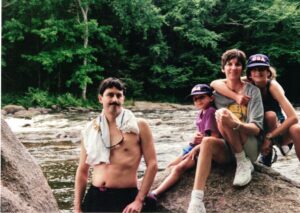
In pain and despair, I hung on, an hour, a minute, a second at a time.Lechaults on the Wolf river

I never ran or played basketball again, but I persisted and went onto to lead a fulfilling life.

I married the Frenchman, who stood by me as I struggled to carve a new identity in a foreign land. Together we raised 2 bilingual, bi-cultural kids, who grew strong, trained hard and entered helping professions, one as a pediatrician, the other as a chiropractor.

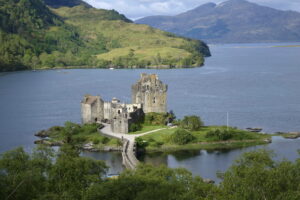
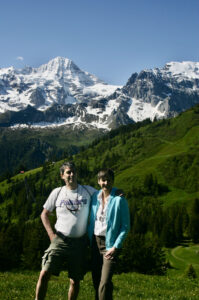
Swiss AlpsEilan Doran Castle. ScotlandI lived near the Eiffel Tower in Paris and at the foothills of the Alps on Lake Geneva. I stood on Mt. Blanc and the Acropolis in Athens. I rode horses on the beach in the Camargue and floated down the canals of Venice. I walked in the shadows of my forefathers at Scotland’s McKinzie Castle and along the Norwegian fjords of my Olson ancestors above the Arctic Circle.
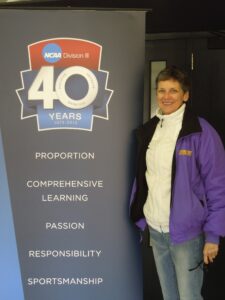
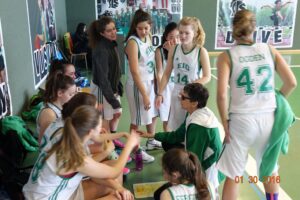
When I could no longer play basketball, I thought I would never adjust to sitting the bench, but found my calling as a coach. In three decades of coaching and teaching I had the privilege of working with sons and daughters of diplomats and world leaders from around the globe from whom I learned as much as I taught.

NCAAI wrote a book that led to an invitation to speak at the U.S. Senior National Games, an NCAA Final Four basketball banquet and commencement at the prestigious International School of Geneva, founder of international baccalaureate.
During my lowest point, I thought I had nothing left to give, but I never gave up. In retrospect, I see that I had a lot left to offer and even more to learn.

Nearly 4 decades later, after another life threatening accident last spring, I struggled again to tie my shoes, walk the fields, write a paragraph, repeating lessons learned years ago. I wonder why am I here? I grapple with finding a purpose to continue.

At age 63, I am too young to put out to pasture.

Each day I lift dumbbells, walk the block, play memory games coaxing my body and mind to grow stronger in preparation for the next calling.

Coaching in SwitzerlandIn the meantime, I keep fighting to go on, pulling up someone else, pushing another forward. After all my struggles, this much I know to be true. We are in the game together.

No one gets this far on their journey without the love of family and friends, the kindness of acquaintances and the helping hand of a fellow man.

In this endless season of sadness, during one of world’s deadliest pandemics, we want to throw in the towel and call it quits. Our bones ache from the cold, grey winter, our spirits break from living in isolation and mourning lost loved ones, our minds spin with anxiety facing future uncertainties. We are each struggling with something.

Let my crazy odyssey serve as an example of hope. Take it from the kid who thought her life ended in an accident at age 26 and is still standing today. Don’t give up yet.

Better things lie ahead.

Hope. Have faith. Hang on.

Put one foot forward.

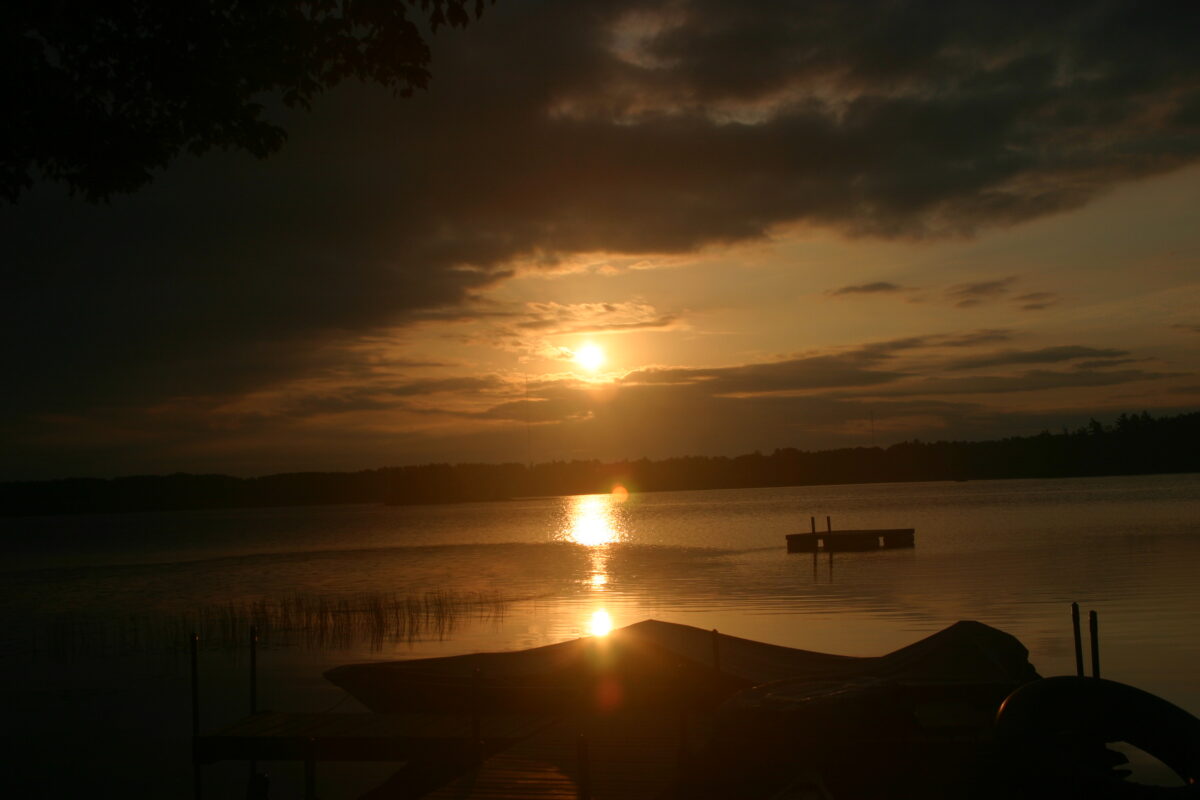
The sun will rise again.

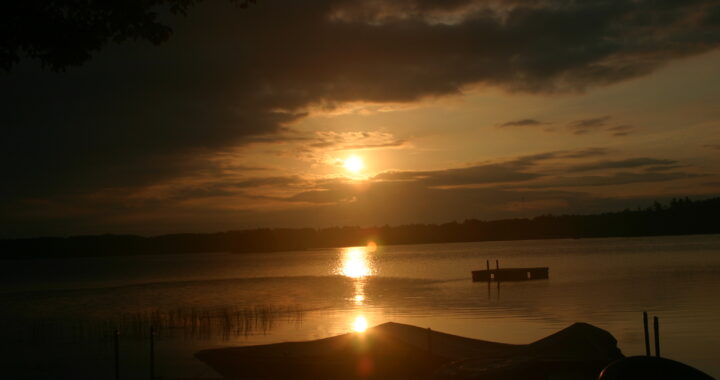
Sunrise on Summit Lake, Wisonsin

Inauguration Celebrating Best of American Story

Inauguration Celebrating Best of American Story

“Our history has been a constant struggle between the American ideal that we are all created equal and the harsh, ugly reality that racism, nativism, fear, and demonization have long torn us apart."

"The battle is perennial. Victory is never assured.Through the Civil War, the Great Depression, World Wars, 9/11, through struggle, sacrifice, and setbacks, our "better angels" have always prevailed.“

On Jan 20, President Biden’s inaugural speech offered hope signaling a new beginning in the American Story celebration. Just 2 weeks ago during one of the darkest days in our history, Trump denied election results and incited insurrection at our Capitol building to overthrow the government, threatening our 200 years old democracy, now we begin to heal and move forward.

After serving USA for 30 years as senator, 2 terms as VP alongside Obama, Biden took oath at age 78 to become our oldest President. His words, coherent and articulate, enflamed with passion and compassion, pleaded for unity and comprehension in a nation divided.

Kamala Harris, lost the democratic nomination but won the ticket as Biden’s VP and broke the glass ceiling by becoming the 1st female vice president, 1st African-American and 1st Asian-AmericanVP. She inspired young girls everywhere to dream.
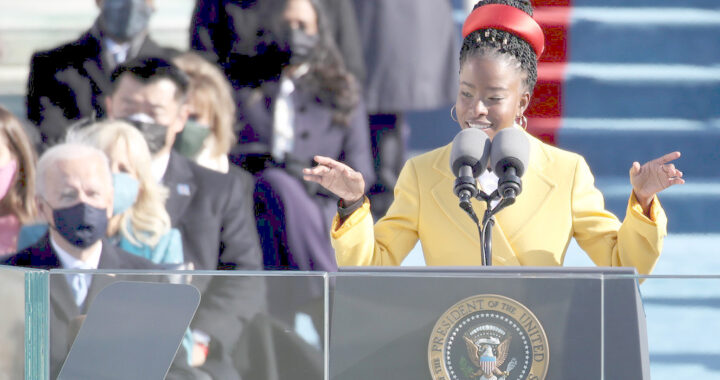
And 22-year-old Amanda Gorman, the youngest ever national poet laureate, compensated for an auditory processing disorder and held nation spellbound with her lyrical words, as she recited “The Hill We Climb” to the world.

Oldest President, first ever African-Asian-American female VP and youngest poet laureate. Old, Young, Black, White. This is America. Land of opportunity. For all.

Gorman. who overcame a speech impediment, stood tall; her voice like a healing balm, rang steady in a soothing cadence and natural rhythm.

The Hill We Climb

“…Where a skinny Black girl
descended from slaves and raised by a single mother
can dream of becoming president
only to find herself reciting for one
And yes we are far from polished
far from pristine
but that doesn't mean we are
striving to form a union that is perfect
We are striving to forge a union with purpose"

…/… (link to the full speech video)

America boasts of sports icons, movie stars, media moguls, but our real champions are these folks who fought the odds and overcame terrific personal losses to keep fighting.

On a smaller scale, heroes exist within our own families. Like my maternal grandparents who came to America for a better life. When my Norwegian grandpa Gustav lost his job during the Great Depression, he walked to the Chicago Public Library everyday to read books because he always wanted to be educated but never had the opportunity.
Or my paternal grandparents who lost 2 sons. Instead of becoming bitter, they dedicated their lives as teachers and college coaches guiding other people’s sons into adulthood.

Or my parents who spent their careers as educators in the same community not seeking praise, but finding peace knowing the value in helping a child read better, stand taller, be braver.

Or me. Losing everything. Beginning again. Not once. But twice. Learning to grip, walk, talk, read and write. Never giving up in spite of great physical pain and emotional despair, looking outside of self to encourage another to get up and go on too. To continue my mission inspiring courage, breaking barriers, creating connections internationally.

That is our American story. Perseverance. Pioneer spirit. Resiliency. Courage. Tolerance. To rise up again. To rebuild Together. Hand in hand. As Biden concluded in his speech:

Here we stand, in the shadow of a Capitol dome that was completed amid the Civil War, when the Union itself hung in the balance.
Yet we endured and we prevailed.
…/…
And here we stand, just days after a riotous mob thought they could use violence to silence the will of the people, to stop the work of our democracy, and to drive us from this sacred ground.
That did not happen.
It will never happen.
…/…
And together, we shall write an American story of hope, not fear.
Of unity, not division.
Of light, not darkness.
An American story of decency and dignity.
…/…
May this be the story that guides us.
The story that inspires us.

Link to the full speech video

This is our America.

Horses Help Patients Heal from Brain Surgery

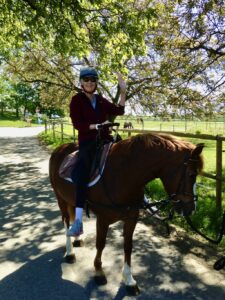
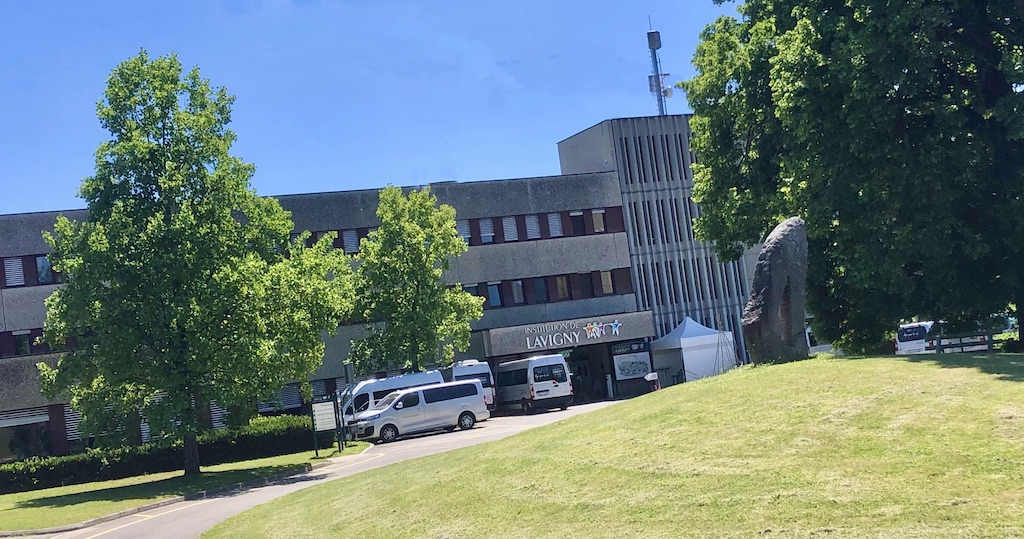
Just a few weeks after my brain trauma and surgery, my physical therapists in the rehab hospital, The Lavigny Institution, recommended a pony ride to help me heal. My entourage at home found that suggestion amusing as they pictured me on a pony with my long legs dragging the dirt.
I was dumbfounded to find out my rehab center had its own stable, vineyard and farm. Dating back to 1906, over a century, a rich Pasteur in Vaud Canton Charles Subilia troubled by the death of an epileptic boy dedicated his fortune to creating an asylum for epileptics. The center now grown to over 900 employees specialized in treating epileptics and stroke victims comes as no surprise, but the fact they owned their own stable and offered hippo therapy seemed unbelievable.

Though the use of equine-assisted therapy (EAT) involve activities with horses to promote human physical and mental health after injury and illness has roots in antiquity, I had never heard of it.

“The movement of a horse side to side, forward to back hip rotations are what humans need to do when walking,” my PT explained. “Riding a horse helps promote that movement that we forget after brain accidents.”

The horse’s pelvis moves in the same three ways as a human pelvis does creating a movement pattern similar to human walking.

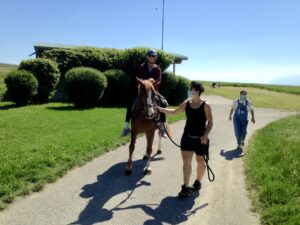
My physical therapists were so enthusiastic they could get me to agree to anything, but on the day I was scheduled for pony therapy I had second thoughts. Was I crazy? I hadn’t ridden a horse in over 50 years. But there was no way I could fall off. To mount the pony, which I was surprised to see had grown overnight to the size of a horse, I walked up a ramp and they brought the horse to a stand beside me.
A stable girl with years of experience took the reins and led the horse down a country lanes. Therapists walked either side of me.

“Lean left , lean right, more hip movement, less upper body, pull back upper shoulders, sit up straight in saddle,” Benoit instructed while I tried to let my body sway into the horse’s natural rhythm . Benoit modified the horse’s movement to promote specific responses within the me, while he simultaneously instructed a fellow PT.

In addition to the physical contact with the animal, the horse also provided sensory input aiding my body’s ability to sense its location, movements, and actions in a continuous loop of feedback between sensory receptors throughout my body and my nervous system.

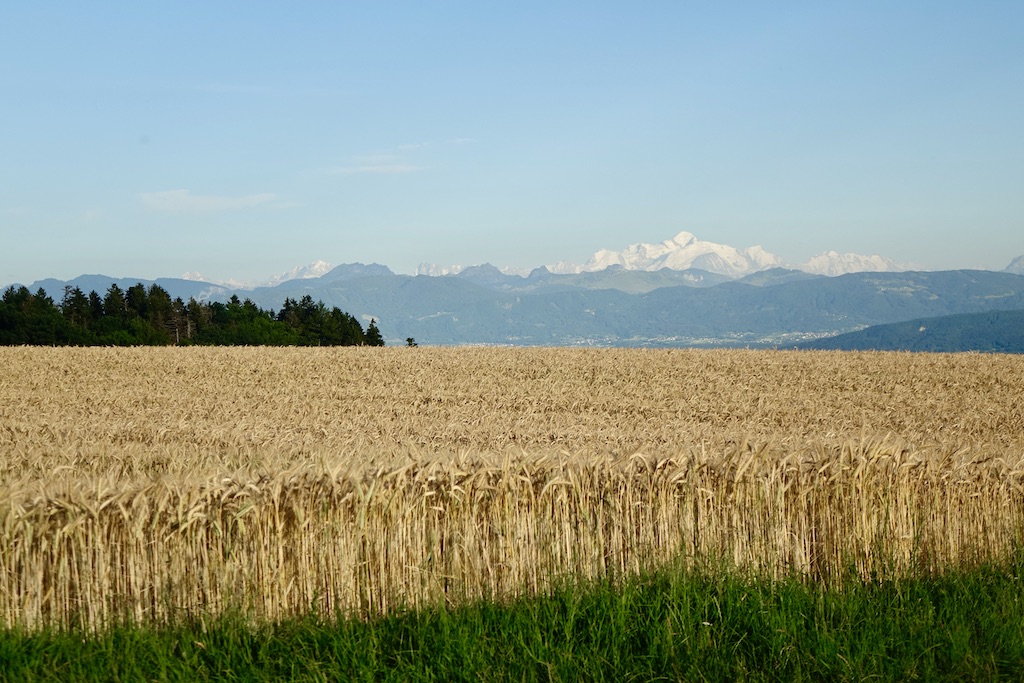
As I rode down the trail, my worries melted. My rigid, body melted into the movement of the horse while my mind blended into the healing atmosphere of nature. As wind washed over my face, golden fields of wheat undulated in the winds like a Hawaiians dancers hips swaying in grass skirts.

Lavender fields and cobalt blue ponds looked as vivid as a Van Gogh paintings. Baby goats rollicked at their mamas heels and cows, the color of toasted marshmallows, grazed in lush green valleys. The entire vista opened up to the majestic Lake Geneva surrounded by the imposing Alps, which looked like sea creatures rising up from the deep.

The feel of the breeze, the steady rocking of the horse and the mesmerizing view filled me profound peace allowing total liberation from my broken body and bruised mind and gave me hope.

“The Lavigny Institution supports each person as a whole: physical, psychic, intellectual, emotional and spiritual to develop autonomy and social relationships, as well as foster the development of the person.”

Therapists in Rehab Hospital Inspire Hope

Unfortunately at different times in my life, I have been hospitalized in 4 different countries, but none of them could compare to my six week stay in Lavigny, Switzerland.

After nearly 2 months in the hospital, I am still trying to piece together what happened to me. I don’t remember any details about my fall, about the harrowing helicopter transport and emergency brain surgery or the first 2 hospitals where I laid in a bed too weak to stand, too confused to carry on a conversation to process everything I was facing.

Fortunately over time, I began to heal. But I am the first to admit I did not do it alone. I was transferred to the 3rd hospital, Lavigny, a neurological rehabilitation center specializing in treatment for epilepsy, stroke victims and brain injury. Set in the rolling hills between the Jura Mountains and Lake Geneva, the bucolic countryside with majestic views filled me with peace, but my therapists stoked the inner fire to thrive.

At Lavigny, I relearned self care, how to use muscles properly and how to regain my voice after intubation during surgery. Everyone was so encouraging and kind and young.

When I arrived at Lavigny, I felt as old as the mountains surrounding me. Tasks that I once completed effortlessly, seemed insurmountable. Maneuvering down the hall 30 feet to the dining rooms without toppling over felt as exhausting as completing a marathon.

The first thing the nurses and therapists did was get me out of bed. With words of support, they refused to let me mope around and feel sorry for myself. We became a team with a common goal— make me strong enough to function independently so I could go home.

Therapist in Rehab Hospital Inspire Hope

The village of Lavigny, with the hospital in foreground

At times I felt like giving up, but my team of therapists wouldn’t let me. With their never ending encouragement, I took one step forward and then another. Nadine taught me how take a shower safely, how to tie my shoes and how use eating utensils again.

Carla and Benoit helped me regain balance and walk without staggering side to side like a drunk. They trained me to lift my left arm again and to make a fist with my left hand. Manon helped me recover my voice, which squeaked as if I had just coached a European championship.
No one knew for sure how much of my abilities I could recover or how quickly, but no one ever let on they had any doubt that I would return to normal, so I never doubted either. That combined with the positive verbal encouragement from loved ones’ nightly phone calls surrounded me with positivity.

Lisa, my neuropsychologist, explained what trauma does to the brain and helped me regain its function even before I realized it wasn’t working. At first I wanted to lash out at all my therapists in frustration over my loss of abilities, ashamed of my dependency, my physical weakness, my mental handicaps. I complained to Gerald over the phone, “They treat me like a baby. They will keep me here forever.” It was as though I couldn’t admit my loss of skills, losses I was reminded of when I saw other patients slumped over in wheel chairs, hobbling behind walkers, unable to walk, to talk, to swallow. Contrary to my misperception, each action was a challenge to become more self-reliant, so I could live independently again.

Each day was the same rigorous routine, 5 intense 45 minutes of therapy — PT, OT, neuropsych, speech therapy —that left me feeling so exhausted between sessions that I fell asleep between each one.

When I was finally released from the hospital, I was convinced that my therapies and my team’s commitment and care, literally saved my life. I was filled with gratitude to Lavigny and its staff.

When I met with the psychiatrist in charge of my case after another month of therapy as an outpatient, he reminded me,”The therapists certainly helped you reach your goals, but what they all told me was that it was your will power and drive that made the biggest difference to come back from such a devastating accident.”

In retrospect I am not sure how I overcame such great odds alone in a hospital in Switzerland during a global pandemic. I wish I could impart that combined force – family, therapists and iron will to readers who may be facing insurmountable odds in their battles against cancer, illness, life altering accidents. The human spirit is so fragile, life challenges so insurmountable, our mortality so fleeting, but don’t give up. Never underestimate the power of love and the role you play in your recovery, in your capacity to heal .

I will always credit the therapists at Lavigny with giving me back my dignity. They celebrated every success – the day I could raise a glass to my lips, butter my own bread and walk to the dining hall without assistance- was worthy of a standing ovation. They acknowledged the courage it took each day to get out of bed and confront the shadow of my past and I will be forever grateful.

Pat leaving the hospital

4th of July 2020 – A Time of Reflection

4th of July 2020 - A Time of ReflectionOn our nation’s birthday I want to wish everyone a Happy 4th of July, but I don’t feel happy. I am deeply troubled about our future.

This is the first 4th of July since I moved to Europe 4 decades ago that I am not in my homeland celebrating the American holiday with family. Due to the present situation, I am not welcome there nor is my French husband or anyone else from Europe. No planes from abroad are allowed to land on American soil due to the Covid epidemic, but the great irony is that European leaders have done a much better job of handling the crisis than. Trump. The pandemic is under control here especially where we live in Switzerland.

The US has the most coronavirus cases and deaths in the world.

Americans are not allowed in Europe either, which is sad for European business.

“In 2019 around 18 billion Americans came to Europe spending 70 billion Euros (about 78 $billion dollars), “says Tom Jenkins CEO of the European Tourism Association.““

Europe’s borders have reopened to Europeans and 14 other countries – no one knows for how long— but they won’t be open to Americans anytime soon. Long haul flights and exchanges between Europeans and Americans look even more doubtful.

The financial fall out from lack of international trade between Europe and the US is massive; the emotional toll on families even greater.

I don’t know when I will see my children in the States again. My British daughter- in- law does not know when her family will be allowed to visit. My niece’s Chinese boyfriend has no idea when he will see his parents. And my eldest niece, who will be a new mother in two months, wonders what kind of a world awaits her baby.

Like most Americans living abroad, I am ashamed of our country’s leadership. I am alarmed by our President’s incompetence, his total lack of diplomacy, compassion and integrity.

I am worried for my daughter and niece who work in the medical health field in the States at a time when people show lack of respect for human life, refusing to do something as simple and innocuous as wearing a mask.

I am troubled by social unrest created from years of blatant inequality and lack of tolerance

I am horrified by the anti woman, anti gay, anti black, anti European rhetoric that fuels hatred and gives free license to bigotry.

Families may not be as international as mine, but so many of us can trace our ancestry to other parts of the world and so much of our nation was built on the backs of immigrants and slaves. To ignore the role of the African Americans, Asians and Europeans in the making of our country is a travesty, to sever the ties to our motherlands is a crime.

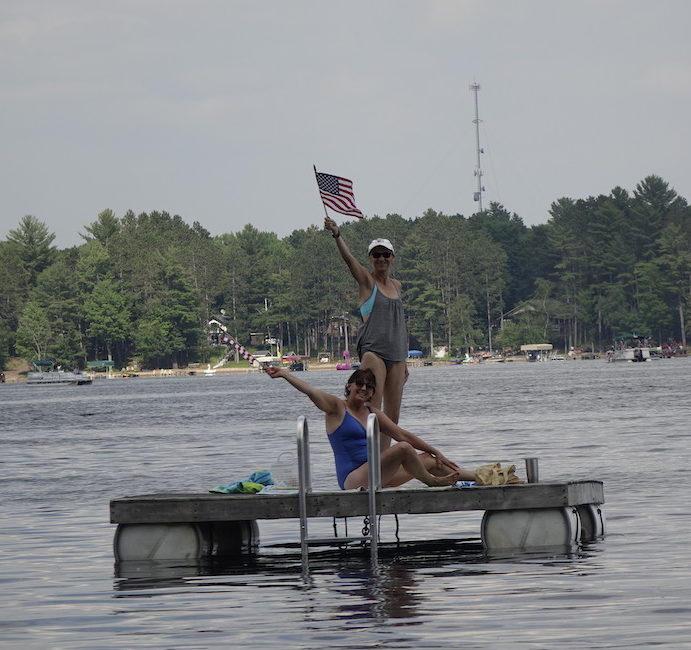
But I hope there are still pockets of America where the old values I grew up with still remain. Places like Summit Lake where time stands still, where hope runs eternal ,where nature heals our broken hearts. A place where the 4th of July is a celebration of a forgotten way of life of what is good about Americans, their childlike optimism and joie de vivre.

4th of July 2020 - A Time of Reflection


A place remarkable in its simplicity. Every 4th of July people dressed in costumes ride in decorated pontoon boats that circle the lake waving flags and throwing out candy and icees to people sitting on their docks. Later in the evening fire works explode from the public beach across the lake rivals any big city display. On the dock, wrapped in blankets, we swat mosquitoes while admiring the burst of sparkly colors illuminating the black waters and believe in childhood dreams again.
4th of July 2020 - A Time of Reflection

This year though I am sad for my country, I am thinking of happier 4th of July memories. Still my heart aches for family, for the lake and for a simpler time when we weren’t isolated and separated by a pandemic.