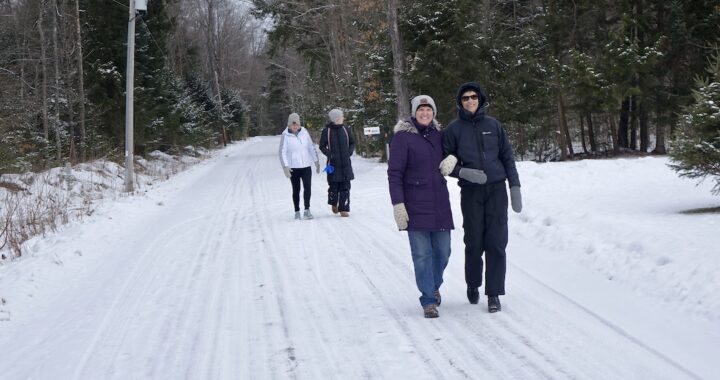
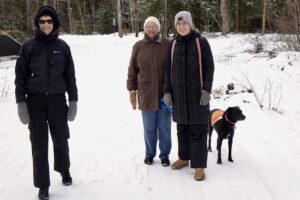
Walk in Nature – Rejuvenate Brain Power, Lift Mood, Improve Health


Remember when our mothers used to throw us out of the house commanding, “Go out and play!”: we spent the day climbing trees, making mud pies and inventing games.” Well, they were right all along. We grew strong, healthy and resilient.

Scientific research shows that you need to get back outside. Walking in nature may benefit not only your heart and lungs, but also your brain.

Studies back what humans once knew knew instinctively. Norman Doidge, MD, notes in his fascinating bestseller, The Brain that Changes Itself, that nature and staying active help the brain stave off dementia, ward off depression and heal from injury.

Physical exercise and learning work in complementary ways: the first to make new stem cells, the second to prolong their survival.
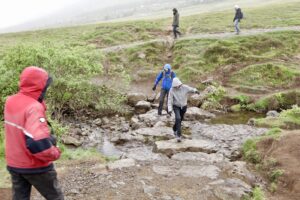
Not only does physical activity create new neurons, but exercise also strengthens the heart and blood vessels that supply oxygen to the brain helping you feel mentally alert.

Humans were not designed to live in a world of cement, artificial screens and sounds.

“This artificiality is draining our brains and damaging our health,” nature writer Professor David Gessner explains, “some scientists would say technology is slowly ruining our lives.

One US study by Harvard and Stanford researchers shows how workplace related stress can significantly reduce life expectancy. The link between low stress and longevity is well established.

The Swiss, the second most active people in Europe after the Swedish, have one of world’s longest life expectancy. Forty-four percent of Swiss exercise several times a week and 92% are motivated to move by getting in contact with nature.
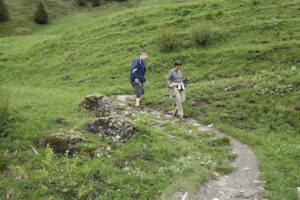
Not everyone, like the Swiss, enjoy the privilege of living in a mountainous and lake regions. Nor can everyone be located on coastal sea areas.

But even the American Midwest offers accessibility to nature. Minnesota - land of 10,000 lakes - offers miles of paved trails. Minneapolis-St Paul is known as one of the nations best metropolitan areas for biking/hiking. Escape to Wisconsin lives up to it’s motto as being a great get away for its lakes and forests.

The Chicago Park District owns more than 8,800 acres of green space, making it the largest municipal park manager in the nation.

Anyone living in the Cleveland area should contact my brother, who could have 2nd career as tour guide. He can find you a beautiful walking, hiking and running areas within a 20 mile radius of the city and give you directions how to get there.
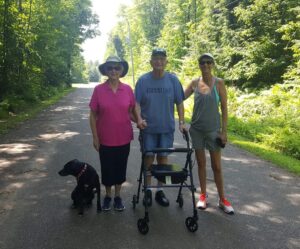
National and state parks and nature reserves abound across America. Even smaller communities boast of green space, like Sterling, Illinois where I grew up, which has 20 different parks, including a favorite Sinnissippi.

Unfortunately not all of us have the ability to walk. If that is no longer an option, ask your loved one to take you to a park where you can sit on a bench and benefit from listening to the wind in trees, watching the birds and feeling the sunshine on your face.
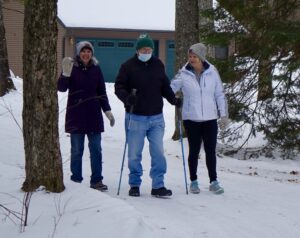
Those of us who can - must keep moving. My mom maintains her routine by taking steps for friends who no longer can. My dad keeps trudging along with his walker by setting daily goals to walk to the corner. And through diligent practice, I learned to regain balance, step forward without stumbling and swing my immobile left arm again after brain injury.

What’s holding you back? Get outside and shake that booty!
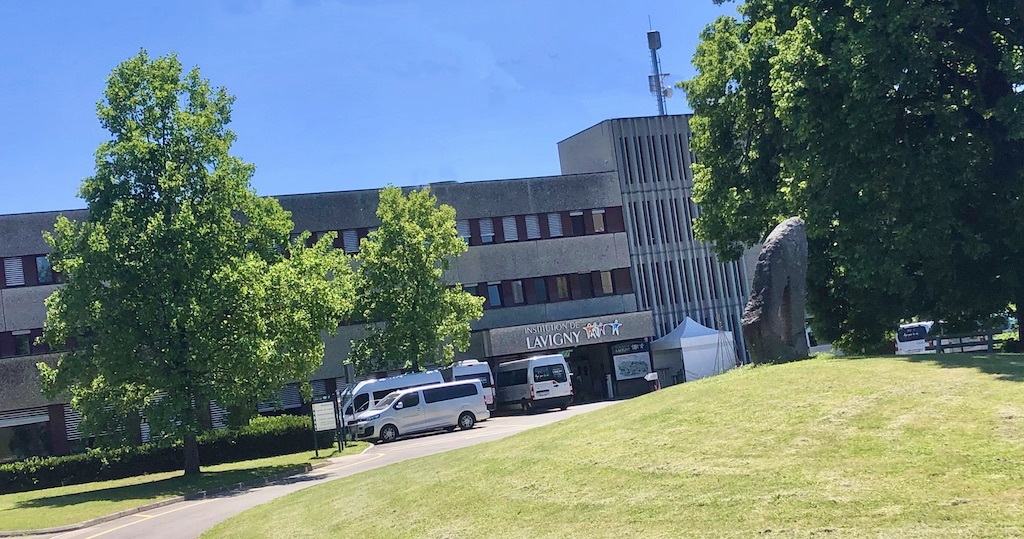
Therapists in Rehab Hospital Inspire Hope

Unfortunately at different times in my life, I have been hospitalized in 4 different countries, but none of them could compare to my six week stay in Lavigny, Switzerland.

After nearly 2 months in the hospital, I am still trying to piece together what happened to me. I don’t remember any details about my fall, about the harrowing helicopter transport and emergency brain surgery or the first 2 hospitals where I laid in a bed too weak to stand, too confused to carry on a conversation to process everything I was facing.

Fortunately over time, I began to heal. But I am the first to admit I did not do it alone. I was transferred to the 3rd hospital, Lavigny, a neurological rehabilitation center specializing in treatment for epilepsy, stroke victims and brain injury. Set in the rolling hills between the Jura Mountains and Lake Geneva, the bucolic countryside with majestic views filled me with peace, but my therapists stoked the inner fire to thrive.

At Lavigny, I relearned self care, how to use muscles properly and how to regain my voice after intubation during surgery. Everyone was so encouraging and kind and young.

When I arrived at Lavigny, I felt as old as the mountains surrounding me. Tasks that I once completed effortlessly, seemed insurmountable. Maneuvering down the hall 30 feet to the dining rooms without toppling over felt as exhausting as completing a marathon.

The first thing the nurses and therapists did was get me out of bed. With words of support, they refused to let me mope around and feel sorry for myself. We became a team with a common goal— make me strong enough to function independently so I could go home.

Therapist in Rehab Hospital Inspire Hope

The village of Lavigny, with the hospital in foreground

At times I felt like giving up, but my team of therapists wouldn’t let me. With their never ending encouragement, I took one step forward and then another. Nadine taught me how take a shower safely, how to tie my shoes and how use eating utensils again.

Carla and Benoit helped me regain balance and walk without staggering side to side like a drunk. They trained me to lift my left arm again and to make a fist with my left hand. Manon helped me recover my voice, which squeaked as if I had just coached a European championship.
No one knew for sure how much of my abilities I could recover or how quickly, but no one ever let on they had any doubt that I would return to normal, so I never doubted either. That combined with the positive verbal encouragement from loved ones’ nightly phone calls surrounded me with positivity.

Lisa, my neuropsychologist, explained what trauma does to the brain and helped me regain its function even before I realized it wasn’t working. At first I wanted to lash out at all my therapists in frustration over my loss of abilities, ashamed of my dependency, my physical weakness, my mental handicaps. I complained to Gerald over the phone, “They treat me like a baby. They will keep me here forever.” It was as though I couldn’t admit my loss of skills, losses I was reminded of when I saw other patients slumped over in wheel chairs, hobbling behind walkers, unable to walk, to talk, to swallow. Contrary to my misperception, each action was a challenge to become more self-reliant, so I could live independently again.

Each day was the same rigorous routine, 5 intense 45 minutes of therapy — PT, OT, neuropsych, speech therapy —that left me feeling so exhausted between sessions that I fell asleep between each one.

When I was finally released from the hospital, I was convinced that my therapies and my team’s commitment and care, literally saved my life. I was filled with gratitude to Lavigny and its staff.

When I met with the psychiatrist in charge of my case after another month of therapy as an outpatient, he reminded me,”The therapists certainly helped you reach your goals, but what they all told me was that it was your will power and drive that made the biggest difference to come back from such a devastating accident.”

In retrospect I am not sure how I overcame such great odds alone in a hospital in Switzerland during a global pandemic. I wish I could impart that combined force – family, therapists and iron will to readers who may be facing insurmountable odds in their battles against cancer, illness, life altering accidents. The human spirit is so fragile, life challenges so insurmountable, our mortality so fleeting, but don’t give up. Never underestimate the power of love and the role you play in your recovery, in your capacity to heal .

I will always credit the therapists at Lavigny with giving me back my dignity. They celebrated every success – the day I could raise a glass to my lips, butter my own bread and walk to the dining hall without assistance- was worthy of a standing ovation. They acknowledged the courage it took each day to get out of bed and confront the shadow of my past and I will be forever grateful.

Pat leaving the hospital

Europe Under Siege Our New Normal?

After enduring winter’s fog obscuring our mountains, I rejoiced to see the sun rise over the Alps and Lake Geneva. Though daffodils dance with the promise of spring, people remain oppressed.

Our resplendent view clashes with the darkness in our hearts, as we face a relentless enemy. As if it blew in overnight, coronavirus swept across the land leaving silence in its wake. No birds chirp in the gardens, no planes fly overhead, no cars rumble in the distance.

We live in a bucolic village outside Geneva Switzerland at the crossroads of the globe only 2 minutes from France, an hours drive from Germany, 3 to Italy. But right now no one travels beyond the block.

How could we not see what was happening?

When the coronavirus invaded our neighbor Italy, we continued daily routines. We didn’t know anyone who was sick. Weren’t symptoms mild? Weren’t only the elderly and infirm at risk? We lied to ourselves “I am healthy, I am robust, I am not that old.”

Meanwhile coronavirus crept into our communities.

Ten days ago, President Macron rang alarm bells urging French people to stay home to protect our most vulnerable.

Champs-Elysées, Paris, March 20th 2020

The following day, Swiss authorities enforced the same protocol. One by one European countries followed suite closing borders, shutting schools, and urging employees to work from home.

Like vultures swooping down on prey, people ravaged grocery shelves stocking up for the siege and stormed pharmacy stock for hand sanitizers, gloves, masks, pain killers. Worse yet, medical staff faced shortages.

Even so, many others still ignored warnings and continued to party in crowds at parks, cafes, night clubs spreading disease with every encounter.

So governments mandated more restrictions. Overnight, France turned into police state. Officers fined citizens 135 euros ($150) for leaving their homes without a warrant.

For first time since WWII, Switzerland deployed troops to help transport supplies and patients from overflowing hospitals. In Ticino, the Italian speaking part of Switzerland, no beds remained. ICU patients in Alsace region had to be airlifted to other parts of France.

Europe Under Siege Our New Normal

Warning signs in Swiss train station

Infections doubled daily, death rates climbed.

Did we do too little too late?

Citizens learned a new vocabulary – Covid-19, containment, mitigation, social distancing, flatten the curve.

And changed cultural customs. No hand shaking, cheek kissing, bear hugging. No funerals, no weddings, no family gatherings. Grandparents can no longer babysit children. Family members not living in the same house can’t meet up. With no entertainment, no social gatherings, no sporting events, we grumbled about the very restrictions that may safe keep our lives.

As free floating anxiety reigned across the land, our lives are stripped to bare necessities — food, water, air.

Tick tock. Tick tock. Italians cried, “Heed our warnings!”

Are we listening?

Who will be next?

Is this the new normal?

Instead of turning inward in self-pity, we need to look outward.

How can we support the overworked medical personnel?

What can we do to help the poor and homeless survive?

How can we reach out to struggling neighbors?

Who can we do to lift someone up today?

La Maison Cailler -Switzerland Synonymous with Chocolate

Cailler chocolateSwitzerland is synonymous with chocolate and it comes as no surprise that the world’s oldest chocolate maker Cailler is arguably also the world’s best. In ancient times, chocolate, once considered the “elixir of the Gods,” was believed to have magical properties. I agree.

No trip to Switzerland is complete without sampling one the nation’s finest offerings, yet I never toured a chocolate factory until my niece came for a visit. Boy, was I missing out. A trip to a chocolate museum entertains all ages. It is worth it just for the free samples.

The most well known of Swiss chocolates, Cailler claims to be the oldest brand. Cailler produced chocolate in Vevey as far back as 1819 and since 1889 in neighboring Broc where today millions of tourists visit the La Maison Cailler du Chocolat. In 1929 Cailler became part of the Nestle group, but it still functions independently.

The Swiss consume the most chocolate in the world. 5% prefer white, 20% prefer dark and 80% prefer milk chocolate, which is made from treasured 200 year old Swiss secret recipe. In my opinion the darker the chocolate the better and apparently experts agree the higher the cocoa content the better it is for your health.

Cailler chocolateIn 1911 Alexandre-Louis Cailler developed a different process to manufacture a creamier, milky flavored chocolate. Instead of using powdered milk, he took condensed milk from Alpine milk in the Gruyère region to create a milk chocolate with an incomparably smooth, rich milky flavor. To this day, Cailler is the only Swiss chocolate manufacturer to use this method.

While you wait your turn to enter the museum, you can watch through windows where on the floor below the chef leads a class of visitors in making 5 different kinds of chocolate in the chocolate workshop.

For 12 Swiss francs, visitors enter the museum’s historical journey of chocolate’s development through time in multi sensory audiovisual tours. Chocolate originated in antiquity from Mexico’s cocoa bean. In the 1500s, Spanish conquistadors brought chocolate to Europe where it was considered taboo until the pope declared it a wholesome drink. In the last century, the French considered it an aphrodisiac and savored tiny cups of divine chocolate silk while in bed.

As part of the Cailler chocolateMaison Cailler experience, you are allowed to touch the cocoa beans, butter, nuts and raw material used to make chocolate. A replica of the conveyor belt used in the factory shows the process of how Cailler’s signature Mini Branches – hazel nut filled logs – are made, cut and wrapped.

The highlight for any sweet tooth is the free sampling at the end. Just like at a chocolate shop, every sort of bar and cream filled chocolate align the glass counters for free sampling from the sweetest to the most bitter. I skipped the white and milk chocolate varieties and made a beeline for the end of the row to savor the dark chocolates. My niece and her friend tasted a piece of every kind of chocolate except the dark ones.

After the tour, you can savor chocolate-based drinks and desserts in the Cailler chocolatecafé. You can also shop for brand souvenirs and Cailler chocolate bars, pralines and famous brands of Femina, Ambassador, and Frigor.

The only problem with unlimited sampling, a gourmet may suffer from what the French call a “crise de fois,” a liver crisis brought on by too much rich food.

Grounded: Broken Wing After Skiing

Grounded: Broken Wing After SkiingDear friends and readers just wanted to let you know I have been grounded and won’t be flying around cyber space anytime soon. I broke a wing. I should have stayed in the save confines of the gym instead of sailing down the slopes. I wiped out cross-country skiing in the Jura Mountains trying to keep up with my Frenchman who defies gravity and age. One minute I felt on top on the world celebrating life soaring under a blue sky on a snow-covered mountaintop. The next moment, I was lying in a heap on the icy side of a treacherous incline with my head shoulders pointing east and my legs twisted west.

To make a long story short, after a bumpy rescue squad ride in a snow mobile, a curvy trip back down the mountaintop and a 5 hour wait in emergency room, a doc diagnosed what I already knew, “Broken collar bone.”Grounded: Broken Wing After Skiing

“It exploded,” he said pointing to the jagged edges on the computer screen, “looks like you will need surgery.”

But just before I fainted, he called his buddy the orthopedic surgeon who balked when he found out I didn’t have insurance. (Well, I have insurance but not the kind that covers this swanky private hospital where peasants move to the back of the long waiting line.) The doc strapped me in a sling to immobilize the shoulder and sent me home with instructions to stay off slopes and out of gyms. Next week I will return for another X-ray to assure that the bone is aligning properly on its own.

At least I am in good company. My buddy Aaron Rodgers busted his collarbone twice and still throws 70-yard touchdown passes. Ditto for Charles Woodson who broke his in the Packers 2011 Super Bowl victory and he still had a heck of a career. And according to my doctor daughter, who has seen her fair share of broken bones, the clavicle is the most common fracture in the human body.

My advice to all you skier wannabes, stick to the flatlands of the Midwest, and leave the European mountains to the foreigners.

Also never ski alone. To be extra safe, bring along your own favorite doctor.Grounded: Broken Wing After Skiing

In the meantime, if I you want to hear any of my tall tales in the near future, give me a ringy ding. Thank goodness for the old fashioned, one arm operated telephone.

Raclette Party Swiss Favorite Event and Food

When guests arrive at our house for the first time, we always throw a raclette party to give them an authentic taste of Switzerland. Raclette is not only a food; it is an event.

This popular mountain dish, made from the alpine raclette cheese, has been around for centuries. Raclette, recorded in texts from German Swiss convents in 1291, dates back to medieval times. Cow herders used to melt this cheese over campfires when moving cows to and from pastures in the mountains.

Originally for this hearty, peasant meal a large raclette cheese round was heated over the fireplace then poured over potatoes. Hotels and restaurants in the mountains still use this method. Most people living in our area own an electric, tabletop raclette grills, which makes preparing the meal easier.

I love raclette because guests cook their own meal by heating sliced cheese in individual metal trays. The cheese is scraped onto small potatoes. Or it may also be served on bread like we do. Dried meats cured in the mountainous regions, such as beef, Parma hams, and viande des Grisons, can be heated on the grill top and served also. Tiny vinegary pickles and onions always accompany the dish.

The French serve raclette with a Savoy white wine, a Riesling or a pinot gris. According to the locals, one should drink only wine with raclette because water will harden the cheese in the belly creating indigestion. However, I have yet to see someone get sick even from imbibing, bubbly Coca Cola with the raclette meal.

At our house, we never had a guest who disliked raclette; in fact most people love it.

“Oh raclette, love it! Best meal of my life!” said Charlotte, Larissa’s sister who clapped her hands in delight and marveled. “Takes potato skins to a whole new level.”

My family enjoyed this so much on visits to Switzerland that I once hauled a bulky raclette machine across the Atlantic, so they could savor the meal stateside. Fortunately this is no longer necessary. You can order the raclette cheese and the grill from where else but a shop in New Glarus, the mini Switzerland of Wisconsin..

Order from New Glarus.

Imported raclette cheese is expensive. So at our cabin in Wisconsin, we use the excellent local products, the Colby, cheddar, or Swiss from Mueller’s Cheese Factory outlet. Although my French husband would disagree, I find the American cheese also suitable for this dish.

Raclette makes the perfect convivial meal to share on a cold winter night. The piping hot potatoes, heat from the grill and wine will toast your toes and warm your hearts.

Bon appétit!