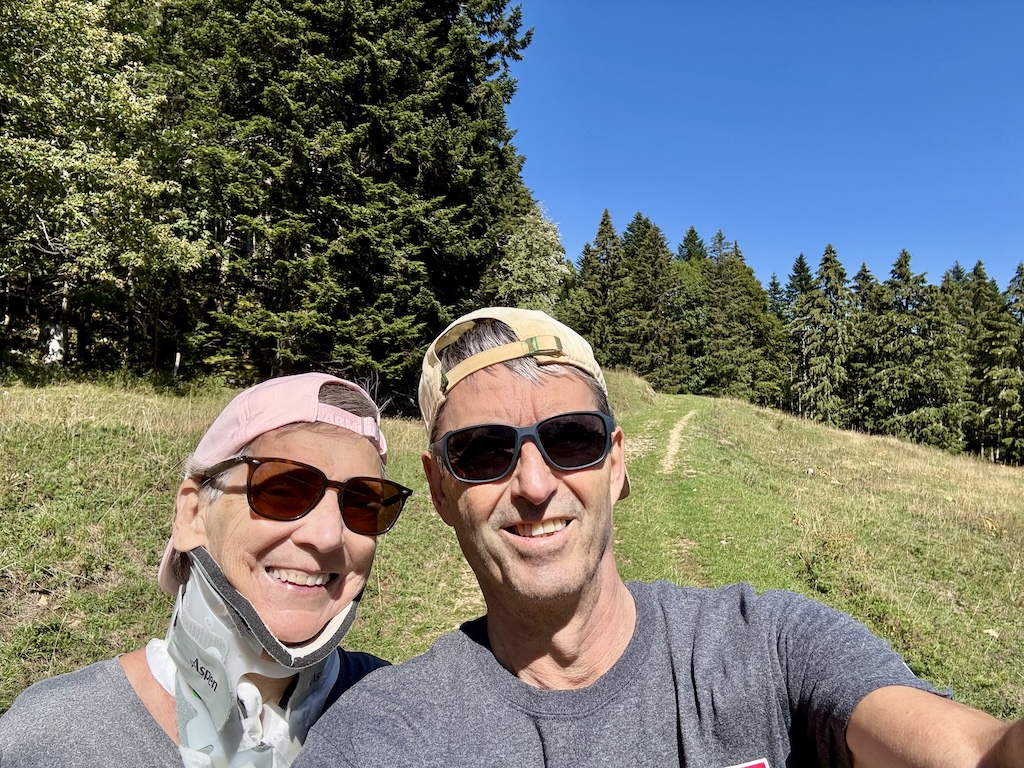
 “Why don’t you tell people honestly how hard it is to recover?” My husband challenges. “You always put a lighthearted spin on health problems.”
“No one wants to hear how hard it is to climb the mountain,” I said, “They only want to know you made it to the top.”
Alas, I am nowhere near the peak.
I am falling down the rabbit hole AGAIN, plagued by a sickening sensation. How can this happen again? After my emergency craniotomy in 2020, I spent months in hospitals working to recover simple skills - how to speak, to grasp items in my fingers, to move the left side of my body.
Since my fall in June, I struggle all over to regain balance, use of my limbs and restore my brain after another bad fall traumatic brain injury.
For weeks, I rebelled. I can’t do this again! I kicked my heels, pounded my fists, cried my heart out.
Each time I became trapped in my spiral of doom, someone near and dear dragged me out of that empty pit of despair.
First step, I had to get over myself: face off with my ego. I grew up priding myself on being physically strong, agile and smart. Now I compare my rebirth unraveling with the curiosity of a toddler. I have to see the universe anew with the enthusiasm of my two-year-old grandson. He picks up objects with either hand, pulls himself up on furniture, puts together words, balances walking on different surfaces and explores new textures, sights and sounds. Every day is a new adventure.
Long ago, I pushed my body to its limits in pursuit of goals as a professional athlete. I use that same self-discipline today to work even harder to maintain status quo. I no longer strive to pursue higher aspirations, but rather to prevent losing those simple skills that I have regained. I work my butt off to maintain my present level.
I am lucky; I am not alone.
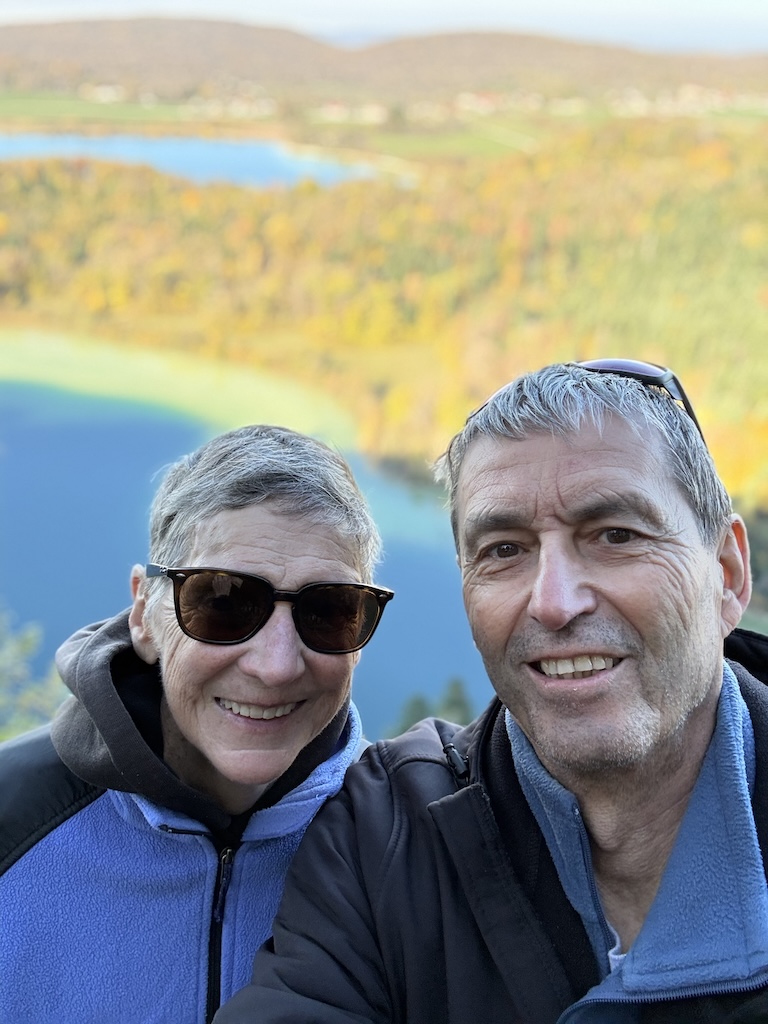 I have a secret weapon - a team of dedicated therapists. It also helps having a bit of extra advice within the family! Once my Swiss neurologist removed the neck brace and gave me the green light to start moving again, my son, a sports chiropractor in England with a real passion for injury rehabilitation, gave me some guidance on appropriate exercises and a little soft tissue work to help me gradually start rebuilding my strength and mobility
My mind is my greatest opponent. My counselor, Carey, challenged me to face the old athlete’s dilemma: movement was my savior. yet also my curse.
“Exercise is so much a part of who you are,” Carey observed, “But it’s painful. Every time you try to improve physically, you confront your limitations simultaneously while coping with PSTD.”
When I lamented I thought I had accepted my situation, Carey reminded me, “Acceptance is an ongoing process, like laundry, you have to do it over and over again.”
For me now, physical therapy is an embarrassment. I lift dumbbells weighing no more than a burger at McDonald’s! I struggle to stand on one foot, to straighten my arm, to hold my head high.
Physiotherapy helps people to recover motor function and movement of joints, muscles and tendons preventing wasting and deterioration. I credit Jenna, my Finnish PT, who has worked with me the past three years, for helping me progress as much mentally as physically.

My neurophysiotherapy is even more humbling. This specialized branch of physiotherapy helps improve the function of patients like me who have suffered physical impairment caused by neurological conditions.
At the rehab center, I walk on uneven surfaces while counting backwards from 100 subtracting by 7. I balance on a Bosu ball in a squat position while bouncing a tennis ball on colored disks.
While I am standing on one leg, Flo, my therapist, commands “right, left, blue, red, green, yellow” and I must tap colored lights, switching my hands, without falling over.
 My fascia therapy is also intriguing. Fascia, a continuous web of connective tissue, primarily collagen beneath the skin, stabilizes organs, encloses nerves and separates muscles throughout the body. It provides structure, support, and communication between different systems. While I lay on a massage table, Morgane, my fascia therapist, use hands on pressure and specific movements to loosen restricted fascial areas which induces relaxation and pain relief.
Unfortunately, chronic pain can diminish one’s appreciation for life. Gratitude, like acceptance, must become a daily mental habit. It is not a given.
So this Thanksgiving, I reflect on my blessings with gratitude for my doctors and therapists, who use their gifts to help me heal. I honor human connections, the family and friends who reach out to offer encouraging words and strong shoulders to cry on. I appreciate all who share kindness and patience with people in their circle, struggling to overcome the mountains we inevitably confront in a lifetime.