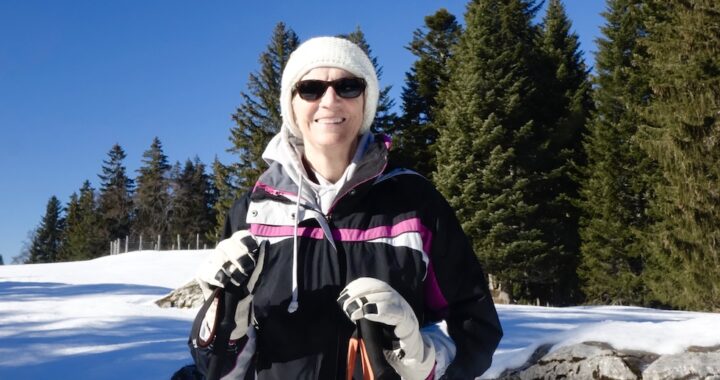
After my car accident at age 25 doctors feared I’d never walk again, after brain surgery nearly 40 years later, they thought I would be lucky to use my limbs properly.
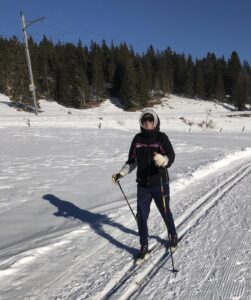 After countless hours of medical treatments, therapy and hard work, I cross-country skied again. I fell in love with the sport, inspired by my Scandinavians ancestors, who invented cross-country skiing centuries ago to circulate across mountains in winter. It reminds me of my forefathers born on the fjords in Northern Norway where reindeer run wild and Laplanders reign, where nature and its preservation is a God given right and obligation.
I was never an adept skier. I am even worse now. From a distance I look more like a wobbly stork than a Scandinavian savant. I huff and  puff around each bend. I remove my skis when I can non longer duck waddle up the steep incline. My fear of falling defeats the fun of gliding downhill. I also take my skiis off to walk down any incline. At sharp bends at the end of slopes, I collapse sideways halfway down the slope. Better to fall gently, but awkwardly on my own terms, then crashing out of control.
I spend a lot of time putting on and taking off skiis. But that is the beauty of cross country. Everyone can go at their own pace.
When I moved to Switzerland, the land of ski, no one believed me when I told them, I don’t know how to ski. I have reached an age where I am afraid to try downhill, not so much due to my numerical age, but to my spinal age from years of abusing my body on a basketball court, a bike accident, a car accident left me ever feisty, yet fragile.
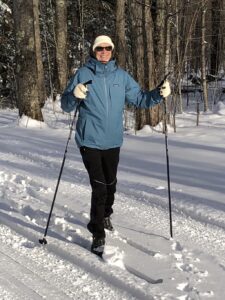 I can still remember the first time I went skiing with a teammate on the golf course of Illinois State University. I’ll never forget the wrath of my coach when I came to practice with a twisted knee after tumbling down the slope on the 9th hole.
Skiing for a DI basketball players may be taboo in Illinois, but not in Switzerland. The basketball season takes a back seat to ski season. When my star Swedish center insisted on hitting the slopes a week before our European championship, I went ballistic.
“Don’t worry Coach, “ she assured, patting me on the back, “I never get hurt. I was born on skiis. To me it is as natural as breathing.”
That maybe true for some Scandinavians, but to those ancestors of immigrants, it is still a challenge.
Yet, when I glide around another hairpin turn, my shoulders pull on poles propelling me forward, mountains whiz past in my peripheral vision, and I feel euphoric. As I weave through the fresh powder in forests full of snow sprinkled evergreen, I hear the call of a coyote and inhale the crisp, clear mountain air.
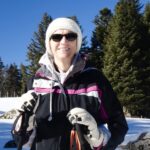 And I feel lucky to be alive.
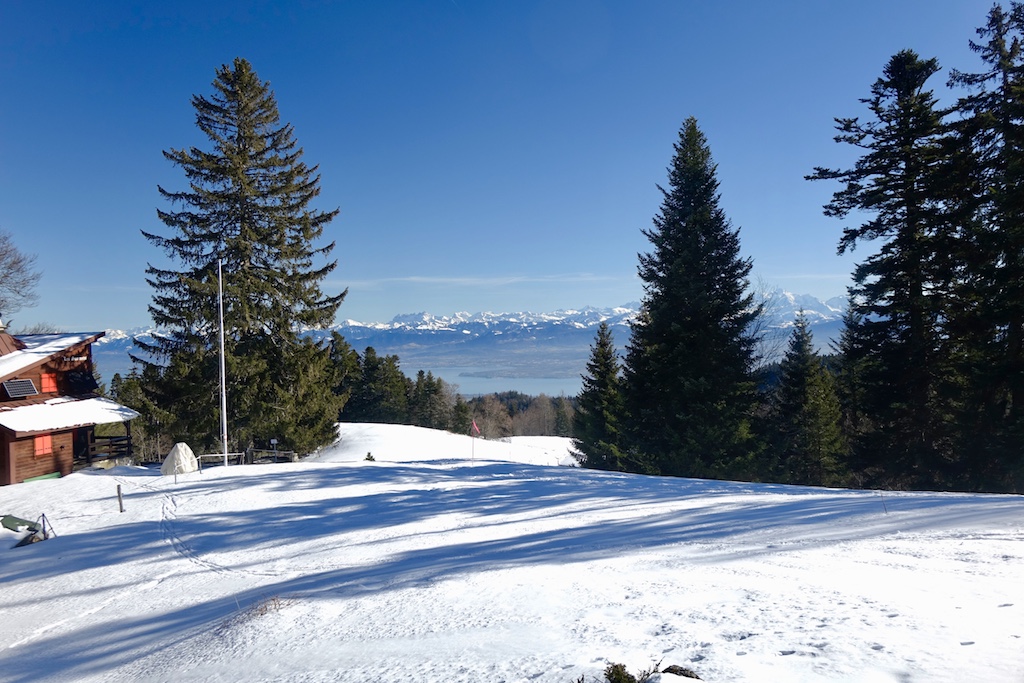
Never mind that an hour later, my muscles will lock up from the pain of fibromyalgia. Knots will form in shoulders. My neck, hips and low back will ache. Knifes will stab my knees every step I take. I will lie flat - a hot water bottle on my upper back and ice packs on my knees - and close my eyes. I see a sheer, jagged mountain peek pointing toward turquoise skies, icicles hanging from the rooftops of red shuttered wooden chalets in an incredibly beautiful tableau of whiteness. I am blessed to be here in the land of mountains and water where the skies meet the heavens in Switzerland.
 After a 5 hour brain surgery, 6 weeks of hopitalization and 15 months of therapy, I started over again retraining my muscle memory to better spine aligment. Swiss neurosurgeons successfully treated my major brain injury, but had no clue how to help me with my back. Fifteen months later, due to COVID constraints, I was finally allowed to enter the USA. I began intensive therapy to treat injury my body incurred in that bad, bad fall that cracked my skull.
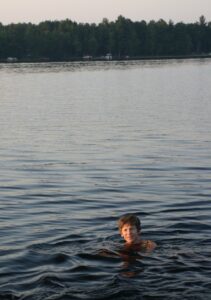 To move forward, I had to go backwards, and forgo any swimming, guitar playing, blog writing, and movements with my arms. Then step by step, I retrained my muscle memory by walking.
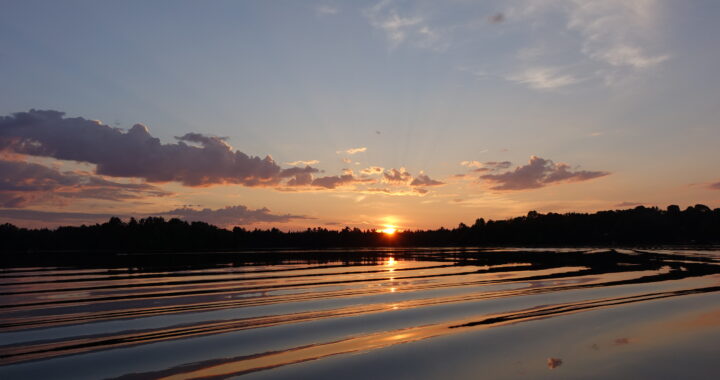
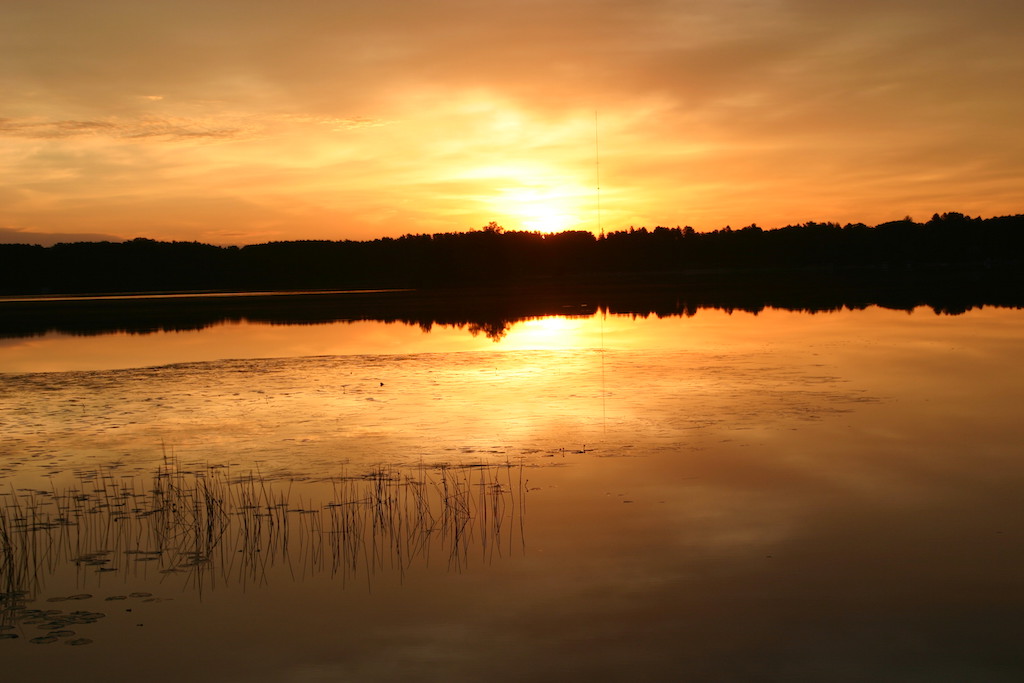
 muscles, the tranquil view of the lake and woods inspired me and an eagle soaring overhead rooted me on.
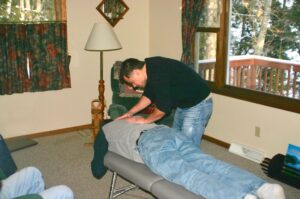 helping people by trying to accommodate every patient in his overbooked schedule.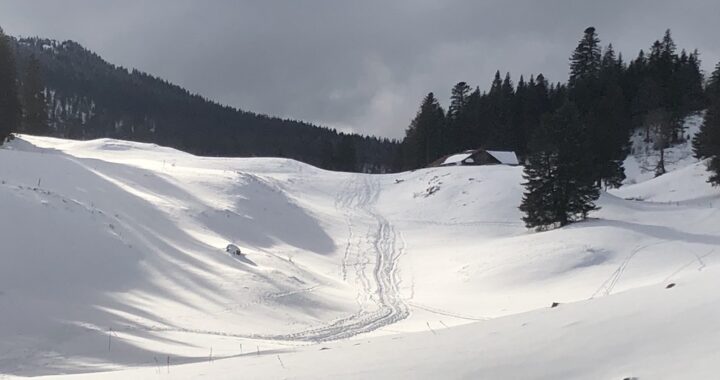
 I have been working so hard to recover from traumatic brain injury after a bad fall that wreaked as much havoc with my spine as it did my brain. Once stateside, I spent 6 months, moving between families’ homes in Minnesota, Illinois and Wisconsin and underwent intensive therapy for my back and shoulders.
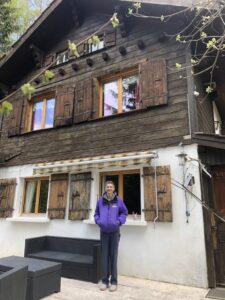
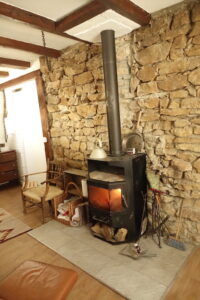 Mid January we returned to Switzerland and landed back in time in our “Heidi hut.” a rented, rustic chalet, chiseled out of the mountainside and heated only by wood burning stove.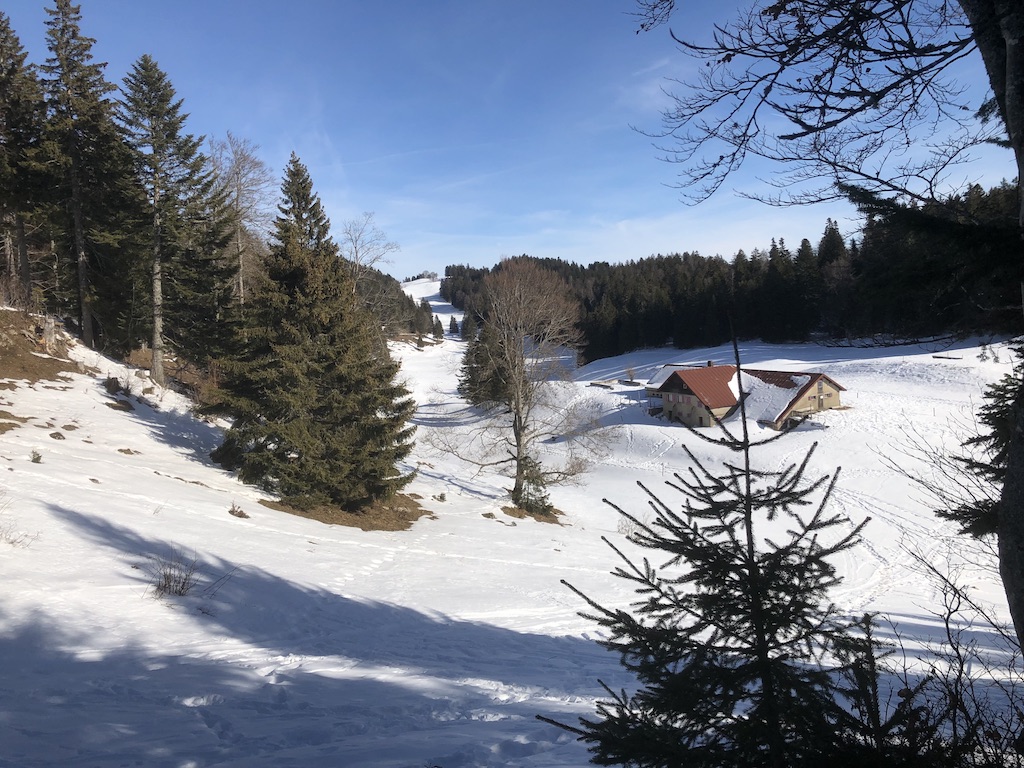
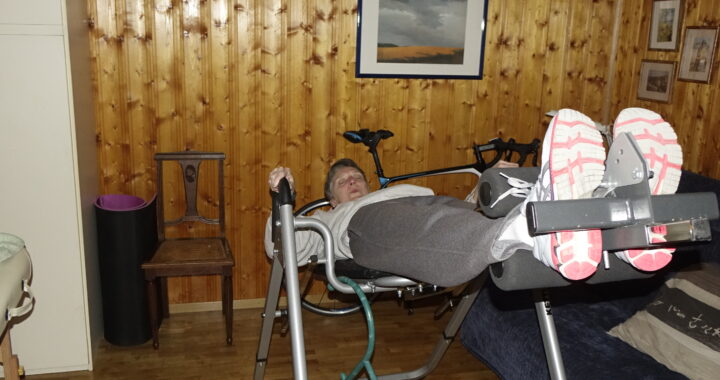
 For the past 55 years I have lived with back pain and I could write a book on how to cope since I have tried every self help tool available.
 The Wet Vest allowed me to run again, but not on land. The vest that looks a bit like a life jacket keeps you afloat in deep water so that you can run without back or joint pain. http://www.hydrofit.com/wet-vest-ii/
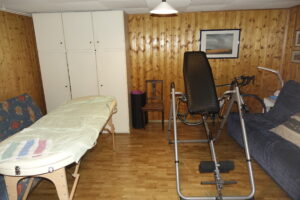 The Inversion Table is my new favorite. By hanging on a table upside down, gravity takes the weight off the vertebrae and disks.
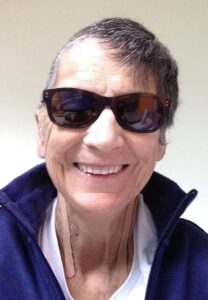 My head hurt, my face hurt, my right side hurt. One side of my head was shaved. I reached up and traced the scar dissecting my skull from my forehead to my earlobe.
 to hallucinations.
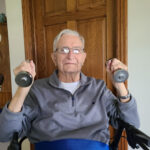 With my daughter, nieces, siblings and dear mom, helping him regain mobility and self care, my determined dad learned how to push out of his chair and walk unassisted again. Just like I once I relearned how to tie my shoes, grasp utensils, and button my shirt.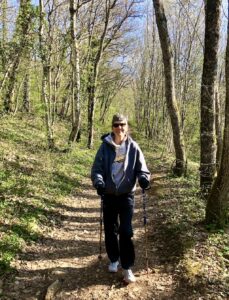
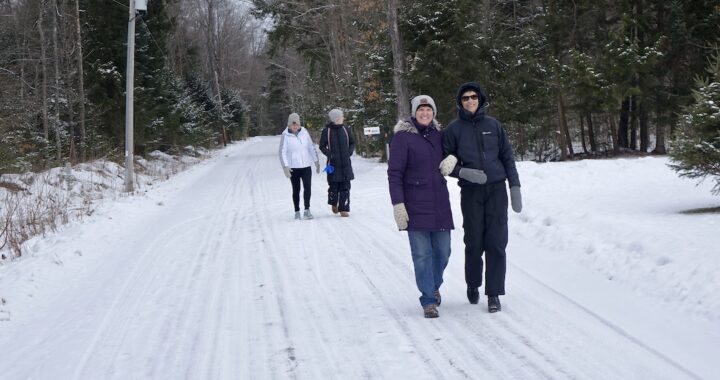
 Remember when our mothers used to throw us out of the house commanding, “Go out and play!”: we spent the day climbing trees, making mud pies and inventing games.” Well, they were right all along. We grew strong, healthy and resilient.
 Not only does physical activity create new neurons, but exercise also strengthens the heart and blood vessels that supply oxygen to the brain helping you feel mentally alert.
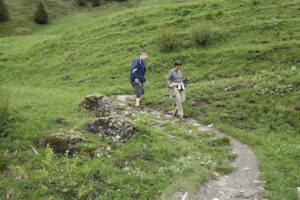 Not everyone, like the Swiss, enjoy the privilege of living in a mountainous and lake regions. Nor can everyone be located on coastal sea areas.
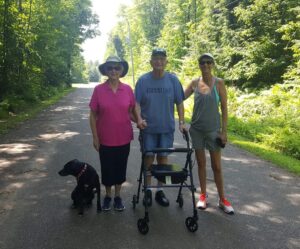 National and state parks and nature reserves abound across America. Even smaller communities boast of green space, like Sterling, Illinois where I grew up, which has 20 different parks, including a favorite Sinnissippi.
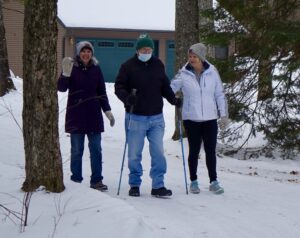 Those of us who can - must keep moving. My mom maintains her routine by taking steps for friends who no longer can. My dad keeps trudging along with his walker by setting daily goals to walk to the corner. And through diligent practice, I learned to regain balance, step forward without stumbling and swing my immobile left arm again after brain injury.