Happy Birthday to Me, E.T.

Oh dear, how do I tell my 91-year-old mother that she gave birth to an extraterrestrial being? What else could explain my extraordinary quirks, peculiar ailments, and uncanny ability to survive against all odds?

I’ve recovered from accidents that no mortal should have survived. I suffer from maladies so bizarre that no one has ever heard of them before.

Then again, how many people survived a rabid skunk bite as a toddler and lived to tell the tale?

My latest episode involved the right side of my mouth festering until my gum line resembled the embers of a dying fire. A thread under my lip pulled my gum away from my tooth, exposing the root.

My Swiss dentist pried open my mouth and exclaimed in awe, “Très intéressant! I’ll do a frenectomy!”

Frenectomy?

In the past, when diagnosed with other strange ailments, I had no idea what my American, French, German, Greek and Swiss doctors were talking about.

I’ve always been different.

After all, I was born in Sandwich.

“Which kind? Baloney!” friends teased.

According to my mother, I was the only planned baby of her four children.

Good grief! Who in their right mind would have planned to birth an extraterrestrial being?

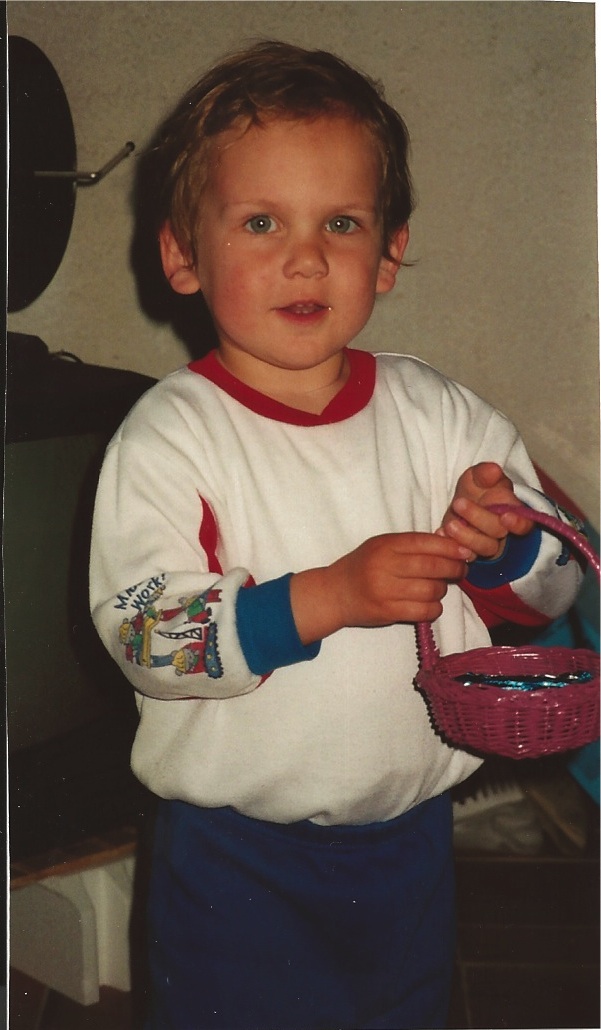
Fortunately, back in Sandwich in 1957, I was a bargain baby! The doctor who delivered me charged my folks only 50 bucks.

Since then, I’ve cost a fortune!

Braces, glasses, orthodontia, orthotics, and umpteen surgeries. Disintegrating discs, temporal mandible dysfunction, neuroborreliosis. I had strange conditions before they became common knowledge. My treatments, considered controversial quackery at the time, have become part of standard care, like chiropractic and TMJ dental treatment.

Why me?

Blame it on that rabid skunk bite!

My poor mother! How did she survive my childhood?

My poor Frenchman! How does he endure my adulthood?

After each calamity, he picked up the pieces, paid medical bills and waited for me to heal. With his help, I am still ticking, albeit slowly.

Today, doctors suspect I was born with Ehlers-Danlos Syndrome (EDS). EDS? Huh? It’s part of a group of genetic connective tissue disorders, which could help explain
my proprioception issues and propensity for falls.

We’re all unique beings, trying to move forward, stay strong, and beat the odds.

No one chooses their family, the genes they inherit, the beliefs they assimilate, or where they grow up. No one can predict what physical, emotional, and mental challenges they’ll face.

Wouldn’t it be easier if we didn’t see ourselves only as Democrats or Republicans, Americans, Europeans, Asians, Africans, Indians, Australians, Muslims, Jews, or Christians?

Could we live better harmony if we didn’t identify so much with one religion, nationality, race, or ethnicity, but more as tiny specks in the universe?

What if we all came from somewhere beyond Earth?

How’s this for conspiracy theory?

What if we’re all aliens?

Who knows?

I am here still questioning, still yearning, still learning.

Time is running out. I may never get it right. For now, I exist in a state of grace, warts and all, grateful to be here even during these troubled times.


Thank you, my beloved mother, for bringing me into existence and guiding my path!

Merci mille fois mon courageux français for staying by my side.

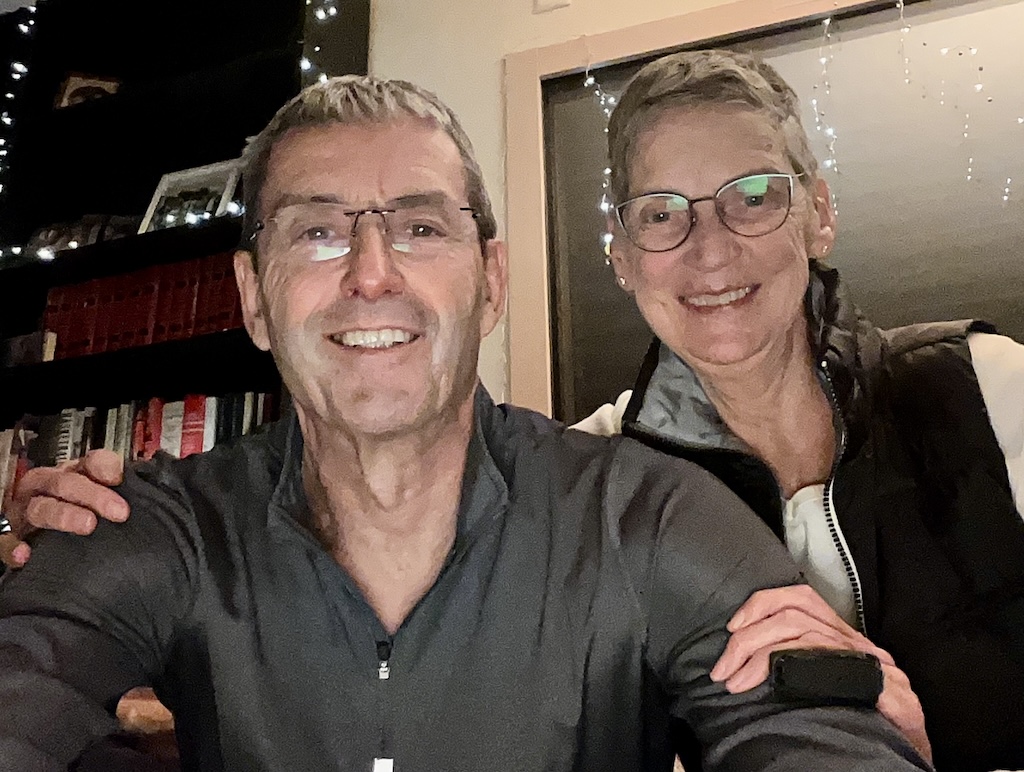
Happy Birthday to me, E.T.

Buggy Ride Back in Time With Lil’ Prince of Gaydon

How about a buggy ride back in time through an enchanting village in England’s heartland? Mormor, (that’s me) is driving! Mormor is grandmother in Norwegian, giving a nod to my Norwegian mom and our family in Norway. Lil’ Prince of Gaydon (nickname I gave my grandson) and I are taking a wild ride through town!

Gaydon, though not mentioned distinctly from Chadshunt in the Domesday Book of 1086, was a separate settlement. It became known as Gaidon by the late twelfth century, taking its name from the proper name “Gaega” and the Old English word for hill “dun”.

Homeward Bound

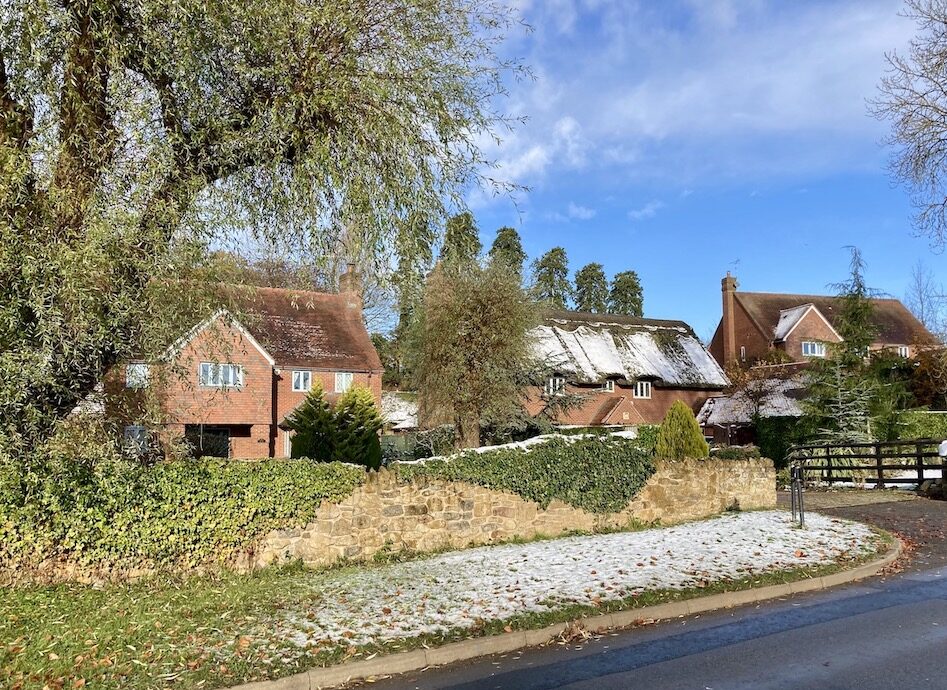
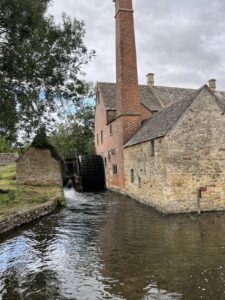
Gaydon is at the gateway to the Cotswolds in the Stratford-on-Avon District of Warwickshire. Surrounded by rolling hills and rich farmland, Gaydon is known for its picturesque countryside and meandering walking trails. While the rest of the England races by with its twenty-first century angst, the 500 or so residents of Gaydon can chill away from the big city hustle in a community where time stood still.

I bundle Lil’ Prince into his buggy and wheel down his street lined by stately, red brick homes with colonial windows. As we pass by, I wave to the young couple next door and hope for a sneak of their new baby.

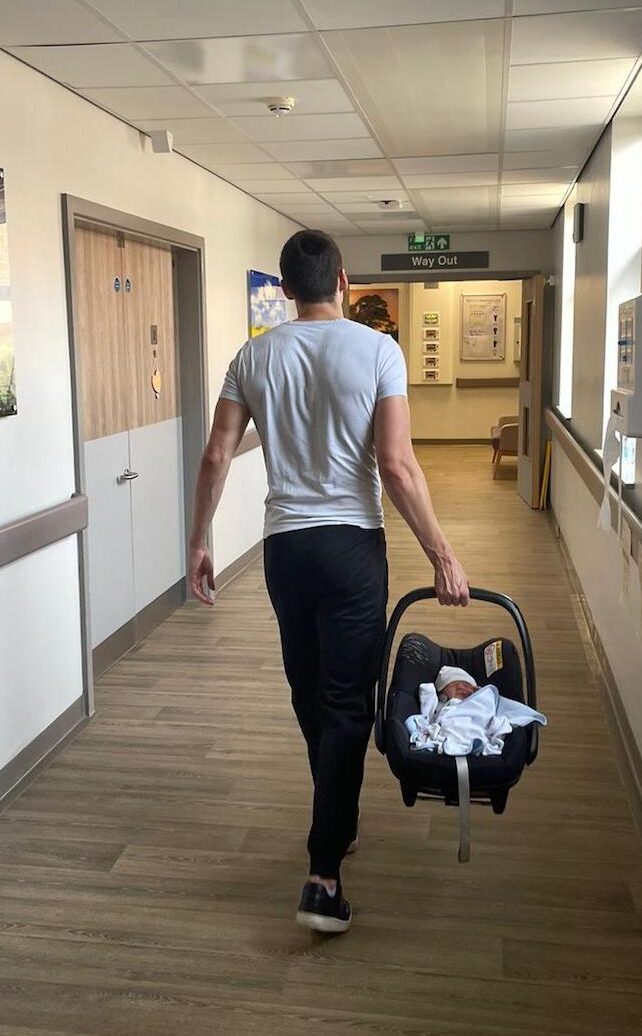
It’s a boy!

Lil’ Prince will have a new playmate soon.

Allez op, off we go ‘round the cul-de-sac and down the other side of the street past the home of the proprietors of the local pub, The Malt Shovel.

On the corner, the decrepit Gaydon Inn, notorious in the eighteenth century for violent highwaymen, still stands, barely. In 1725, a Parliamentary Act brought the stagecoach trade to the village, increasing Gaydon Inn’s importance. It has since has fallen into disrepair due to zoning laws.

Across the street on Banbury Road, a busy highway for commuter rushing to the cities, the Esso station and a quick stop shop, reminds me modern civilization is never far away.

We turn and wind along Church Street, which leads us to the St. Giles Church, as does Church Lane. Like in yesteryear, all roads lead to the church.

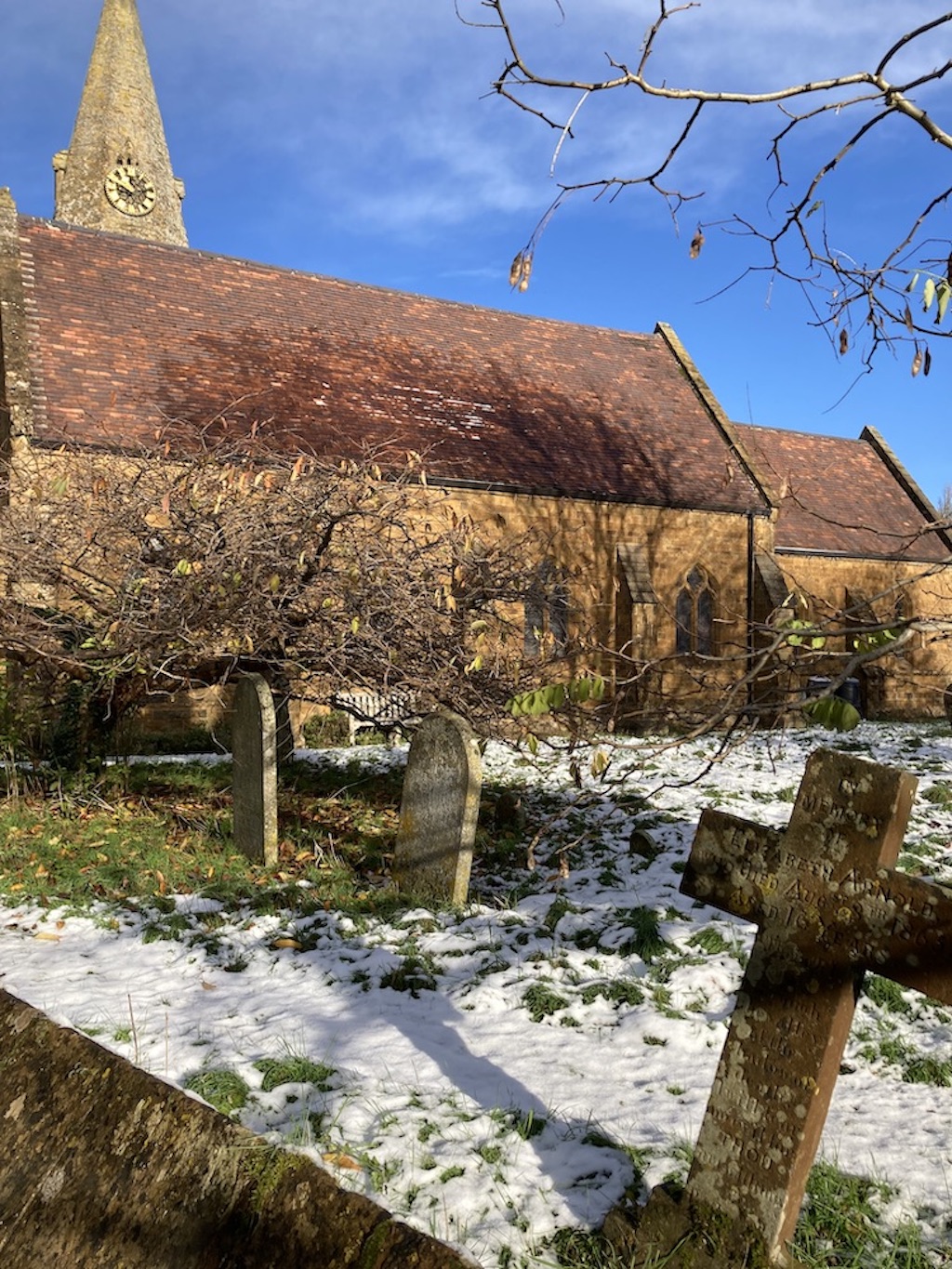
Now at the site of original thirteenth century medieval chapel, the current one was rebuilt in the gothic revival style of the mid 1800s. Only the bell survived from the original church, but worn gravestones from past centuries remain in the churchyard.

Lil’ Prince appears to be enthralled by the bewitching stories I spin of ghosts lurking among the ancient tombstones tilting in the heavy Warwickshire fog.

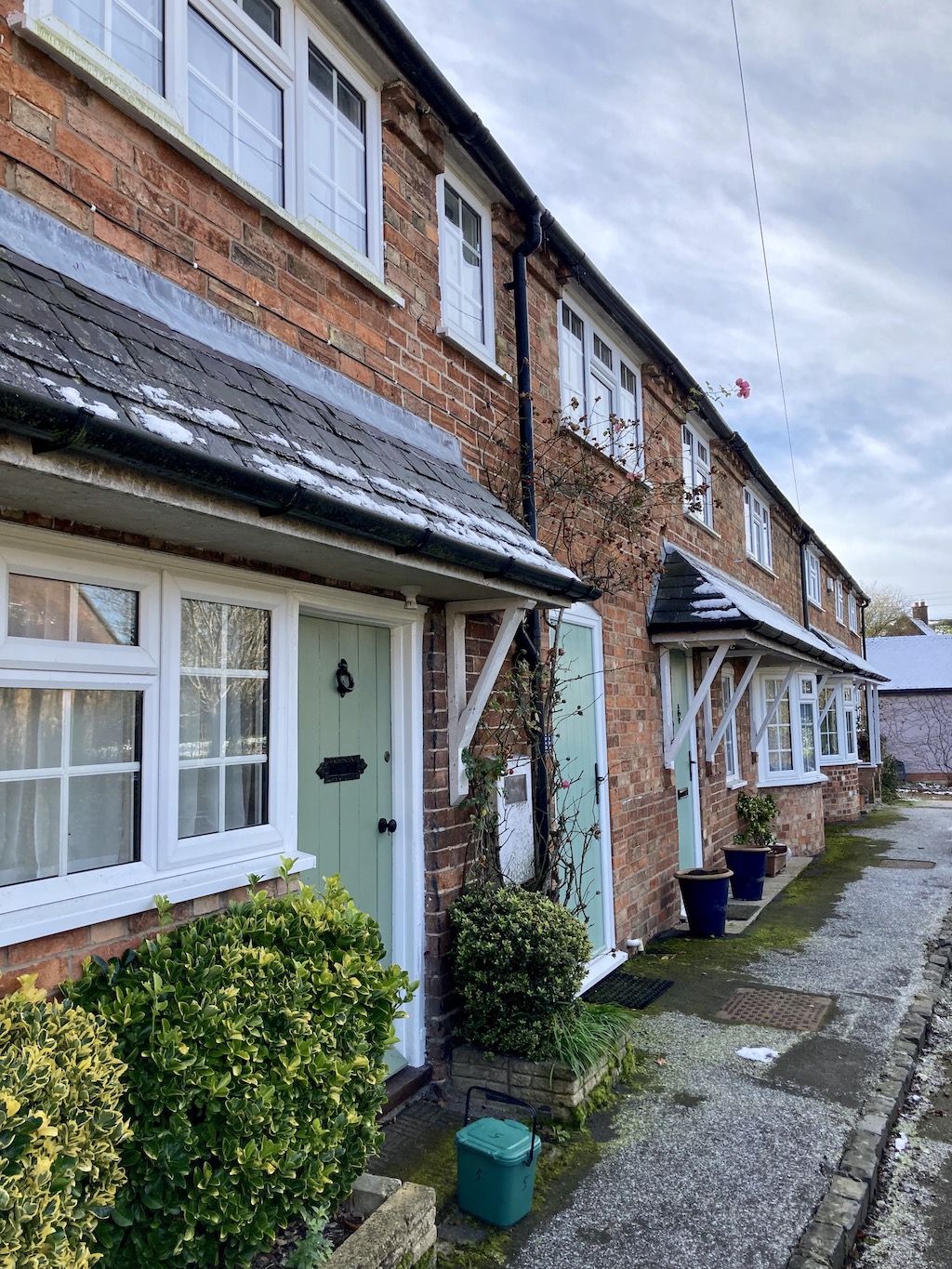
“They look like Hobbit Houses!” I exclaim pointing out low stone dwellings across the lane from the churchyard. Anyone in my family would have to duck to enter the doorway, but I would love to see inside even if had to crawl through the visit.

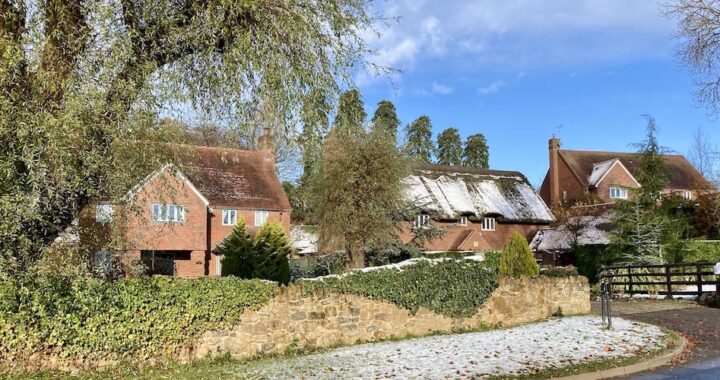
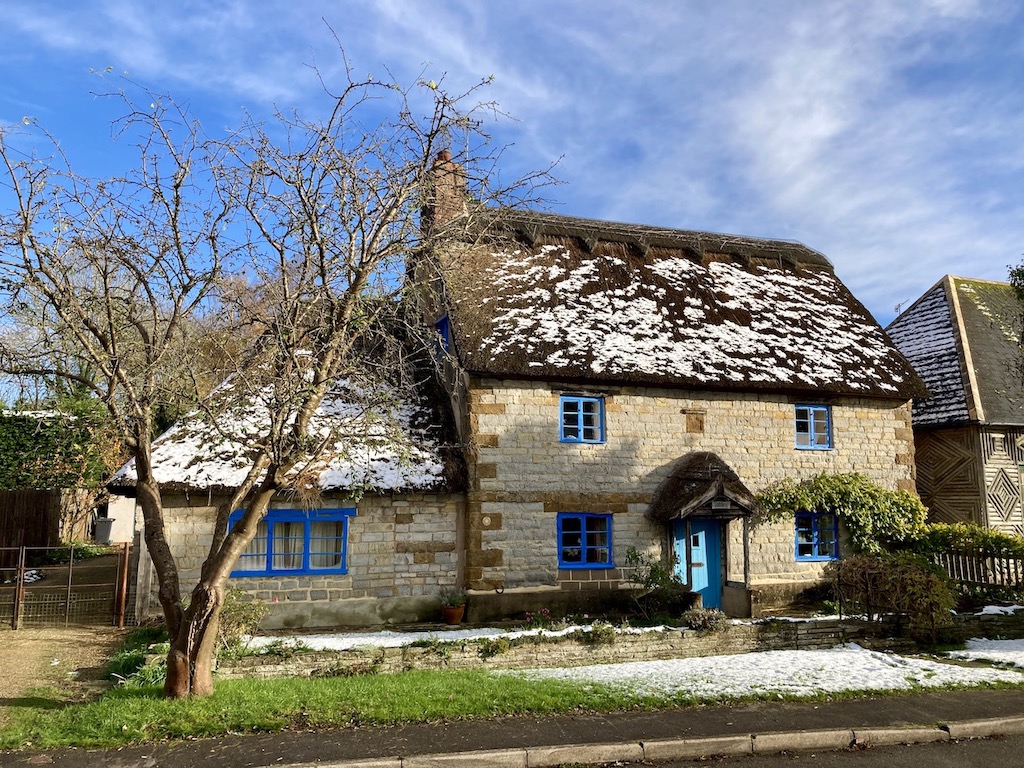
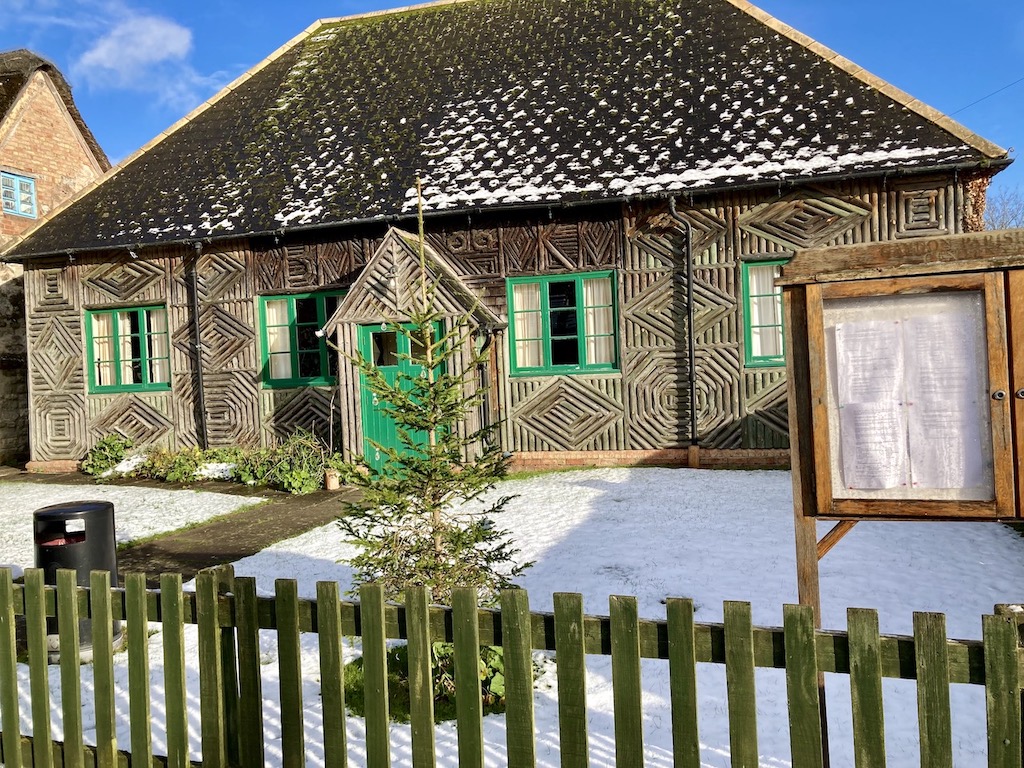
Just past the church, in front of the town parish, I read aloud the Parish Council News and update Lil’Prince on village events. Next to town hall, a white stone, blue-shuttered thatched-roof house stands magnanimously.

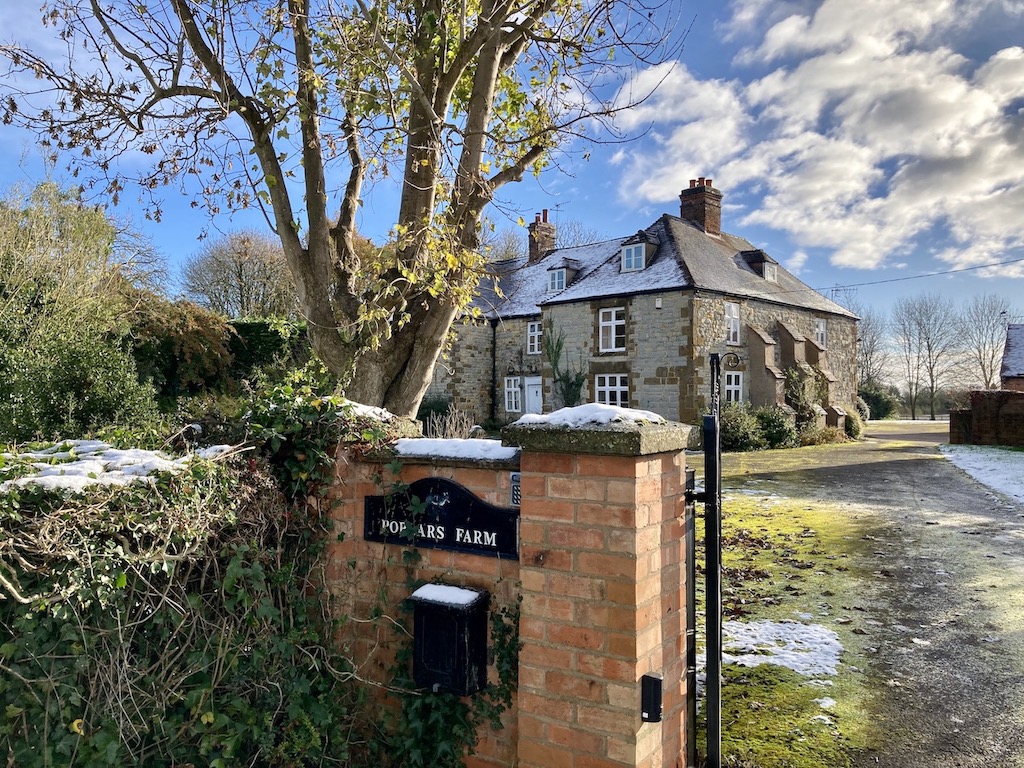
Next we stop to admire the Manor House on Kineton Road, which dates back to the seventeenth century. Surrounding the village, open fields, farms and estates, date back to the nineteenth century and bear the titles Manor Farm, Gaydon Farm, Gaydon Hill Farm, Gaydon Field Farms and Poplars Farm.

“How about that?” I laugh as I tell the Prince, “Now we are on Pimple Lane.”

Then, we stroll past the local village shop that opened May 2010. Volunteers run, the non-profit coop providing local produce, homemade gifts and daily essentials.

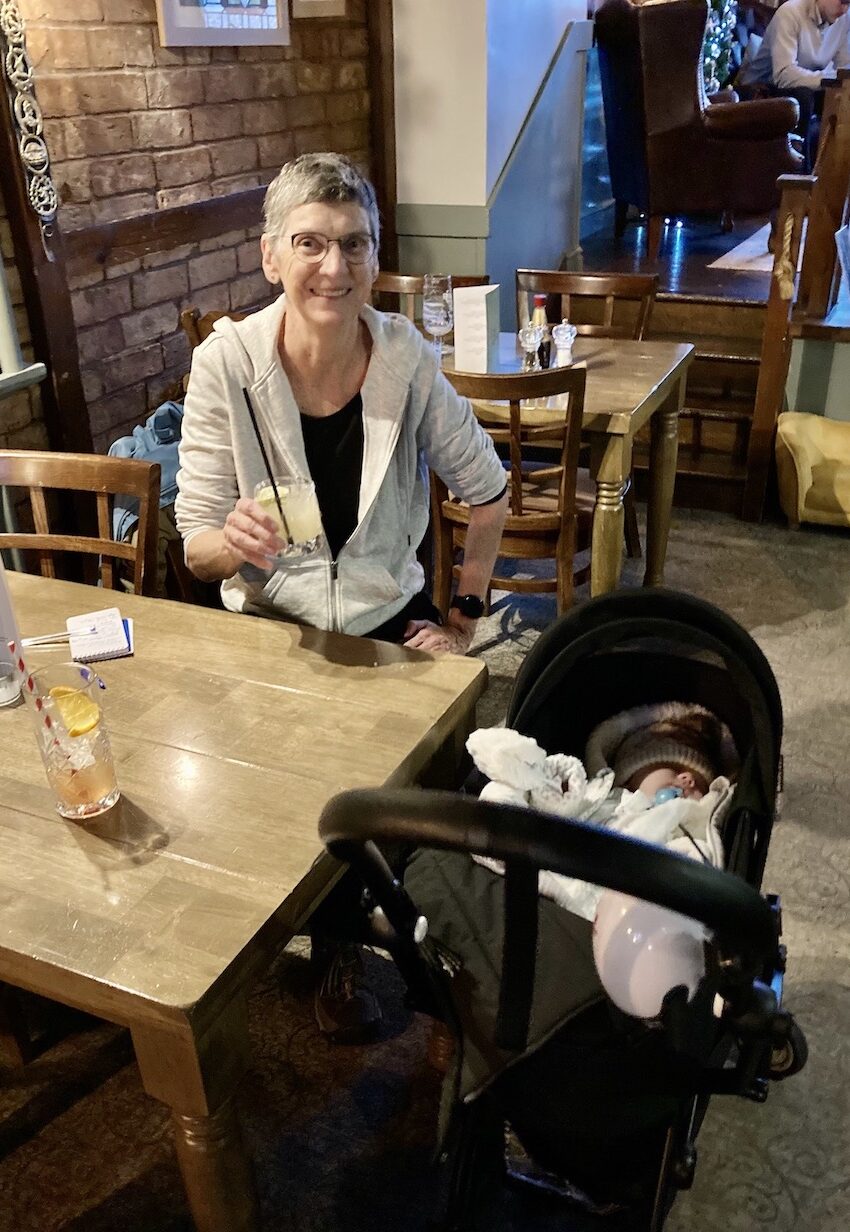
Last stop, The Malt Shovel, the local pub, which offers a cozy welcome to village life. With baby in tow, we pop in for a quick pint of apple cider, popular in the region.

This village is definitely worth a look see, but,”shh don’t tell anyone.”

If I advertised this gem, villagers would be dismayed. Gaydon’s natural beauty, unaltered by tourist buses, gift shops and fast food joints, is part of its charm.

Like the British would say, “Gaydon is a great place to stop and ‘ave a nosy.’”

Jump Start Brain and Body – Learn a New Sport

Feeling old, achy and foggy brained? Experts say learning a new skill is recommended for our rusty bodies and aging brains. For me, relearning old skills is equally valuable. It is never more important than after suffering a traumatic brain injury (TBI) which can effect spatial awareness, balance, proprioception, executive function, listening, speaking and emotional stability.
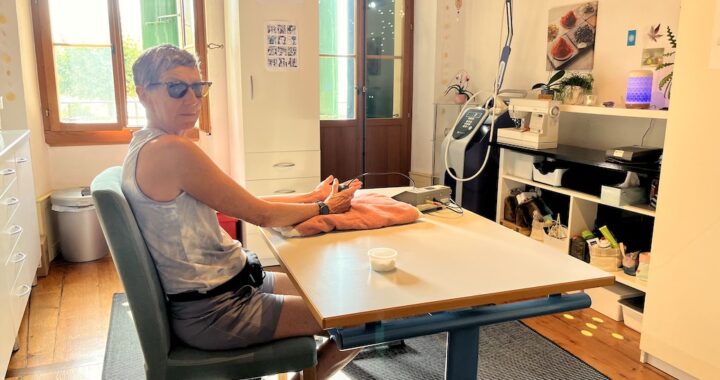
Like so many people after injury, illness and accidents, I was forced to reframe my life. Once I retired from playing pro ball, I dreamed would learn to scuba dive, alpine ski and surf. I’d run marathons and bike mountains.

Well, that hasn’t been an option for decades.

So when my chiropractor in Geneva (Switzerland) suggested that I try “rope flow” to help strengthen my core, align my back, retrain my brain to better coordinate both hemispheres and work my lazy left side, I was all ears.

In Dr. G’s office, I watched in awe as he demonstrated swinging a heavy rope around his body.

“Jump rope sans the jump for injured adults!” I said.

“Actually, a heavier marine rope like sailors use works better,” Dr. G explained. “The sailboat boutique across Lake Geneva in Nyon carries all different sizes.”

Then he went onto explain the history.

“David Weck, an American, created rope flow to help people recover rotational movement and to reinforce how we walk, run and move. Rope wave, quickly adopted by elite athletes and movement coaches, has become a valuable training tool for improving mobility symmetry, coordination and striking power.”

At first glance, rope wave looks easy. It’s not. It involves swinging a rope around your body in coordinated patterns like figure-eights, while shifting your weight and rotating your spine, shoulders, and hips with rhythm and control.

I was delighted to discover a game that I can play without getting hurt as long as I don’t whip myself on the back of my legs or lips.

If you perform rope flow properly, the rapid rhythm builds a smooth, effortless coordination across both sides of the body. Rope flow is symmetrical. You rotate both left and right, retraining your non-dominant side and this helps smooth out imbalances.

YouTube player

Rope flow is ingenious for its affordability, convenience, practicality and simplicity. This portable habit helps rewire the way I relate to my body. It is probably even more valuable for people like me who suffer from the effects of a stroke or TBI where message systems in the brain are damaged and to weakness on one side of the body.

After my time at the Functional Neurology Clinic in Minnesota, I learned how neuroplasticity allows the brain repair itself. After my brain surgery, messages did not get to my left side. Rope flow trains the brain and the body simultaneously and I would recommend it for anyone recovering from a TBI.

I am learning to accept my limitations, no more hooping, running, jumping. No kayaking, canoeing, golf, tennis, pickle ball or any asymmetric sport requiring lateral movement. For me, traveling in cars and planes or even sitting must be minimized.

So I was encouraged to finally find a sport I can perform with my broken body; it’s even good for me.

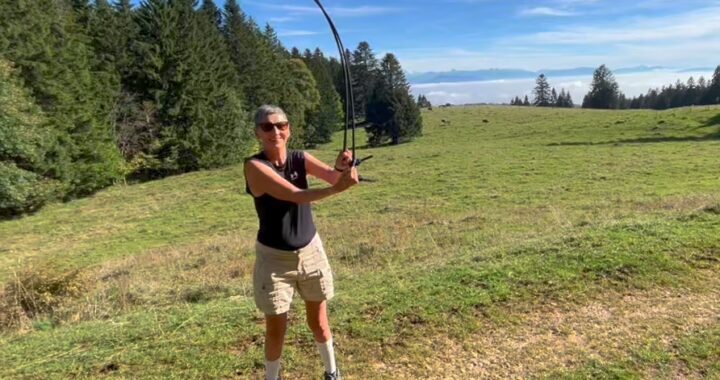
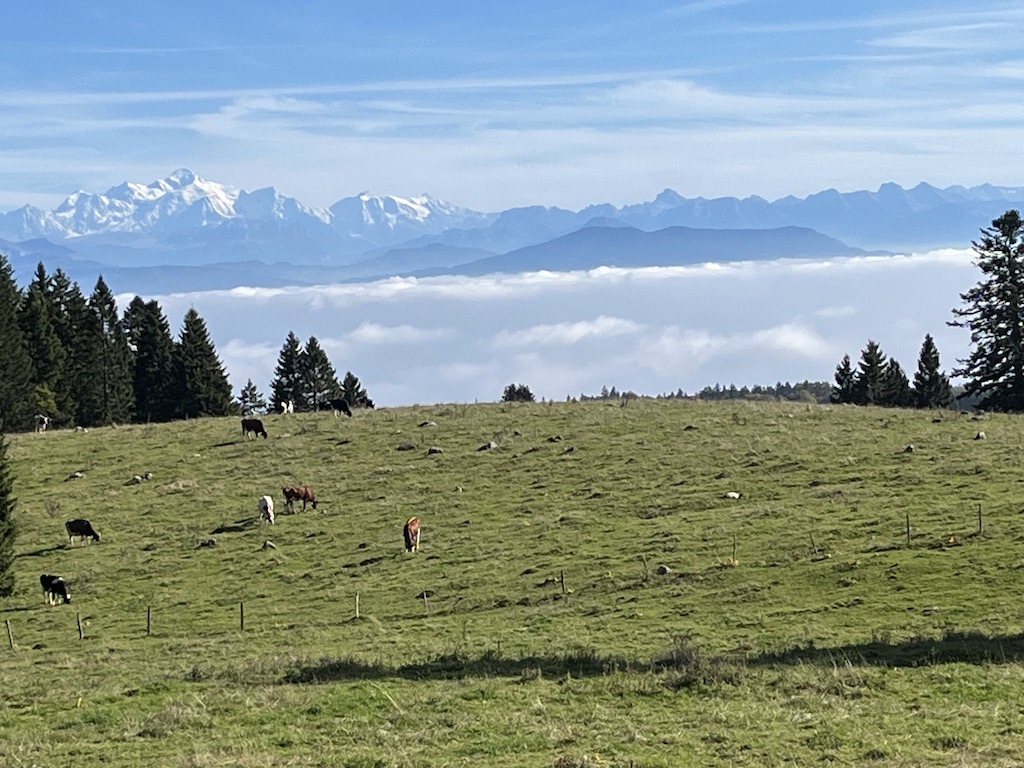
Granted I look a bit crazy, but who cares? I swing my rope, whistle like my dad used to, hang out with cows up in mountain meadows and admire the panoramic Alps.

It is highly unlikely that you can find an instructor in your area, but David Weck, Tim Shieff and other experts offer detailed videos breaking down movement into steps.

So pick up a rope, put on your favorite song and swivel those hips.

Yahoo! Clear the way! Look out! I’ll lasso you…my first dream was to be a cowgirl!

Health Care Professionals Deserve Standing Ovation

I stopped blogging when overgrown connective tissue crippled my fingers from Dupuytren’s Contracture, a hereditary condition. A hand surgeon split my palm open, removed the diseased tissue and attempted to straighten my little finger. The dozens of ragged stitches across my hand healed, but on top of muscle memory, the tendons and ligaments pulled my finger back into a clawed position in a protective natural reaction.
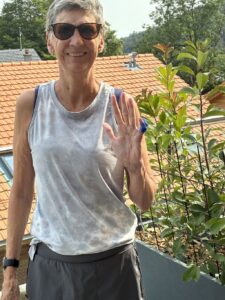
If my pinky was the only problem, I could cope, but while addressing other ongoing health issues, doctors concluded my spine, damaged in too many areas, can’t be fixed. Nothing more can be done medically to alleviate my back problems. My knees are kaput too.

I limp along trying to remain upbeat.

And failing.

Never a candidate for back surgery, knee replacements loom ahead and my finger may be contracted forever. Un-huh. No way. No pity party for me. A hearty can-do cheer would be welcomed.

When my surgeon suggested I see an ergo-therapist,(occupational therapist, aka a hand specialist) for the first time, I thought, “oh no, another specialist!”

Then, I gave it a go.

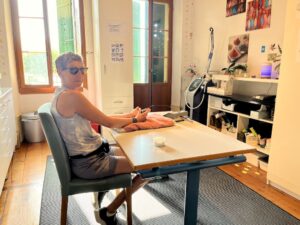
After a half a dozen visits, the ergo-therapist put my hand in thin, plastic glove and dipped it in warm, melted wax. Then she kneaded my palm and finger to break up scar tissue, restore mobility and coax tendons to loosen their hold on the joint.
I fought back tears of frustration.

“Go ahead. Cry,” she said, patting my arm. “Progress is slow, so hard to see or measure.”

While I gathered my composure, she crafted splints to straighten my finger.

“Wear the hard, plastic orthotic at night; the velcro one in the day,” she instructed. “If it’s too uncomfortable, take it off. Wiggle your fingers. Go for a walk. Relax. Sometimes our bodies need to heal in their own time.”

My physical therapists and chiropractors, too, have always emphasized that mind/body connection. After my accidents, they partnered with me to help me recover and regain as much mobility as possible.

Modern medicine has evolved thousand-fold, but healing remains an ancient art. Those called to the profession — like my son, my daughter, my nieces — are gifted.

Lately, the medical field has been broadsided. Healthcare workers face endless scrutiny and skepticism under a tsunami of misinformation on social media and inaccurate directives from the authorities. That, along with major funding and resource cuts, make their job even harder.

Skilled surgeons helped spare my life, but it was auxiliary health care professionals — therapists, chiropractors, masseurs, counselors, nurses— that saved my broken heart when I wanted to give up.

Never underestimate the healing power of those dedicated people, whose soothing voice and gentle touch (like my “hand whisperer”) ease suffering and save souls.


They restored my faith in humanity.

Kindness matters.

More than ever.

Hope in Hopeless Times

God grant me the serenity
to accept the things I cannot change;
courage to change the things I can;
And the wisdom to know the difference.

My paternal grandmother taught me The Serenity Prayer when I was a child. I turn to this verse in the troubled times of today. Replace the word God with the name of whatever deity you worship or ideology you believe in. An estimated 4,200 religions exist in the world and most adhere to the same tenets.

Each culture is rich in its own way, with its own language, religion, literature, art, music, poetry, traditions and philosophy.

My heart breaks a little more each day knowing that my birth land, a country built on the backbone of indigenous tribes, immigrants and African slaves is now being split apart by violent rhetoric, divisive ideology, religion intolerance, systemic racism, sexism, classism and ethnocentrism.

In the USA, civil rights are being threatened daily by policies eliminating immigration and human rights. Nationalism is sweeping across borders with extreme right wing leaders rising to power in Austria and Italy and threatening to succeed in Germany and France.

Have we forgotten our past?

I never thought I would witness war on European soil during my lifetime. Yet three years after Russia invaded Ukraine, Ukrainian’s battle for freedom and defense of democratic principles rages on. A potential US-Russian peace agreement for Ukraine, without including Ukraine in the discussion, echoes of the disastrous appeasement plan of the Nazi Era that led to WWII.

Europe is not a far away place somewhere. Europe is your neighbor. Europe is my home. In the past, my grandfather fought in WWI; my French in-laws and Norwegian relatives survived the Nazi Occupation. My American peers and I grew up fighting against discrimination and inequality.

My family, through birth and marriage, is American, British, Chinese, French, Irish, Norwegian, Scottish, Swedish, and Ukrainian.

My people are all people.

Set our differences aside. Take off our rose-colored glasses and pie-in-the-sky illusion that conditions are improving. We must face the stark reality of what is happening, not only in the USA, but around the globe. Natural disaster, civil unrest, a wave of extreme right wing ideology and nationalism is spreading.

A half century ago, as an idealistic university student, I started studying social work. When I realized that I could not save the world, I trained as an educator. Serendipitously, while teaching at an International School in Switzerland, I had the privilege to work with students and families from around the globe.

From my experience, I learned that we are more alike than different.

We all want the same things for those we love — a roof overhead, food on the table, a right to a good education and an equal chance to work and prosper.

Yet as individuals, we remain impotent, helpless and hopeless. How can one human being, especially one with a broken body, ever change the world?

I can’t. But I can reach out to those in my entourage.

We must begin within our immediate circles — families and friendship groups, neighborhoods and schools, churches and communities.


As my former coach said, “We have to continue to do the right things, for the right reasons, for all of us.”

It’s so hard to believe integrity matters when countries’ leaders seem to be so hell bent on spinning lies, disbanding public education, health care, social services, and the human rights we fought so long to assure.

How can my country go from being the world’s leading democracy to one of the planet’s biggest bullies?

Political ideologies aside, if any civilization anywhere on earth is to survive, we must find ways to work together on global issues. Poverty, climate change, cyber security, natural resources, future pandemics, nuclear threats and pollution affect all mankind.

An estimated 8.2 billion people representing 4,000 different cultures, speaking 7,000 languages share this planet. We all have to do more at every level in each country to communicate in a common language — the language of humanity.


How International Women’s Day, Title IX and Sterling Basketball Tie Together

Today, March 8, 2025, is International Women’s Day! Coincidentally, the United Nations began celebrating International Women’s Day as part of the International Women’s Year in 1975. That same year the Title IX (June 23,1972) Amendment stipulated full compliance with the law.

Title IX transformed education for women. After centuries of discrimination, the landmark civil rights law leveled the playing field in sports and allowed millions of women to earn degrees.

Speaking at Illinois State's 50th Title IX Celebration with legendary basketball coach Jill Hutchison, Olympian Cathy Boswell and other superstar alumni.

Gradually, Title IX revolutionized women’s lives in the US by opening doors to education and athletics.

Unfortunately here and globally, women are still subject to sex abuse and domestic violence and denied access to health care, education and equal opportunity in the work place.

In our hometowns, we see firsthand Title IX’s impact, as our daughters, granddaughters and great granddaughters enjoy the opportunities that my generation, and women prior to my time, fought so hard to ensure.

The 2025 Sterling High School Golden Warriors basketball team fell a game short a trip down state to Redbird Arena, my alma mater, in their run to repeat the 1977 first Illinois state championship. Their rise to glory was no less phenomenal. In four years they turned a 3-26 losing team into a championship contender.

This year's team with their tough defense and fighting spirit were reminiscent of SHS’s 70s and 80s teams like that 1977 state championship team, which included Coach McKinzie and Coach Smith, a dad/daughter, brother/sister combo, the 2025 team was also a family affair uniting sisters, coaches, dads, daughters and their families.

With perfect timing, Coach Jackson’s team gave the community a reason to cheer at a scary time when many civil rights and federal departments protecting health and education threaten to collapse at an alarming rate.

I am proud of Sterling’s stellar basketball season. Like many Sterlingites who may have moved away, I still bleed blue and gold. Our Sterling High School days remain tattooed in our hearts.

As a pioneer, I lived daily the battle for equality and I have had the privilege of seeing opportunities for women explode. I am also old enough and wise enough to know our rights could disappear.

Today, in the Caitlin Clark and Paige Bueckers era, we celebrate the popularity and media exposure of women’s basketball. We love watching the NCAA’s March Madness, the Unrivaled 3-on-3 inaugural season and the W. We appreciate the opportunities awaiting our daughters, not only in basketball, but in so many other arenas.

But work must continue in the US and around the globe to improve women’s health care, to protect reproductive rights, to guarantee equal pay, to curb the epidemic of violence against females, and to allow the voices of other women to be heard worldwide.
Today women succeed, not only on the playing fields, but in education, business, medicine and other professions where we were never allowed before.

Today we are winning, but the risk of losing all has never been so great.

Today, we must fight to guarantee these rights will remain for future generations.
.
Five decades ago, the UN started the First National Women’s Day. Fifty years ago Title IX was fully enacted.

What can we do today to assure women’s opportunities and their contributions will stand in the next century?