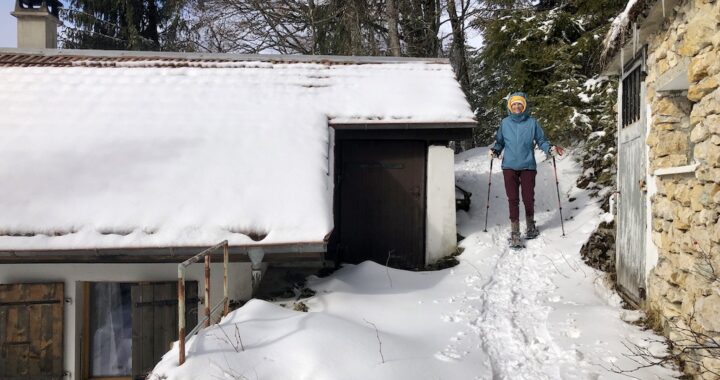
 If you can walk, you can snowshoe. Sure! Snowshoeing in the Swiss Mountains makes me feel like Donald Duck waddling on the side of an iceberg in webbed feet.
Forget CrossFit, yoga, and aerobics. The ultimate work out is snowshoeing. Each step forward feels like lifting a ton.
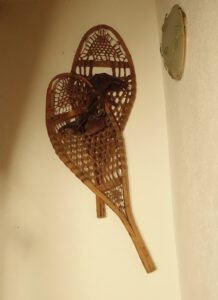 Though snowshoeing was invented in 6000BC, it was a brand new sport for me. In the old days, people made their own snowshoes - wooden-framed, rawhide-latticed wooden rackets with leather straps. I thought snowshoeing would be as simple as strapping a tennis racket to your shoe and heading out the door.
But today one needs a master’s degree to decipher how to affix the tubular aluminum-framed, neoprene-decked, state-of-the-art snowshoe to one’s foot. The “shoes,” designed for maximize efficiency, take me half a day to strap on. To prepare for my little snow “walk,” I balance on one leg while struggling to manipulate my other foot into the contraption.
Modern snowshoes have two styles of binding: fixed-rotation or"limited-rotation" and full-rotation or "pivot" bindings. In fixed-rotation, the bindings attach to the snowshoe with an elastic strap, bringing the tail of the snowshoe up with each step. In theory, the snowshoe moves with the foot and the tail does not drag, until you want to change direction.
Unlike Nike’s Air Jordans, Adidas’ The Kobe, and New Balance’s Coco Gauff CG1 tennis shoes, contemporary footwear has been designed to permit one to turn on a dime accommodating the mind-blowing moves of acrobatic athletes playing modern day ball games.
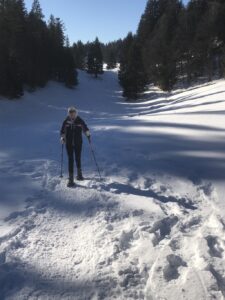 Alas, the snowshoe allows only one directional forward movement. To turn right or left or at a 180 degree angle requires the dexterity of an elite gymnast.
With my feet locked in waffle irons, turning becomes preposterous.
My body jerks one direction, while my feet remained locked in place. Even with the aid of trekking poles to help with balance, am I the only one who wiped out snowshoeing?
Walking skills may easily transfer to straightforward snowshoe travel, but this doesn’t apply when turning around. To change direction, I need enough space to walk in a semicircle. On a steep slope or in the close quarters of a forest, this is inconceivable!
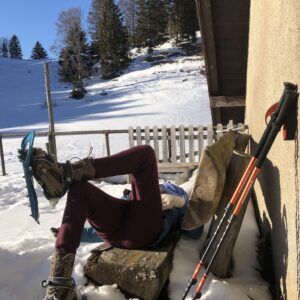 My ever patient hubby, an avid skier, encourages me to execute a "kick turn" similar to the one employed on skis.
“Lift one foot high enough to keep the snowshoe in the air while planting the other,” he explains, “ then put your foot at a right angle to the other, stick it in the snow and quickly repeat the action with the other foot.”
Et voila!
With one foot pointing north and the other aimed south, my legs tangle, pitch me off balance and sling me into a snowbank.
I renamed the maneuver - “ze face plant”
After trudging along for hours, my legs shake and my back throbs. My arms tremble from clinging to toothpicks that are supposed to prevent me from toppling down the mountainside.
Fortunately in Switzerland, the view at the summit makes every painful step worthwhile.
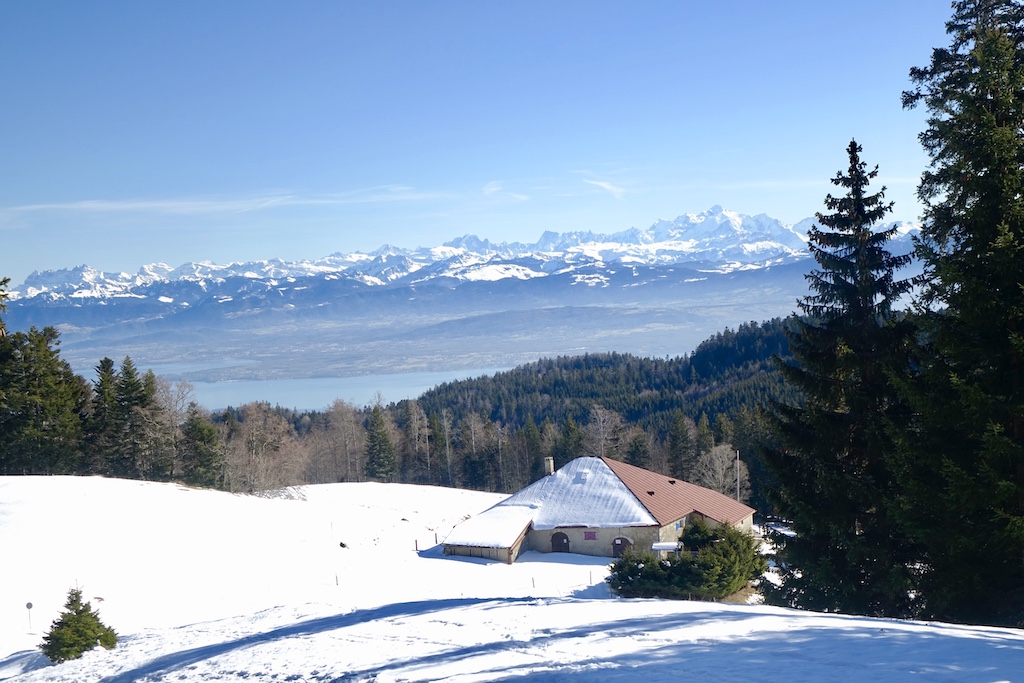
I can’t wait to give it another go.
 September 13, 2022. She left behind 2 daughters, a son, 2 foster sons, 2 stepsons, 1 step daughter, 18 grandchildren, several nieces and nephews, one sister, three brothers and hundreds of friends, who would swear they were somehow related too.
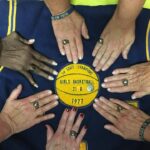 She was a catalyst uniting people from every race, ethnicity and walk of life.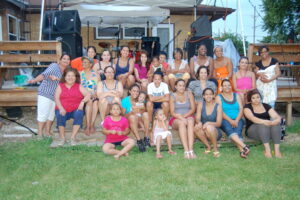
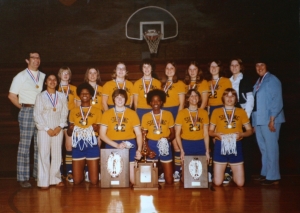 champions,
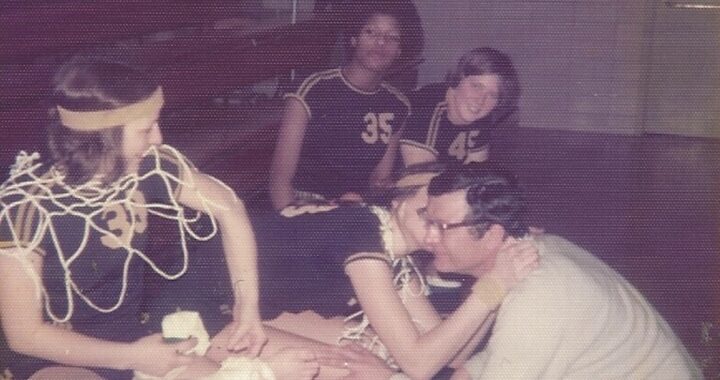
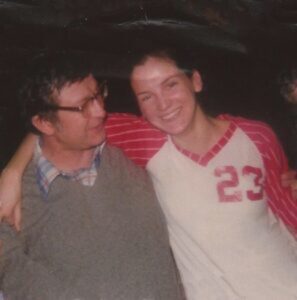 “What was it like making history becoming the first athletic scholarship recipient at Illinois State University during the groundbreaking implementation of Title IX?” asked journalists from my alma mater.
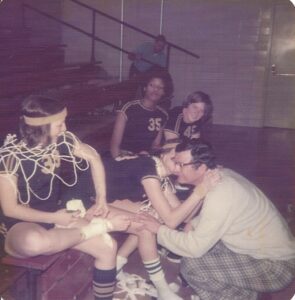 “Dad, remember all those hours we spent at the gym, all the baskets you rebounded for me.”
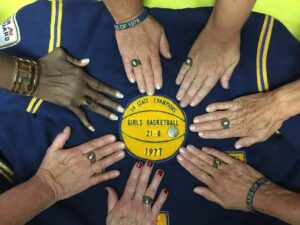 “Yep, you showed me how to throw a football, pitch a softball, spike a volleyball. You broke the rules and taught me all the things girls weren’t supposed to be doing back in the 60s and 70s. Because you did, I never doubted that I had the right to be there in the gym like the boys.”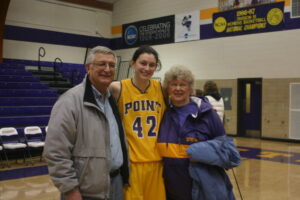
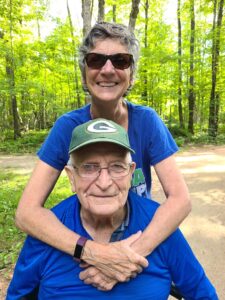 We have a ways to go, but we are getting closer. It began with dads, like you, who believed that little girls could, should and would play ball one day.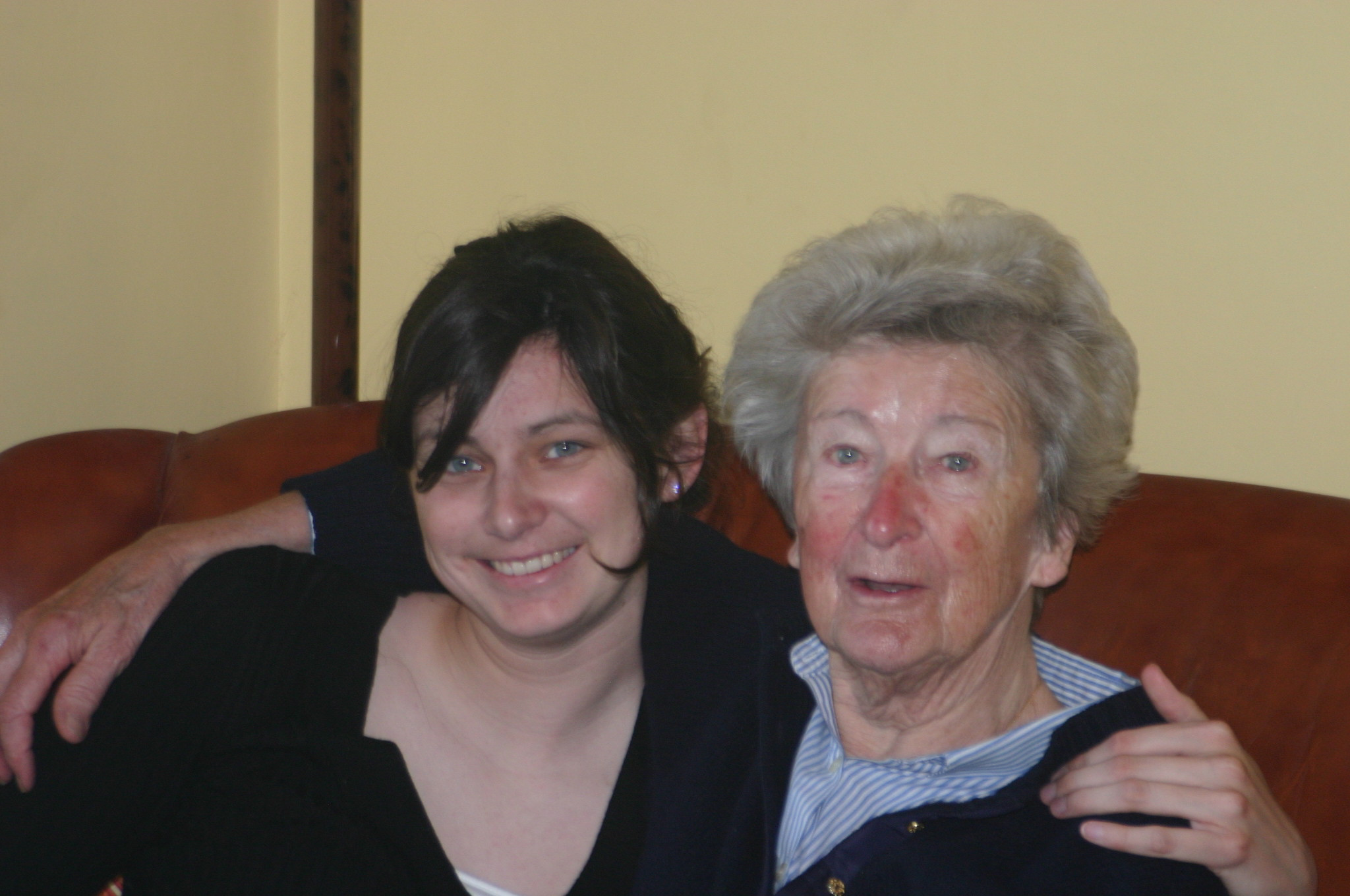
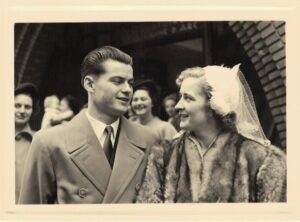
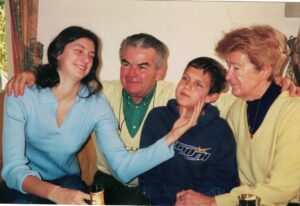
 Though she was 94 and ready to go, we are never prepared to say that final farewell to our mothers. On the day we buried our beloved Mamie, we were overcome with waves of sadness that come and go like the tide crashing the shores of Trouville by the Sea where she lived for over 6 decades. Fleeting memories of her emerged like rays of sunshine poking through the dark clouds.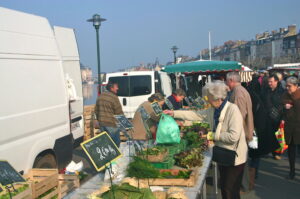
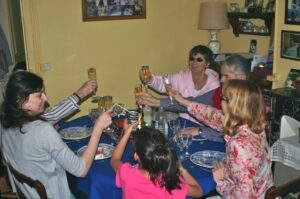 We had barely cleared the table before Mamie started preparing for the next feast, scurrying back around to the village shops filling her wicker basket with fresh supplies from the butcher, the baker and the creamery.
 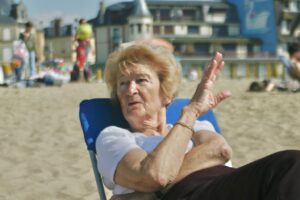 Mamie could be stormy with a sharp tongue that you never wanted to cross, but she was also sunshine filled with warmth and the first to offer consoling words in times of trouble. Ever since my car accident in France 40 years ago, like a mother hen she welcomed into her family nest and watched over me as if I were a baby chick with a broken leg.
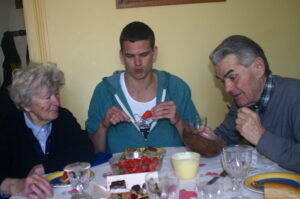 Mamie was the sun and the sea, the wind and the rain, the beach, the boardwalk, the open market, the fish sold fresh off the boat on the quay. She was Camembert, strawberries and cream, chocolate mousse, apple tart and homemade red current jelly.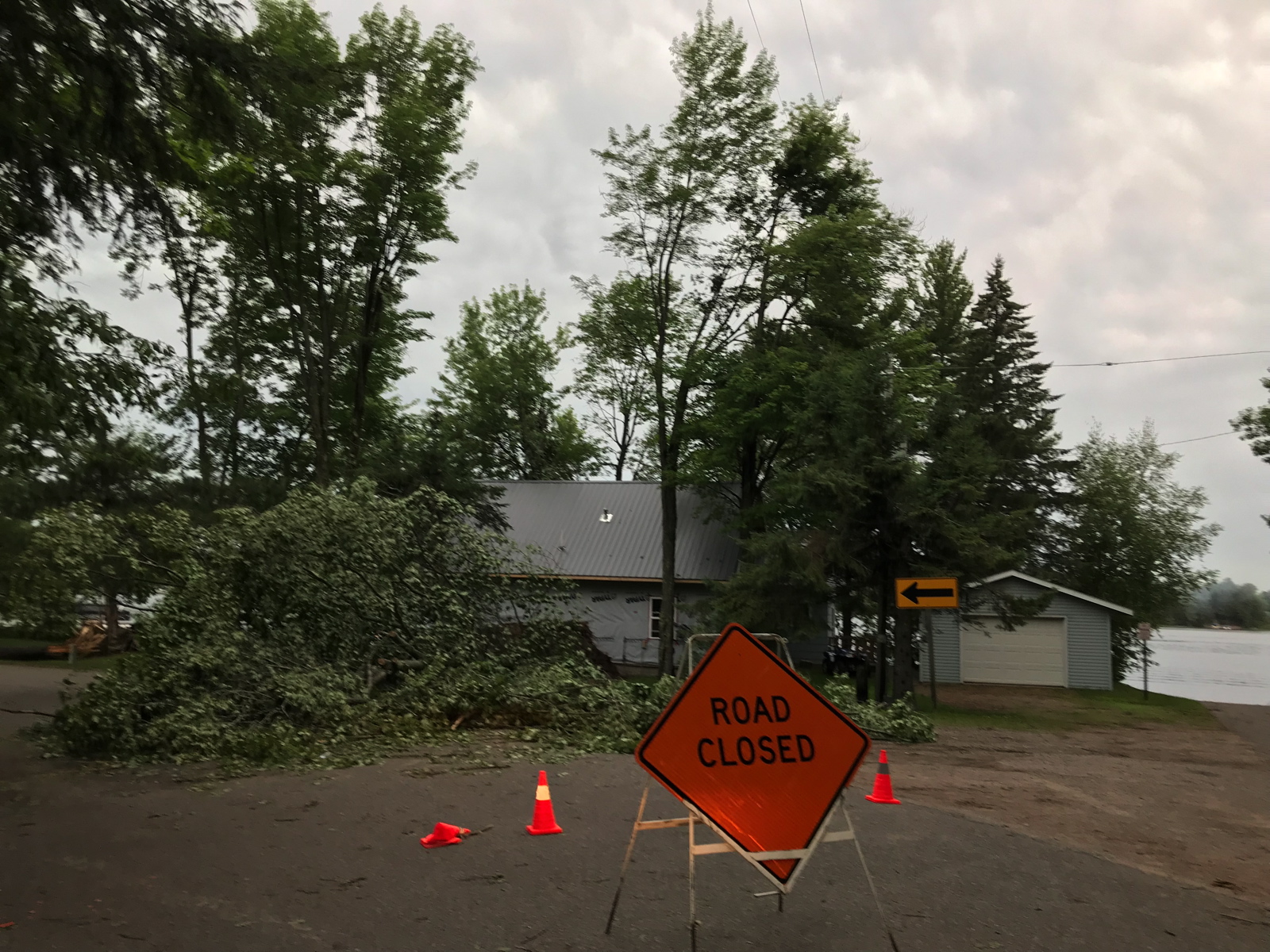
 Summer storm warnings in the midwest are so routine, we ignore them, but in the era of global warming look out. After a hot day on the lake, we sat on the dock of McKinzie cabin admiring the formation of mammatus clouds that looked like upside down dinner rolls. When the rain started, we headed up hill to the cabin. Just when my friend started her stand up comedy routine, the lights blinked out. We hee hawed to her jokes by candlelight while trees thrashed and waters churned outside.


