Celebrating the class of ’75 SHS Forever

This weekend at my alma mater, Sterling High School Class of 1975 celebrates its’ 50th reunion. Sadly, the Big Pond and 4000 miles that separate us makes it impossible for me to drop in, but pieces of my heart never left home.

Born by the Rock River in Illinois, I grew strong in my family (McKinzie) in my hood (19th street) and within the halls of Sterling High School.

The baby boomer names— Bob, Doug, Mike, Chris, Deb, Sue, Pat— of my classmates, no longer common, have gone out of style.

Over the past half century, names aren’t the only thing that has changed.

Back then, cell phones hadn’t been invented. Instead we dialed friends’ numbers on land lines and tied up the family phone for hours as we spread gossip and sorted out teen dramas.

Text messages, huh? We communicated by flicking hand written notes across the class room on paper folded into tiny footballs.

In spring of ’75, Bill Gates and Paul Allen founded Microsoft computer software, but my peers and I practiced the hunt and peck method on type writers. Anybody remember those antique machines?

Boys jostled in the halls and teased the girls, but dangerous bullies back then did not exist. Today’s 21st century bullies lurk on social media spewing hatred and vitriol. Predators hide online; deviants use AI to create fake photos and identities and blackmail innocent victims. Cyber bullying destroys teenagers’ lives.
In the 70’s, our streets were safer; outside threats smaller. We lined up on the playgrounds during fire drills and hid under our desks in tornado warnings. But no one could ever imagine a school shooting.

No one died at school.

Nobody owned guns except deer hunters.
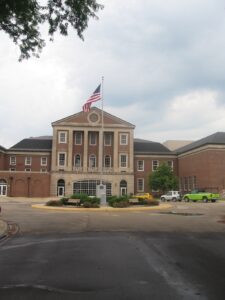
Back then, we walked through the open school gates freely. Now security guards check backpacks at the door and roam the halls sweeping lockers for guns. Active shooting drills have become the norm.

As high schoolers in the ‘70s, we did stupid stuff. We hung out in cars, but nobody owned their own wheels. We cruised in our parents’ vehicles, spinning grease laps around McD’s, running Chinese fire drills at stop lights, pitching toilet paper out windows to TP trees.

My class was notorious for the “Moon Mobile!” Bare butts hanging in the wind became a common sighting!

Our shenanigans were annoying, but innocent.

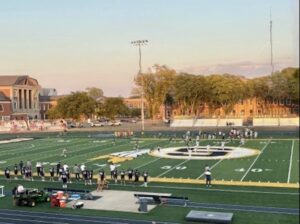
Our greatest transgression — streaking (running buck naked) across the football field under the Friday night lights. We had slumber parties and seances and summer jobs.

“What’s happenin?” 70s gave way to the shake your bootie disco days of the 80’s. We grew up to the background beat of Motown and Springsteen’s “Born to Run,” during the Vietnam War Era, moon landings and Watergate.

At the time, we never appreciated the opportunities Sterling provided, giving us the chance to pursue our interests and hone skills in outstanding facilities. Drama club, robed choir, marching band, dance, pom poms, cheerleaders, chess, debate and sports a go go.

Not for girls.

Not right away. But when Title IX started rolling, we were one of the first schools in Illinois to provide girls’ competitive sport programs.

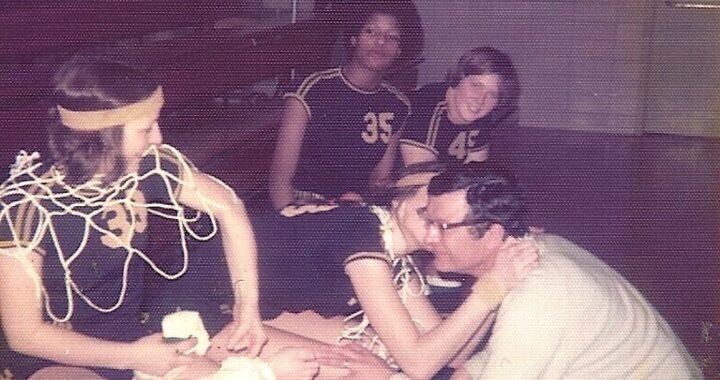
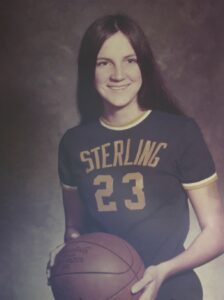
Back then, I probably had a chip on my shoulder because I wanted to play ALL sports like my male peers. But I was lucky to come of age at the tip of Title IX and be there at the beginning—first girls’ teams, first female Roscoe Eades recipient, first women’s athletic college scholarship recipient, first women’s pro basketball league (WBL) draftee.

I will always have a special affinity for the class of 75, but after graduation, age differences blur. Once we tossed that blue cap to wind, we all became proud alumni. In retrospect, boomers raised in big families had so many siblings at SHS at the same time, class distinctions never mattered.

I recall my older brother’s talented class of 73, with his brainy bunch of friends headed to the Ivies, and equally exceptional athletes off to the Big Ten. I’ll always remember the Sweet Sixteen boy’s basketball team that let me play in pick-up games, long before girl’s hooping was a thing. And who could ever forget my lil sister’s winning Illinois’ 1st girls’ state basketball championship in 1977.

Did we appreciate our fortune surmounting those challenging rights of passage on our campus, as impressive as any university? For a blink in history, we shared a common bond. We grew up in the same place, at the same a time, when graduation to adulthood was simpler, safer, saner.

We were basically good kids.

If we ever failed to toe the line at SHS, we had great character-building role models, teachers, coaches and administrators who held us accountable and made us own our mistakes.

We learned lifelong lessons of dependability, honesty and integrity through team participation and performances in the arts and sports.

Sadly, since those carefree times, we have lost family members and loved ones, including friends from our graduating class, like Mouse, Bob, Jay, Laurie and others.

Many classmates attending our 50th reunion will have replaced worn out body parts, survived heart attacks, endured cancer, COVID and other chronic diseases.
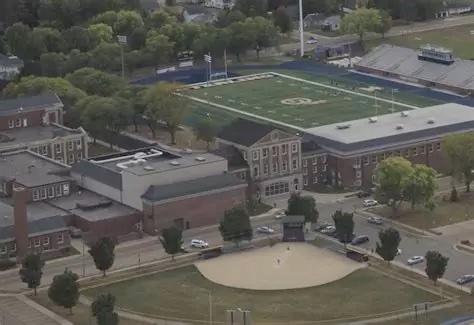
My old friends will gather to celebrate, to watch a football game, tour the SHS campus and reminisce about the good ol’days!

Somewhere across the globe, a tall, slender gal will raise a glass in their honor.

Thanks for those magical 70’s memories.

Our Sterling years remain etched in gold forever.

Hometown Teams Unite Us in Divisive Times

While Americans fear for our future during this time of national turmoil, the Sterling Golden Warriors basketball team unites us and gives us something to cheer about.

Sisters of the past (and brothers who battled with them) remember the struggle. From the suffragettes to civil rights, from Wade vs. Roe to Title IX, we must never forget the sacrifices of those who fought for the privileges we may be losing today.


Title IX

“No person in the United States shall,
on the basis of sex, be excluded from participation in,
be denied the benefits of, or be subjected
to discrimination under any education program
or activity receiving Federal financial assistance.”

Nearly 50 years ago, in the infancy of Title IX, an odd trio, McKinzie a respected boys’ coach, Strong, a GAA coordinator, and Smith, the first African American teacher in the conference made sure female athletes had equal opportunity at Sterling High School(SHS).

While our nation struggled with civil rights and gender equity issues, a small town team united blacks, whites and Hispanics in one dream — a state championship. In 1977, Illinois State University hosted the first IHSA girls’ basketball tournament. It could only happen here where legends like Jill Hutchison (basketball), Linda Herman (volleyball) and others assured Title IX’s enactment into law. https://goredbirds.com/

https://goredbirds.com/

Right place. Right time.

In my era, pre Title IX, girls’ teams weren’t allowed on the shiny wooden fieldhouse floor. We played on tile courts in half-flight “girl’s gyms” with chalk scoreboards. We wore the same uniform for every sport each season.

Fast-forward to 2025, another athletic family with Sterling roots, Novak Carbaugh/Jackson, returned to teach and coach today’s SHS Warriors capturing the essence of that earlier time.

Coach Jackson’s mom, Laura Carbaugh, a friend of my sister Karen’s (1977 team), sent me the livestream link to the games, so I could see Sterling defeat Naperville. The hoop-a-la in Homer Musgrove Fieldhouse blew me away. The jumbotron flashed names, numbers and stats as players warmed up in stylish blue and gold uniforms. The Sterling players’ introductions were nearly as spectacular as WNBA players starting line-up announcements that we can see on national TV.

A Title IX pioneer, I had to move abroad for the right to play basketball. A half century later, I saw the SHS live game transmission on my laptop. With tears in my eyes, I watched as coaches, players, and fans rose to sing our national anthem in front of our flag.
After tip-off players ran the court, drove to the basket and rebounded with heart. Jackson and her coaching staff inspired an intensity reminiscent of the golden girls of yesterday. Austin stepped up and under from the low post. The James’ girls picked off passes. Who was that tiny guard dishing out assists on a dime? And feisty Harris? Any relation to Marche Harris?

Forgive me for not knowing every player’s names. Forty-four girls are listed on the SHS roster. Regardless of playing time, each participant having the opportunity to represent the Blue and Gold, will learn the same values of teamwork, sacrifice and loyalty .

Like basketball, the Sterlings girl’s 2018 state championship volleyball team was a family affair with sisters, brothers, moms, dads and grandparents.The recipe for success: take the Borum sisters, add the Gould combo and toss in a Lexi Rodriguez libero.

Over the past decades, coaches like Dietz, McKinzie, Smith and so many others dedicated their lives to guiding our youth. The generosity of citizens, the Pete Dillon’s, Mo Duis’, Roscoe Eades, Homer Musgrove’s, Jim Spencer’s of the community worked tirelessly behind the scenes to provide the foundation of excellence.

We never realized how spoiled we were to have access to public recreational centers like Westwood, Duis Center, the YMCA and dozens of parks, Sinnissippi, Kilgore, Platt and a many others we learned to play early on.

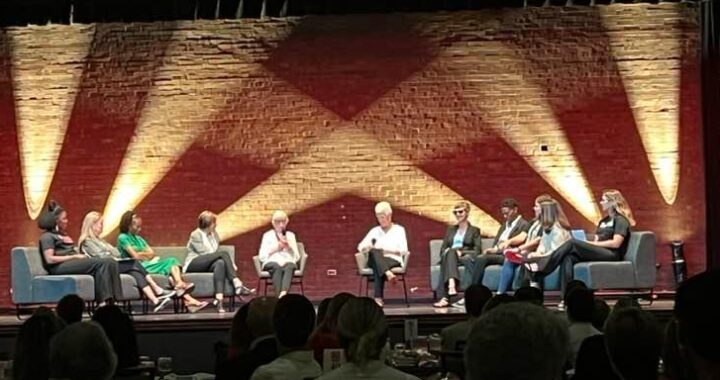

Our SHS sports’ facilities (and performing arts auditorium) are so outstanding opponents kiddingly call us Sterling U.

No matter where the alumni ended up, we still feel proud to say, “I’m from Sterling.”

In 2025, women’s sports has unprecedented popularity, media interest and monetary incentives. The Alex Morgan’s, Caitlyn Clark’s and Simone Biles’ inspired millions of girls to be all they can be.

Opportunities abound for the Lexi’s, Maddie’s, Nia’s, and others, who can today aspire to becoming pro athletes, doctors, lawyers, CEO’s and mom’s.

Alone, we cannot hold back the tsunami sideswiping our country, but together we can strengthen the bridges between our families, neighborhoods, schools and communities. Together, hand in hand, do the right thing in the right place to preserve the human values on which we were raised.

Tolerance, integrity, solidarity.

It begins at home.

Illinois State University Celebrates Title IX 50th

As a girl, I was stuck on the sideline, watching boy’s basketball games, hoping that the ball would roll out of bounds so I could throw it back into play. I never fathomed girls would be allowed on center court one day.
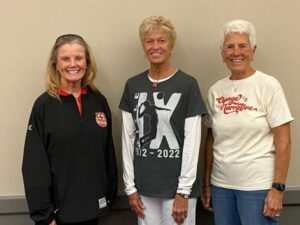
50 years ago on June 23, 1972, Title IX passed. The federal civil rights law prohibited sex-based discrimination in any educational institution that received federal funding.

It opened doors to places I never knew existed.

Pillars of ISU Melinda Fischer, Linda Herman, Jill Hutchison

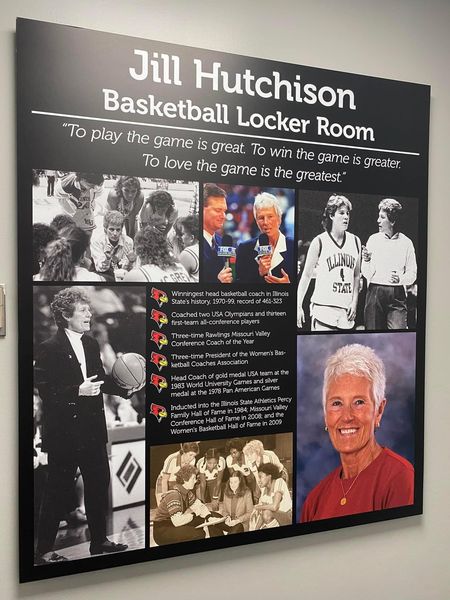
Illinois State University's legendary coaches, Linda Herman (30 plus years as esteemed volleyball coach and administrator) and Jill Hutchison (28 years at the helm of women’s basketball and also a successful international level coach) among others, played a major role in Title IX’s passage and assured its implementation for female athletes.

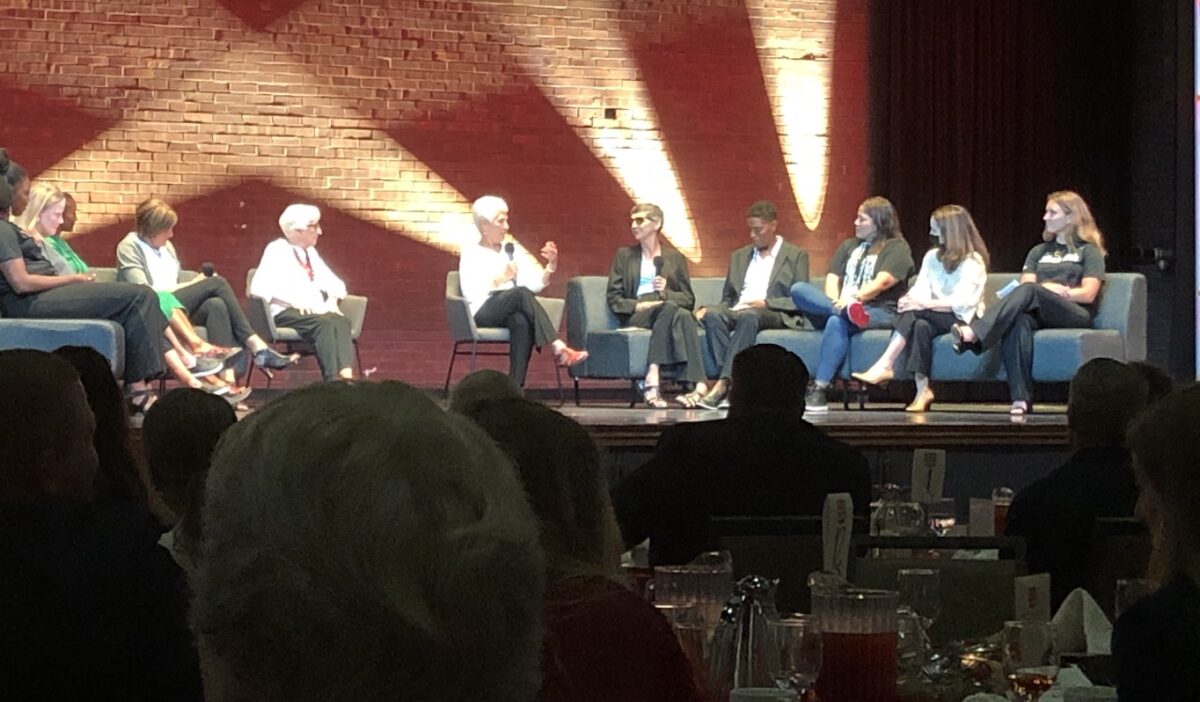
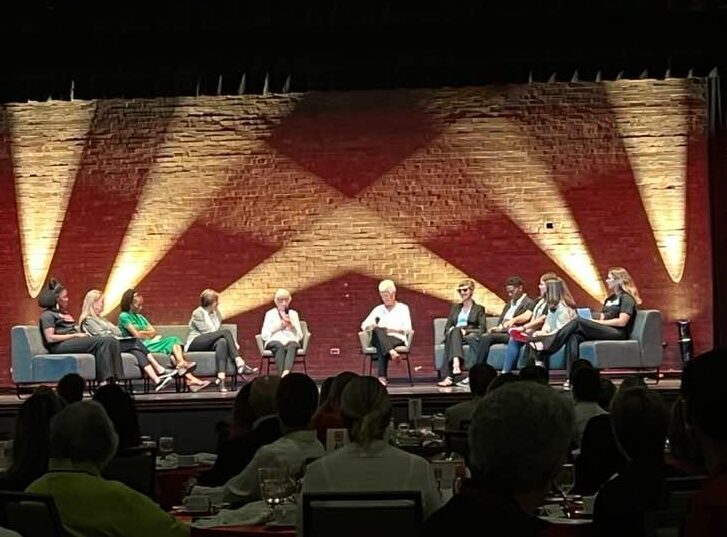
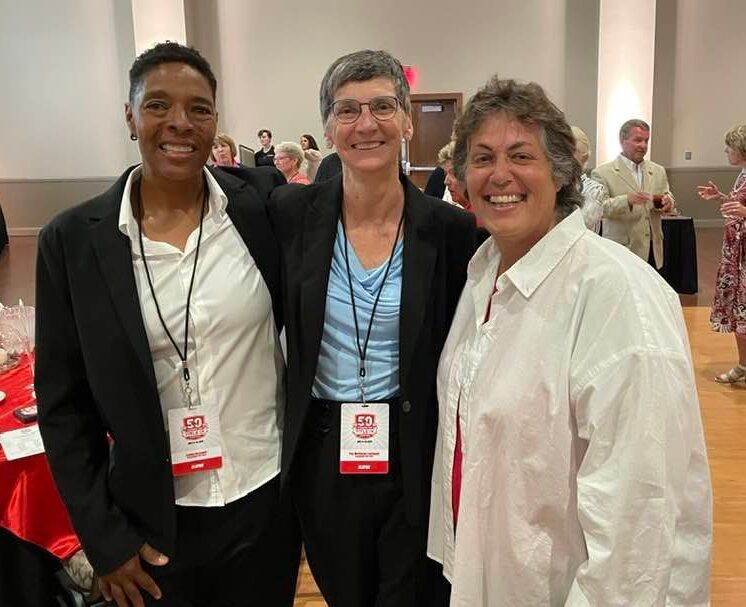
This June 25, 2022, ISU led the nation again by honoring the pioneers in its Title IX 50th Anniversary Celebration.

In 1976, I was one of the first females to be awarded an athletic scholarship to ISU. Back then, I didn’t even know what a scholarship was. No one realized the profound impact Title IX would have on our lives.

Today young female athletes grow up dreaming of being recruited and receiving athletic scholarships and all its perks just like their male counterparts.

During my visit back to the ISU campus for the first time in decades, I was blown away by the accommodations for female Redbird athletes including the opportunity to prepare in the state of the art Jill Hutchison Women’s Basketball Locker Room and play in Redbird Arena, 10, 200 seat capacity.

Many athletes of the current generation never heard of Title IX nor appreciate how we got here. ISU reminded us of the sacrifices in our journey by honoring the pioneers who paved the way

Linda and Jill opened the event by narrating a video of outlining the development of women’s collegiate sport back from the days when women sewed their own uniforms and drove campus station wagons cross country to compete until present times.

We heard firsthand how Title IX shaped the lives of ISU alumni like basketball star Cathy Boswell, 1984 Olympic Gold Medalist, to Jaci McCormick, a Native American player from the Nez Perce Reservation. Jaci went on to co found Rise Above, an organization that uses basketball to promote wellness on reservations.

Speakers also included Melinda Fischer, a former 3 sport athlete, basketball and softball coach with the winningest record at ISU and in the Missouri Valley Conference and Angie Taylor, who after a record-setting career in track and field became an illustrious international and collegiate coach. She also developed programs for Nigerian track and field teams.

Still others on the panel shared how they took the foundation and philosophy built at ISU and passed it on as coaches and administrators.

I was humbled and honored to be invited to speak and the share the stage with these legends. Most of you who follow my column know my story.

Basketball took me from ISU, to the women’s first pro league (WBL), to France, Germany and Switzerland. In the late 70s, the Women’s Professional Basketball League (WBL) failed, but we helped give birth to the WNBA in 1996.

After my American pro team went bankrupt, I flew to Paris as one of the 1st American women in European Basketball League, playing first in France and then in Germany.

When my player’s career ended instantly in a car accident abroad, I became a teacher and coach at international schools. For the next 3 decades I served as an ambassador of the game in Europe, guiding athletes from around the globe, first in France, then in Switzerland.

“No person in the United States shall,

on the basis of sex, be excluded from participation in,

be denied the benefits of, or be subjected

to discrimination under any education program

or activity receiving Federal financial assistance.”

Many of the players I coached pursued higher degrees before returning to their homelands to fight for social justice.

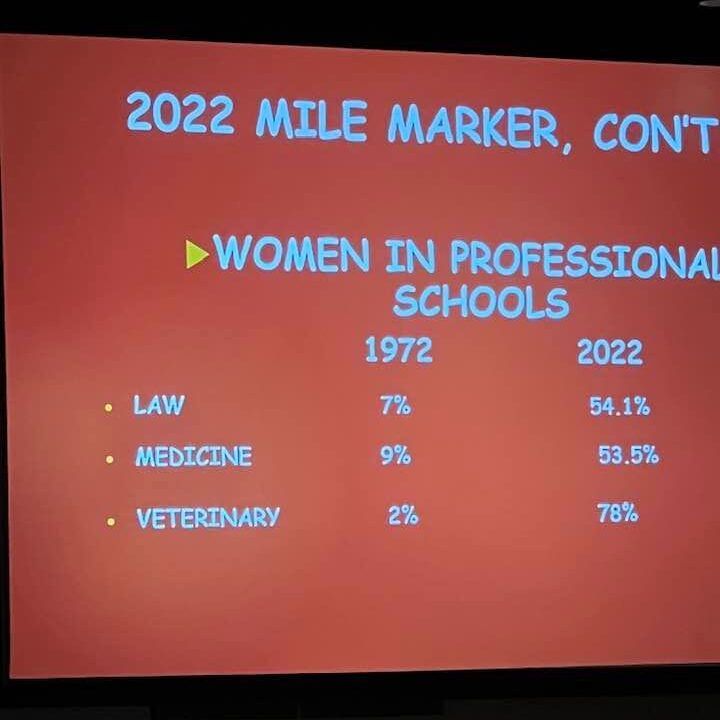
When I was a kid, women were banned from the playing fields. I didn’t know any female doctors, lawyers or CEOs.

We fought for the right to play ball and paved the way for our high-flying daughters today.

My own daughter, who I coached in Switzerland, came to USA where she played in a DIII Final 4 for UWSP, studied 11 years and reached her dream to become a pediatrician.

Many of our present day contemporaries never heard our history. I wrote Home Sweet Hardwood, A Title IX Trailblazer Breaks Barriers Through Basketball, to give a voice to the silent generation of women who battled so hard for the rights we have today.

Jill and Linda and other dedicated pioneers put together an amazing weekend to celebrate our past, to educate, and to inspire the next generation.

We can’t know who we are if we don’t know where we came from.

We are indebted to women who came before us .

From the sideline to Showtime! Thanks to Title IX, a girl grows up never questioning her right to be all she can be.

American Abroad Crying for My Country

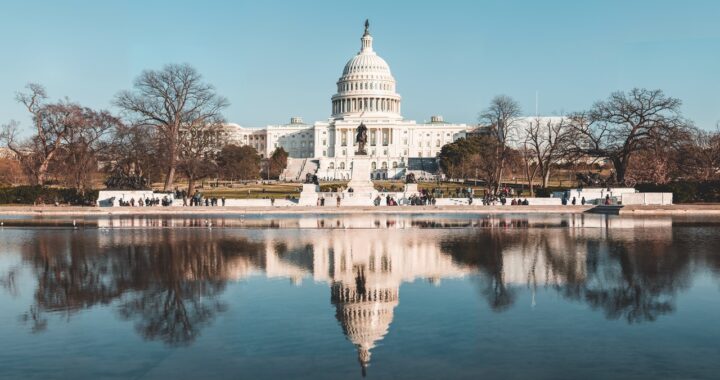
On January 6th, I watched violent scenes unfold on Washington DC’s capitol hill on a dark episode in our history and I wept for my country.

Ironically at his “Make America Great Again” rally, Trump’s supporters were incited by his inflammatory speech as he ranted “Stolen election. A fraud. I will never leave office.” The mob stormed the Capitol, breached the police blockage, and ravaged the House and Senate while terrified US representatives donned gas masks and ducked behind chairs.

Fothe Capitol, Washington DCur years under the leadership of this madman ended in this deplorable moment in our history, leaving American citizens shocked, appalled, humiliated and terrified. It degraded our image and lowered our status among other countries.
Is the world’s oldest democracy, a beacon of hope, a bastion of freedom imploding in front of our eyes?

I weep for my country. My spirit is broken. My heart is shattered.

My personal history with Washington DC makes this event even more painful. As a child I used to boast to friends that my relatives - my grandma, uncles, aunts and cousins - lived in our nation’s capitol as if that afforded me special connections.

Washington Metros, WBAIn my twenties I called it home, when I was a player for the professional basketball team, the

Washington DC Metros, a precursor to the Washington Mystics and the WNBA.

Back then, I loved showing off “my city” to visitors, leading them on tours along the majestic National Mall past the Lincoln Memorial and Jefferson Memorial and Washington Monument.

Washington DCLong after I moved to Europe, DC remained imprinted in my heart - Fort Belvoir, a US Army base where we practiced, the DC Armory, the national guard training arena, where we played our games, and the Capitol Center where we toured. A kaleidoscope of memories collide warm family meals, heated basketball games, cozy jazz clubs in historic Georgetown, and landmarks of American history.

Growing up, the privilege of American citizenship has never been lost on me. I am the granddaughter of immigrants who sacrificed everything to build better lives on US soil.

Fast forward forty plus years where, as an expat in Switzerland, living in a safe neutral country, I stare at that news report as domestic terrorists, American white supremacists, scale the walls of the Capitol building and rampage after our US President ignites their insurrection by spewing lies, hatred and intolerance.

Though friends, having moved back to the States warned me about the dangerous division infiltrating my homeland, I never believed it could be that bad until I saw the events unreeling on Jan 6.

Yes we must impeach the President, imprison the perpetrators, condemn their actions, but then how do we move forward?

Where do we go from here? How do we reconcile? The world has witnessed with incredulity our values disintegrate on prime time.

How do we, as the oldest democracy, restore the pillars of our foundation — peace, liberty, equality for all — when the essence of what it means to be American has been desecrated?

Washington DCBefore an entire country can heal, we must begin with one person. Reach out. Get to know someone of another religion, race, culture, ethnicity and learn about their universe. What foods do they eat? What holidays do they celebrate? What language do they speak? What deities do they worship? What fears do they face of living in the USA? How can they be made to feel welcome here?

If your neighbors all look, think and act like you, read papers from another country with a neutral viewpoint from another perspective without the biased Democratic/Republican party division.

Not everyone was raised in an accepting family, or experienced firsthand cross cultural living and marriage, or teaching in an international school. I have been lucky to have met, worked with and learned about people from everywhere around the globe.

Tolerance may not be a birthright, but it can be a learned behavior.

It starts in our homes, spreads to neighborhoods, communities, crosses state lines and national borders.

Tolerance begins with the words we speak and actions we take.

Today.

Right now.

In our house.

In our America.

Illustration photos by Praneeth Koduru , Sandy Torchon, and Budgeron Bach from Pexels

Women’s Rights Are Human Rights

The inauguration day of our 45th President was a day of despair that I spent wrapped up in a blanket shivering from illness and shuddering from the political tsunami. The stark contrast between Obama’s gracious farewell speech to the campaign of the new president-elect whose words offended everyone with his disparaging comments about women, minorities and immigrants made me cringe.

But a day later on January 21st, my spirits lifted when millions of women (and men) took to the streets in America’s largest protest ever. Wearing pink hats and carrying signs, protesters peacefully chanted slogans and mocked Trump’s sexist demeanor and discriminatory rhetoric.

I did not have the strength to join the peaceful demonstrators marching across the Mont Blanc Bridge in Geneva; I was on the phone crying with my sisters as I battled pneumonia again. Like so many other women and minorities, I am worn out. Weary from this nonsense. Why must we continue to fight the same battles we won decades ago?

My only consolation was in knowing that we are not alone. The movement spread to 670 places nationwide and overseas ranging from Berlin, London, Stockholm, Sydney and others. Spurred by Facebook event messages, thousands paraded down the Parisian boulevards protesting the sexist, homophobic, xenophobic and racist ideology Trump defended during his campaign.

Around the globe, demonstrators objected against all aspects of intolerance. In South American countries, gender violence topped the list. In Tokyo, the right to education was a major issue and in other parts of the world health care reform was the priority.

The demonstrations stemmed from Trump’s campaign fueled by audacious claims and divisive rhetoric. He dismissed allegations of sexual assault and his lewd comments, like “grab them by the pussy” as “locker room talk.”

I grew up on the sideline listening to demeaning locker room talk. The ultimate affront to emasculate a male was to call him, “a pussy” insinuating that he was a pansy, a sissy, a girl.

In the past women were insulted daily, treated as second class citizens and obliged to fight for the right to vote, to participate in sports, to earn higher education, to hold office, and to lead companies.

Today I did not have the strength to join my sisters and take to the streets, but tomorrow I will rise. I will return to the gym, encouraging my international athletes to keep fighting in face of defeat. To take that energy, that strength, that power back to their homelands and to use their gifts to make a better world.

From our streets to our offices to our playing fields discrimination remains insidious and girls are still reminded in so many subtle and not so subtle ways that they don’t count.

I cannot change public policy, but I can make a difference. Everyday. I can use my voice, my example, my courage to inspire other girls and minorities to reach for the stars, to believe that they count just as much as their white brothers and that their contribution is equally valuable.

We must all continue to make our voices heard.

American Election An Expat Perspective

12665885-silhouette-of-a-sad-politician-on-american-flag-background-with-vintage-look-stock-photoTo me it’s not about politics. It’s not about liberal or conservative or agreeing to disagree on what we each think is the best way to ensure that the US is a great place to live.

It’s about the values  I thought we held regardless of our political leanings.

After hearing the election results on November 9, I cried. I felt a gut wrenching fear and despair that knowing there was no turning back. I walked out the door and wanted to keep walking right off the planet. My disappointment was magnified thousand-fold with the heartbreaking knowledge that half of the nation believes in a leader whose platform was filled with empty slogans and derogatory rhetoric based on repression, intolerance, bigotry, misogyny and ignorance.

I know that realistically not all those who voted support those views and that they have very legitimate reasons for wanting change, I know that for many it was an act of anger, frustration and hopelessness, not racism or misogyny. But it’s hard for me to feel that in so-voting, those views, which I find so abhorrent and antithetical to the very rights we fought so hard for in the past, weren’t being endorsed. Regardless of what happens at a policy-level, I’m fearful of the message that has been sent, of the noxious sentiment that has been aroused, and of the no-longer unrealistic possibility that the rights we have fought for could be taken away, or at the very least not truly be guaranteed for all.

I understood why thousands of Americans took to the streets in protest chanting, « Not my President. »

Not my country either. Not the country I loved so dearly for defending the unalienable rights we hold so true … liberty, justice and freedom for all, not just those who shout the loudest or have the biggest bank accounts or have ancestors born in Western Europe and have less melanin in their skin.

Having lived in Europe for the past 37 years, perhaps I have no right to judge. I do not know what it feels like to be stopped in the street for the color of my skin. Or to be a working class man facing unemployment when my job was outsourced overseas. Or to be homeless waiting in line for a food pantry hand-out. Nor the despair of watching my child grow sicker and weaker due to an inability to afford health care.

But I do know the fear of standing in line in a French immigration office fearing that I will be deported. I do know the humility of depending on German teammates for a roof over my head. And I do know the gratitude of people – international friends and colleagues – who ignored where I came from and accepted me for who I was.

And I know what it feels like to be left out. In the early Title IX days, I left the USA to pursue a dream denied in my homeland. In 1979, I moved to Europe on the heels of the Vietnam War at the height of the Cold War, during the Reagan era.

While living abroad, I tried to mitigate the stereotype of the loud, arrogant, ethnocentric American by speaking softly and keeping a low profile. I demonstrated the ideals of tolerance on which my country was founded by showing respect for others who worshiped different deities, spoke different languages and practiced different customs. As a guest in others homelands, I discovered firsthand through friendship the beauty in our diversity.

I came back to a nation where people were more connected than ever on social media, yet profoundly divided in real life and unable to communicate in civil terms.

Recently retired from teaching abroad, I stayed in the states longer and followed the election with mounting alarm, stunned not just by how vitriolic it turned, but how easily we condoned it. When did the election in one of the greatest democracies become more about digging up dirt on one’s opponent than discussing critical policy issues?

I felt as if I’d been flung back in time to an era when women were objectified, Jim Crow Laws kept blacks in their place, and gays hid in the closet for safety. Trump gave free licence to discrimination. His dismissal of anyone who is not a white American male echoes an Aryan supremacist ideology that nearly destroyed us.

« Make American great again ! » Trump proclaims. What was great about America was that everyone had an opportunity to pursue the Dream.

« Build walls to keep out immigrants ! » America was built on the backbone of immigrants who came here for a better life.

On the heels of Brexit, Trump’s victory, following a campaign filled with disdain for women, minorities, immigrants, gays and the disabled only fuels the extreme right of the world. Marie Le Pen is kicking up her heels in France; Geert Wilders is dancing in Holland.               .

The nightmare I woke up to November 9 reverberates around the globe. We may only worry about what is happening in our neighbourhood, and I get that, but what we don’t realize is that, like it or not, any decision made in America affects the rest of world, environmentally, socially, and economically.

We need to remember that regardless of our political party, religious affiliation, national identity, race or gender, we don’t own this planet.

We cannot go back and change the outcome of the election, but that does not mean we should give up on those ideals. We can speak up for those who are victimized or do not have a voice. We can continue to teach our children to treat everyone with kindness and respect. We can encourage the many politicians in both parties who have condemned Trump’s racist and misogynistic rhetoric to continue to do so.

We can do better.

We must.