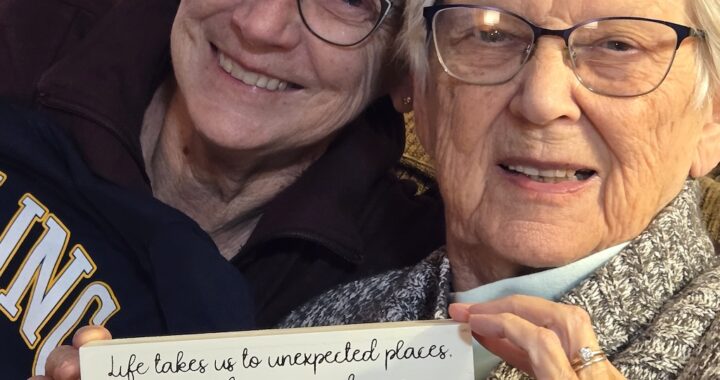
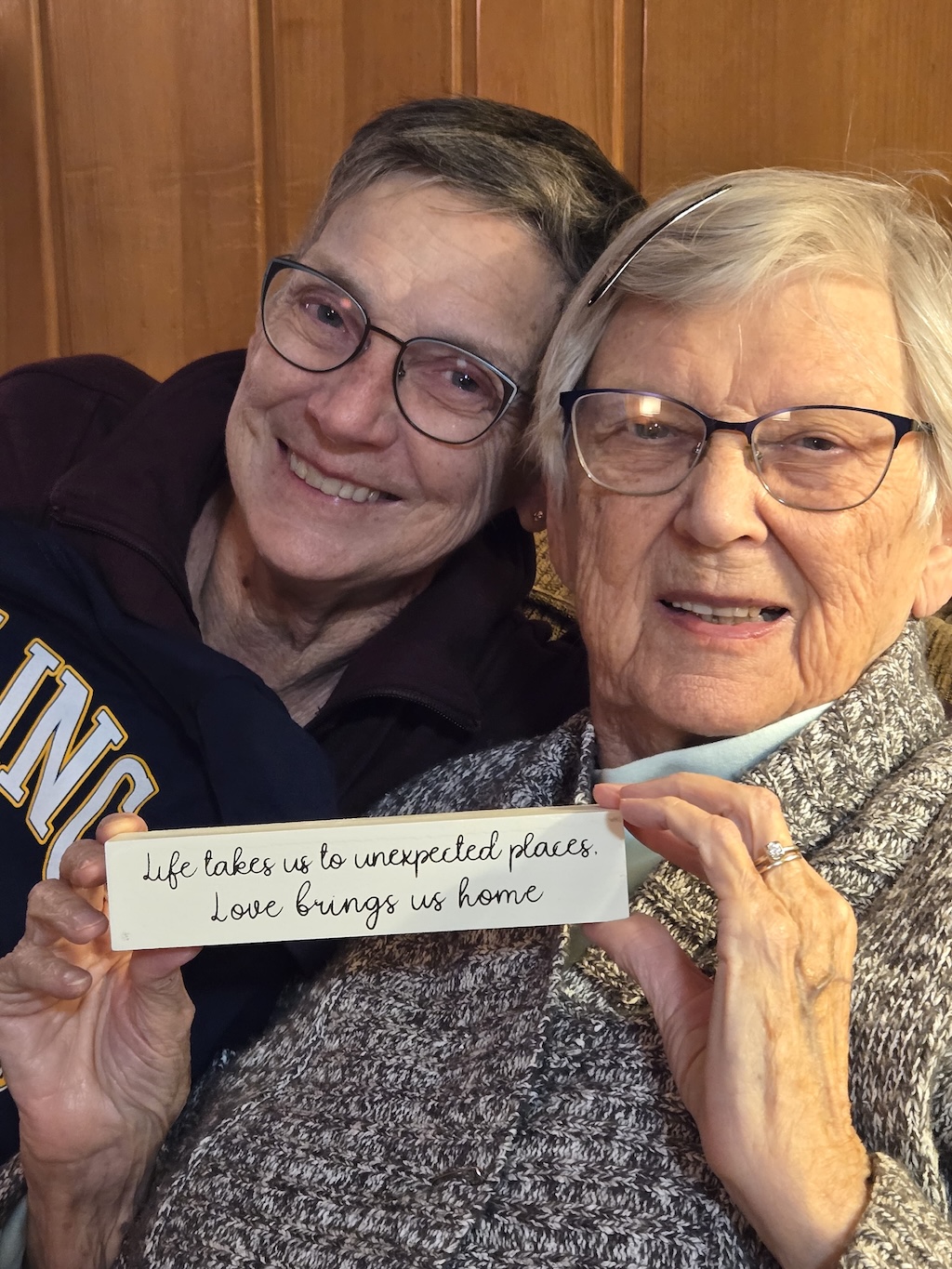
 Oh dear, how do I tell my 91-year-old mother that she gave birth to an extraterrestrial being? What else could explain my extraordinary quirks, peculiar ailments, and uncanny ability to survive against all odds?
I’ve recovered from accidents that no mortal should have survived. I suffer from maladies so bizarre that no one has ever heard of them before.
Then again, how many people survived a rabid skunk bite as a toddler and lived to tell the tale?
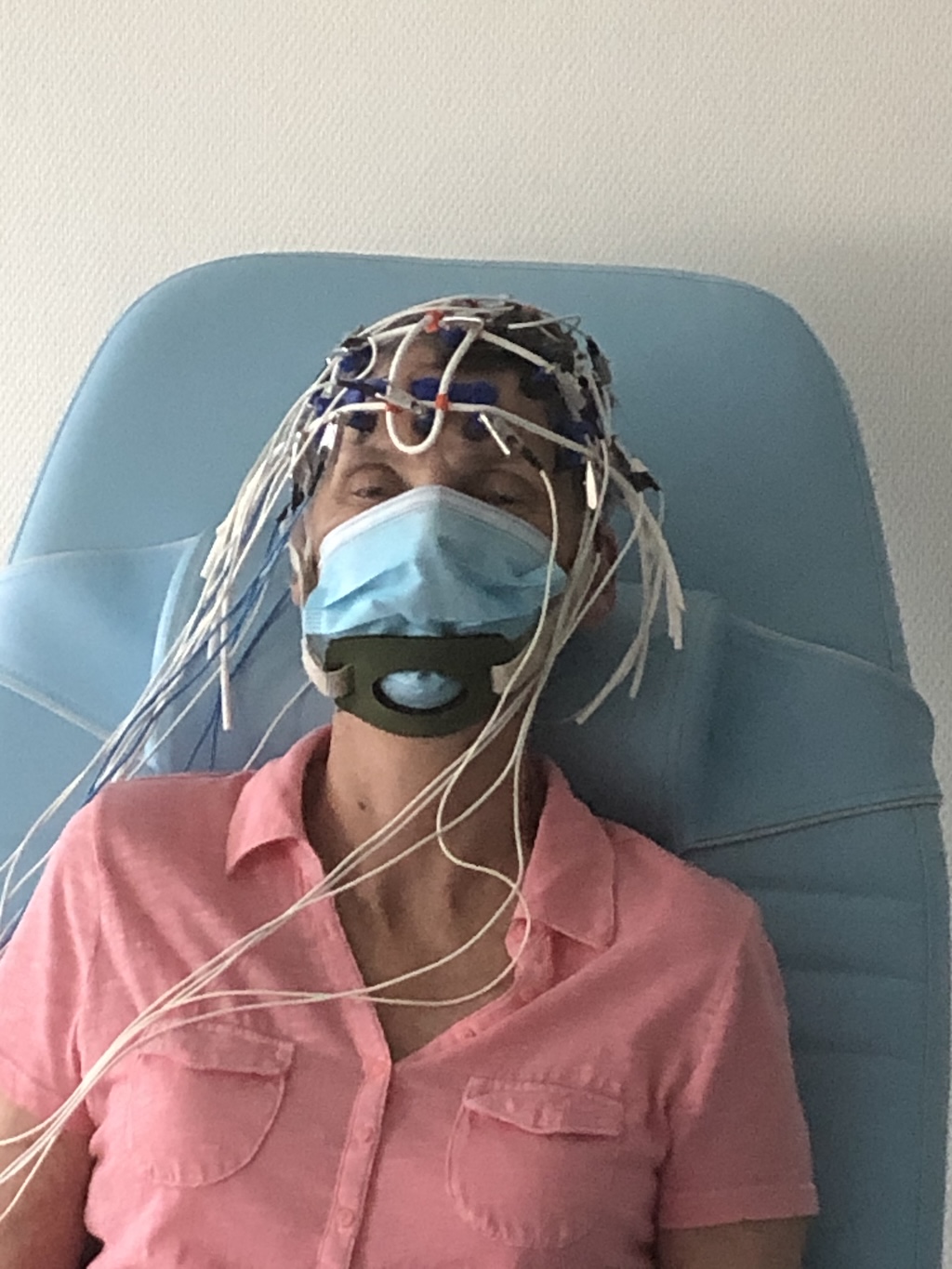 My latest episode involved the right side of my mouth festering until my gum line resembled the embers of a dying fire. A thread under my lip pulled my gum away from my tooth, exposing the root.
My Swiss dentist pried open my mouth and exclaimed in awe, “Très intéressant! I’ll do a frenectomy!”
Frenectomy?
In the past, when diagnosed with other strange ailments, I had no idea what my American, French, German, Greek and Swiss doctors were talking about.
I’ve always been different.
After all, I was born in Sandwich.
“Which kind? Baloney!” friends teased.
According to my mother, I was the only planned baby of her four children.
Good grief! Who in their right mind would have planned to birth an extraterrestrial being?
Fortunately, back in Sandwich in 1957, I was a bargain baby! The doctor who delivered me charged my folks only 50 bucks.
Since then, I’ve cost a fortune!
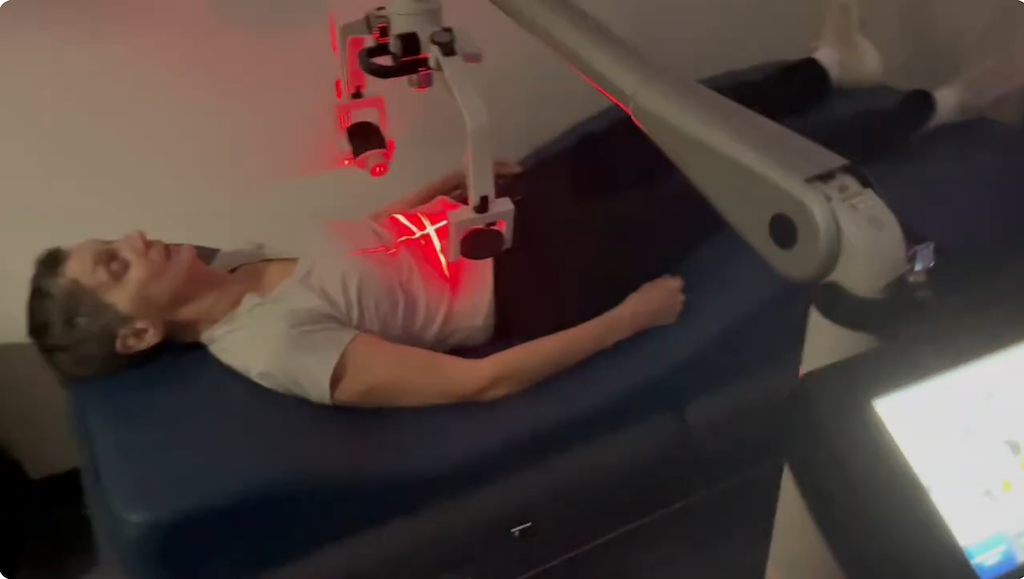
Braces, glasses, orthodontia, orthotics, and umpteen surgeries. Disintegrating discs, temporal mandible dysfunction, neuroborreliosis. I had strange conditions before they became common knowledge. My treatments, considered controversial quackery at the time, have become part of standard care, like chiropractic and TMJ dental treatment.
Why me?
Blame it on that rabid skunk bite!
My poor mother! How did she survive my childhood?
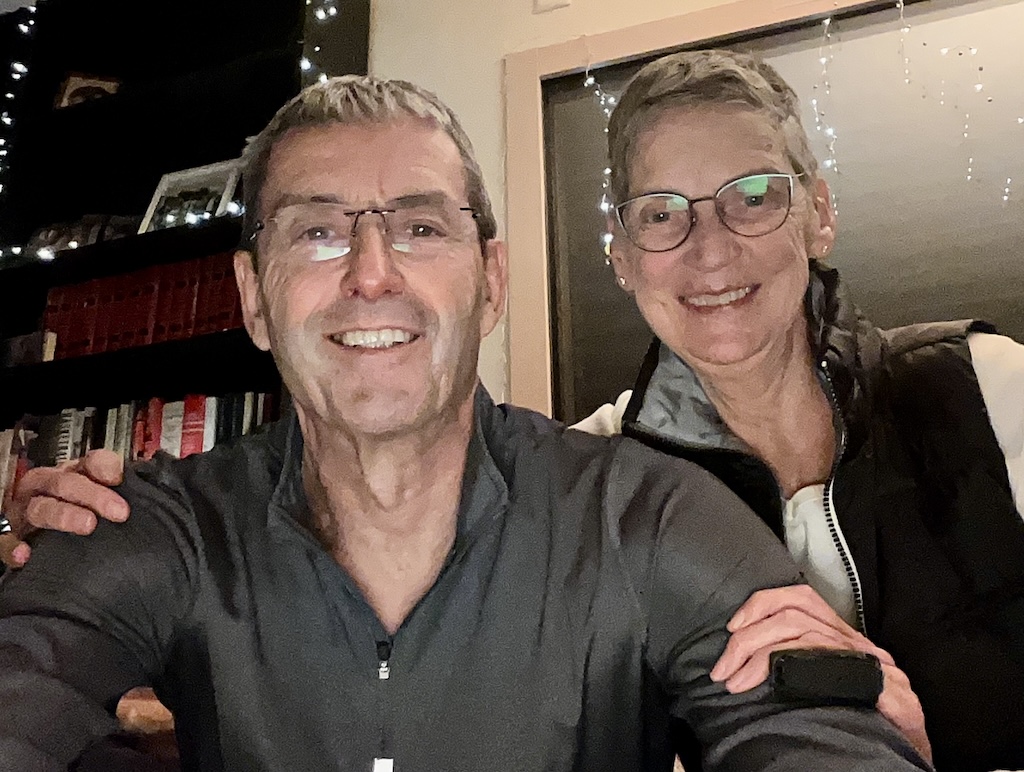 My poor Frenchman! How does he endure my adulthood?
After each calamity, he picked up the pieces, paid medical bills and waited for me to heal. With his help, I am still ticking, albeit slowly.
Today, doctors suspect I was born with Ehlers-Danlos Syndrome (EDS). EDS? Huh? It’s part of a group of genetic connective tissue disorders, which could help explain
my proprioception issues and propensity for falls.
We’re all unique beings, trying to move forward, stay strong, and beat the odds.
No one chooses their family, the genes they inherit, the beliefs they assimilate, or where they grow up. No one can predict what physical, emotional, and mental challenges they’ll face.
Wouldn’t it be easier if we didn’t see ourselves only as Democrats or Republicans, Americans, Europeans, Asians, Africans, Indians, Australians, Muslims, Jews, or Christians?
Could we live better harmony if we didn’t identify so much with one religion, nationality, race, or ethnicity, but more as tiny specks in the universe?
What if we all came from somewhere beyond Earth?
How’s this for conspiracy theory?
 What if we’re all aliens?
Who knows?
I am here still questioning, still yearning, still learning.
Time is running out. I may never get it right. For now, I exist in a state of grace, warts and all, grateful to be here even during these troubled times.
Thank you, my beloved mother, for bringing me into existence and guiding my path!
Merci mille fois mon courageux français for staying by my side.
Happy Birthday to me, E.T.
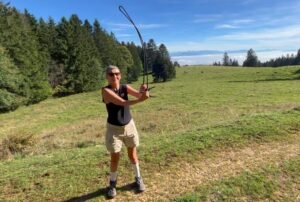 Feeling old, achy and foggy brained? Experts say learning a new skill is recommended for our rusty bodies and aging brains. For me, relearning old skills is equally valuable. It is never more important than after suffering a traumatic brain injury (TBI) which can effect spatial awareness, balance, proprioception, executive function, listening, speaking and emotional stability.
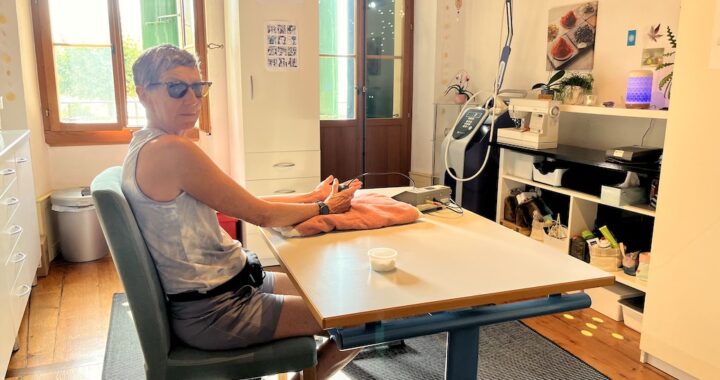
 I stopped blogging when overgrown connective tissue crippled my fingers from Dupuytren’s Contracture, a hereditary condition. A hand surgeon split my palm open, removed the diseased tissue and attempted to straighten my little finger. The dozens of ragged stitches across my hand healed, but on top of muscle memory, the tendons and ligaments pulled my finger back into a clawed position in a protective natural reaction.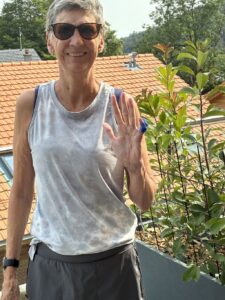
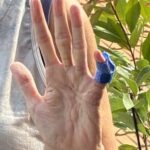 After a half a dozen visits, the ergo-therapist put my hand in thin, plastic glove and dipped it in warm, melted wax. Then she kneaded my palm and finger to break up scar tissue, restore mobility and coax tendons to loosen their hold on the joint.
 Lately, the medical field has been broadsided. Healthcare workers face endless scrutiny and skepticism under a tsunami of misinformation on social media and inaccurate directives from the authorities. That, along with major funding and resource cuts, make their job even harder.
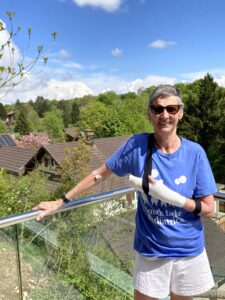 My old friends and teammates will remember my notorious feet with toes so crooked I could hang upside down by them. Back in high school in Sterling, Illinois my podiatrist, Doctor Heffelfinger, gave me my first foot orthoses. He also showed me how to tape each toe to prevent blisters from forming between my phalanges when playing basketball.
 When he described the complex dissection required to prevent digital nerve injury, it helped that he spoke English. He drew lines across my left hand and explained that he would cut into my palm to remove the chords in my palm and pinky. Unfortunately, my disease had advance too far for him to perform a simpler needle aponevrotomy.
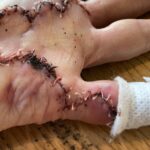 Dupuytren’s and the collagen had formed spirals around the nerves in the finger joint.”
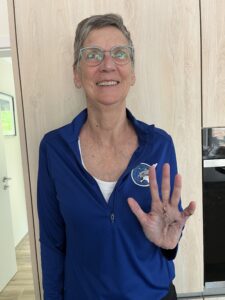 On the bright side, I retain bragging rights in my extended Olson, McKinzie, Lechault, Carlson, Miles, Westphal, Zhang family. I hold the record for the most stitches. It will be hard to beat!

 Yeah! I made it. Another birthday. Another year.


 will increase the speed and incline on the treadmill.”
 Nooooo, I’m going to be sucked up by the roller.