Easter Tradition in Normandy

Though Gérald and I will dine tête a tête this Sunday, our hearts are filled with memories of holidays past  when our children were younger and we were surrounded by family. As with every celebration in France, Easter begins and ends à table.

Normandy is appreciated the most at mealtime when land and sea are perfectly marinated. Mamie cooks the traditional Easter favorite, leg of lamb.  At the head of the table, Papie carves the tender meat fresh from a newborn romping on the rolling green hillside only days before. But back up, each course is an event worth savoring.
toasting champagne

toasting champagne

First a toast of champagne and a light aperitif. Next is naturally an egg based, a soufflé as light as cotton candy, followed by a platter of seafood: shrimp, crab legs, clams, oysters,  something for everyone’s palate.

The main lamb course is always served with flageolet, a mini lima bean, that reminds me of the word flatulence and of course, bean jokes inevitably enter the conversation, sending the children into gales of laughter. Mamie always has a special dish for every family member, so a garden of vegetables -beans, broccoli, potatoes, spinach, tomatoes - also grows out of the linen tablecloth.

The children eat with the adults where they risk being reprimanded to sit up straight. However, I never notice table manners; my fork and knife are usually in the wrong hands. Softhearted Mamie excuses the grandkids early and they scamper upstairs to read Lucky Luke or Astérix comic books until called for dessert.

Each course is accompanied by wine, a light white Burgundy for the seafood starters and then a heavier Bordeaux for the meat and cheese. Every big meal is followed by a green salad and cheese platter with triangles of creamy local cheeses like Camembert and Pont L’Evêque.
family feast

family feast

Dessert always includes seasonal fruits, which in the spring means luscious strawberries. Like little elves, the children reappear to gobble up berries dipped in fresh cream. The kids magically disappear again when they smell the coffee brewing. Papie ceremoniously opens the antique Normand hutch and pulls out his bottle of Calvados offering, “a little taste.”  True Normands swear that the fiery apple brandy aids the digestion. During weddings and christenings, the “trou Normand,” a shot served on sorbet in the middle of the feast, is customary.
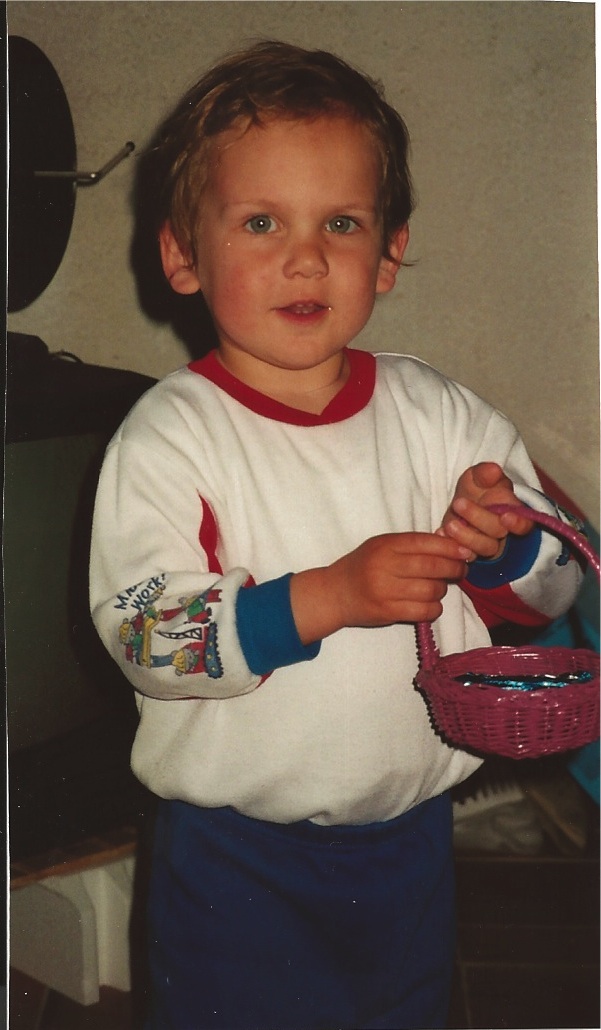
boy with easter basket

boy with easter basket

Throughout each course a lively repartee of sarcasm, word play and arguments ensue that to a soft-spoken Norwegian American sounds like verbal abuse, but is only part of the French art de vivre and their love of language and debate.


Just when you think your belly will burst, Mamie rings a bell and the children race downstairs, for in France, bells, not bunnies, deliver eggs. As a token of mourning for crucified Christ, church bells remain silent from Good Friday until Easter Sunday. On Easter, when the chimes ring again, children rush outside to see the bells fly home to Rome, after dropping chocolate Easter eggs from the sky.

The children crowd onto the wrought iron balcony to find eggs tucked behind the potted geraniums and tulips. While they devour the chocolate figurines, the adults, too, savor a delicacy from the local chocolate shop . Everyone moans of stomachaches and swears they will never eat again, but a few hours later after a stroll by the sea, we are à table again discussing the favorite French topic, food.
Minnesota Strong: Courage Faces Inhumanity

It can be hard to believe the news, TV or social media anymore, but eyes do not lie. I witnessed Minneapolis during the ICE siege when a posse of 3000 federal immigration agents in Special Forces gears rode into town to make America “safe” by rounding up “illegals,” as if storming insurgents in Afghanistan.

The bone chilling cold of subzero temperature was no comparison to the ice that flowed through my veins with what happened next. One can look away from the desecration and destruction in other parts of the world, but when it happens in your own backyard, it’s impossible to turn a blind eye.

My Norwegian grandparents - immigrants

I was born and raised in America. Like so many US citizens, my forefathers were immigrants, who left their homeland for a better life in the Land of Opportunity. On my paternal side, we traced our roots back centuries to Scotland. In 1924, my maternal grandfather immigrated from Norway. To pay back his passage by ship, he worked on his Aunt Ovidia Boe’s (also an immigrant) beet farm across Minnesota’s border in South Dakota. Eventually, he moved to Chicago where he petitioned for U.S. citizenship March 15, 1932.
Though I have resided abroad longer than in the States,I retain strong ties to

the Minneapolis-St Paul (Twin Cities) area. My nieces went to a Spanish Immersion School in its suburbs; my daughter and son earned medical degrees at its universities.

After spending a part of my adult life there, I can attest that “Minnesota nice” is real. Minnesotans wait patiently in lines, respect polite distances, offer muffins to new neighbors. Centuries ago, when immigrants -Norwegians, Swedes, Germans and others -moved westward, they depended on one another for survival in the brutal land.

Minneapolis-St.Paul became sanctuary cities in the 80s, but long before the Sanctuary Movement people here advocated for democracy, civil rights and human dignity setting an example for those resisting authoritarianism worldwide.

In December, agents from ICE (US Immigration & Customs Enforcement) and CBP (Customs & Border Protection) terrorized communities in Operation Metro Surge using racial profiling and storm patrol tactics. They killed law abiding citizens Renee Good and Alex Pretti for doing what Minnesotans do best, extend helping hands to others less privileged.

According to the city Emergency Operations Center's impact assessment in January alone, Minneapolis lost more than $200 million. Local businesses lost $81 billion in revenue; workers lost $47 million in wages and 76,200 people experienced food insecurity. Countless children and adults feared for their safety.

YouTube player

Thousands of people lined the streets in peaceful demonstrations. Businesses and shops opened their doors providing warmth and sustenance for citizens of all walks of life as they marched together in the bitter cold.

Grandmothers knitted “Norwegian” red hats, a symbol of Norway’s resistance during the Nazi Occupation. Young mothers blew whistles warning neighbors. Suburbanites organized car pools to ferry frightened immigrants and their children to churches, schools and work places.

Minnesota Strong became a battle cry for the country.

In solidarity, the food pantry where my brother-in-law volunteers delivered meals to families in hiding. My daughter’s pediatrics group reached out with house calls, zoom consultations and ride shares for Latino, Somalian, Hmong and other minorities afraid to leave their homes because their skin tone, accent, ethnicity put a target on their back. She drove colleagues, who “looked different,” to their appointments. My niece loaded her Costco cart with groceries to donate. My sister marched and carried banners.

Before we flew back to Europe, my sister invited us to dinner. Feeling distraught and disillusioned, like so many families, my immediate circle rallied round sending me off with a comforting, ol’fashioned Minnesotan dinner.

IMG_2326
previous arrow
next arrow

My brother-in-law made a hot dish, emblematic of the region's low-key, unpretentious, and salt-of-the-earth reputation. This traditional, humble meal, a creamy mix of meat and vegetables topped with tater tots, symbolizes the down-home, Minnesota-nice culture.

Then, I returned to Switzerland heavy hearted to where tensions had escalated from America’s home-grown insanity that incited war across the Middle East impacting world peace.

I am a well-traveled, global-minded expat with a unique and privileged world view, but I have no answers. In my chagrin, I focus on the memory of family regrouping and Minnesotans rallying together.

Minnesotans are nice!

They are also resilient.

They stand together.

They hold their ground.

I may live abroad, but I remain Minnesota Strong.

YouTube player

Happy Birthday to Me, E.T.

Oh dear, how do I tell my 91-year-old mother that she gave birth to an extraterrestrial being? What else could explain my extraordinary quirks, peculiar ailments, and uncanny ability to survive against all odds?

I’ve recovered from accidents that no mortal should have survived. I suffer from maladies so bizarre that no one has ever heard of them before.

Then again, how many people survived a rabid skunk bite as a toddler and lived to tell the tale?

My latest episode involved the right side of my mouth festering until my gum line resembled the embers of a dying fire. A thread under my lip pulled my gum away from my tooth, exposing the root.

My Swiss dentist pried open my mouth and exclaimed in awe, “Très intéressant! I’ll do a frenectomy!”

Frenectomy?

In the past, when diagnosed with other strange ailments, I had no idea what my American, French, German, Greek and Swiss doctors were talking about.

I’ve always been different.

After all, I was born in Sandwich.

“Which kind? Baloney!” friends teased.

According to my mother, I was the only planned baby of her four children.

Good grief! Who in their right mind would have planned to birth an extraterrestrial being?

Fortunately, back in Sandwich in 1957, I was a bargain baby! The doctor who delivered me charged my folks only 50 bucks.

Since then, I’ve cost a fortune!

Braces, glasses, orthodontia, orthotics, and umpteen surgeries. Disintegrating discs, temporal mandible dysfunction, neuroborreliosis. I had strange conditions before they became common knowledge. My treatments, considered controversial quackery at the time, have become part of standard care, like chiropractic and TMJ dental treatment.

Why me?

Blame it on that rabid skunk bite!

My poor mother! How did she survive my childhood?

My poor Frenchman! How does he endure my adulthood?

After each calamity, he picked up the pieces, paid medical bills and waited for me to heal. With his help, I am still ticking, albeit slowly.

Today, doctors suspect I was born with Ehlers-Danlos Syndrome (EDS). EDS? Huh? It’s part of a group of genetic connective tissue disorders, which could help explain
my proprioception issues and propensity for falls.

We’re all unique beings, trying to move forward, stay strong, and beat the odds.

No one chooses their family, the genes they inherit, the beliefs they assimilate, or where they grow up. No one can predict what physical, emotional, and mental challenges they’ll face.

Wouldn’t it be easier if we didn’t see ourselves only as Democrats or Republicans, Americans, Europeans, Asians, Africans, Indians, Australians, Muslims, Jews, or Christians?

Could we live better harmony if we didn’t identify so much with one religion, nationality, race, or ethnicity, but more as tiny specks in the universe?

What if we all came from somewhere beyond Earth?

How’s this for conspiracy theory?

What if we’re all aliens?

Who knows?

I am here still questioning, still yearning, still learning.

Time is running out. I may never get it right. For now, I exist in a state of grace, warts and all, grateful to be here even during these troubled times.


Thank you, my beloved mother, for bringing me into existence and guiding my path!

Merci mille fois mon courageux français for staying by my side.

Happy Birthday to me, E.T.

Endearing Tradition – Swiss Celebrate Seniors With Christmas Dinner

In one of its most endearing traditions, Swiss villages celebrate their seniors by hosting the annual Christmas dinner for retirees. The “Repas de Noël” has become a beloved part of the holiday festivities.

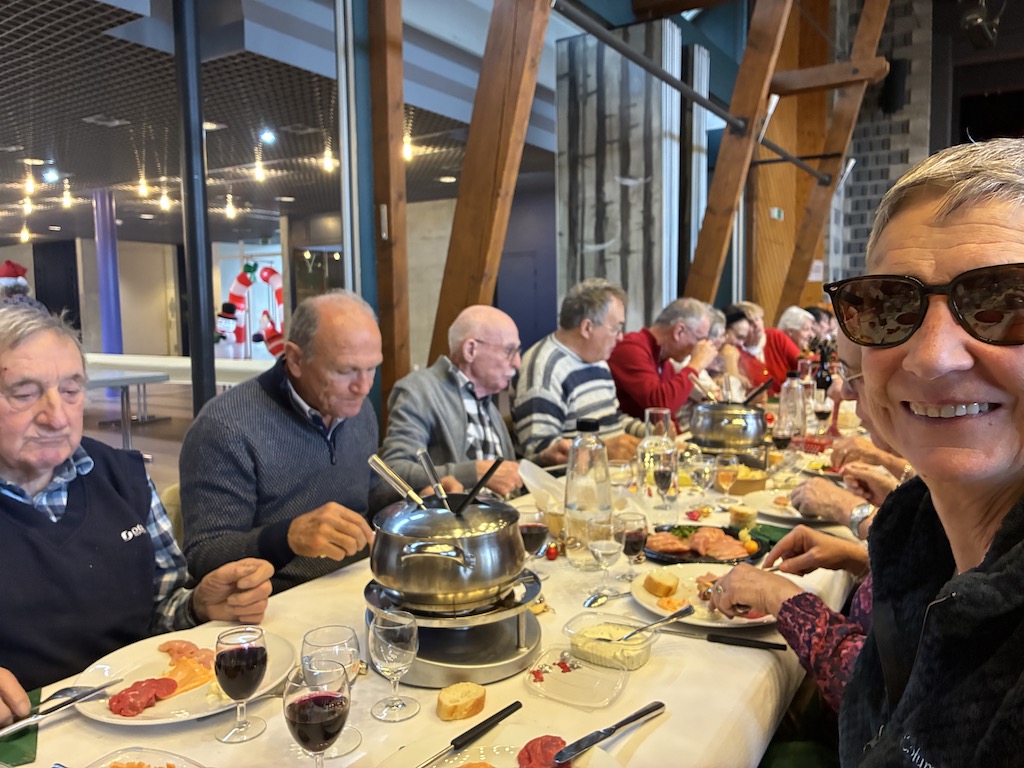
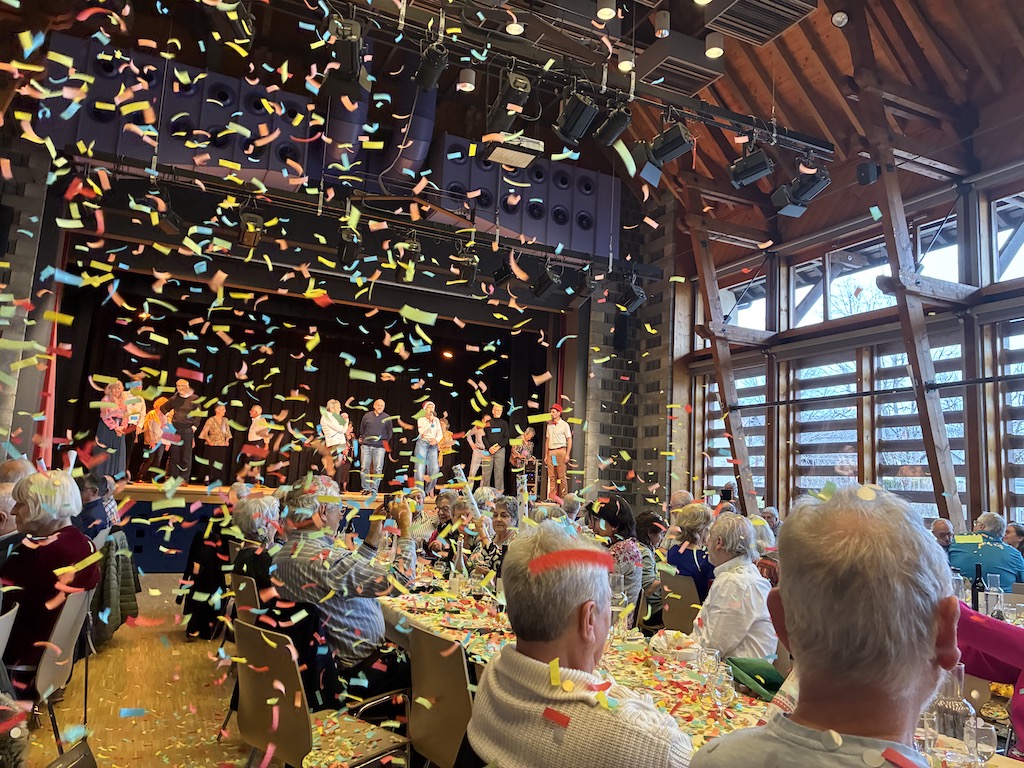
In St-Cergue, at the community center next to the grade school, a few hundred retirees gathered around long tables to share fondue. Not the classic cheese fondue one associates with Switzerland, instead Vaud, like all 26 Swiss cantons, has adopted a variation of the Chinese fondue to celebrate Christmas Eve.

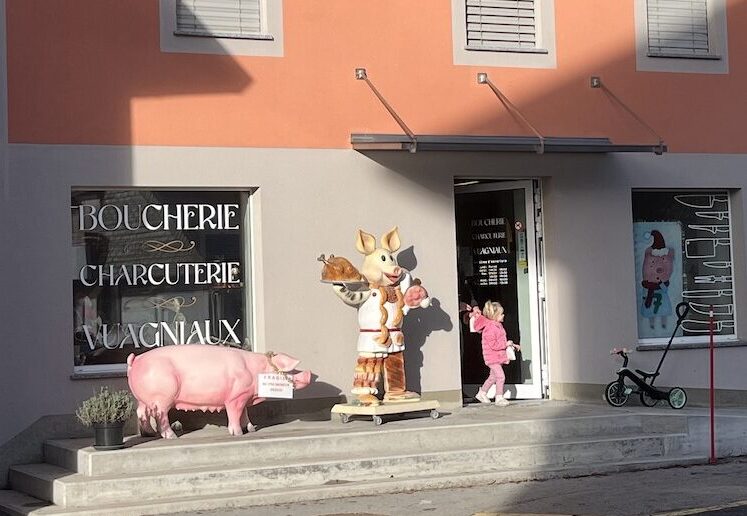
After individual starters of grated carrots and paté, we passed plates of veal, pork, chicken and beef provided by our local butcher. We skewered the thinly sliced meat on long forks and dipped them in slow-simmering broth in Chinese fondue pots. The meat was accompanied with rice and different sauces, ranging from curry-flavoured mayonnaise to zingy relishes.

For dessert, we savored the traditional Buche de Noel or yule log, a rolled sponge cake, with layers of buttercream. This extraordinary favorite had a local twist. It was crafted by a former pastry chef who perfected his art in prestigious French restaurants.  To our great fortune Julien Maslanka relocated to Switzerland where he opened four different patisseries including Le Comptoir du Vieux Chateau à St-Cergue on our main street.

In a serendipitous stroke of luck, I sat next to an interesting jazz musician and a friendly, outgoing woman, who gave me all the contacts and links to activities for citizens in the community. When she saw me scribbling in my pocket notebook, I explained that I wrote a blog sharing European experiences.

“Oh, I have to introduce you to our American writer!” she said clapping her hands. Then she led me to a table to introduce me to a short, white-haired fellow with twinkly blue eyes who had lived in Switzerland for fifty-five years.

Then after the municipal employees took a bow on stage, the seniors gave a hearty applause in  appreciation for their public services, especially for their swift snow plowing of our streets.

A senior dance group performed a polka, school children sang holiday songs, and then we joined in  singing along to a French translation of Gloria in Excelsis Deo.

The only shadow on the festivities, was finding out that we lost our petition to save our local post office, which closes in 2026.

The convivial atmosphere resumed, when the master of ceremony invited us to pop open the tubes of confetti in a jovial grand finale.

Wherever you live dear friends and readers, however you celebrate the season, I wish you peace, health and hope for 2026.


Happy holidays from X-Pat & ze Frenchman in "Santa's Village" Switzerland!

The Village Shop, Soul of the Town

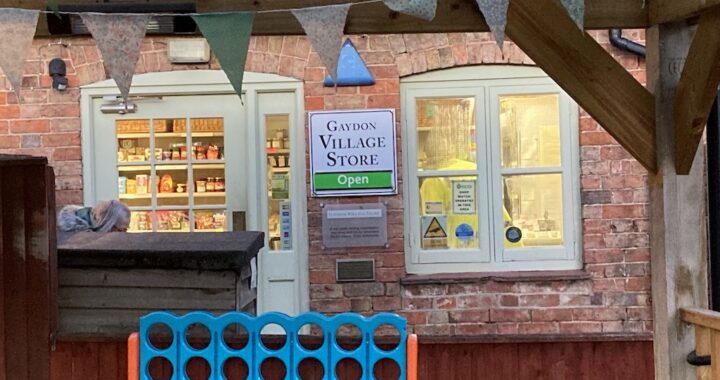
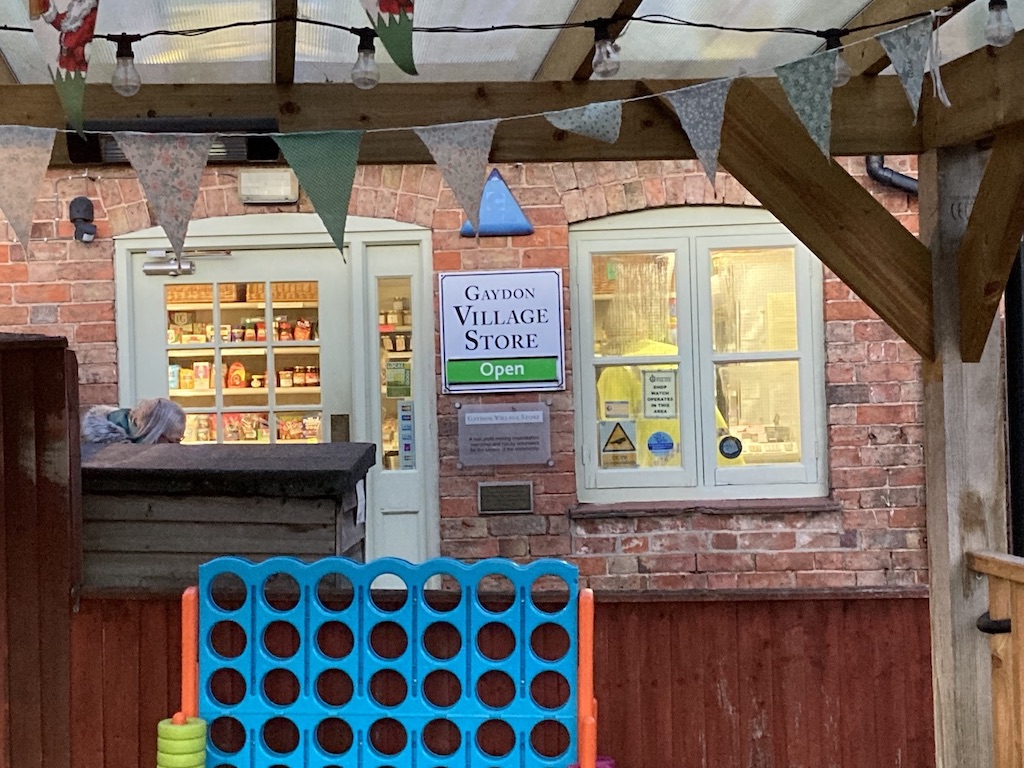
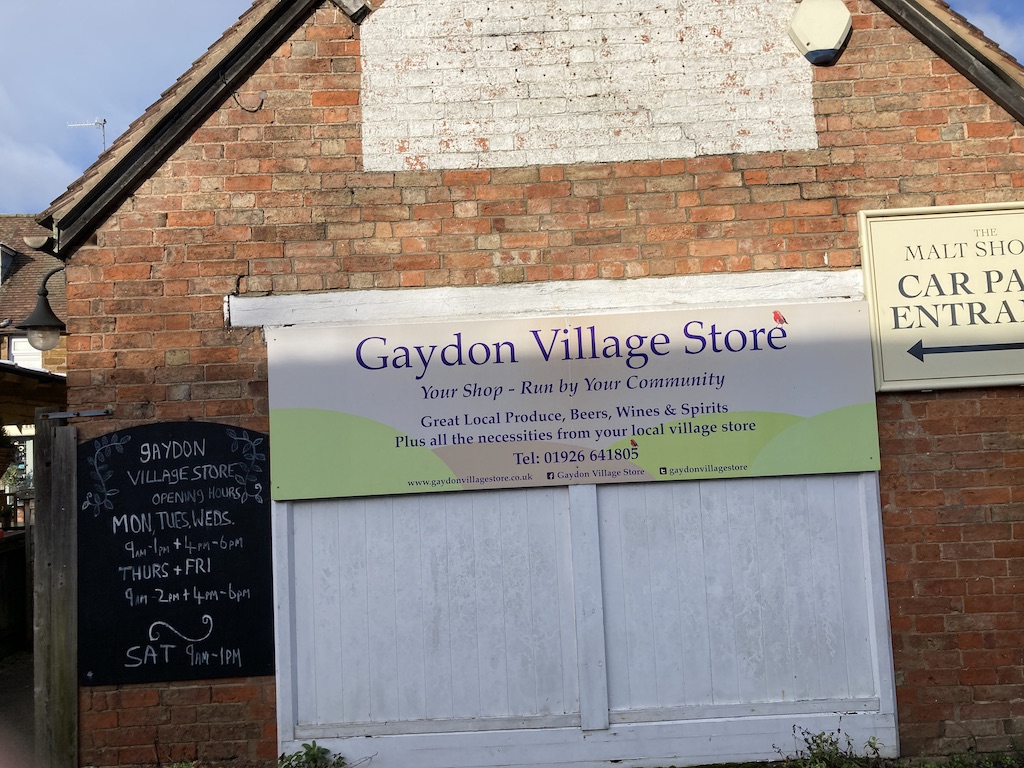
In a nondescript, brick building across from the Malt Shovel Pub, Gaydon’s Village Shop opened in May 2010 as a non-profit co-op where volunteers provide locals with staples and simple necessities that households might run out of on a weekend.

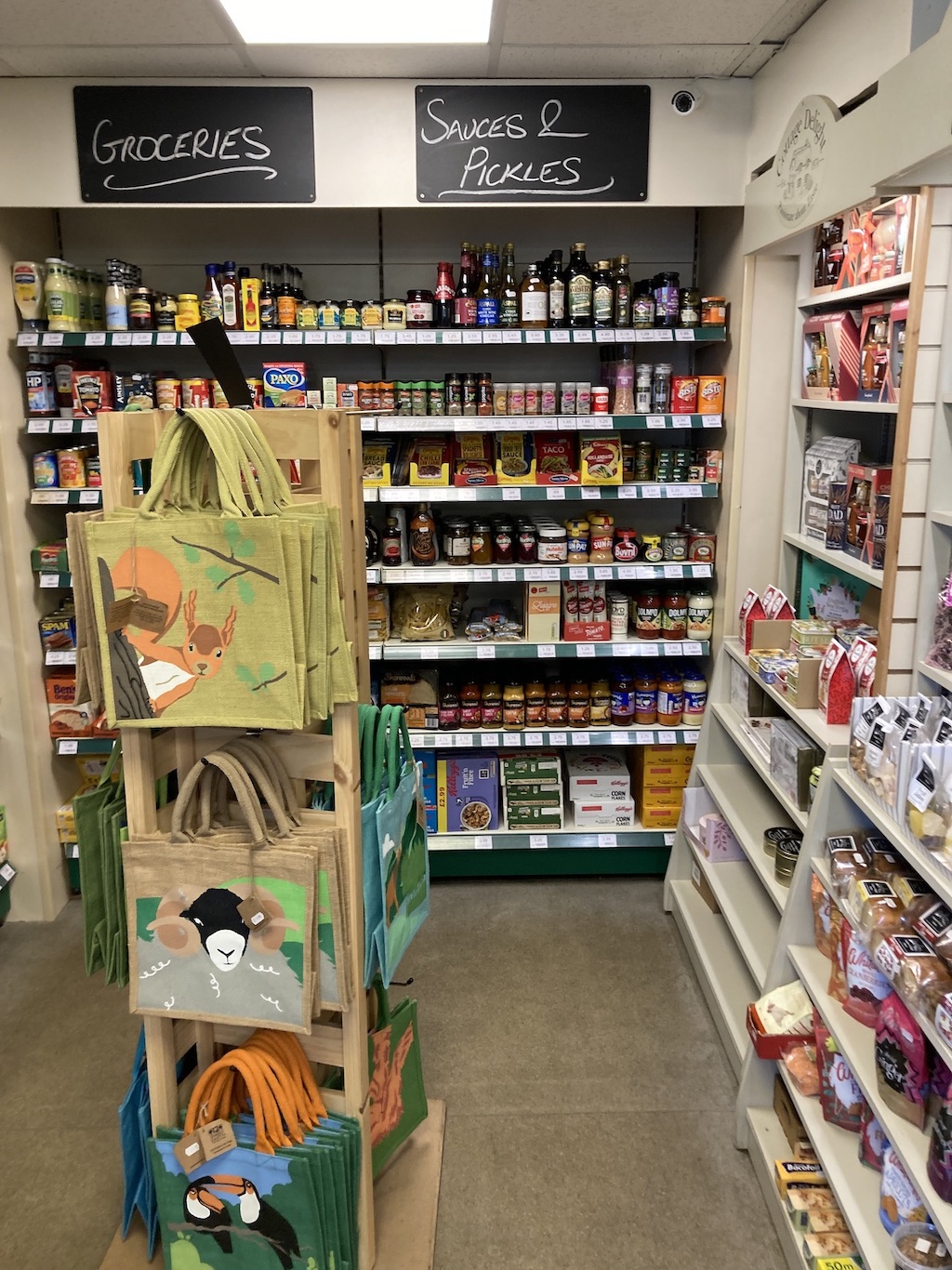
The shop’s shelves were stacked with a hodgepodge of essential toiletries like shampoo, soap, deodorant, toilet paper and toothpaste, as well as milk, eggs, butter and cheese and a limited selection of fruits and vegetables, canned goods, pasta and cereals.

Surprisingly, the Village Shop also sold fresh pastries and bread delivered daily from a bakery in the hamlet just down the road.

Beverages, such as bottled water, alcohol, beer, wine, cider, juice and sodas are also available for purchase.

I perused the shelves with childlike wonder. I picked up a chunk of cheddar, waved it at the woman behind the counter and asked, “Do you have grated cheese?”

“No” the lady at the till told me, “but I have grater at home that you can borrow.” Then, she picked up the phone and called her daughter and asked her bring it over.

Minutes later, the shop doorbell jingled and her daughter dashed in and handed me the family’s cheese grater.

Meanwhile, as we were talking, a middle aged man walked in with his father, who hobbled on an artificial leg from the knee down.

“Oh dear, what happened?”

“Felt my knee cap slip up me thigh when I fell,” the elder man told the woman at the cash register. “And that was my good leg!”

A spontaneous discussion between strangers unfolded as can only happen in these quaint, little communities where the time seemed to standstill.

Another shopper asked me, “Where you from?”

“Illinois,” I answered in my midwestern nasal twang. My very unBritish inflection was a dead giveaway.

“I’m from Normandy,” Gerald added in English with a heavy French accent.

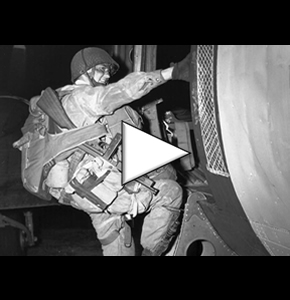
“Normandy!” the elder gentleman exclaimed. “Lost my great uncle over there during The Landing. He was shot down parachuting over Ranville (towards Caen).”

“Me and dad were paratroopers,” the man’s son explained. “I parachuted in the WWII reenactment in Arnhem, Holland.”

Then the friendly fellow went on to recount his tales traveling to US and being in whiskey bar in Florida.

“We’ve just been to the pub,” the jovial, older man said, “Had a wee pint or two or three!”

Another young lady in the shop overheard us talking. She peeked into our baby buggy and asked, “Oooh, is that Nic and Larissa’s baby?”

“Yes,” I said beaming, “we are the proud grandparents.”

“I’m their neighbor,” she said.

“Glad to meet you!” I said. “I’ve heard so many nice things about you from our son and daughter-in-law; I feel like I know you already.”

If the Malt Shovel Pub is the heart of Gaydon, the Village Shop is its’ soul. Where else in the world does the pace slow enough to chat with locals, so trusting, that they’ll lend their own kitchen appliances to complete strangers?

Everyone feels at home at the Village Shop.

Even the “foreigners.”

The Malt Shovel Pub — A Pet Parrot, A Mascot Dog and Stories A-Go-Go

The ol’ pub (aka public house) has been a part of British culture for centuries.
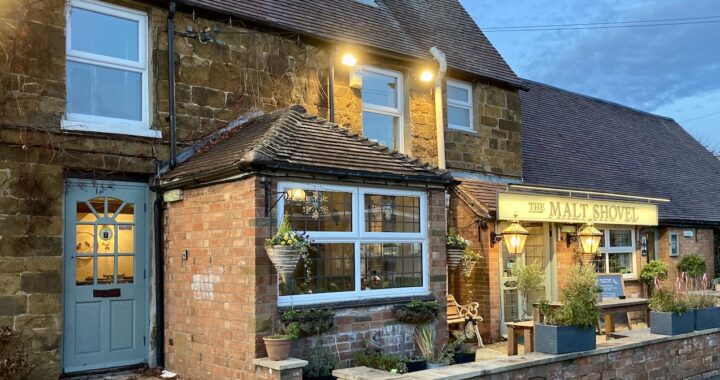
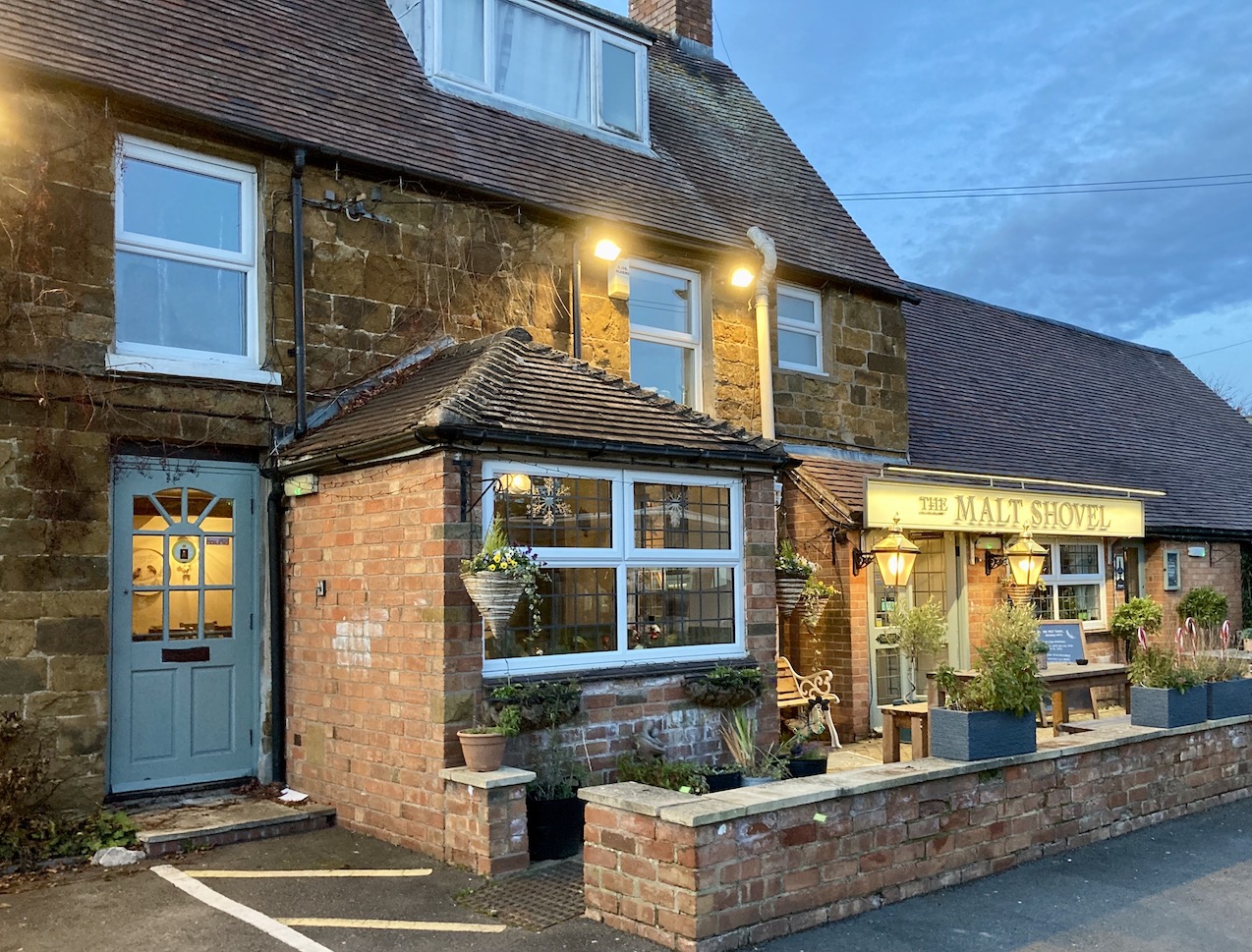
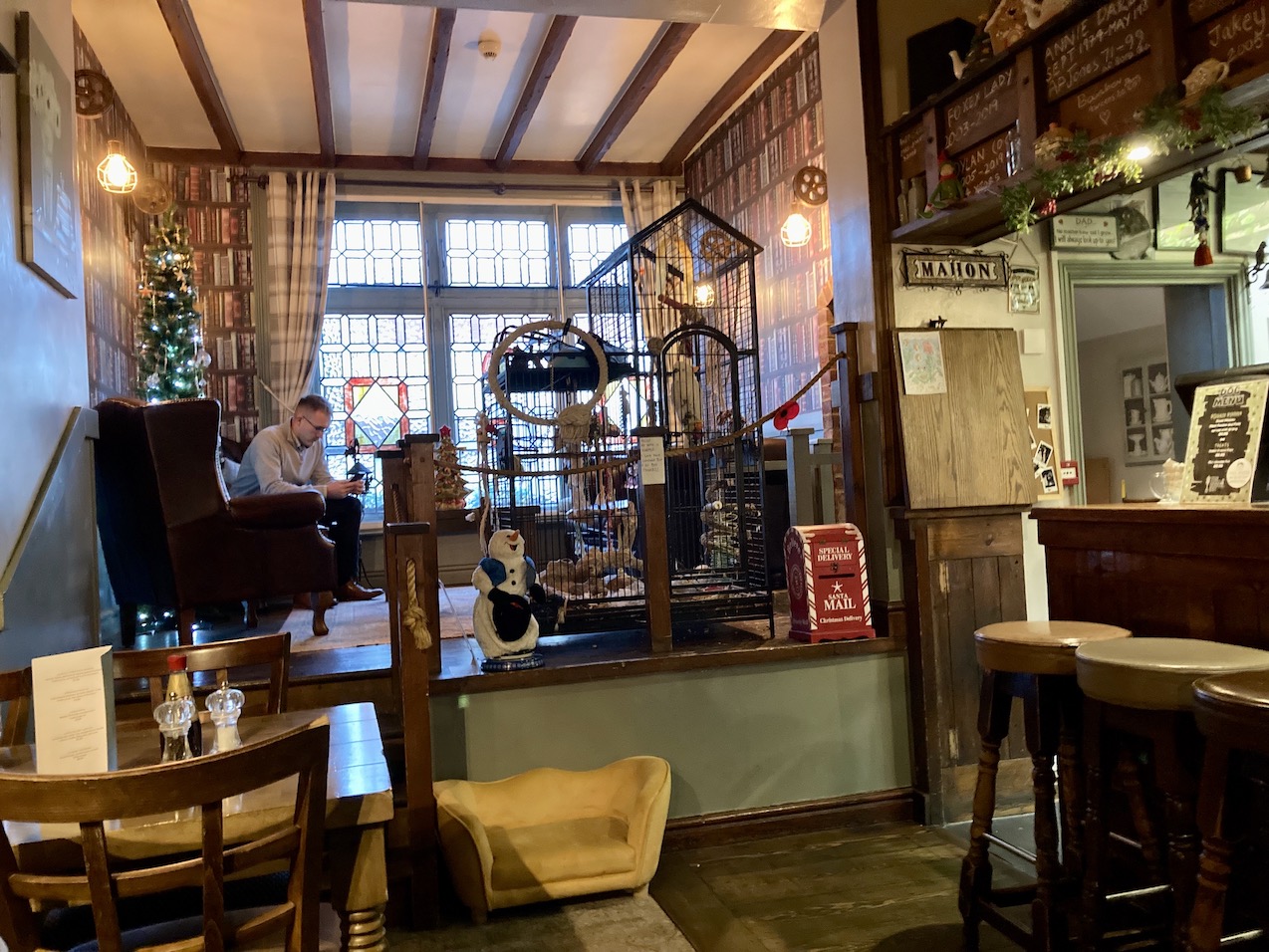
England is known for its cozy and welcoming pubs; the best pubs create a sense of belonging, a place to be that isn’t home, but can become like a second family. Gaydon’s eclectic Malt Shovel is no exception.

The altered building, made of Hornton Stone, an ironstone found nearby on the Burton Dassett Hills, was first referenced in 1849 as an unnamed beer house. In 1874, it became known as the Malt Shovel when it was licensed to Robert Ayres.

Just off junction 12 of the M40, the Malt Shovel, opened daily, serves fresh, locally sourced food and a wide selection of cask ales, lagers, wines, spirits and soft drinks.

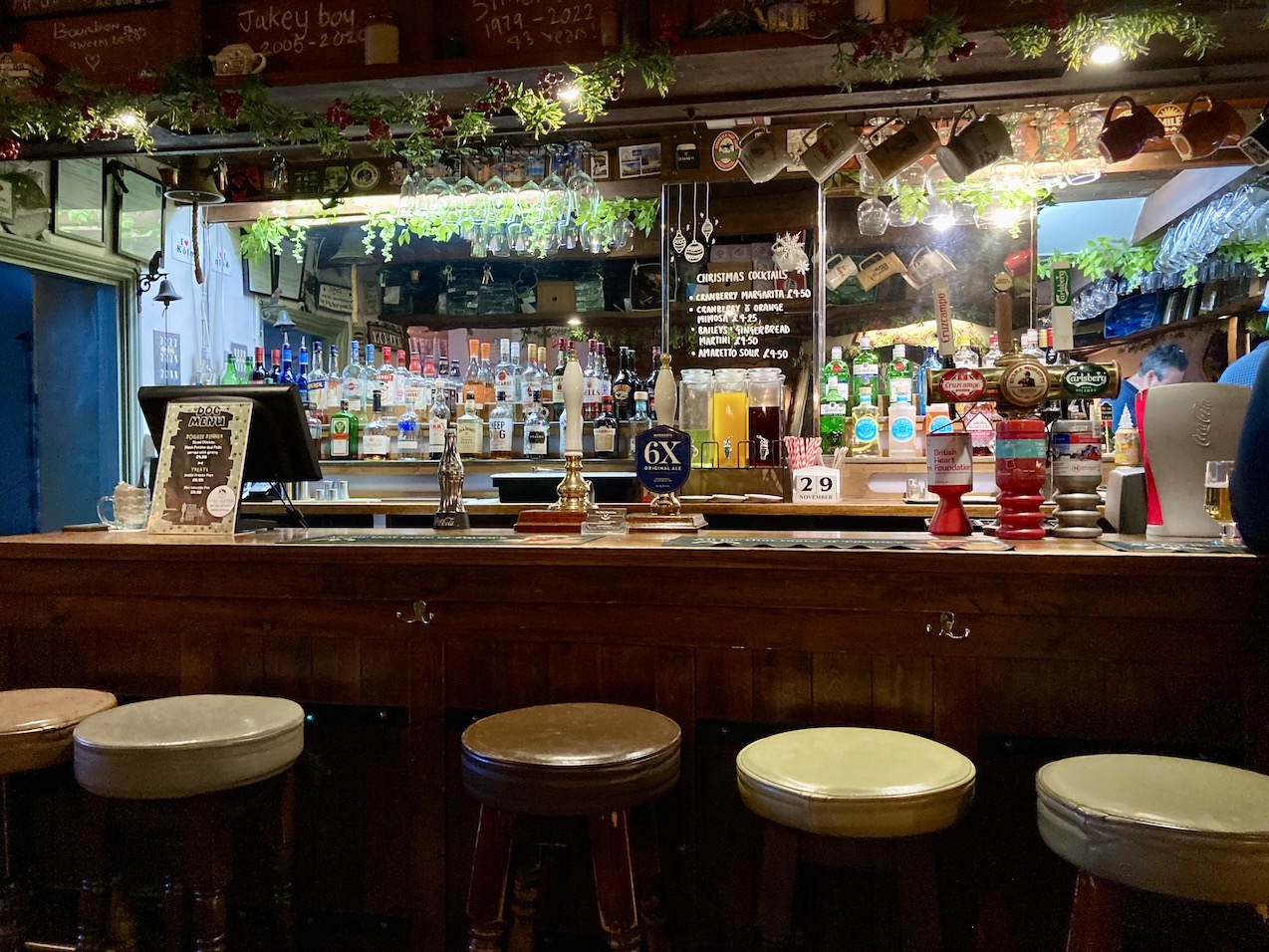
Everyone is welcome here including four legged friends. Though tolerated in many pubs, at The Malt Shovel, pets are offered their own doggie menu.

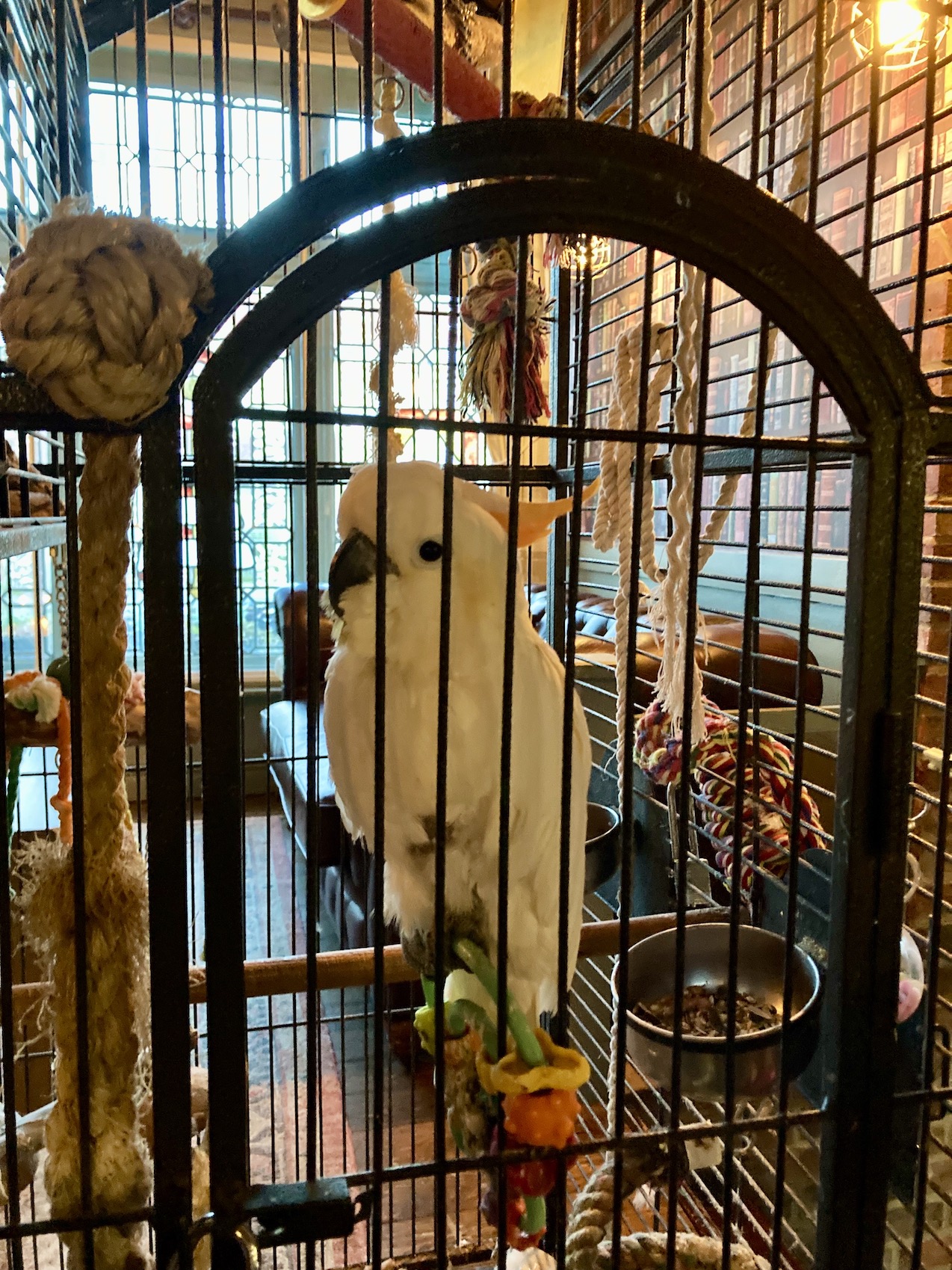
The pub has so many personal touches — a cozy, reading corner on a deck, stained glass windows, its’ own mascots, a parrot, a miniature schnauzer and knick knacks galore.

In addition to the special doggy menu, the proprietors’ humor can be seen in the proposed children’s menu.

  1. -I don’t care (chicken nuggets, skinny fries)
    -I’m not hungry (bangers & mash)
    -I don’t know (chicken nuggets, fries? whatever (burger, skinny fries)
    …all served with choice of beans or peas) bubble & steak, homemade pizza

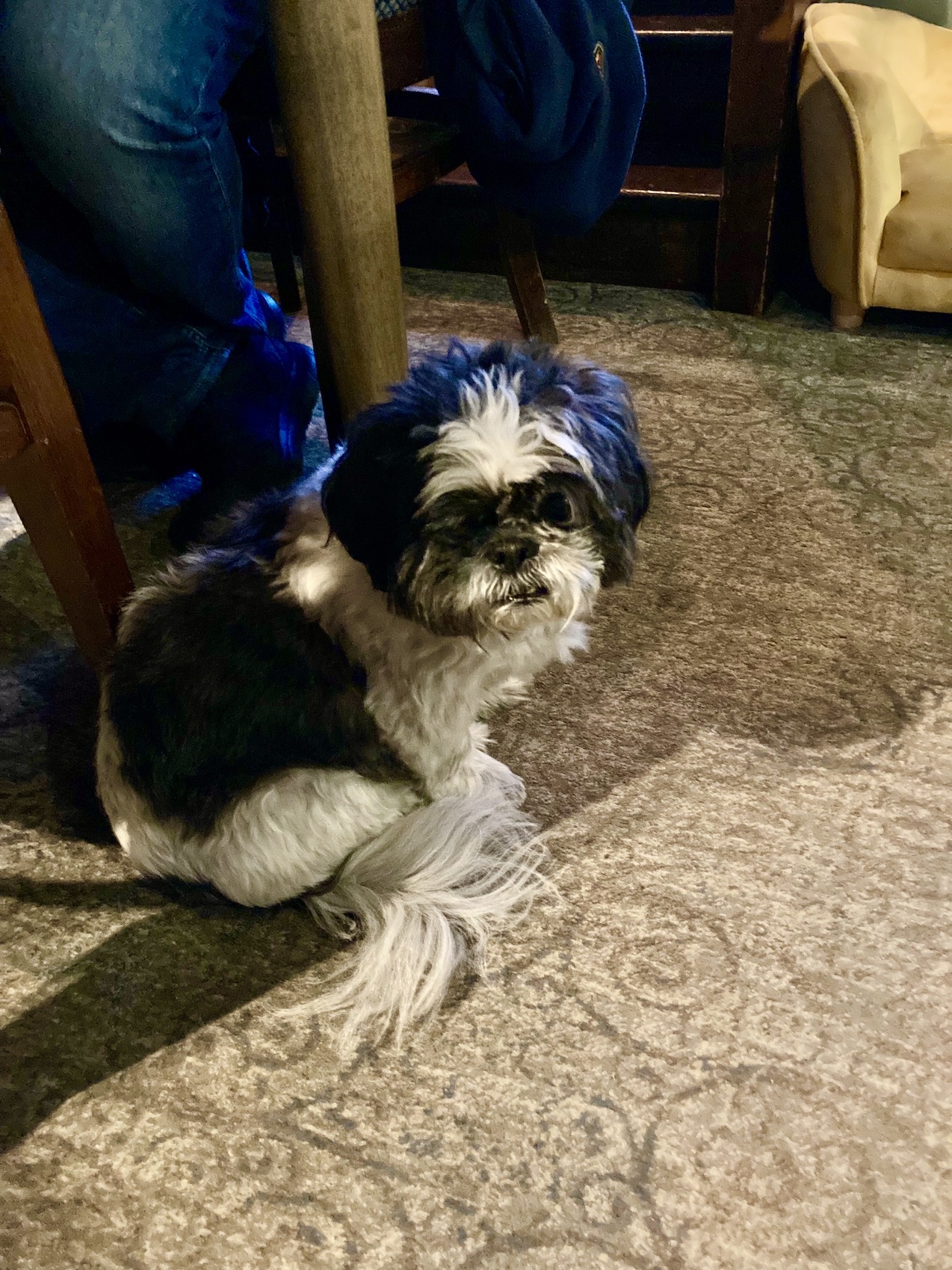
When we stopped in for a drink, the man at the table behind us was sneaking fries to the schnauzer waiting patiently beside his table.

“Can I take a picture of your dog?” I asked.

“Of course,” the man said and chuckled, “but Belle’s not mine. She belongs to the pub owner.”

Sure enough, the little, gray and white dog had his own doggie couch where he could reign over the bar.

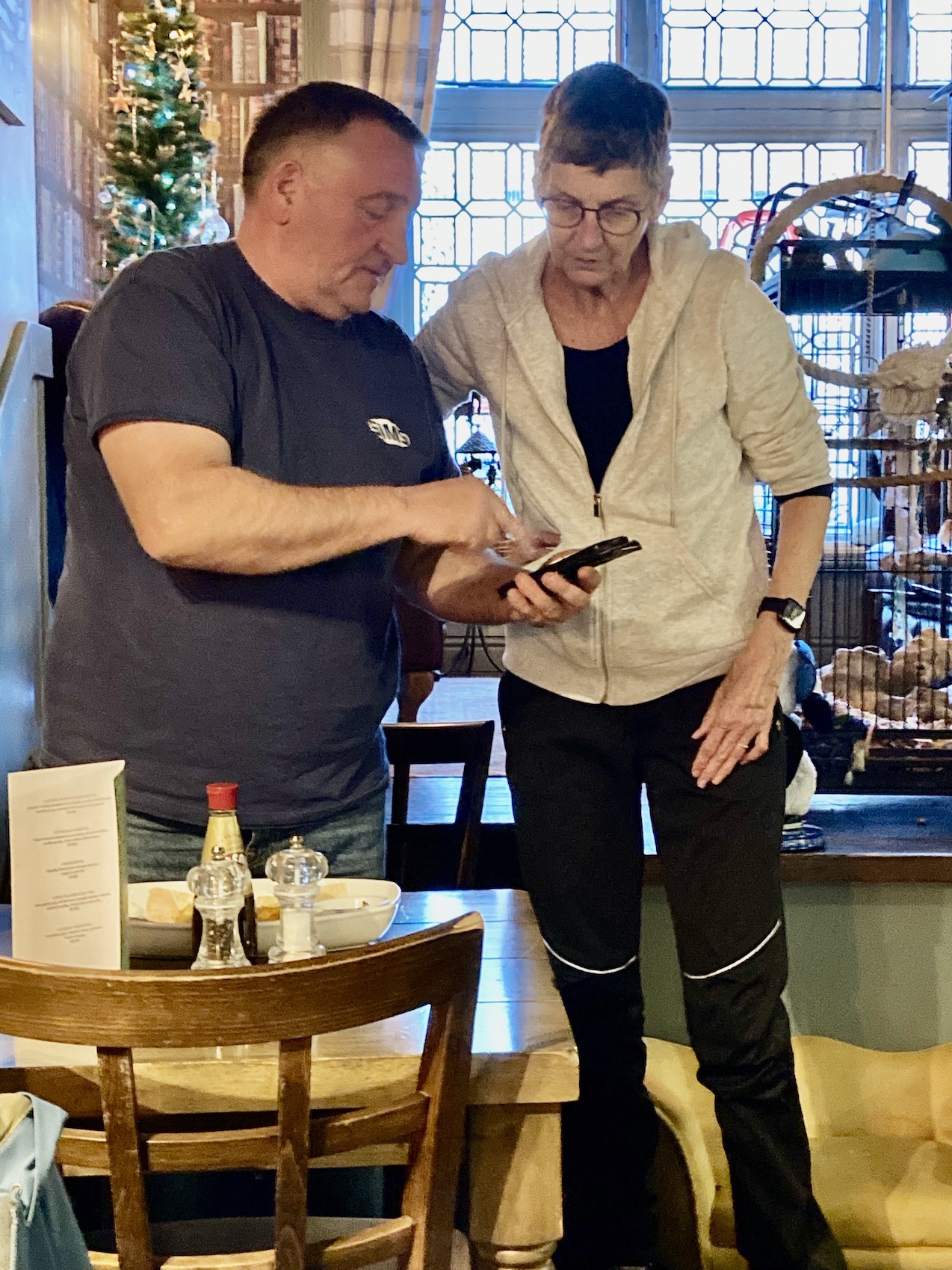
The man, a friendly trucker, pointed to the names written in chalk on wood beams around the bar,

“See the names up there?” He explained. “They were people who worked for JLR (Jaguar Land Rover) engineering centers at the edge of Gaydon on the land that was once an air strip of the RAF.”

Many of the patrons lining the bar look like they just finished a work shift and stopped in for a quick pint on their way home.

The charismatic pub was cozy and charming. Gemutlich. Nicknacks decorated the walls, including a tea pot collection.

“Where you from?” The trucker asked.

“Illinois,” I told him and then added, “My husband’s French.

“Where about in France?” he asked Gerald.

“Normandy on the coast.”

“Ever heard of a tiny place called Trouville?” the trucker asked.

Gerald about fell off his chair. “That’s where I grew up.”

“ I hauled a load there,” the trucker said.

“What do you haul?”

“Blacktop and gravel when they strip the road to repave.”

“What kind of truck you drive?”

He pulled his phone out and showed me pictures of his rig.

“Drove all across France, but grew up in Warwick,” he said, “Now I live in Casablanca. When I’m on the road, I live in my truck.”

As we were leaving, I thanked the bartender and told him, “We’re just visiting, but our son and daughter-in-law moved to the area.”

“Oh I know them,” the bartender said, “they live across street from me!”

It’s a small, small world!

In the spirit of the ol’ English pubs, The Malt Shovel unites people still today.