 Feeling old, achy and foggy brained? Experts say learning a new skill is recommended for our rusty bodies and aging brains. For me, relearning old skills is equally valuable. It is never more important than after suffering a traumatic brain injury (TBI) which can effect spatial awareness, balance, proprioception, executive function, listening, speaking and emotional stability.
Like so many people after injury, illness and accidents, I was forced to reframe my life. Once I retired from playing pro ball, I dreamed would learn to scuba dive, alpine ski and surf. I’d run marathons and bike mountains.
Well, that hasn’t been an option for decades.
So when my chiropractor in Geneva (Switzerland) suggested that I try “rope flow” to help strengthen my core, align my back, retrain my brain to better coordinate both hemispheres and work my lazy left side, I was all ears.
In Dr. G’s office, I watched in awe as he demonstrated swinging a heavy rope around his body.
“Jump rope sans the jump for injured adults!” I said.
“Actually, a heavier marine rope like sailors use works better,” Dr. G explained. “The sailboat boutique across Lake Geneva in Nyon carries all different sizes.”
Then he went onto explain the history.
“David Weck, an American, created rope flow to help people recover rotational movement and to reinforce how we walk, run and move. Rope wave, quickly adopted by elite athletes and movement coaches, has become a valuable training tool for improving mobility symmetry, coordination and striking power.”
At first glance, rope wave looks easy. It’s not. It involves swinging a rope around your body in coordinated patterns like figure-eights, while shifting your weight and rotating your spine, shoulders, and hips with rhythm and control.
I was delighted to discover a game that I can play without getting hurt as long as I don’t whip myself on the back of my legs or lips.
If you perform rope flow properly, the rapid rhythm builds a smooth, effortless coordination across both sides of the body. Rope flow is symmetrical. You rotate both left and right, retraining your non-dominant side and this helps smooth out imbalances.

Rope flow is ingenious for its affordability, convenience, practicality and simplicity. This portable habit helps rewire the way I relate to my body. It is probably even more valuable for people like me who suffer from the effects of a stroke or TBI where message systems in the brain are damaged and to weakness on one side of the body.
After my time at the Functional Neurology Clinic in Minnesota, I learned how neuroplasticity allows the brain repair itself. After my brain surgery, messages did not get to my left side. Rope flow trains the brain and the body simultaneously and I would recommend it for anyone recovering from a TBI.
I am learning to accept my limitations, no more hooping, running, jumping. No kayaking, canoeing, golf, tennis, pickle ball or any asymmetric sport requiring lateral movement. For me, traveling in cars and planes or even sitting must be minimized.
So I was encouraged to finally find a sport I can perform with my broken body; it’s even good for me.
Granted I look a bit crazy, but who cares? I swing my rope, whistle like my dad used to, hang out with cows up in mountain meadows and admire the panoramic Alps.
It is highly unlikely that you can find an instructor in your area, but David Weck, Tim Shieff and other experts offer detailed videos breaking down movement into steps.
So pick up a rope, put on your favorite song and swivel those hips.
Yahoo! Clear the way! Look out! I’ll lasso you…my first dream was to be a cowgirl!



 will increase the speed and incline on the treadmill.”
 Nooooo, I’m going to be sucked up by the roller.
 I was excited as a two-year-old to take my first walk in wellies across the beautiful British countryside (I am easily amused.) Wellies, the symbol of British culture, reflect the lasting legacy of the Duke of Wellington and the term carries a sense of tradition, practicality, and British identity.
 The British waterproof gumboots are usually made from rubber or PVC. Traditionally Wellies come in black, olive green, tan color or print and hit just below knee level.
 Today's wellies, with varied color options and patterns, permit people to add personal style to functional footwear. They can be paired to match every outfit and occasion.
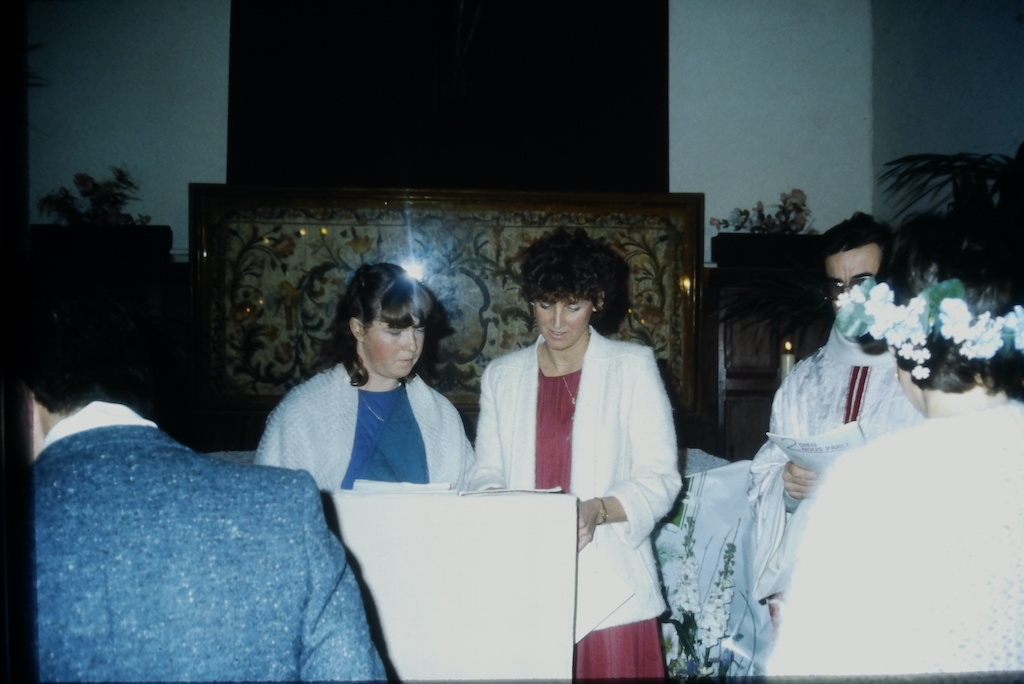
 Forty years ago on New Year’s Eve 1983, I said, “I do,” in a seventeenth century chapel in France, not far from the famous WWII Landing beaches. What are the odds of a small town girl from the cornfields of Illinois meeting a French boy raised by the sea in Normandy?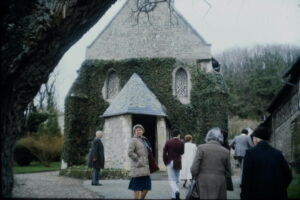
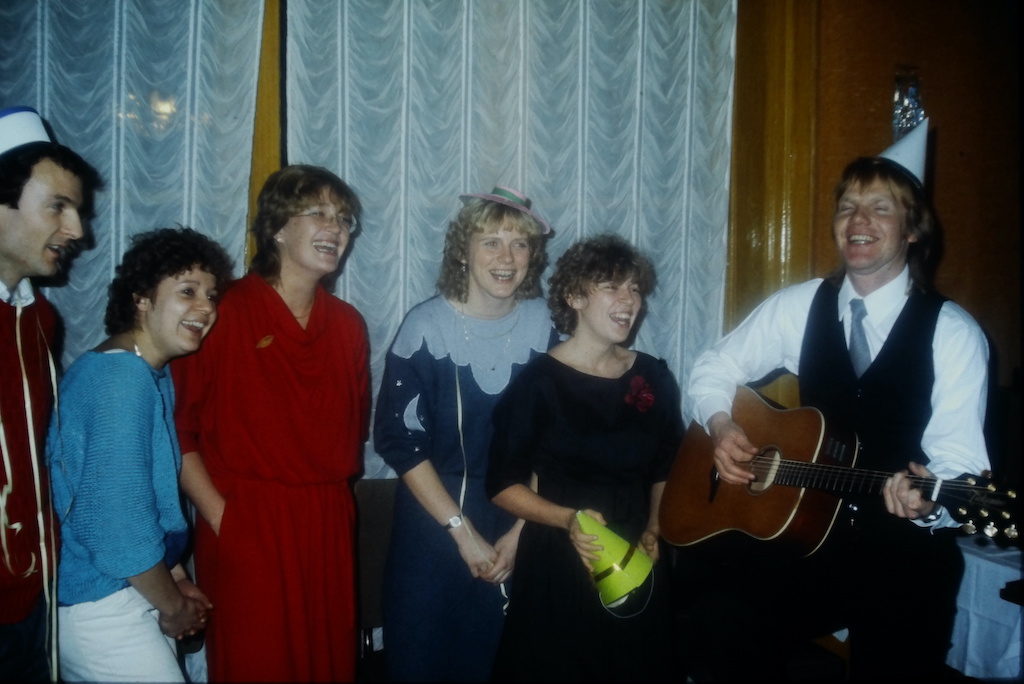
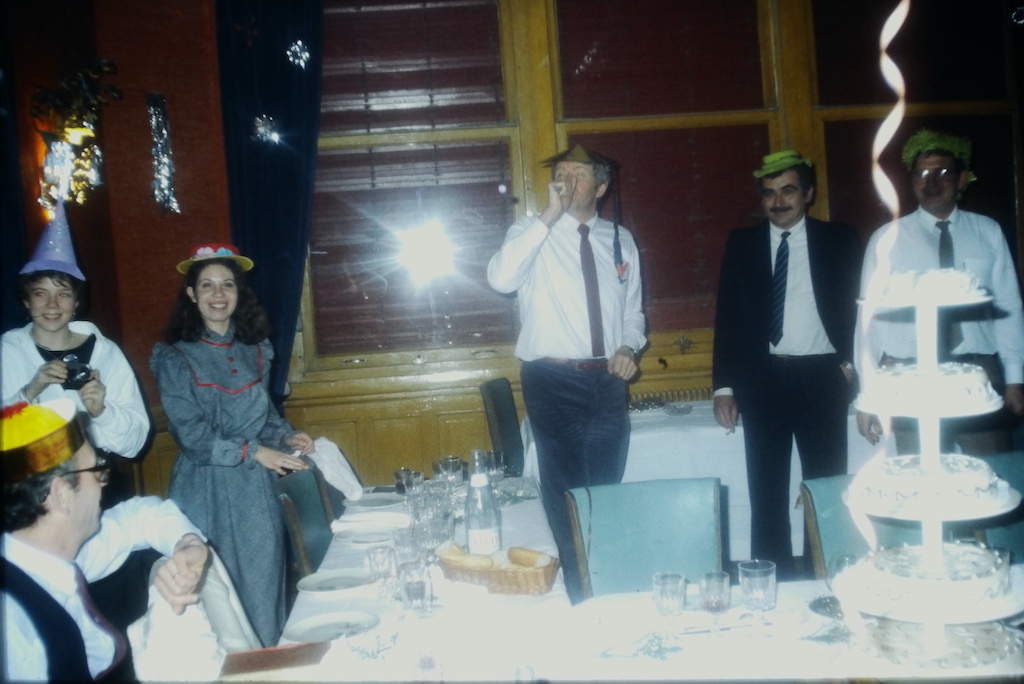
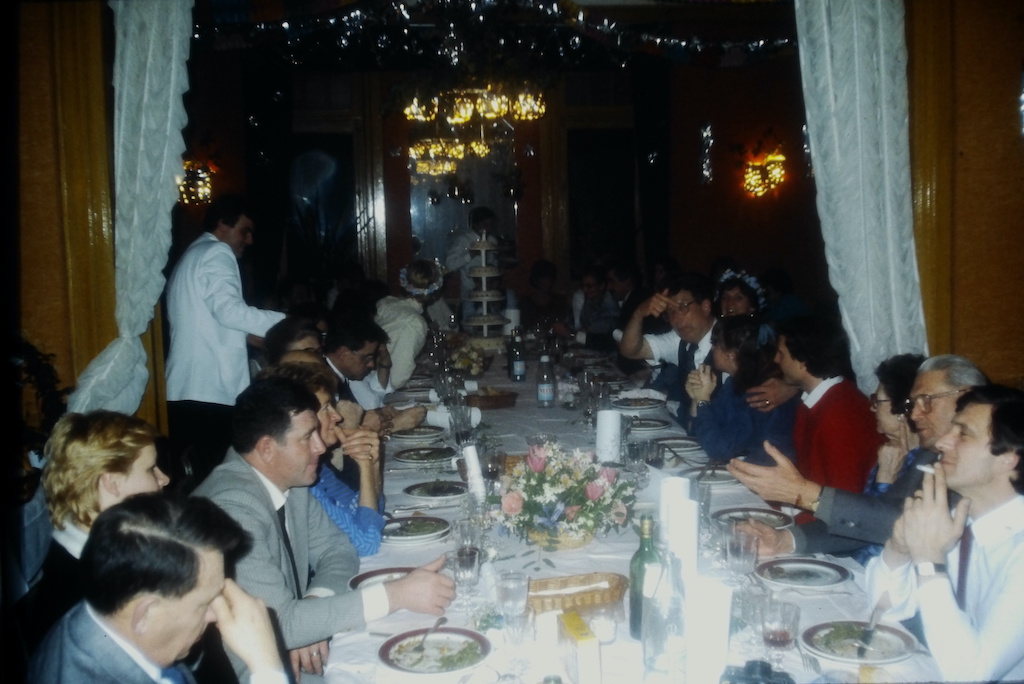
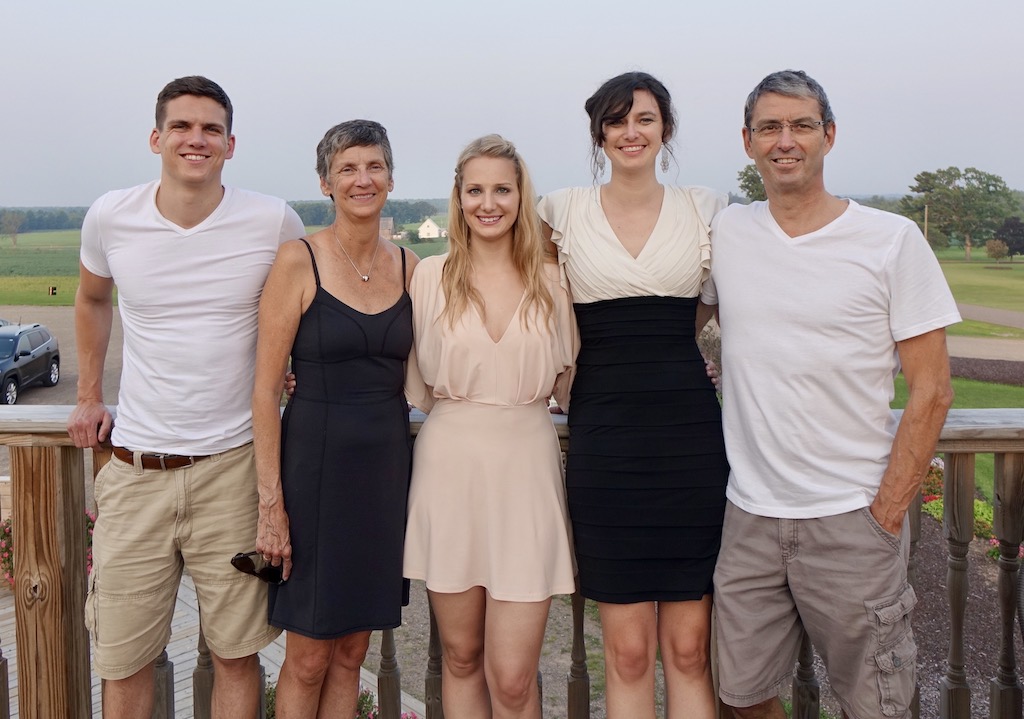
 But our rewards were great; none greater than watching a bright, adventuresome daughter and a clever, witty son grow strong on basketball courts across Switzerland and go onto become doctors.


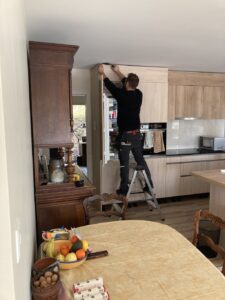
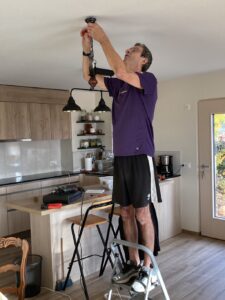 Between our old furniture falling apart after three years in storage and builders mistakes, each day in our new house brings a challenge. One morning, I opened the closet and the hanging rod broke, burying me under an avalanche of clothes. The next day the drawers collapsed, stripped from the support rail.
 A trip to a Swiss equivalent of Menards or Home Depot does my head in with its rows of wood, tile, kitchen, bathroom and plumbing fixtures and endless racks of tools, clamps, brackets, bolts and shelving.
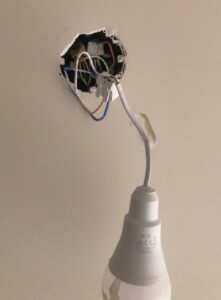 Then I wandered over to the luminaires department where hundred of different light fixtures blink. Imagine the spectacular light show? There were suspension, platform, ceiling, wall, desk, and table lights in three categories - incandescent, fluorescent, and high intensity discharge - all with various strengths of bulbs to choose from.
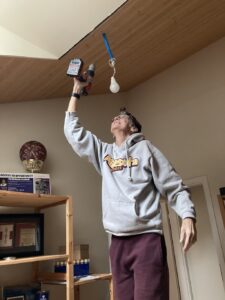 I can distinguish between a classic nail and a screw, but there are 25 different kinds of nails and 26 different types of screws in dozens of sizes. Even worse, Swiss measurements are in the metric system (ie. centimeters, millimeters), but my poor brain is stuck in inches, feet, and yards.
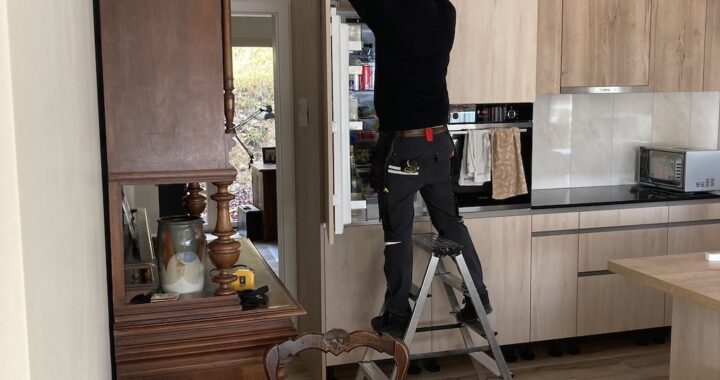
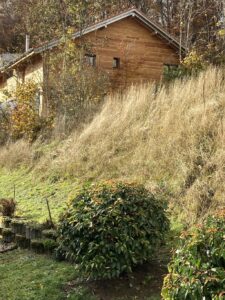 We officially moved a month ago, but we keep having to relocate within our walls. We continue to rotate tables, chairs, dishes, books and clothes from place to place, so builders can replace broken fixtures and access faucets covered by dry wall.
 ly.
ly.