Why Me Syndrome

dsc01302Ever suffer from the why me syndrome? Those times you are immobilized by anger, frustration, and fatigue and wondering why you have to go through whatever it is you are enduring. Anyone who knows me knows that I have coped with an abundant amount of physical pain. Some of it was self-inflicted during my career as a pro athlete, but most of it accidental, random sh**.

I don’t have to look far for inspiration to find someone who is fighting an even greater challenge. Compared to others, my life is not so bad. I have lost friends to cancer, suicide, and bad, bad bugs like MSRA. I have friends who are coping with MS, diabetes, and depression.

I have friends enduring the crippling loss of a parent, child, sibling, spouse or friend. I know people facing surgery, dealing with dialysis, and going through chemo. I have friends who encounter each day without complaint, staring down each personal setback with dignity.

Early on, we must learn life is not fair. We don’t get to pick our opponents. Some obstacles are insurmountable. Some rivals are bigger, stronger, better. Some battles cannot be won, no matter how hard we fight.

I have cried a million tears, pounded my bed in despair and prayed to the heavens. Why am I here if only to suffer?

Because suffering is universal.

It is what makes us human.

img_0006Life is not fair. It is not fair that I was born into a stable, loving family. That as a child, I grew up with 3 of my 4 grandparents still living to help shape me. That my community was so safe I could play outside until the street lights came on. That doors opened for women in sports that had been forever closed offering me opportunities to travel and compete. That my father was a coach and I, an athlete, so I had a head start. That I met my soul mate half way across the globe. His family adopted me just as mine cherished him helping us to create a new cross cultural, bilingual family. That I had not only one, but two children that enrich my life. That I have loyal, steadfast friends and former students and athletes scattered around the globe cheering me on in my darkest moments.

img_1963Thanks to all of you who reached out to support me with calls, comments, text messages, FB shout outs and emails.

I have been blessed beyond measure. As I roll out of bed onto the floor and into the downward dog to stretch my limbs that lock up overnight, I toss-up a prayer.

To all of you grappling with the loss of loved ones, job insecurity, crazy bosses, growing older and the gamut of emotions ranging from rage to fear to anxiety that are an inherent part of the human condition, I hope you have the resiliency to weather the next storm.

As you face a new day, I wish you Bon Courage.

Be bold, be brave, believe.

Embrace life…a gift at any age.

Back from the Brink

dsc01139As if enduring chemo, without the cancer, I slipped off the planet into a free-fall spinning out of control. Out of commission, I disconnected from the real world incapable of answering email, writing blogs, telephoning friends. It was all I could do just to survive another day.

I feared going out in public because I could no longer trust my body. Dodging the throng of shoppers at Costco, I darted towards the nearest bin bag and doubled over heaving at the end of the fresh cut meat aisle.

At times my heart raced and I felt breathless. Other times I was dizzy and nauseous. In my worst moments I puked, barfing up breakfast or lunch. My entire existence became limited to timing my next medicine dosage and figuring out what I could eat, when and how to keep food inside.

As the days dragged on, my body shut down, so did my brain. Like a wounded, ol’dog, I wanted to drag my weary carcass off to a dark corner to lie down and die.

What precipitated this spiral of descent? In July I began a treatment to fight parasites in my blood, another evil component of my multi system inflammatory disease. Protozoa, unlike bacteria, are the same cell type as human cells. Antibiotics can differentiate better between your cells and bacteria cells, but anti-protozoan meds will also effect your own cells. Consequently, the most effective medications are extremely difficult to tolerate creating a chemo-like effect.

First came the shakes, queasiness, fatigue, disengagement, disassociation then the vertigo, nausea, vomiting, shortness of breath, and severe orthostatic hypo-tension. Rising from a sitting position, made me faint. I was so winded going up the stairs I had to sit down every other step to catch my breath. Walking up a slight incline left me doubled over gasping as though I had just run a mile.

I knew something was seriously wrong for even in my favorite place among my favorite peeps, I felt despair. Mere communication required too much effort. I didn’t want my family to worry, so I tried fake it, but fooled no one.

“What is wrong mom?” my kids asked. “You aren’t talking and you always have something to say.”

The weird plethora of symptoms made me feel like I was going crazy, but I did not look sick until the weight dropped – 15 pounds off my lean 5’10 frame. I begged my doctor let me stop the meds for a few weeks, so that I could regain my strength and sanity in a mini break from the antibiotic, anti parasite, anti fungus regime.

Within a day the nausea subsided and I could take in calories. The level of fatigue and dys

pnea lessened, the depression lifted.

A part of me felt angry for the all the sublime summer days I’d lost while curled up in a dark room clinging to the sides of bed to keep me from spinning off earth.

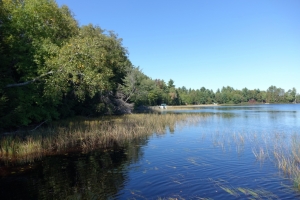
But another part of me knew that there was no better place to heal than at the lake where the quiet woods and calm waters coupled with the love of family allowed me to endure one day at a time. Chronic illness is not for the feint hearted and I am a warrior. My fighting spirit is back; I am ready for the next battle.


Sharing My Story at the International Women’s Day Celebration

2014-03-20 05.50.16As someone who grew up in a time period when women, like children, should be seen, not heard, I grew up without a voice. I wrote Home Sweet Hardwood, a Title IX Trailblazer Breaks Barriers Through Basketball to tell the story of the pioneers. Since its publication, I have been invited to speak at dozens of functions including ironically those hosted by organizations like the Rotary, Kiwanis and NCAA, who for years denied access to women. I never passed up a chance to share our story and felt especially privileged to be invited to speak to the next generation at the International School of Zurich (ZIS) for their International Women’s Day March 8th celebration.

International Women’s Day is a global day celebrating the social, economic, cultural and political achievements of women. The day also marks a call to action for accelerating gender parity.”

Coincidentally, the United Nations began celebrating International Women’s Day (IWD) as part of the International Women’s Year 1975, which was the same year the groundbreaking Title IX (June 23, 1972) was to be in regulation. This year, the IWD theme “Planet 50-50 by 2030: Step it Up For Gender Equality” focuses on women’s empowerment and women’s human rights.

As a misfit in an era when female athletes (especially in team sport) were ostracized from society, I grew up on the fringes of girl groups, hanging out as one of the boys. In adulthood, as a basketball coach in a field dominated by male coaches, officials, and athletic directors, I often felt like the odd “man” out. It has been a pleasure to see more women joining the ranks in sports and to offer a tribute to the women and men who contributed to women’s rights advancement in my homeland.

Gradually, Title IX revolutionized women’s lives in America by opening doors to education and athletics. Though we may be growing closer to gender parity in the West, women lag far behind in many parts of the world. Women are subject to sex abuse and domestic violence and continue to be denied access to health care, education and equal opportunity in the work place.

The need to celebrate women’s day remains crucial.

Step It Up Highlight“Everyone – men and women – can pledge to take a concrete step to help achieve gender parity more quickly and each of us can be a leader within our own spheres of influence and commit to take pragmatic action to help include and advance women.”

Change begins with one voice, one dream, one step.

On March 8th, I will be speaking in a room filled with girls from around the globe, movers and shakers of the next era, who will go on to become doctors, lawyers, diplomats, and leaders in their own countries. It dawned on me, maybe, my role all along was not to play ball, but to share my experience to inspire, to light the fire, and pass the torch to a younger generation who can use their talents to make this a better world.

I finally know who I am… an international woman.

Please join us in the party. Take time to celebrate the women in your life and make a pledge for parity.

Timeline: Women's Footprint in History

fascinating timeline – be patient, takes long to upload, but it is worth waiting

Ten Tips for Survival When Sidelined by Back Pain

DSC00183I am back. I missed my friends out in the global blogosphere. When I logged out before the holidays, I did not intend to be away so long, but s*** happens.

Especially when you have a bad back. I am only a sneeze away from a catastrophe. Some people who have never suffered from back pain, poo poo the idea that back pain can be so incapacitating, but once it happens to you, you know.

Was it one too many cross Atlantic flights, too many basketball road trips, too many holiday cookies, who knows? But due to a major flare up, I was out of commission. I struggled to endure my school day. Every free minute I wasn’t preparing lesson plans or school reports, I spent lying flat or in therapy – deep tissue massage, spinal adjustments, thermal baths.

Stretch, walk, teach, rest, repeat.

Take one crooked old spine and an arthritic neck, add two herniated lumbar disks, three compressed dorsal vertebrae, and what do you get? One heck of a backache! My body has undergone a lifetime of trauma. Bad back is an understatement. Yet if you look at me, except for the basketball player slouch, from ducking through too many low French doorways, you’d never know, how I struggle to remain upright and shuffling forward. For any of you who suffer from chronic back pain or an occasional flare up, I put together a few tried and true tips.

  1. Never jump out of bed – flop on the floor first and roll like a ball
  1. Stretch – at regular intervals. Legs against wall, arms stretched overhead in L shape for a full body stretch.
  1. Exercise – walk, swim, bike but avoid high impact sports.
  1. Avoid sitting
  1. Limit computer time – strains your neck, shoulders, and wristsDSC00182_copy
  1. Take rest breaks flat out – stash a yoga matt under the couch, in the kitchen, at the office
  1. When it hurts too much to stand upright, crawl (preferably on carpet,) to loosen the SI joint and hips
  1. Use heating pads, thermal baths, body pillows, heat lamps, cold packs
  1. Do whatever you can to keep mobile
  1. Then ice baby ice!

A lifetime of hard hits, accidents, and high intensity competitive sports has left me fragile, but I am not broken. As long as this ol’ heart keeps ticking, I will fight to put one foot in front of other. I have tried every alternate therapy out there to avoid undergoing the knife.

Why not opt for surgery? I have too many weak links. Do you know anyone moving around with a total spinal fusion?

Nooo, give me my chiropractors, masseurs, physical therapists. From all my research and experience this is one area where integrative medicine and non-surgical intervention have the best long-term results.DSC00178_copy

That said I am always looking for the newest, non-invasive cure all. Next summer, if I can save enough money, I may head back to Wisconsin to my all time favorite chiropractor to try deep tissue, heat laser therapy. He and his brother use this to treat elite athletes including those giant cheese heads in the green and yellow jerseys. Hey, if it is good enough for the Greenbay Packers, it may work for this crazy, headstrong gal who got sacked one too many times in the game of life.

What is your best trick for coping with a bad back?

Happy Father’s Day – Thanks for the Swimming Lesson

My dad taught me to drive a car, shoot hoops, catch frogs, paddle a canoe, and swim laps. When I was just a hyperactive little kid, he tired of shooing me off the “dangerous” dock. Finally, he reasoned it would safer to teach me to swim than to keep track of my free spirited meanderings near the lake and in the woods.

He held my hand as I stepped off the sandy beach into the icy lake. Together we walked out over my head. While my dad’s strong arms held me afloat, I put my face in the water and blew bubbles. He taught me the crawl stroke, flutter kick and to cup my hands. “Reach forward, pull back.” He helped me master the trickiest part – how to breathe without swallowing half the lake.

Though I never had a near drowning experience, swimming saved my life. After a bad bike IMG_2175_copycrash and later a debilitating car accident, I became trapped in a body that no longer worked quite right. My hoop dreams disintegrated. My aspirations of skiing down mountainsides and running marathons dissolved. I hung up my high tops, tennis racket, baseball glove; I set aside my football, basketball, volleyball.

I was condemned to the pool where the buoyancy of the water kept me from further injuring my spine and joints. Early on, I became a has-been athlete plagued with bad feet, bad knees and a broken back. The scars of my past calamities never really left me; the sharp twinges and shooting, throbbing, stabbing aches remained. But magically, weightless in water, I became pain free.

To an athlete being confined to a pool seemed like a death sentence. Yet, after every misfortune, I retreated to the healing waters. Gradually, it seemed like my savior; swimming became my solace, my meditation, my prayer.

As a child I learned to swim at my grandparents Camp Ney-A-Ti on Summit Lake. In my teens, I swam through summers at the old Emerald Hill pool. In adulthood, when pregnant – and ordered to bed rest for 3 months to prevent premature births – I begged the doctor to let me swim. In a Parisian pool, I bonded with my unborn child, gliding in sync alongside the baby kicking inside me.swimming at SL

Over the years, I even saved a few lives as a lifeguard. And I once dragged the semi conscious high school quarterback from the pump room when he became asphyxiated from the chlorine. But the real hero of my swimming story was my dad. He taught me to believe that no matter how rough the seas or how high the waters, I would never sink.

With each stroke of my arm and kick of my leg, I repeated the mantra he ingrained, “Never give up.”

Dad thought he was showing me the frog kick, freestyle, and breaststroke, but really he was teaching me how to survive.

IMG_0999_copyAs a child, my dad let go, so I could take my first strokes solo. IMG_1693_copyNow as an adult I swim in bliss from one side of the lake to the other. Dad, like a lifeguard, sits on the dock, observing each stroke as if he could save me should a boat comes crashing into my path, or a leg cramp pull me under.

We have come full circle. We both know there is no way that my 83-year-old father could rescue me especially when I am swimming 150 feet from shore at the far end of the lake. But I feel safer, just knowing he is there, watching over me with his benevolent eyes.

Teaching Tolerance in the Age of Terror

le_chat_14sept11_223I began and ended my holidays with a moment of silence, a solemn reminder that the threat of terrorism lurked on every street corner, in every train station and every international airport. Just before our winter break, 7 militants from the Pakistani Taliban entered an army-run, public school in Peshawar and fired at random killing 132 students and 9 teachers during 8 hours of terror.

In solidarity, the next day, our Swiss and International School of Geneva flags flew at half-mast; otherwise we resumed our regular school day. That evening we had a basketball game at another large international school where I looked forward to seeing the opposing coach, my American friend, and my son’s former coach.

Instead of being greeted with his usual bear hug, when I walked in the gym he raised a finger to his lip, and apologized, “Sorry, Pat, we are in lock-down.” He urged us to duck behind a pile of gym mats where his team crouched low.

Overhead the loud speaker blared, “Le train ne s’arrête pas à Lausanne.” (The train doesn’t stop in Lausanne). The code was repeated over and over again heightening our anxiety. Teenagers in hiding whispered nervously, while I wondered why would they “practice” a lock-down drill after school hours.

The following morning, back on my own campus, students from the age of thirteen to eighteen gathered in an assembly to sing, dance, and perform. One was a world champion tap dancer, another played the piano and sang a piece he composed, two students from my home room class, co presidents of our school, spoke eloquently. I marveled at such talented kids, such bright minds.

From the balcony, I overlooked our gym floor covered with chairs lined in rows representing 6 classes in each year group from grade 7 to 13. In a sea of joy, heads bobbed and arms, representing 135 nationalities, waved in rhythm to the jazz band. So young, innocent, so earnest.

Then our principal spoke breaking the festive atmosphere.

“In an international school about our size, terrorists wiped out an entire year group in an unimaginably, appalling attack. Some students were finishing exams; others were in first aid class or in normal lessons. All the children were just trying to learn, trying to better themselves through education.”

Our principal asked us to observe a moment of silence in memory of the victims. The stark contrast between the previous noisy, frivolities to absolute stillness was eerie. Though we practiced lock-down procedures, Switzerland seemed unrealistically safe. A safety we take for granted.

At the world’s oldest and largest international schools, we remained one of the few campuses left unguarded and unenclosed. Teachers, students, parents and visitors come and go freely admiring the bucolic countryside and spectacular view of Lake Geneva surrounded by the Alps.

I left school that day deep in thought. Three weeks later, after our holiday, I returned to school with an even heavier heart. As the sun rose over the Alps, I walked to campus and contemplated the lessons I had prepared for that day. Reeling from barbaric terrorists attacks in he heart of Paris on January 7th; I contemplated how to discuss the events in a school composed of students representing so many different nationalities, ethnicities and religions.

While across Europe, leaders debated ways to assure safety in light of the recent attacks, my school hosted a joint Education for Peace Conference at Palais des Nations to celebrate our 90 years of international education and 70 years of the United Nations. We joined forces around our common values of peace, tolerance, respect and diversity upon which we were founded.

I am an educator, but what information should I impart?

How can we teach vigilance without invoking fear?

How do we protect our citizens without infringing on personal rights?

How do we practice tolerance in the face of terrorism and impart an understanding that terror is not synonymous with Islam?

How do we safeguard intellectual freedom is such gifted, promising, malleable young minds?